What Is 9D Virtual Reality? Understanding the 9D VR Experience


Virtual reality has evolved far beyond simple headsets and screens. Today, immersive attractions combine motion platforms, environmental effects, and synchronized visuals to create experiences that feel real, intense, and unforgettable. One of the most advanced formats in this evolution is 9D Virtual Reality.
But what exactly is 9D VR? How does it differ from 5D rides or standard VR experiences? And why is the 9D virtual reality experience becoming so popular in commercial entertainment venues worldwide?
This article explains 9D VR in a clear, practical way—helping operators, investors, and buyers understand its value and real-world applications.
What Does “9D” Mean in Virtual Reality?
The term 9D VR does not simply refer to “nine dimensions” in a scientific sense. Instead, it represents a combination of multiple sensory elements working together to enhance immersion.
A typical 9D virtual reality experience includes:
- High-definition VR visuals
- Motion simulation (tilt, rotation, vibration, movement)
- Environmental effects such as wind, sound, and vibration
- Real-time synchronization between visuals and motion
The goal of 9D VR is to make users feel as if they are inside the experience, not just watching it.
How 9D Virtual Reality Works?
At the core of a 9D VR system is a motion platform. This platform moves in coordination with the virtual scene displayed inside the VR headset or screen.
Depending on the system design, motion may include:
- Forward and backward movement
- Left and right rotation
- Pitching and rolling
- Controlled vibration for impact effects
When these movements are precisely synchronized with VR visuals, the brain perceives the experience as realistic and immersive.
This is why a well-designed 9D virtual reality system feels smooth and exciting rather than uncomfortable or disorienting.

9D VR vs 5D Ride: What’s the Difference?
Many people compare 9D VR with a traditional 5D ride, but the two are not the same.
A 5D ride usually includes:
- A fixed seat or platform
- Pre-set motion effects
- Limited interaction
In contrast, 9D VR offers:
- More advanced motion control
- Greater synchronization accuracy
- Interactive or semi-interactive experiences
- Higher immersion through VR headsets
In short, 9D VR is more flexible, more immersive, and better suited for modern commercial venues.
What Makes a 9D Virtual Reality Experience So Popular?
The popularity of 9D Virtual Reality Simulator is driven by both user experience and business performance.
1. Strong Sense of Immersion
Users feel movement, speed, and impact in addition to seeing the virtual world.
2. High Replay Value
Different scenes, stories, and motion patterns keep experiences fresh.
3. Wide Audience Appeal
From teenagers to adults and families, 9D VR attracts a broad demographic.
4. Compact Installation
Compared to traditional amusement rides, 9D VR systems require less space.
5. Flexible Content Updates
New VR content can be added without replacing hardware.
Common Applications of 9D Virtual Reality
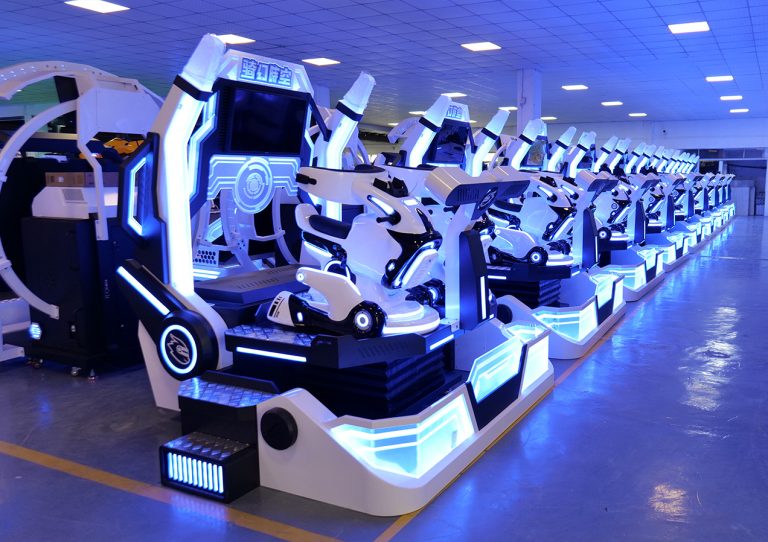
Today, 9D virtual reality systems are widely used in:
- VR arcades
- Shopping malls
- Theme parks
- Family entertainment centers
- Indoor amusement venues
Popular experience themes include:
- Flying and space exploration
- Roller coaster simulations
- Adventure and action scenes
- Sci-fi and fantasy storytelling
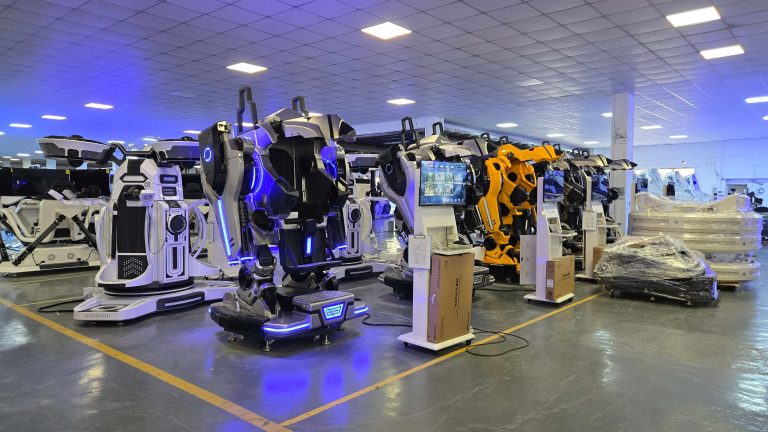
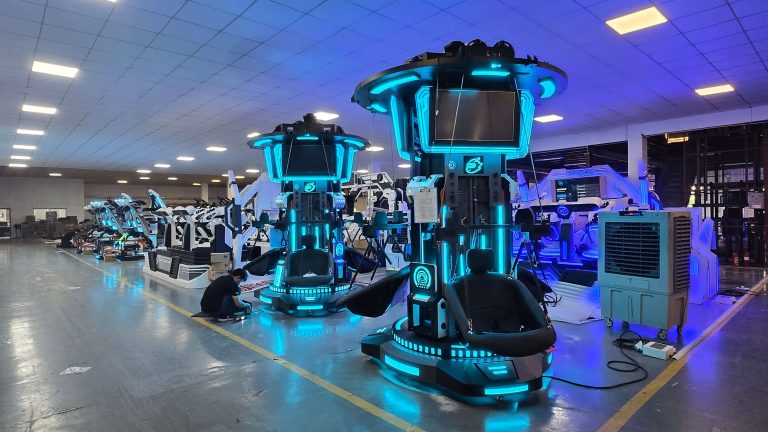
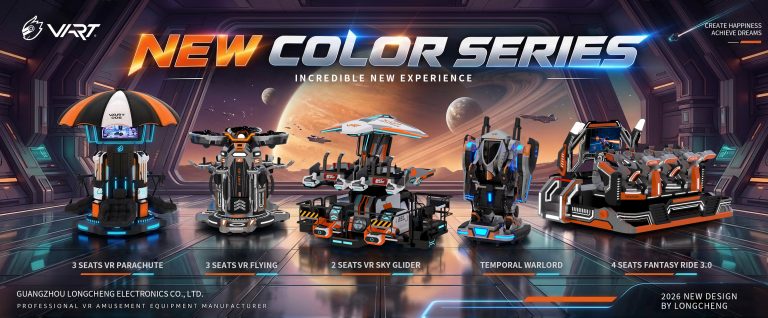
One of the most recognizable implementations of 9D VR technology is the VR Flying UFO Simulator, which combines full motion with immersive flying visuals to create a true flight sensation.
Learn more about this application here: VR Flying UFO Simulator
Is 360 Flight Simulator a Type of 9D VR?
Yes—many 360 flight simulators are considered a form of 9D VR.
A 360 flight simulator typically includes:
- Full or partial rotation
- Multi-axis motion
- VR headset or panoramic display
When these elements are synchronized with environmental effects, the experience fully fits within the 9D virtual reality experience category.
This is why flying simulators are often featured as flagship attractions in VR entertainment centers.

Why 9D VR Is Ideal for Commercial Use?
From a business perspective, 9D virtual reality offers several advantages:
- Premium experience justifies higher ticket pricing
- Strong visual impact attracts walk-in traffic
- Motion-based excitement encourages repeat play
- Compact footprint maximizes revenue per square meter
For operators looking to balance investment cost with long-term performance, 9D VR systems provide an efficient and scalable solution.
Choosing a Reliable 9D VR System Matters
Not all 9D VR systems deliver the same quality. Motion accuracy, system stability, and content synchronization play a critical role in user comfort and satisfaction.
Manufacturers with real project experience focus on:
- Stable motion control
- Certified safety standards
- Commercial-grade hardware
- Long-term technical support
This is especially important for advanced systems such as flying simulators and motion-based rides.
How 9D Virtual Reality Fits Into a Complete VR Business?
A successful VR venue often combines multiple attraction types:
- Motion-based 9D VR experiences
- Interactive shooting or racing games
- Family-friendly VR content
Within this mix, 9D virtual reality experiences often serve as the centerpiece attraction—drawing attention and defining the venue’s identity.
Conclusion
9D Virtual Reality represents the next level of immersive entertainment, combining motion, visuals, and sensory effects into a unified experience. Compared to traditional rides or basic VR setups, 9D VR delivers higher immersion, greater flexibility, and stronger commercial value.
As entertainment venues continue to evolve, the 9D virtual reality experience is becoming a key component in attracting visitors, increasing dwell time, and building long-term profitability.
For operators and investors exploring advanced VR attractions, understanding 9D VR is the first step toward making confident decisions.
Frequently Asked Questions About 9D Virtual Reality
What is the difference between 9D VR and traditional VR?
Traditional VR mainly focuses on visual immersion through headsets, while 9D virtual reality combines motion platforms, environmental effects, and synchronized visuals to create a full-body immersive experience.
Is 9D virtual reality suitable for commercial venues?
Yes. 9D VR is widely used in VR arcades, shopping malls, and theme parks because it offers strong visual attraction, high replay value, and efficient space utilization.
How much space does a 9D VR system require?
Most 9D virtual reality systems are designed for commercial use and can fit into compact spaces. The exact area depends on the number of seats and motion range, but it is generally smaller than traditional amusement rides.
Is 9D VR safe for players?
Commercial 9D VR systems are built with safety structures, controlled motion limits, and certified components. When properly installed and operated, they provide a safe and comfortable experience for users.
Can 9D VR content be updated over time?
Yes. One of the advantages of 9D virtual reality experiences is the ability to update or expand content libraries without replacing hardware, helping venues stay fresh and competitive.