What is 9D Virtual Reality (9D VR)? The Ultimate Commercial Guide


Key Takeaways
- 9D Virtual Reality (9D VR) is a commercial immersive entertainment format that combines a 360-degree VR headset with synchronized motion and physical sensory effects such as wind, vibration, air movement, leg effects, and spatial audio.
- The term “9D” does not describe nine mathematical dimensions. It is an entertainment-industry term used to distinguish multi-sensory VR attractions from conventional screen-based 3D/4D/5D cinemas and headset-only VR.
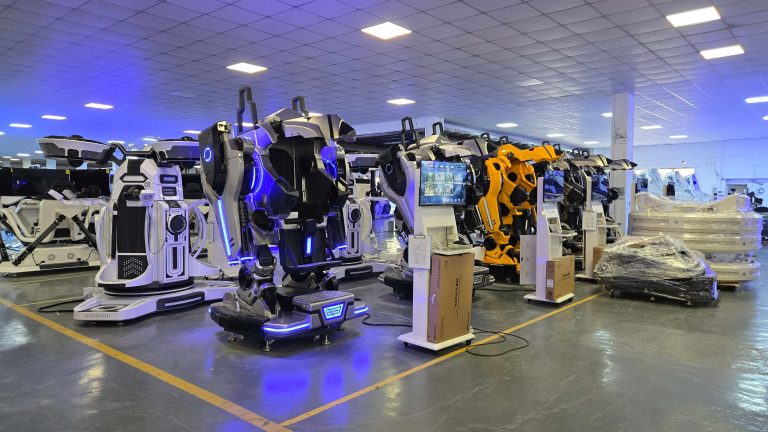
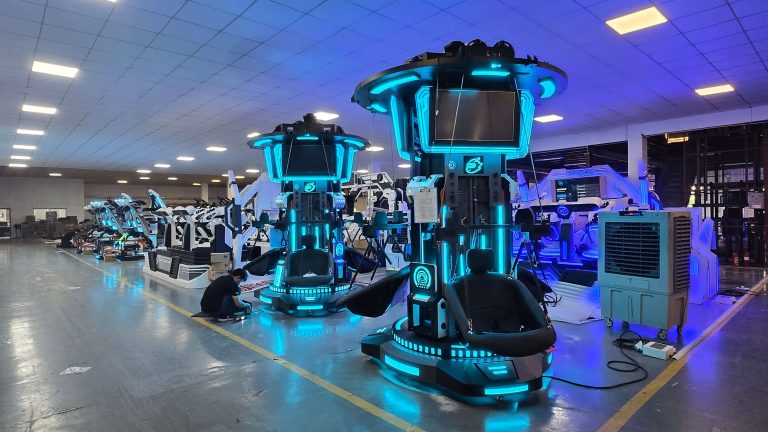
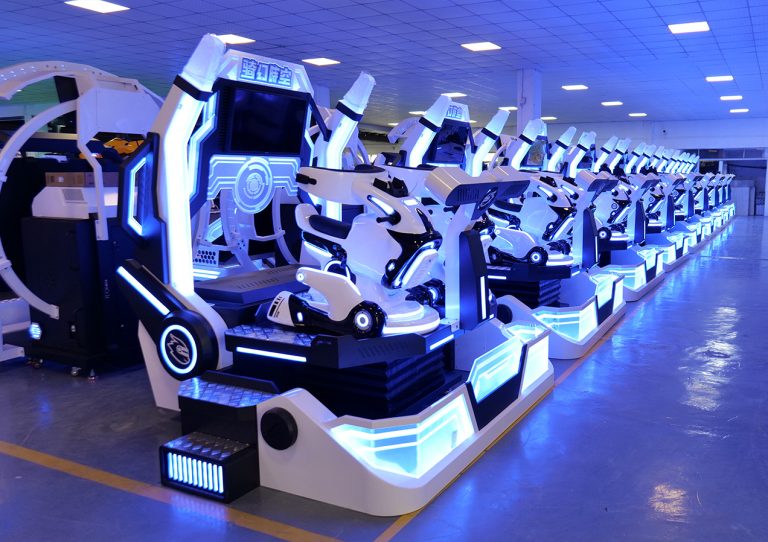
- Commercial 9D VR simulators can range from compact one- or two-player egg chairs to multi-seat motion platforms, flight simulators, racing machines, and group attractions.
- For arcade and FEC operators, profitability depends less on the “9D” label and more on throughput, machine footprint, uptime, game content, ticket pricing, visual attraction, and repeat-play potential.
- Before purchasing a 9D VR machine, buyers should verify the motion system, commercial game licensing, spare-parts policy, safety features, certifications applicable to the destination market, installation requirements, and after-sales support.
If you are asking what is 9D virtual reality, the simplest answer is this: 9D VR combines an immersive VR headset with synchronized physical motion and additional sensory effects so players can see, hear, and physically feel events inside a virtual experience.
Unlike a traditional 5D theater, a 9D VR simulator normally places the visual world directly inside a head-mounted display instead of relying on a fixed cinema screen. Depending on the machine, the experience may add seat movement, vibration, wind, air effects, interactive controls, or other physical feedback.
For commercial operators, however, the more important question is not whether a machine is called “9D.” It is whether the system can reliably create a compelling experience, serve enough customers per hour, fit the available venue, and operate efficiently over the long term.
What Is 9D VR? Quick Definition
9D Virtual Reality (9D VR) is an immersive amusement technology that combines a 360-degree VR head-mounted display with a synchronized motion platform and physical sensory effects such as wind, vibration, airflow, leg effects, and spatial audio. “9D” is an industry naming convention rather than a scientifically standardized ninth dimension.
A typical 9D virtual reality cinema experience may involve a customer sitting in a motion seat while wearing a VR headset.
When the virtual vehicle turns, the seat tilts.
When the virtual roller coaster drops, the platform moves with the scene.
When the player accelerates through a virtual environment, airflow or vibration may reinforce the sensation of speed.
The objective is to make several senses tell the same story at the same time.
That synchronization is what turns ordinary visual VR into a more physical commercial attraction.
5D vs 7D vs 9D VR: Quick Comparison
| 5D Cinema | 7D Cinema | 9D VR | |
|---|---|---|---|
| Visual format | Fixed screen | Fixed screen | 360° VR headset |
| Motion seats | Yes (basic) | Yes (full 6DOF) | Yes (varies by machine) |
| Interactivity | No | Yes — gameplay controllers | Yes — headset tracking + controls |
| Sensory effects | Wind, water, bubbles | Wind, water, snow, fog, scent, vibration | Wind, vibration, airflow, leg effects, spatial audio |
| Best for | Short attraction, high turnover | Group interactive experience | Full visual immersion, premium experience |
Demystifying 9D VR: What Does “9D” Actually Mean?
The entertainment industry has used labels such as:
- 3D
- 4D
- 5D
- 7D
- 9D
for many years.
These labels can be confusing because they sound like scientific descriptions of dimensional space.
In commercial entertainment, they usually are not.
The Marketing Term vs. the Technical Reality
A 3D movie generally describes stereoscopic visual depth.
The term 4D became associated with adding physical effects such as moving seats to a 3D presentation.
5D cinema commonly refers to additional environmental effects such as wind, water, fog, snow, bubbles, vibration, or similar sensory features.
7D has often been used for interactive theaters that add shooting controllers or scoring.
And 9D VR typically represents the transition from screen-based immersive cinema into a headset-based multi-sensory experience.
So the “9” should not be interpreted as a precise engineering specification.
Two manufacturers may both advertise a “9D VR cinema” while using very different:
- Motion systems
- Headsets
- Seat configurations
- Game libraries
- Environmental effects
- Control systems
For a buyer, the specification sheet matters more than the dimensional label.
The Three Foundation Pillars of a 9D VR Simulator
Most commercial 9D VR machines can be understood through three fundamental technology layers.
Pillar 1: 360-Degree VR Headset and Spatial Viewing
Traditional cinemas ask customers to look toward a screen.
VR removes that limitation.
The headset surrounds the player’s visual field with a virtual environment, allowing the user to look:
- Forward
- Backward
- Left
- Right
- Up
- Down
This creates a stronger feeling of being inside the scene.
Depending on the hardware and game design, the system may track rotational movement or provide more advanced positional tracking.
The key commercial difference is visual isolation.
In a conventional 5D cinema, the customer still knows they are sitting in a theater watching a screen.
Inside a VR headset, the visible physical room is largely replaced by the virtual scene.
That usually creates a stronger sense of presence.
Pillar 2: Dynamic Motion Seats and Platforms
Visual immersion becomes more convincing when the body receives movement that matches what the eyes see.
Commercial 9D VR equipment may use motion systems that generate:
- Pitch
- Roll
- Lift
- Tilt
- Vibration
- Rotational movement
The exact degree of movement depends on the machine.
Some systems use compact multi-axis electric platforms.
Others use larger mechanical configurations designed for more dramatic motion.
When properly synchronized, a virtual climb can correspond with physical lift, while a turn or drop can be reinforced by platform movement.
This is important for immersion because visual and physical signals should remain as coherent as possible.
It is better to say that well-synchronized motion can reduce sensory mismatch for some users than to claim that motion engineering eliminates VR motion sickness entirely. Individual sensitivity still varies.

Pillar 3: Environmental and Physical Effects
The third layer adds sensations beyond movement.
Depending on the machine, effects may include:
- Wind
- Air blasts
- Back vibration
- Seat vibration
- Leg ticklers or sweeps
- Directional audio
- Interactive controls
- Special lighting visible around the attraction
These effects can turn an ordinary game event into a stronger emotional moment.
A virtual high-speed sequence feels different when the player also feels airflow.
An impact feels stronger when vibration is synchronized with the scene.
A creature or surprise sequence can become more memorable when a physical seat effect reinforces what the player sees.
This is the basic philosophy behind 9D VR: multi-sensory synchronization rather than visuals alone.
For a broader look at how these formats relate, see 3D vs 4D vs 5D vs 7D vs 9D VR Theater: What’s the Real Difference?
Key Features That Separate 9D VR from Standard VR Headsets
A home VR headset and a commercial 9D machine may use similar underlying virtual-reality concepts, but their business purposes are very different.
Total Visual Isolation
A standard home headset already provides 360-degree visual immersion.
What commercial 9D equipment adds is a physical system built around that virtual content.
The visitor is no longer simply wearing a headset while sitting on an ordinary chair.
The entire attraction becomes part of the experience.
Synchronized Motion Engineering
A commercial motion platform should respond to the content rather than move randomly.
If the player’s virtual vehicle turns left, the physical motion should reinforce that event.
If the player accelerates, airflow or vibration may increase.
If the scene slows, the physical effects should also change appropriately.
The best commercial experience comes from timing, not simply stronger motion.
More aggressive movement is not automatically better.
For families and first-time customers, well-controlled motion can create a more enjoyable experience than maximum intensity.
Commercial-Grade Operating Design
A commercial arcade machine also needs features that home VR systems do not normally require.
Depending on the configuration, these may include:
- Centralized operator controls
- Start/stop controls
- Emergency stop systems
- Durable commercial seating
- Safety harnesses or restraints
- Payment integration
- Coin, card, or QR-compatible operating options
- Session reset controls
- Content selection interfaces
- Easy-to-clean contact surfaces
These details do not look exciting in a promotional video, but they directly affect daily operations.
For an arcade owner, a system that looks spectacular but takes too long to reset between customers can become a throughput problem.
Commercial 9D VR Equipment Matrix & Specifications
There is no single type of 9D VR simulator.
Operators can choose configurations based on floor area, target audience, customer volume, and desired experience intensity.
| Equipment Category | Typical Capacity | Approximate Space Strategy | Main Experience | Best Commercial Role |
|---|---|---|---|---|
| 1-Seater 9D VR Unit | 1 player | Very compact | Personal immersive ride | Kiosks, overflow traffic, first-time users |
| 2-Seater VR Egg Cinema | 2 players | Compact | Shared motion cinema | Malls, arcades, couples |
| 3-Seater Motion / Flight Platform | 3 players | Medium footprint | Social flight/motion experience | FECs, friend groups, families |
| 4–6 Seat VR Cinema Platform | 4–6 players | Larger dedicated area | Group ride/cinema | Theme parks, FECs, tourist venues |
| 360° VR Flight Machine | 1–3 players depending on model | Requires motion clearance | Extreme flight and rotation | Premium thrill attraction |
| VR Racing Simulator | Usually 1 player per cockpit | Modular | Competitive driving | Arcades, esports-style zones |
| Multi-Player Motion Attraction | Varies by model | Dedicated zone | Group immersive experience | Destination entertainment venues |
The actual installation area must always be confirmed from the selected machine’s technical drawing.
A machine’s body dimensions are not the same as its required operating area.
Operators must also reserve space for:
- Motion clearance
- Entry and exit
- Customer assistance
- Queueing
- Maintenance
- Electrical access
- Safe circulation
Compact 1- and 2-Seat 9D VR Egg Cinemas
The classic 9D VR egg cinema remains popular because it is easy to understand.
Customers see two futuristic seats, watch other riders react, and can quickly decide whether they want to try it.
Its commercial advantages include:
- Small footprint
- Straightforward operation
- Suitable for couples
- Easy placement in malls
- Short-session potential
- Lower staffing complexity
This format can work well as an impulse attraction.
A passerby does not need a long explanation before understanding the product.
3- to 6-Seat Group Motion Platforms
Larger platforms change the revenue logic.
Instead of processing one or two customers per cycle, the operator can sell several seats during the same experience.
This can work particularly well for:
- Families
- Friends
- Tourist groups
- Birthday visitors
Group capacity can also make the attraction feel more social.
Customers often prefer sharing an intense experience with people they know rather than riding alone.
360-Degree Flight and Racing Attractions
Flight and racing equipment moves closer to simulation than passive cinema.
A premium VR flight attraction may use:
- Larger motion range
- Flight controls
- Stronger physical feedback
- Airflow
- More dramatic external design
VR racing adds:
- Steering wheel
- Pedals
- Racing seat
- Competitive gameplay
- Optional multi-machine competition
These machines generally require more floor planning than a basic egg chair, but they can also become highly visible hero attractions.
Why 9D VR Simulators Can Produce Strong Commercial ROI
No VR machine can guarantee high ROI.
Profit depends on:
- Local foot traffic
- Rent
- Ticket price
- Machine utilization
- Session duration
- Maintenance
- Staffing
- Marketing
- Content quality
However, 9D VR has several structural advantages that can support an attractive commercial model.
Compact Footprint and High Visual Impact
Commercial floor space is expensive.
A machine that creates a strong experience without occupying a very large zone can improve revenue density.
Some compact one- or two-seat systems may use only a few square meters for the machine itself, while larger installations require significantly more operating space.
Rather than relying on a universal “under 10 sqm” claim, buyers should ask manufacturers for the complete operational footprint, including safety and service clearance.
That gives a much more realistic estimate.
Short Sessions and High Turnover
Many 9D VR experiences are designed around relatively short entertainment cycles.
A commercial session might last approximately 5–8 minutes depending on the content and machine.
In theory, that can allow approximately 6–8 sessions per hour after accounting for some transition time.
But operators should calculate complete cycle time, not just game duration.
For example:
5-minute game + 2-minute loading/reset = 7-minute commercial cycle.
A two-player machine at roughly eight cycles per hour has a theoretical capacity of: 2 × 8 = 16 player admissions per hour
Actual paid utilization will normally be lower.
That is why ticket price and traffic must be modeled realistically.
Lower Labor Requirement Through Centralized Control
A good operating console can allow one staff member to supervise several nearby machines during moderate traffic periods.
This can reduce labor pressure.
However, truly unattended operation is not appropriate for every 9D VR attraction.
Staff may still be required for:
- Safety checks
- Headset fitting
- Hygiene
- Harness inspection
- Customer guidance
- Emergency response
The better goal is efficient staffing, not simply eliminating employees.
What to Look for When Buying a Commercial 9D VR Simulator
The purchase price is only the first cost.
A commercial buyer should evaluate total ownership.
Electric Servo vs. Hydraulic Motion
Both motion technologies can be suitable depending on the machine design.
Electric servo systems are often attractive for indoor commercial VR because they can provide:
- Precise control
- Responsive movement
- Cleaner installation
- Relatively straightforward maintenance
Hydraulic systems can provide substantial force and are still appropriate for some heavy-duty attractions.
The correct choice depends on:
- Required motion load
- Machine size
- Intensity
- Maintenance environment
- Noise requirements
- Power infrastructure
Do not choose solely because one brochure claims that one technology is universally superior.
Ask for the actual:
- Motion range
- Load capacity
- Power consumption
- Maintenance schedule
- Component lifespan
- Emergency-stop design
Game Library & Content Updates
The game library influences repeat visits.
A machine with only one attractive game may perform strongly when new but lose novelty over time.
Ask:
- How many commercial games are installed?
- Are the games legally licensed for commercial use?
- Are updates provided?
- Are updates included or charged separately?
- Can themes be changed for families and thrill-seekers?
- Does the motion profile synchronize with each game?
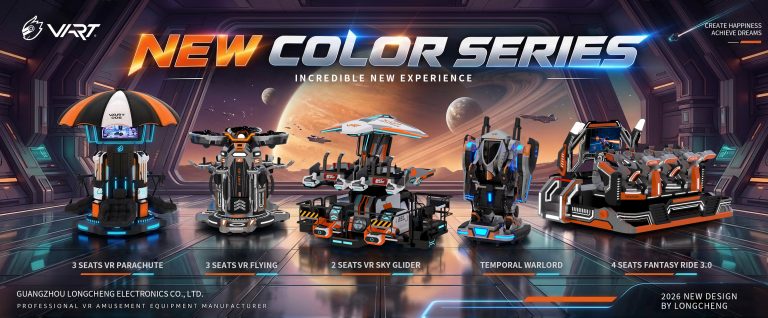
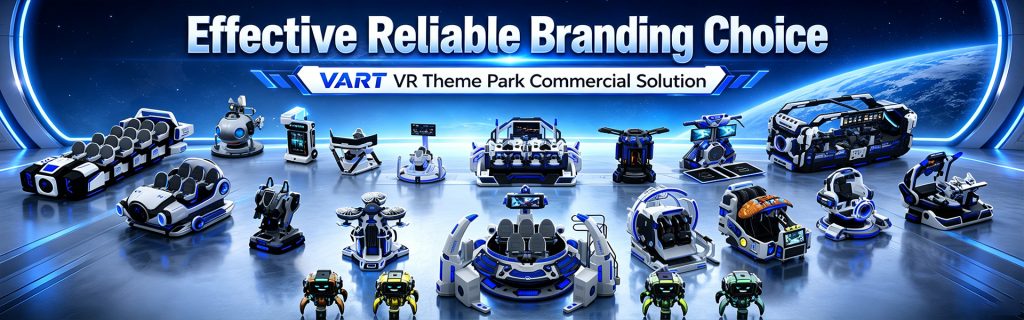
VART VR commercial systems can be supplied with compatible game content designed for the corresponding equipment. Exact content libraries and update terms should be confirmed for the selected machine before purchase.
Avoid promising “lifetime unlimited updates” unless that wording is explicitly written into the quotation or software agreement for that model.
Safety Features
A commercial 9D VR machine should be designed around real public operation.
Depending on the product, important safety elements may include:
- Emergency stop controls
- Safety restraints
- Stable structural frame
- Motion limits
- Operator control
- Safe entry and exit
- Clearly defined user restrictions
International Certifications
Certification requirements differ by destination and product.
CE documentation may be relevant for European markets.
Other countries may require different electrical, mechanical, fire, amusement-device, or local inspection standards.
UL-related compliance may matter in certain North American procurement situations, but buyers should not assume that one certification automatically satisfies every local requirement.
Before purchasing, ask:
Which certification documents apply to this exact machine and my destination market?
That is much more useful than simply seeing several certification logos on a marketing page.
Understanding 9D VR Machine Price
People frequently search for 9D VR machine price, but there is no meaningful universal number.
Price depends on:
- Number of seats
- Motion technology
- Headset
- Frame structure
- Game library
- Interactive controls
- Environmental effects
- Payment system
- Custom branding
- Shipping
- Installation
- Destination certification requirements
A compact two-seat system and a large multi-player motion attraction should not be compared as if they were the same product.
Instead of asking only:“What is the cheapest 9D VR machine?”
a commercial operator should ask:
“Which configuration produces the best combination of throughput, ticket value, uptime, and floor-space efficiency for my location?”
That is the more useful investment question.
Example 9D VR Revenue Model
Consider a hypothetical two-player machine.
Assumptions:
| Variable | Example |
| Seats | 2 |
| Average Ticket | $8 per player |
| Complete Commercial Cycle | 8 minutes |
| Theoretical Cycles per Hour | 7 |
| Operating Hours | 10 per day |
| Average Utilization | 35% |
Theoretical full-capacity player throughput: 2 × 7 × 10 = 140 player admissions/day
At 35% average utilization: 140 × 35% = 49 paid admissions/day
Illustrative daily revenue: 49 × $8 = $392
Illustrative 30-day revenue: $392 × 30 = $11,760
This is not a revenue promise.
The example simply demonstrates how the variables interact.
Real operators must subtract:
- Rent
- Payroll
- Electricity
- Payment processing
- Marketing
- Maintenance
- Taxes
- Other operating costs
ROI should always be modeled under conservative, normal, and peak-demand scenarios.
Where 9D Virtual Reality Cinema Works Best
Commercial 9D VR equipment can fit many venue types.
Shopping Malls
Advantages include:
- Existing pedestrian traffic
- Families and young customers
- Strong impulse-purchase potential
- Good visibility
Compact motion machines often work especially well near entertainment floors, cinemas, food courts, and family zones.
Family Entertainment Centers
FECs benefit from variety.
A 9D machine can complement:
- Racing
- Shooting
- Redemption games
- Traditional arcade machines
- Interactive attractions
Multi-seat systems can be particularly useful because FEC customers often arrive as families or friend groups.
Theme Parks and Tourist Attractions
Tourism environments can support more elaborate themes.
Examples include:
- Space flight
- Underwater adventure
- Dinosaur exploration
- Roller coaster simulation
- Fantasy journeys
These experiences can function as secondary paid attractions or indoor entertainment options.
Cinemas
Movie theaters already have customers waiting before and after screenings.
Compact VR attractions can monetize this dwell time without requiring another full-size auditorium.
Frequently Asked Questions
Is 9D VR safe for kids and older visitors?
9D VR can be suitable for many visitors, but eligibility depends on the specific machine, motion intensity, restraints, manufacturer instructions, age or height requirements, and the visitor’s health condition.
Children should meet the equipment’s minimum safety requirements and follow operator instructions.
Older visitors or people with medical conditions, motion sensitivity, pregnancy, cardiovascular issues, balance problems, or other relevant conditions should review safety warnings and consult appropriate medical guidance when necessary.
Operators should never market a high-motion attraction as universally suitable for every age group.
How much space is required to install a 9D VR cinema?
Space requirements vary significantly.
A compact single-seat system may have a machine footprint of only several square meters, while a large multi-seat motion platform may require 20–25 sqm or more once customer circulation and operating clearance are considered.
As a rough planning concept:
| Format | Planning Range |
| Compact Solo Unit | Approx. 4–6 sqm |
| Two-Seat Egg Cinema | Approx. 6–10 sqm |
| Multi-Seat Motion Platform | Approx. 12–25+ sqm |
| Large Flight / Extreme Motion System | Product-specific |
These are conceptual planning ranges, not installation specifications.
Always obtain the exact equipment drawing and required safety clearance from the manufacturer before signing a lease or completing the floor plan.
What is the average payback period for a commercial 9D VR machine?
There is no reliable universal average payback period.
Payback depends on total investment, local ticket price, daily customer traffic, utilization, rent, payroll, maintenance, and operating hours.
Use:Payback Period = Total Initial Investment ÷ Average Monthly Net Cash Flow
For example, if total equipment and installation investment were $20,000 and verified monthly net cash flow attributable to the attraction averaged $4,000, the simple mathematical payback would be approximately five months.
That does not mean every 9D VR project will achieve five-month payback.
Actual results can be substantially faster or slower depending on the market.
What is the difference between 5D cinema and 9D VR cinema?
A 5D cinema typically uses a traditional screen or projection system combined with moving seats and environmental effects.
A 9D virtual reality cinema normally replaces the fixed screen with individual VR headsets, giving each player a 360-degree visual environment while adding motion and sensory feedback.
Does 9D VR really have nine dimensions?
No. “9D” is an entertainment-industry term used to describe a multi-sensory VR experience. It should not be interpreted as a scientific ninth spatial dimension.
How long does a 9D VR experience usually last?
Many commercial experiences are approximately 5–8 minutes long, although actual duration varies by game and machine.
Operators should calculate the full commercial cycle, including customer entry, headset fitting, safety checks, gameplay, exit, and reset.
Can one employee operate several 9D VR machines?
Potentially, depending on venue design, machine type, traffic level, local rules, and customer assistance requirements.
Centralized controls can improve efficiency, but staff must still maintain safe operation, equipment hygiene, customer guidance, and emergency readiness.
Is an electric motion system better than hydraulic for 9D VR?
Not universally. Electric servo systems are often preferred for compact indoor VR applications because of their precise control and relatively clean maintenance profile. Hydraulic systems can still be appropriate for larger or higher-force attractions.
Buyers should compare actual specifications rather than choosing solely by technology label.
What should I ask a 9D VR simulator manufacturer before buying?
Ask for the exact equipment dimensions, motion range, power requirement, player capacity, game list, software licensing terms, warranty, spare-parts policy, safety requirements, certification documents, installation process, maintenance schedule, and after-sales support.
Can VART VR help plan a complete VR arcade instead of supplying one machine?
Yes. VART VR provides commercial VR equipment and can support venue projects with equipment selection and customized 2D/3D layout planning based on the available space and target audience.
Conclusion: Build the Business Around the Experience, Not the “9D” Label
Understanding what is 9D VR is useful, but the number itself should never be the main reason to purchase a machine.
The real commercial value comes from the system underneath it: 360-degree visual immersion + synchronized motion + physical sensory feedback + commercial operation design.
For a shopping mall, compact one- or two-seat equipment may provide a strong combination of visibility and floor efficiency.
For an FEC, three- to six-player systems can better serve families and groups.
For destination venues, 360-degree flight systems, racing attractions, or larger motion experiences can become premium centerpiece attractions.
Whatever format you choose, evaluate:
- Hourly throughput
- Complete operating footprint
- Game quality
- Motion synchronization
- Safety
- Uptime
- Software licensing
- Spare parts
- Technical support
- Long-term content strategy
A cheaper machine that spends more time offline, serves fewer customers, or lacks useful content may produce a worse investment result than a better-integrated commercial system.
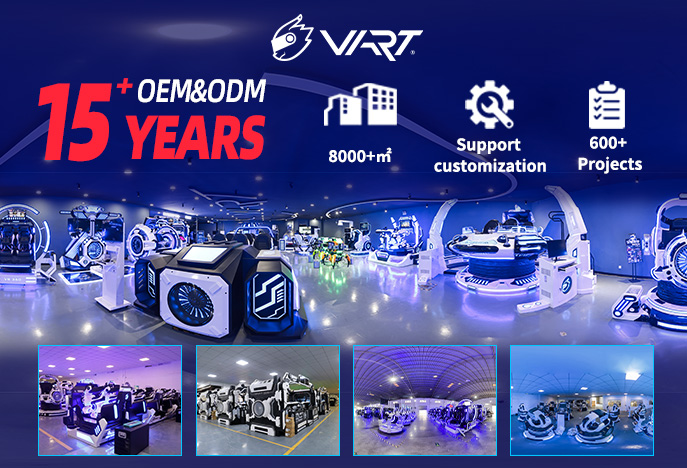
VART VR provides commercial VR simulators for arcades, FECs, shopping malls, theme parks, cinemas, and other location-based entertainment venues.
Planning a 9D VR project? Contact VART VR for product specifications, equipment recommendations, factory demonstration options, and a customized 2D/3D venue layout based on your available space.