VR Theme Parks: A Complete Business Guide for 2026

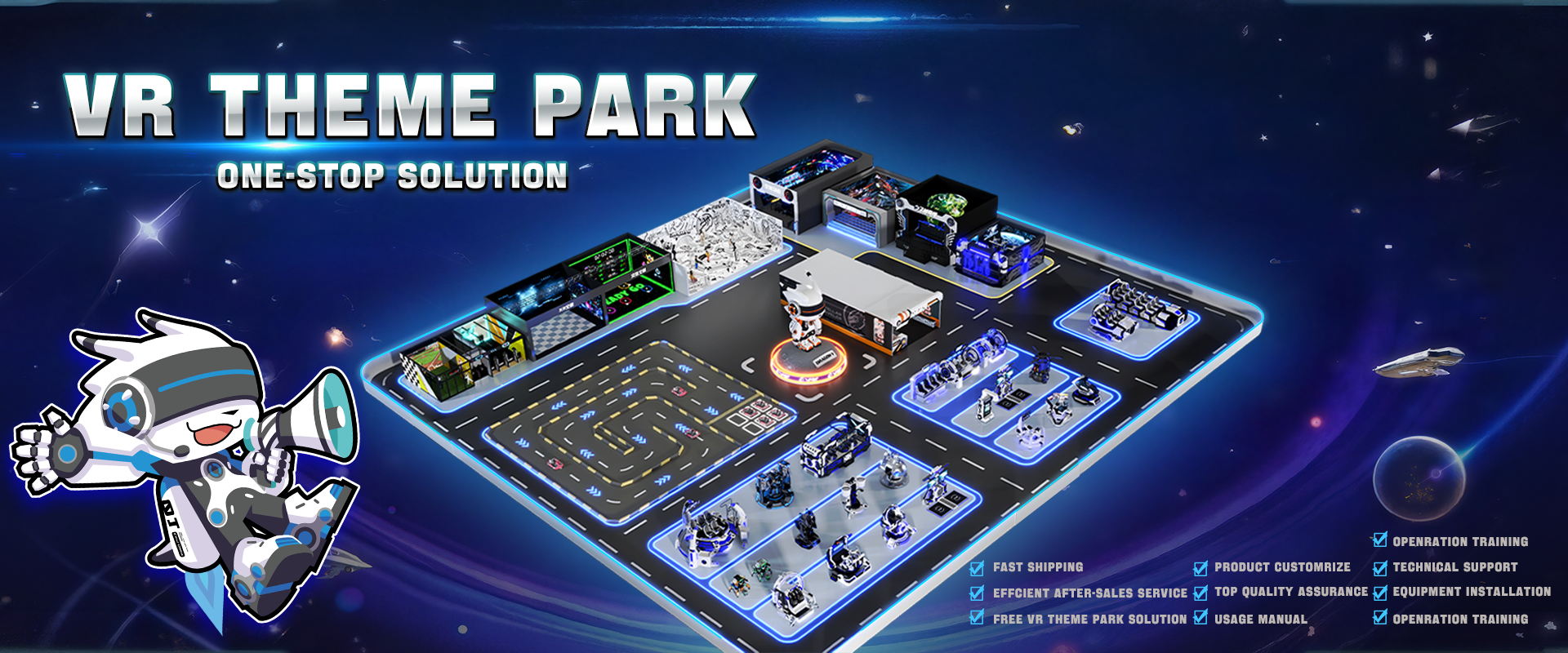
A VR theme park is a location-based entertainment venue where visitors experience immersive virtual reality through motion platforms, simulators, and multiplayer arenas. Entry-level setups start around $20,000–$40,000 for a small 30–60 m² space, while a full-scale park with 10+ attractions can run $150,000–$250,000+. Most operators reach break-even within 6–12 months when equipment mix and pricing are optimized.The entertainment business is getting into a new wave. Viral reality entertainment has ceased being a niche, but is now a mainstream attraction as audiences request increasingly immersive, interactive, and memorable experiences. By 2026, VR theme parks will cease to be test projects – they are verified, mass-replicable business models with high demand on an international level.
Shopping malls, film theatres, family entertainment venues, and tourist spots are quickly introducing VR amusement park areas to appeal to younger audiences and encourage them to spend more time. As the hardware has gotten better, the content of the games has become more advanced, and the commercial systems have become more affordable, a virtual reality theme park has become one of the most viable location-based entertainment investments.
This advice will provide insights on how to get into the market in the best possible manner, select the appropriate business model, invest in the most suitable equipment, and develop a successful VR entertainment center that will expand vibrantly beyond the year 2026.
Understanding the VR Theme Park Model
A VR theme park is a physical entertainment attraction in which visitors play immersive virtual worlds on motion platforms, simulators, multiplayer arenas, and interactive VR games. These parks, in contrast to conventional arcades, are a blend of physical movement, sensation, and digital storytelling to produce something that cannot be done at home.
There are several formats to consider:
- small-sized VR Arcades within the malls or cinemas.
- Mid-size VR Entertainment Centre consisting of several attractions.
- Full-sized VR Parks, themed areas, and multiplayer arenas.
The significant strength of this model is modularity. It is possible to begin with some machines and add more when the revenue increases. A VR park is very flexible to the trends in the market because it is possible to add new attractions without redesigning the entire venue.
VR parks take up less area, require fewer employees and less maintenance, and have higher replay value and faster refresh rates than more traditional amusement rides.

Business Strategy: How to Launch and Grow in 2026?
The VR entertainment business needs an effective business plan to start. How you make your decisions in terms of place, form, and cost will determine your success.
Selection of the appropriate venue format.
- VR center in malls: Strong traffic and impulse buying.
- Add-on enterprises: cinema or entertainment complex. Strong cross-traffic.
- Separate VR park: Branding control in full, and greater value in the long-term.
Revenue models that work best
- Pay-per-play: Charge per ride or experience, ideal for high-traffic areas
- Time packages: 30-minute or 1-hour passes for multiple games
- Group bookings: Birthdays, school groups, and corporate team building
- Membership programs: Encourage repeat visits and stable income
Hybrid models are usually the most successful in terms of the results achieved through the integration of daily visitors with regular events and group packages.
A properly run VR amusement park can become profitable in a short period of time because of:
- High machine utilization
- Low staffing requirements
- Short play cycles and high turnover
Operators can easily realize a stable cash flow in the initial year with optimal pricing and attraction mix.
Essential Checklist: Is Your VR Business Plan Ready?
Key Elements to Validate Before Launch:
- Market Viability: Have you identified your top 3 competitor locations and their pricing models?
- Space Efficiency: Does your layout allow for high-traffic flow? (Use our CAD planning guide).
- Equipment ROI: Have you prioritized machines with short play cycles (e.g., 9D Egg Chairs) to maximize revenue per square meter?
- Operational Budget: Have you factored in monthly electricity, staff training, and software/content update costs?
- Customer Acquisition: Do you have a documented 3-month social media content calendar?
- Compliance: Have you confirmed local safety standards (CE/TUV/UL) for all imported amusement hardware?
Understanding Profitability: The VR Business ROI Model
How to Calculate Your Return on Investment (ROI): Success in VR entertainment isn’t just about revenue; it’s about the ratio of Throughput vs. Investment.
- The Throughput Factor: High ROI machines (like the 9D Egg Chair) are effective because they have a high turnover rate (3–5 minutes per session).
- Pricing Strategy: Use a tiered model.
- Low-traffic hours: Use “Happy Hour” discounts to keep machines active.
- Peak hours: Maximize individual ride fees.
- Operational Efficiency: The goal is to reach a “Break-even Point” within 6–12 months. This is achieved by combining high-margin equipment with low labor costs. A well-optimized 100m² center should target a 30-40% operational profit margin after accounting for overheads.
Investment and Setup: What You Need to Get Started
The start of a VR park in 2026 is as easy as it has ever been, yet it has to be carefully planned.
Typical investment ranges
- Entry-level setup (30–60 m²):
2–3 machines, basic decor, simple ticketing
Approximate investment: $20,000–$40,000 - Mid-size center (100–200 m²):
4–6 machines, waiting area, themed design
Approximate investment: $60,000–$120,000 - Large VR theme park (600 m² and above):
10+ machines, multiplayer arenas, multiple zones
Approximate investment: $150,000–$250,000+
VR Theme Park Formats: Quick Comparison
| Entry-Level | Mid-Size | Large Park | |
|---|---|---|---|
| Space | 30–60 m² | 100–200 m² | 600 m²+ |
| Machines | 2–3 | 4–6 | 10+ |
| Investment | $20,000–$40,000 | $60,000–$120,000 | $150,000–$250,000+ |
| Best for | Malls, cinemas | Entertainment centers | Standalone theme parks |
| Break-even | Fastest (low overhead) | 6–12 months typical | Longer, higher ceiling |
Key setup considerations
- Location selection and lease terms
- Electrical capacity and network infrastructure
- Safety clearance for motion equipment
- Licensing and local compliance
Selecting a supplier with planning assistance, installation overviews, and after-sales support will greatly minimize the risk as well as go-live time.
Equipment Essentials: Building a High-Impact VR Experience
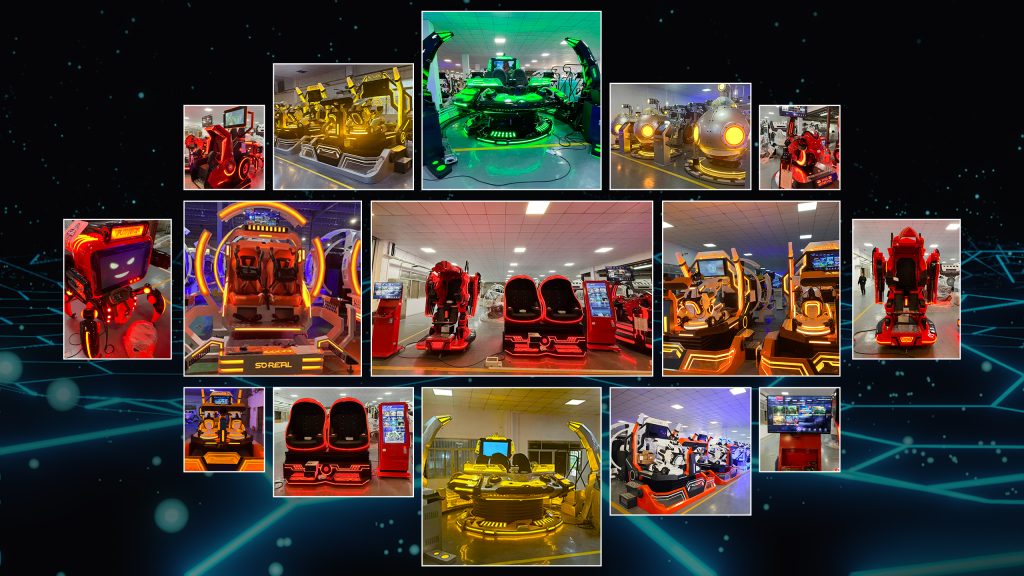
The equipment is the core of a successful VR Entertainment Center. Customer satisfaction rates, repeat business, and turnover per square meter are set by the right attraction mix.
Core categories for a profitable VR park
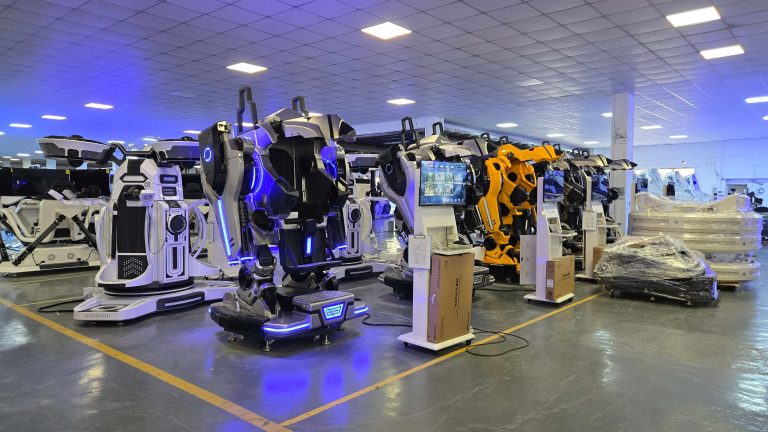
VR Egg Chairs and Cinema Systems 9D VR
These closed motion seats have 360-degree rotation, vibration, sound, and environmental impact. They are small, simple to use, and some of the highest ROI machines in the industry.
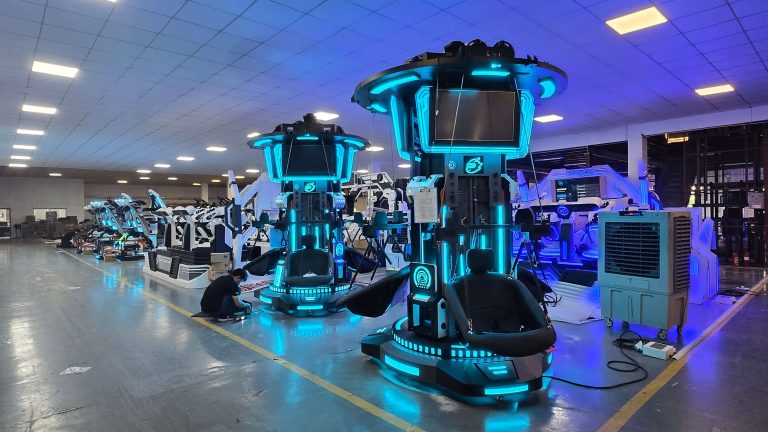
VR Paraglider Simulator
The most striking feature in any VR park. This simulator comes complete with lift, tilt, wind, rain, vibration, and surround sound, giving the experience of a complete freefall and attracting large crowds and social media coverage on a regular basis.
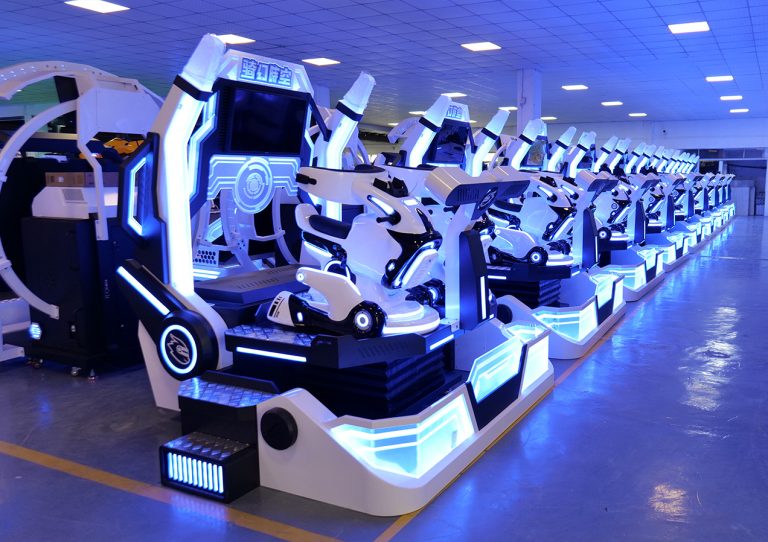
VR Driving Simulators and Flight Simulators
Driving simulators and flying simulators are still leading. They attract competitive individuals and have a good replayable value.
Multiplayer Shooting Arenas
Interactive weapons, score keeping, and other sensory-feedback group experiences enhance dwell time and appeal to families and groups.
VR Platforms Standing
These stations are capable of offering a broad set of games and experiences, and facilitating easy content updates and targeting audiences in a flexible way.
This will take into consideration a balanced mix of equipment that will make your VR simulator zone attractive to the thrill-seekers, casual visitors, children, and competitive players.
Space Planning and Design Best Practices
The revenue directly depends on the layout design. The intelligent design maximizes the use of machines, improves visitor navigation, and enhances the general experience.
Small spaces (30–60 m²)
- Target the machines with high visibility.
- Locate attractions close to the doors to attract them.
- Keep the layout open and simple.
Medium spaces (100–200 m²)
- Design definite attractive areas.
- Include sitting and waiting rooms.
- Create an atmosphere using themed lighting and signage.
Large spaces (600 m² and above)
- Divide into thematic areas (racing, cinema, shooting, adventure)
- Include reception, locker rooms, and spectators.
- Showcase gameplay live with the use of LED screens.
Professional CAD planning allows operators to:
- Maximize space utilization
- Maintain safety distances
- Improve visual impact
- Grow the revenue per square meter.
The best VR park is better in terms of its financial performance, but it also has a lasting impact that contributes to word-of-mouth marketing.
Marketing Your VR Park in 2026: What Works Now?
The second step to taking your VR theme park is to bring in foot traffic and establish a loyal customer base once your theme park is established. In 2026, local ads will not be the focus of marketing, but rather creating experiences to be shared, and utilizing digital discovery.
Proven marketing strategies for VR amusement parks:
Social Media Showcases
Produce short-form video segments of players on your VR rides – better still, on your more active simulators such as the VR Paraglider Simulator. TikTok, Instagram Reels, or YouTube Shorts are the best platforms to go viral.
Influencer Collaborations
Ask local influencers to experience what you have to offer and post it to their followers. It creates trust and introduces actual humans to your marketing process.
Event-Based Promotions
Discount on offer during birthday celebrations, school outings, or team building days. These bulk purchases have the ability to increase exposure and turnover.
Local Advertising and Partnerships Local Advertising and Partnerships
Publicize your park to the surrounding businesses, conduct special events at the mall, or referral programs with the local cafes, cinemas, and stores.
Community Engagement
VR nights, host tournaments, or events associated with a holiday or a local festival. The less tangible and engaging your brand is, the weaker your relationship with your customers.
In 2026, it is all about creating a visually thrilling brand, whether online or offline, which people desire to discuss, share, and revisit.

Why Choose VART VR for Your Theme Park Build?
Having a history of over 10 years and customers in more than 100 countries, VART VR is one of the most reliable companies in commercial VR entertainment. We provide full services to assist you in getting up and running quickly, running efficiently, and growing profitably.
The following is why VART VR is a partner of choice:
- End-to-End Support: Consultation and equipment choice, layout planning, and post-sales service.
- Built to Fit any Space: We have designs for spaces of 30m2 to 600m2-sized parks with free CAD layout drawings.
- Machines certified by industries: All products are European and American certified in terms of safety and quality (CE, RoHS, SGS, TUV).
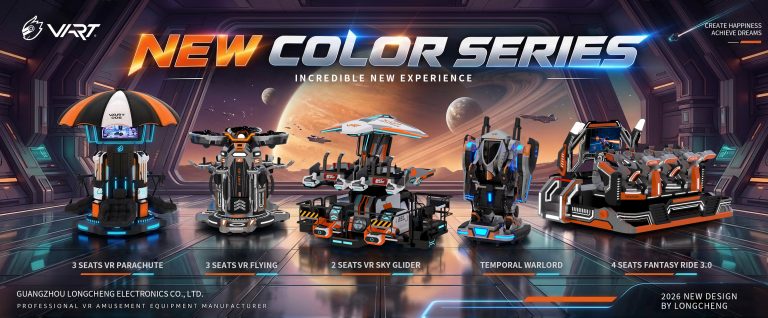
- Great Product Line: 9D VR Cinemas, VR Racing Cars, VR Paraglider Simulators, Multiplayer Arenas, and the newest interactive VR games.
- OEM & Branding Services: Make your machines look like your business.
We are in the business of making your VR business simple to jump-start and very profitable. You are either developing a new location or looking to grow your existing location. VART VR has the solutions and knowledge to make it happen.
Success Blueprint: Tips from Real Operators
Great equipment is more than just enough to run a profitable VR amusement park. The following are time-tested business ideas of successful VR owners:
Place More Emphasis on Experience than on Quantity.
Provide fewer but good-quality machines as opposed to congesting your premises. The number of machines is not as important as the customer experience.
Train Your Staff Well
Not only are your staff expected to be familiar with the tech, but they are also expected to provide excellent customer service. Courteous and supportive operators enhance satisfaction as well as rebookings.
Clean and Well-Maintained Parks
First impressions count. Customers are attracted by clean equipment, good lighting, and neat designs in the facility.
Switch Content of Rotating Games
New features and update your collection of games every few months to keep things going.
Use Data to Guide Decisions
Monitor the machines that are working out, at what time of day are your best hours, and what offers are effective. Make knowledgeable adjustments to pricing, layout, and marketing.
By focusing on operations, customer care, and feedback regularly, your VR park will become a success story in the long run.
FAQS
What size area would be required to open a VR park?
It is possible to begin with 30 square meters. VART VR provides tailor-made packages to areas of all sizes.
Which are the most profitable machines?
Best sellers are 9D VR Egg Chairs, Racing Simulators, Multiplayer Arenas, and our only VR Paraglider Simulator.
Is it necessary that I be technical to operate the park?
No. VART VR machines are easy to use, and they are fully trained and supported by remote support.
What is the cost of the start-up?
A minimal installation begins at approximately 20000 dollars. The larger parks are more costly to invest in; however, they carry proportional returns.
Can I expand over time?
Yes. The modular design of VART VR also allows you to expand into additional machines and zones once your business expands.
What is a good ROI timeline for a VR theme park?
Most well-run VR parks reach break-even within 6–12 months, driven by high machine turnover and short play cycles. A well-optimized 100m² center should target a 30–40% operational profit margin after overheads.
How do I choose the right location for a VR theme park?
Look for high foot-traffic areas like shopping malls or entertainment complexes, confirm electrical capacity and safety clearance for motion equipment, and check local licensing requirements before signing a lease.
Conclusion
Virtual reality is no longer a trend in 2026, but a booming business. Scalable models, immersive hardware, and an increasing number of visitors of all ages and generations can make a properly implemented VR theme park a solid payoff and a success in the long term.
For investors planning in Europe, our guide to starting a profitable VR arcade in the UK explains compliance, location, and cost planning in more detail.
With a reliable partner such as VART VR, you have the benefit of having professional planning, the best equipment in the world, and continuous assistance that will see you introducing your business with ease and your activities proceeding to profitability. In case you are willing to make the future of entertainment a reality today, let you make a move.
Contact VART VR and start creating your own virtual reality entertainment center – and we can assist you in making your space the next place where people have immersive fun.