VR Arcade Booking Packages & Pricing Strategy: From Social Traffic to On-Site Revenue

Key Takeaways
- Profitable VR arcade booking packages should be designed around customer intent, group size, experience intensity, and time-slot demand—not treated as permanent discount coupons.
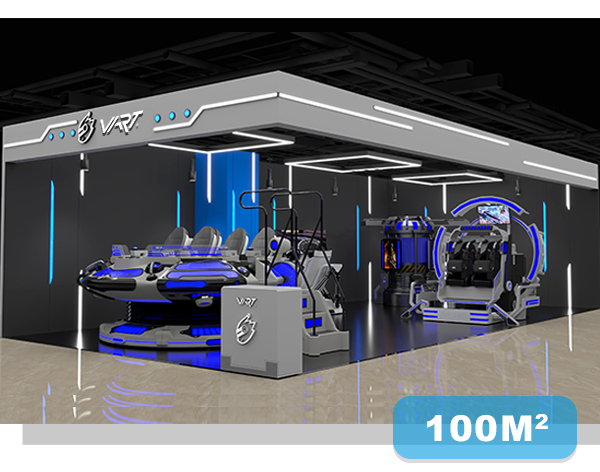
- An efficient 80 sqm (approximately 860 sq. ft.) venue should assign every VR machine a specific commercial role: attract walk-in traffic, serve groups, generate repeat visits, or fill unused capacity.
- TikTok and Instagram Reels work best when they show authentic player reactions and clearly connect viewers to a bookable experience.
- A strong VR theme park pricing strategy combines off-peak discovery offers, social packages, family/group products, and advance-booked party or corporate events.
- Online marketing is only the beginning. Confirmation messages, QR check-in, accurate session timing, waiting-area upsells, scores, photos, and repeat offers determine how much social traffic becomes real venue revenue.
- Operators should measure bookings, redemptions, no-shows, queue times, equipment uptime, multi-player package share, repeat visits, and group-event leads every week.
Executive Summary: Why VR Booking Packages Should Not Be Cheap Coupons
A VR booking package should answer one question: What experience is this customer trying to buy?
A first-time visitor may want a low-risk introduction. A couple may want an adrenaline challenge. Four friends want something they can experience together. A parent may want a family activity that is easy to book. A company wants an organized team event, not a collection of individual VR sessions.
That is why an effective VR arcade booking package combines the attraction, player count, time slot, experience intensity, and booking conditions into one understandable product.
The underlying operating philosophy is simple:
Do not sell machine minutes. Sell a complete experience that begins when customers discover the venue and continues through booking, arrival, gameplay, sharing, and returning.
The venue operating material supplied for this guide makes the same distinction: customers are buying who they play with, what story they enter, what happens during the experience, and what they can take away or share afterward. It frames the journey as discovery, understanding, reservation, experience, sharing, and return.
For an 80 sqm VR arcade, this matters even more. There is not enough space to let machines, queues, ticket products, and marketing operate independently. Everything must support the same commercial system.
Introduction: From Random Foot Traffic to a Predictable Booking Engine
Many VR arcade operators face three recurring problems.
First, weekdays can feel empty while weekends become unpredictable.
Second, online videos may generate thousands of views without producing measurable bookings.
Third, busy periods create operational friction: customers arrive simultaneously, staff search for reservations, queues block equipment, and sessions start late.
The common response is often to discount tickets.
That may create short-term traffic, but it does not solve the underlying problem.
The better approach is to combine:
- A deliberate VR arcade equipment layout
- Booking products designed around customer missions
- Social content linked directly to those products
- Timed reservations
- Fast on-site redemption
- Post-session retention
- Weekly operational measurement
In other words, learning how to run a VR arcade is less about finding one perfect ticket price and more about building a predictable customer flow from the first video view to the second visit.
This guide uses an 80 sqm commercial venue as the working scenario. Exact machine quantities and clearances must still be confirmed against final equipment drawings, entrance position, columns, electrical supply, ventilation, fire egress, and local safety requirements.
Step 1: Hardware Portfolio Strategy for an 80 sqm VR Arcade
The first mistake to avoid is buying six machines that all perform the same commercial job.
Every attraction should have a role.
Some machines exist to stop passersby.
Some handle fast throughput.
Some create social group spending.
Some generate repeat visits.
Others fill small gaps in the floor plan or absorb customers while premium attractions are occupied.
The source material used for this guide similarly recommends selecting equipment according to venue size, audience, and operating goals rather than simply choosing the lowest-cost hardware. It also emphasizes the need for clear equipment specifications, space drawings, maintenance support, installation guidance, and staff training.
Hardware Allocation Matrix
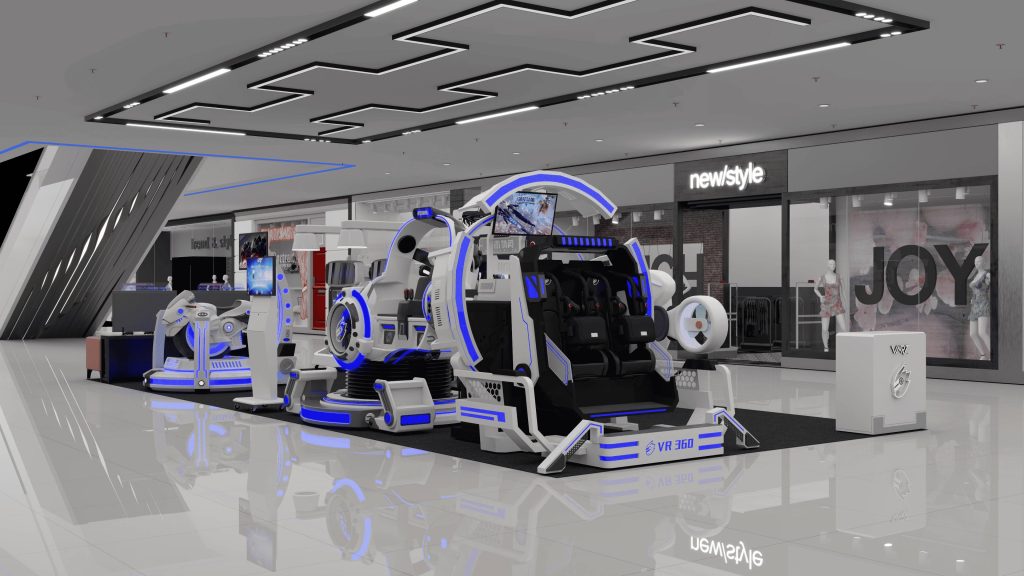
For an 80 sqm concept, the following mix can be treated as a planning framework, not a promise that every listed machine will fit every 80 sqm room.
| Commercial Role | Example Equipment | Primary Customer | Operational Purpose |
|---|---|---|---|
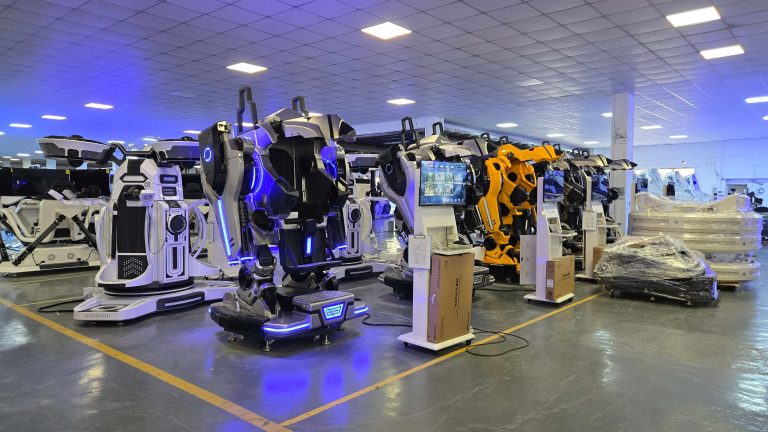
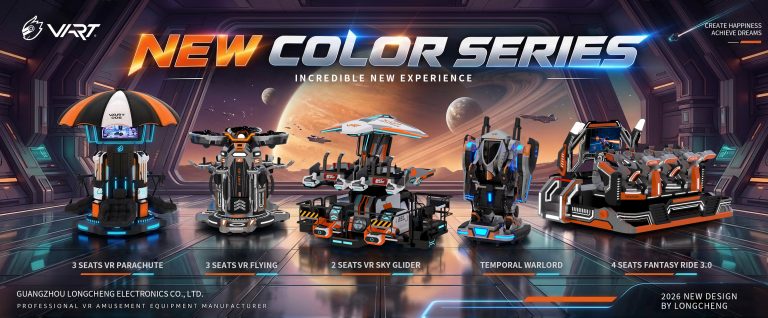
| High-Thrill Impulse Attraction | Dual-seat 360° motion simulator, such as a 360 Extreme Flight-type attraction | Couples, friends, thrill seekers | Stop passersby and create premium walk-in interest |
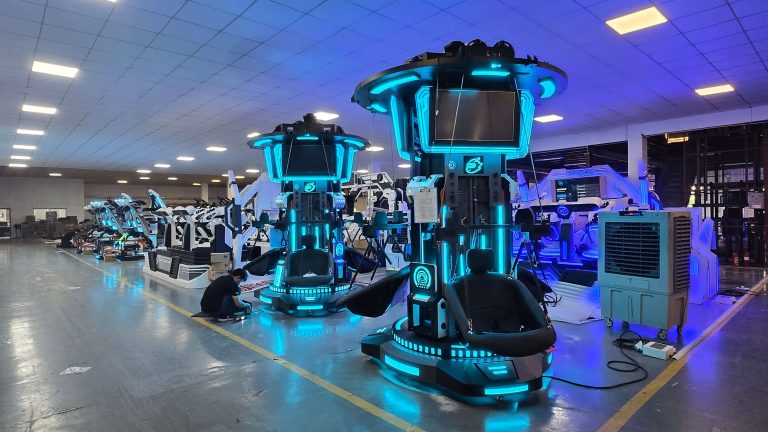
| Group & Family Flight Attraction | Three-seat flight platform, such as Time Travel Flying-type equipment | Families and friend groups | Generate multiple tickets per cycle and shared experiences |
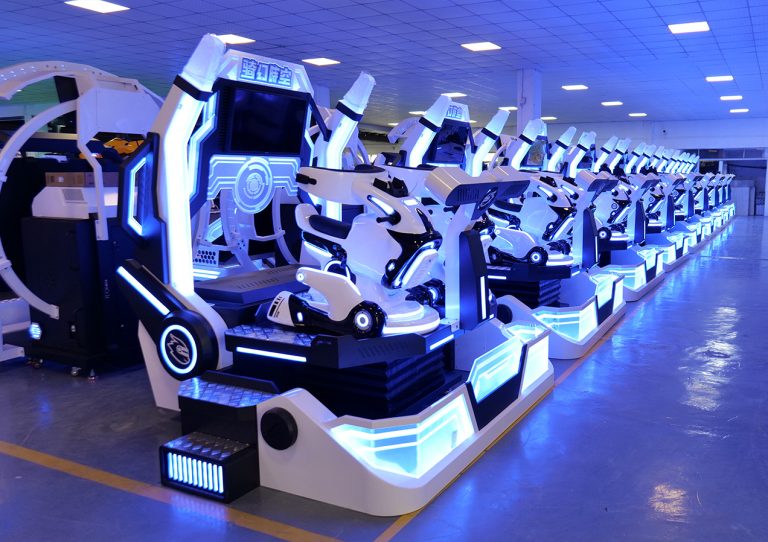
| High-Speed Competition Zone | Triple-screen racing simulators | Teens, adults, competitive groups | Encourage races, rematches, and repeat play |
| Co-op Multiplayer Zone | Two-player shooting/tactical booth, such as Modern Warrior-type equipment | Friends, couples | Create cooperation and repeat missions |
| Family & Group Ride | Four-seat open motion platform, such as Time Knight-type equipment | Families and small groups | Serve several guests in one cycle |
| Single-Player Fill-In Attraction | Futuristic single-player mecha cabin, such as Time Warrior-type equipment | Solo customers and overflow traffic | Use small floor gaps and reduce lost sales during queues |
Give the Front of the Venue to the Machines That Sell Themselves
The most visually dramatic attraction should normally sit where passing customers can see movement and genuine reactions.
A motion simulator with riders tilting, rotating, laughing, or holding onto the machine does more than earn ticket revenue.
It becomes a live advertisement.
VART VR’s commercial flight materials describe this effect clearly: multi-seat motion equipment with visible movement can attract walk-up customers, while shared riding also fits the common pattern of visitors arriving in groups.
Do not hide your strongest attraction behind:
- The cashier
- A solid partition
- A waiting lounge
- Decorative walls
- Less visually expressive machines
The front area should answer “What happens here?” before a staff member needs to explain it.
Build Around Complementary Roles, Not Redundant Hardware
If two machines have nearly identical customer appeal, session duration, and game style, they compete with each other for the same demand.
A stronger portfolio creates a progression:
See the extreme ride → enter with a friend → compete in racing → add another multiplayer session.
That gives the operator more ways to build packages without relying only on price reductions.
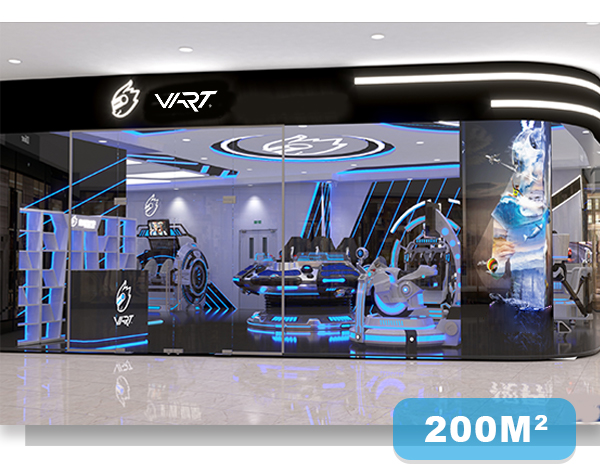
A medium VR venue in the 80–200 sqm range can support a multi-machine setup, but the final design must reserve space for queues, safe movement, equipment access, and branded customer areas rather than treating every square meter as machine footprint.
Step 2: Design VR Arcade Booking Packages by “Customer Mission”
Once the hardware has a clear role, ticketing becomes easier.
Do not begin by asking:
“Should the ticket be $12 or $15?”
Begin with:
“Who is coming, who are they coming with, and what do they want to accomplish?”
The venue strategy provided for this project follows the same principle: single tickets serve spontaneous customers, friend/family products serve social visits, memberships support repeat customers, and group packages serve companies, schools, communities, or parties.
Rule #1: Categorize by Motivation, Not Only Price
A customer may visit because they want:
- To try VR for the first time
- A date activity
- A challenge with a friend
- Something the whole family can do
- A birthday activity
- A corporate outing
Each motivation deserves a different product.

Rule #2: Every Booking Page Must Answer Six Questions
Before a customer presses “Book,” the product page should make six points clear:
- What is the experience?
- How many people can participate?
- How long is the complete session?
- How intense is the experience?
- Which time slots can be booked?
- What are the arrival, rescheduling, and late-arrival rules?
If customers still need to message the venue to learn basic information, the booking system is creating unnecessary friction.
Package 1: The First-Timer Discovery Pass
This package is designed for a customer who is curious but uncertain.
It should have:
- Simple content
- Easy instructions
- Lower physical intensity
- A clear session length
- Off-peak availability
The commercial purpose is not to make your cheapest ticket available all day.
It is to reduce first-purchase hesitation during periods when machines would otherwise sit unused.
A practical structure might be:
VR Discovery Pass — Weekdays Before 5 PM
Includes one selected beginner-friendly attraction.
Limit it by:
- First visit
- Selected time periods
- Specific machines
- Daily quantity
That prevents the introductory ticket from replacing your normal price.
Package 2: Couples & Best Friends “Adrenaline Challenge”
This package sells a shared reaction.
Good hardware candidates are paired 360° motion systems, racing simulators, or two-player tactical attractions.
Instead of: 2 tickets × standard rate
build a named experience: Adrenaline Challenge for Two
Possible benefits:
- Two-player premium attraction
- One competitive second challenge
- Digital photo
- Scoreboard entry
The package feels more valuable without requiring a deep discount.
Package 3: Three-Player / Four-Player Squad Pass
Multi-seat machines should be monetized as group products.
Commercial flight equipment demonstrates why this matters: three seats can generate three tickets in the same cycle while matching the natural way friends and families visit entertainment venues.
A group package might include:
Squad Flight Pass
- One three- or four-player attraction
- Mission or flight selection
- Team photo
- Optional racing or shooting add-on
This changes the conversation from “How much per person?” to “What are we doing together?”
Package 4: Birthday Party & Corporate Team-Building
Group bookings should not be priced like ordinary walk-ins multiplied by headcount.
These customers are buying organization.
A stronger package can include:
- Advance reservation
- Dedicated time block
- Team allocation
- Multiple rotations
- Host assistance
- Scoreboard
- Group photo
- Optional party/lounge time
The source operating strategy describes group products in the same way: sell people + mission + organization + result/photo + service, rather than selling minutes alone.
This is particularly useful for weekday capacity that is difficult to fill with spontaneous mall traffic.
Step 3: Turn TikTok and Instagram Reels Into Bookings
A polished promotional video full of machine close-ups may look professional.
But customers usually respond more strongly to people.
They want to see:
- A real scream
- A friend laughing
- Someone losing balance safely as a platform tilts
- Teammates shouting instructions
- A rider gripping the handles during a sudden movement
- A winning reaction
That is the foundation of practical VR arcade marketing.
The Three-Part Video Structure
The Hook: First 3 Seconds
Do not open with your logo.
Open with the most understandable emotional moment:
- Sudden tilt
- Real scream
- Group laugh
- Race finish
- Unexpected reaction
The customer should instantly understand that something physical and exciting is happening.
The Middle: Show the Group Dynamic
Now explain enough context to make the experience bookable.
Show:
- How many people play
- What they are doing
- The machine moving
- Player reactions
- Gameplay or screen footage
- Cooperation or competition
The supplied operating playbook recommends exactly this style of short-form content: begin with a real reaction or mission crisis, clarify player count and mission, alternate human reactions with gameplay and physical interaction, then end with results and booking information.
The CTA: Remove Booking Ambiguity
The last seconds should tell viewers:
- Venue location
- Group capacity
- Package name
- Booking method
For example: “2 Players. One 360° Challenge. Book the Adrenaline Pass online.”
That is much stronger than: “Come visit us!”
Track the Funnel Beyond Views
A video with 200,000 views and six bookings may be less valuable than a video with 10,000 views and 80 bookings.
Track:
Views → Profile/Landing Page Clicks → Package Views → Checkout Starts → Orders → Redemptions
Creator campaigns should also use:
- Unique booking codes
- Separate landing pages
- Campaign links
- Redemption tracking
The source document specifically recommends evaluating creator activity through reservations, redemptions, reviews, saved content, and subsequent sharing rather than views alone.
Step 4: Streamline On-Site Check-In & Redemption
Generating an online booking is not the end of conversion.
If the customer arrives and spends 20 minutes trying to find the venue, waits in an unclear queue, or sees the session start late, marketing success becomes an operations problem.
Post-Booking: Set Expectations Automatically
Immediately after checkout, send a confirmation email or SMS containing:
- Booking date and time
- Venue location
- Parking or mall directions
- Recommended arrival time
- Group size
- Clothing/safety notes if relevant
- Late-arrival policy
- Rescheduling rules
- QR booking code
The customer should know exactly what to do before arriving.
Arrival: Use Rapid QR Redemption
At peak periods, the front desk should not search manually for names while a queue grows.
A simple flow is:
Customer arrives → QR scanned → reservation verified → group routed to preparation/waiting area.
The objective is to separate transaction processing from experience preparation.
If possible, one staff member handles reception while another manages equipment or customer fitting during high-volume periods.
Waiting Area: Convert Delay Into Anticipation
Waiting does not have to be dead space.
Use screens or signage to display:
- Live leaderboards
- Real gameplay clips
- Next available attraction
- Package upgrades
- Second-session offers
- Upcoming tournaments
The operating material describes this as turning waiting into anticipation: clearly communicate expected waiting time while showing highlights, upcoming themes, team rankings, and product information.
A customer waiting for the flight simulator might see:
“Add a 2-Player Racing Challenge After Your Flight.”
Now the queue itself supports cross-selling.
Post-Experience: Capture the Emotional Peak
The strongest selling moment for the next visit may occur immediately after the first one.
Players are still excited.
Show:
- Score
- Race position
- Team result
- Photo
- Themed frame
- Next challenge
Then offer a targeted return benefit.
Not: “20% off everything.”
Instead: “Completed Flight Mission? Return within 30 days and unlock the Squad Challenge.”
The offer gives the customer a reason to return, not merely a lower price.
Step 5: Essential Operational KPIs
If you want to know how to run a VR arcade professionally, measure the system every week.
Revenue alone tells you the final result.
Operational KPIs tell you why the result happened.
Transaction Metrics
Online Booking Rate
How many customers book before arrival?
A growing advance-booking share improves staffing and demand forecasting.
Redemption Rate
How many purchased bookings actually become completed visits?
Break this down by:
- Package
- Channel
- Daypart
- Creator campaign
No-Show / Cancellation Rate
High no-show rates may indicate:
- Weak reminders
- Poor booking rules
- Excessively long advance booking windows
- Confusing directions
On-Site Operational Efficiency
Session Punctuality
Measure how often sessions begin at the promised time.
Average Queue Wait
A machine with excellent theoretical throughput can still underperform if operational delays accumulate between groups.
Hardware Uptime
Track the percentage of opening hours each attraction is actually available for sale.
Downtime directly reduces capacity.
The source material identifies waiting, punctual starts, and equipment availability as major factors influencing customer evaluation.
Growth & Retention Indicators
Multi-Player Package Ratio
What percentage of sales comes from pairs, squads, families, or groups?
This helps reveal whether your venue is successfully moving beyond one-person transactions.
30-Day Customer Return Rate
How many customers return within 30 days?
Track this by first-purchase package.
Party / Corporate Lead Count
Record inquiries separately from completed bookings.
A high number of inquiries but low closing rate may reveal that the package structure or sales process needs improvement.
Weekly Management Dashboard
| KPI | What It Reveals |
| Online Booking Rate | Predictability of demand |
| Redemption Rate | Whether online sales turn into real visits |
| No-Show / Cancellation Ratio | Effectiveness of reminders and policies |
| Session On-Time Rate | Operational discipline |
| Average Wait Time | Queue efficiency |
| Hardware Uptime | Available earning capacity |
| Multi-Player Package Share | Group-sales performance |
| 30-Day Return & Party Leads | Future revenue potential |
The source venue strategy recommends a closely related weekly dashboard covering redemption, reservation attendance, wait/on-time performance, new-customer conversion, content-to-redemption results, reviews, sharing, and repeat/group opportunities.
Putting the Full 80 sqm Revenue System Together
An optimized 80 sqm arcade should not feel like six unrelated machines placed in one room.
It should operate like one connected commercial system.
A possible customer journey looks like this:
TikTok reaction video – Adrenaline Challenge landing page – Two-player booking -Automated confirmation – QR check-in – Visible high-thrill attraction – Racing add-on during waiting – Score/photo after play – 30-day Squad Flight return offer
Each stage prepares the next transaction.
That is what separates a real VR theme park pricing strategy from simply displaying a price board.
Frequently Asked Questions
Should VR arcades rely on heavy discount pricing?
No. Frequent blanket discounts can weaken the perceived value of the attraction and train customers to wait for lower prices. Use targeted offers for specific commercial purposes, such as first-time weekday visits, unused off-peak capacity, or clearly defined group products. Peak periods should normally focus on reservation certainty and experience quality rather than aggressive discounts.
How long should a commercial VR attraction session last?
There is no universal ideal session length. It depends on the machine, content, physical intensity, setup time, and operating model. Shorter experiences can support higher turnover, while longer multiplayer experiences may justify higher ticket value. Operators should measure the complete cycle—including loading, briefing, cleaning, play, and exit—not only the advertised gameplay duration.
Can an 80 sqm (about 860 sq. ft.) space fit a full multi-machine VR layout?
Yes, an 80 sqm venue can support a multi-machine commercial layout, but the exact number depends on equipment dimensions and required safety clearances. The layout must also reserve space for the cashier, queue, customer circulation, machine movement, maintenance access, electrical systems, and ventilation. Medium VR arcades commonly fall within roughly the 80–200 sqm range, but final planning should always use actual machine drawings.
What should be included in a VR arcade booking package?
A good booking package should clearly define the attraction, number of players, complete session duration, intensity, usable time slots, reservation rules, and any included benefits such as photos, rankings, or additional challenges.
What is the best VR theme park pricing strategy for weekends?
Use timed reservations to protect high-demand slots. Weekend value can come from guaranteed seating, organized service, group access, or themed experiences rather than simply increasing the headline ticket price. Avoid stacking low-price promotions during peak demand because overselling and long queues can damage reviews.
How can TikTok and Instagram actually generate VR arcade bookings?
Use authentic reaction-led videos, show the exact experience and group size, then link directly to a relevant booking package. Track clicks, package-page views, purchases, and redemptions rather than judging performance only by video views.
Should every VR machine have its own ticket?
Not necessarily. Individual machine tickets can be useful, but bundles often communicate more customer value. A flight-and-racing challenge, couple’s package, squad pass, or family bundle can be easier to market than a long menu of machine names.
Why is VR arcade equipment layout important for booking strategy?
The layout determines which attractions customers notice first, how queues form, how quickly groups can enter and exit, and which machines can be sold together. Package design should therefore reflect the actual physical customer journey through the venue.
Conclusion: Turn Traffic Into a Repeatable Revenue System
A successful VR arcade does not depend on one viral video, one cheap promotion, or one spectacular machine.
The strongest operating model connects:
- Hardware roles
- Customer-specific packages
- Social marketing
- Online booking
- Fast redemption
- Queue management
- Add-on sales
- Post-experience retention
For an 80 sqm venue, every attraction and every square meter should have a commercial purpose.
Put highly visible motion equipment where it can generate walk-in curiosity.
Use multi-seat attractions for families and groups.
Package racing and shooting around competition.
Use single-player machines to absorb overflow demand.
Then connect those attractions to clear VR arcade booking packages rather than forcing every visitor into the same ticket.
Most importantly, treat the entire customer journey as the product.
A TikTok viewer should know what to book.
A booked customer should know when and where to arrive.
A waiting customer should see the next experience worth buying.
And someone who finishes one mission should immediately understand why they should return.
VART VR provides commercial VR equipment and venue planning support for arcades, FECs, shopping malls, and immersive entertainment projects. Operators preparing a new project can use actual site dimensions, entrance position, customer flow, and target audience to develop a more practical equipment mix and booking strategy.
Planning a commercial VR arcade? Contact VART VR to request a customized 2D/3D floor plan, equipment configuration, and project quotation based on your venue.