Virtual Reality Flying Cinema Explained: The Naked-Eye VR Motion Theater

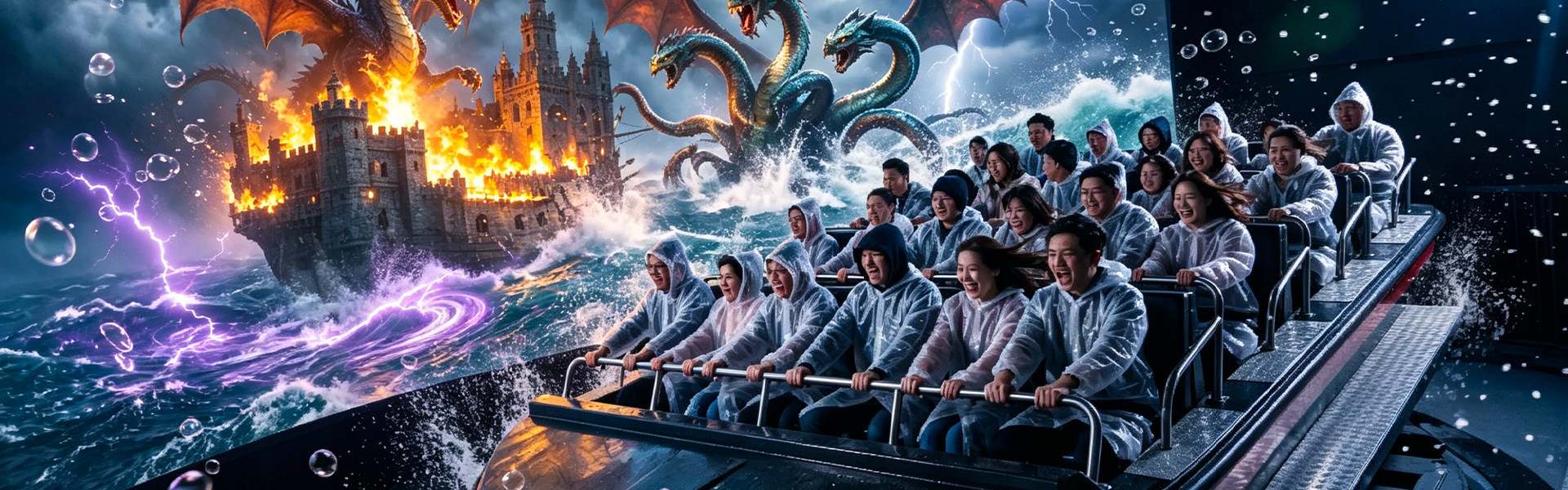
When you read the term VR flying cinema or flying theater when reading about the attractions you are developing in your venue, it is worthwhile to define what the category is before you begin to compare manufacturers.
A Virtual Reality Flying Cinema is a motion-simulator theme park attraction that pairs a huge curved or domed screen with a synchronized motion platform to simulate flight, travel by sea, or travel in space, not to be confused with headset-based VR arcade games, where each customer wears a single headset and usually sits or stands alone.
The difference is operationally significant. A flying cinema is a shared experience, a room-scale experience: a group of riders sits collectively in a motion cabin in front of a big screen, and everybody rides the same ride simultaneously. This is a shared VR Motion Cinema format that is the subject of this guide. This guide subdivides the functionality of the category, what to seek, and its location in the various types of venues.
How Virtual Reality Flying Cinemas Work
Screen System
Depending on the format, the screen may be flat, curved, or even full domed. The curved and dome designs extend deeper into the peripheral vision of the rider and provide a greater sense of immersion even without the use of 3D glasses in glasses-free designs.
Motion Cabin
A motion platform below the seating performs the pitching, rolling, yawing, and heaving movements in sync with the film tilting, rising, and banking in time with the on-screen action. More sophisticated models also introduce the effect of weightlessness, acceleration, and diving patterns to the motion profile.
Environmental FX
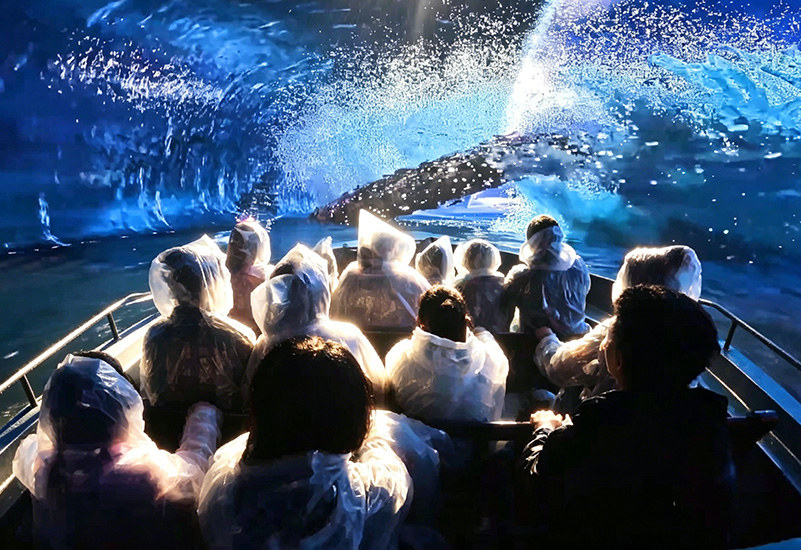
Additional features often included include wind, mist, and temperature change, and scent dispensers are available in certain more advanced units. These effects are synchronized with certain points in the movie: a wind gust in a flying scene, fog in a sea scene.
Audio
Directional sound via built-in surround speakers and a subwoofer finishes off the sensory package to support what is going on on the screen without the mechanical clatter of the motion cabin getting in the way.
Glasses-Free (Naked-Eye) vs. Headset-Based VR Cinema
This is the most critical operational difference that a venue owner should be aware of when purchasing.
Hygiene and sanitization: Systems that use headsets must be cleaned or sanitized after each rider uses shared eyewear. Naked-eye, glasses-free displays do not require that process, as the display is the source of the image.
Per seat Hardware and maintenance: Headsets are other hardware that can be lost, damaged, or require a replacement periodically. A glasses-free VR Cinema eliminates that continuing daily operating cost line.
Spectator appeal: Having a big exteriorly-facing screen will allow people who are passing by a mall or a park to view the ride in action, which creates some curiosity and queue traffic that cannot be created when the experience is a one-on-one experience with a headset.
Throughput speed: Glasses-free formats can facilitate groups of riders to board and alight faster, sustaining increased throughput, without the step of attaching and adjusting separate headsets to each rider.
Common Themes in the Category
The Virtual Reality Flying Cinema attractions are generally constructed around a particular narrative theme, and the theme influences the motion profile and the environmental effects employed:
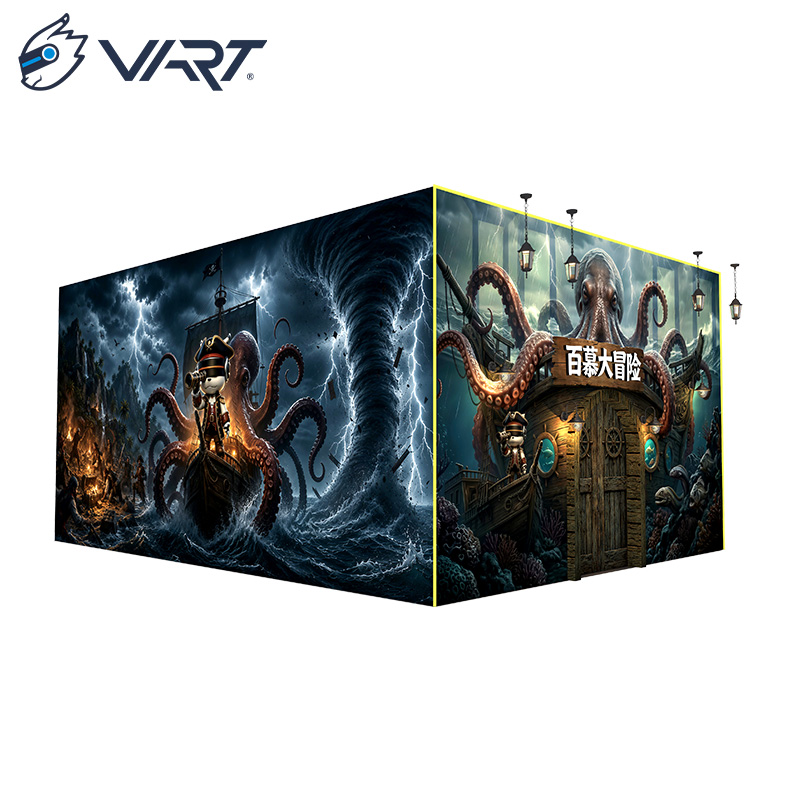
Ocean adventure and deep-sea adventure: Nautical rides with a storm theme, such as the Bermuda Adventure Cinema of VART (also referred to as Bermuda Storm Cinema or 9D Bermuda Storm Cinema), are operated by wind, water spray, and lightning effects in sync with a story of a storm upon the sea.
Space travel: Space exploration, like the Interstellar Traveler by VART, is a theme of rides that usually rely on acceleration and weightlessness effects combined with a backdrop of a starfield or a planet.
Dinosaur and prehistoric themes: These rides tend to be jolting with chase-type movement sequences combined with loud sound and abrupt direction change in order to create a feeling of encountering a situation.
Fantasy and dome-based experiences: Dome-screen screens, such as VART VR Dome Theater, enclose the visual field even more around the rider, and are appropriate to more abstract or fantastical content when the sense of full periphery immersion is more important than a linear plot.
Who Uses Virtual Reality Flying Cinema
Theme parks use virtual reality flying cinema as anchor attractions that draw repeat visits, particularly when paired with a rotating content library.
Shopping malls are making them a high-throughput, small-footprint attraction that raises the dwell time and foot traffic around the retail and dining.
They are used in science museums to provide educational content, space, and ocean exploration in a more interactive format than a traditional exhibit.
They are used in tourism and scenic attractions, where a themed virtual reality flying cinema is used to fit the theme of a location, like a coastal resort with an ocean-adventure theme.
Ocean or deep-sea-themed rides are used in aquariums to build on an existing marine-life story as an interactive attraction.
Questions to Ask Before Buying
These questions will help you evaluate the particular manufacturers before you do so:
- Seat capacity requirements: How many riders per session are your projected foot traffic worth: compact or a bigger flagship?
- Footprint: How many feet of floor area can you realistically commit to, and how does it vary with your desired number of seats?
- Content library: Does it have a large pre-loaded movie library and is this library frequently updated to allow repeat visitation?
- Motion cabin DOF: What number of degrees of freedom does the cabin support, and does that correspond to the level of immersion you are seeking, an entry-level 5D Simulator Cinema, an average Commercial 7D Simulator Cinema, or a high-end 9D One?
- Glasses-free or headset trade-offs: Does your venue focus on reduced continuing hygiene/maintenance cost and spectator appeal, or can a headset-based format work in your situation?
Why Choose VART for Your Virtual Reality Flying Cinema
Once you understand the category, the next decision is which manufacturer to build with. The brand VART of Guangzhou Longcheng Electronics has been producing commercial VR and simulator cinema systems since 2011, with 15 years of engineering experience, directly applicable to the questions above.
- In-house research and development and complete set production: VART develops and manufactures its own screens, motion cabins, and effects hardware instead of assembling third-party components, answering the DOF and build-quality questions posed above.
- Customizable seating and theming (12–100+ seats): Your customized seating and theming can fit any size footprint and seat-count requirement, instead of accepting a pre-determined size unit.
- Continuously updated HD content library (30+ titles): Direct response to the question of repeat visitation, with constant additions as opposed to a fixed content pool (one-time).
- Turnkey B2B support: Installation instructions, access to the catalog, transparent pricing, and post-sale support will decrease the operational risk of implementing new attraction hardware.
- Global deployment track record: Installations in theme parks, malls, scenic locations, and FECs around the world, including both Immersive Cinema formats such as ocean-themed Bermuda Adventure Cinema and dome-shaped VR Dome Theater, and space-themed Interstellar Traveler.
Frequently Asked Questions
What is the difference between a VR flying cinema and a VR arcade?
A flying cinema is a group, room-scale motion attraction, with a group of riders facing a big screen, whereas a VR arcade is an individual headset-based station where riders play one at a time.
Do flying cinemas use VR headsets?
It depends on the format. Glasses-free and naked-eye displays have a large curved or domed display; no headsets are used, although some flying theater models do have headsets. Always verify what kind of headset a particular product uses before purchasing.
How long does a typical flying cinema ride last?
The majority of the sessions are about 8-12 minutes, including loading and unloading.
What venues are best suited for a flying cinema attraction?
Theme parks, shopping malls, science museums, tourism and scenic attractions, and aquariums are all popular in adopting this category and usually have a theme (ocean, space, prehistoric, fantasy) that aligns with their already existing visitor experience.
Conclusion
A Virtual Reality Flying Cinema is best thought of as a type of experience that is characterized by shared, motion-synchronized screen experiences and not a single fixed format; the actual distinction is made by screen technology, motion cabin DOF, environmental effects, and glasses-free or headset-based.
After matching these factors with the footprint and the audience of your venue, the next thing is to compare real product lines with that checklist.
Explore VART’s VR Cinema range, including the Bermuda Adventure Cinema, Interstellar Traveler, and VR Dome Theater, and request a free catalog and price list matched to your venue’s seat count and footprint needs.