Step-by-Step Guide to Starting a Profitable Commercial VR Arcade Business Internationally

Key Takeaways
- Launching a successful commercial VR arcade requires much more than purchasing equipment—it starts with choosing the right location, understanding customer demand, and planning for long-term profitability.
- A well-designed venue layout improves customer flow, increases equipment utilization, and enhances the overall visitor experience.
- Reliable international suppliers simplify global logistics, certification, installation, and long-term technical support.
- Modern VR entertainment businesses succeed by combining immersive attractions with social media marketing, local partnerships, and community engagement.
- This guide walks through every stage of opening a commercial VR arcade, from market research to grand opening.
Introduction
Opening a commercial VR arcade has become one of the most attractive investment opportunities in the location-based entertainment (LBE) industry. Around the world, shopping malls, family entertainment centers, tourist attractions, and indoor amusement parks are expanding their immersive entertainment offerings to attract visitors seeking experiences they simply cannot enjoy at home.
However, launching a successful VR entertainment business involves much more than selecting a few popular machines. Every decision—from choosing the right venue and planning the layout to importing equipment and designing a marketing strategy—directly influences profitability, customer satisfaction, and long-term growth.
According to our VR Theme Park Business Guide for 2026, the most successful operators approach their projects as complete commercial systems rather than individual equipment purchases. They combine strategic planning, high-quality commercial VR equipment, efficient space utilization, and continuous customer engagement to build sustainable businesses.
Whether you are planning a compact mall VR corner, a family entertainment center, or a large-scale VR theme park, this guide will walk you through every phase of creating a profitable commercial VR arcade business.
Market Research & Venue Sourcing
Every successful commercial VR project begins long before equipment arrives.
The first phase is understanding your local market, identifying the right venue, and confirming that the location can support long-term business operations.
Many first-time investors spend months comparing VR simulators while overlooking the factor that has the greatest influence on profitability—location.
Even the best commercial VR equipment cannot compensate for poor customer traffic or an unsuitable venue.
Understand Your Local Customer Base
Before selecting a location, identify who your primary customers will be.
Different audiences expect different experiences.
| Customer Group | Preferred Attractions |
|---|---|
| Teenagers & Young Adults | Competitive multiplayer VR, shooting arenas, motion simulators |
| Families | Multi-seat VR cinemas, flying simulators, family-friendly experiences |
| Tourists | Signature attractions, VR parachute simulators, immersive rides |
| Corporate Groups | Multiplayer team experiences, VR competitions |
| Schools | Educational VR content, cooperative games |
Understanding your target audience allows you to choose equipment that matches customer expectations while improving replay rates and long-term profitability.To translate these customer profiles into a concrete hardware layout for your specific floor plan, you can read our deep-dive guide on selecting the best commercial vr arcade equipment based on your exact spatial square footage.
Evaluate Foot Traffic Before Signing a Lease
One of the most common mistakes new investors make is selecting a venue based solely on rental cost.
Instead, evaluate the quality of customer traffic.
Ask yourself:
- How many people pass the storefront every hour?
- Are visitors actively looking for entertainment?
- How long do customers typically stay in the area?
- Are nearby businesses attracting similar customer groups?
- Does the venue experience strong weekend traffic?
High-quality foot traffic generally produces better long-term results than simply choosing the lowest rent.
Choosing the Right Venue Type
Commercial VR entertainment can succeed in several different environments.
Each venue offers unique advantages.
| Venue Type | Advantages | Best For |
|---|---|---|
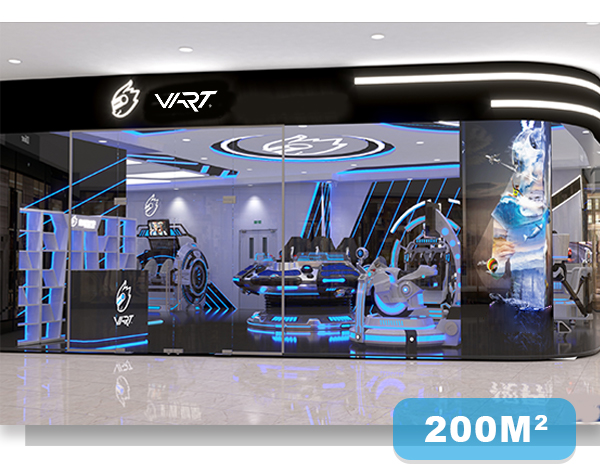
| Shopping Mall | High daily foot traffic and strong impulse purchases | Compact VR arcades and flagship attractions |
| Family Entertainment Center (FEC) | Longer visitor dwell time and repeat customers | Multi-attraction VR zones |
| Indoor Amusement Park | Destination entertainment with larger budgets | Large-scale immersive experiences |
| Tourist Attraction | Premium pricing and memorable experiences | Signature simulators and immersive rides |
| Standalone VR Center | Full branding control and flexible operation | Dedicated VR entertainment businesses |
Selecting the right venue depends on your target audience, investment scale, and long-term business strategy.
Physical Requirements Before Installation
Many investors underestimate the importance of technical infrastructure.
Before purchasing commercial VR equipment, confirm that your venue meets the following requirements.
Ceiling Height
Dynamic motion simulators require adequate vertical clearance.
For most commercial VR attractions, a ceiling height of at least 3 meters (approximately 10 feet) is recommended.
Larger flying simulators or motion platforms may require additional clearance depending on their range of movement.
Electrical Capacity
Commercial VR equipment includes motion systems, gaming computers, lighting, and environmental effects.
Confirm:
- Available electrical capacity
- Dedicated circuits for high-power equipment
- Stable voltage
- Backup power planning (if required)
Proper electrical planning reduces the risk of unexpected downtime.
Network Stability
Today’s commercial VR attractions increasingly rely on network connectivity.
Reliable internet and local networking support:
- Multiplayer VR arenas
- Online content updates
- Cloud-based management systems
- Leaderboards
- Remote diagnostics
For multiplayer attractions, wired network infrastructure is generally recommended for maximum stability.
Safety Clearance
Every moving attraction requires sufficient operating space.
Consider:
- Rotation radius
- Customer entry and exit
- Emergency access
- Queue management
- Spectator viewing areas
Planning these details early helps improve both safety and operational efficiency.
Venue Readiness Checklist
Before confirming your lease, make sure your venue can support commercial VR operations.
| Checklist Item | Status |
|---|---|
| Strong daily foot traffic | □ |
| Target customer group matches business plan | □ |
| Ceiling height suitable for motion simulators | □ |
| Electrical capacity verified | □ |
| Stable internet infrastructure available | □ |
| Adequate safety clearance | □ |
| Convenient customer access | □ |
| Future expansion potential | □ |
Completing this checklist before purchasing equipment can save significant time, reduce installation challenges, and improve long-term profitability.
Why Professional Planning Matters
Successful commercial VR venues rarely happen by accident.
Professional planning helps operators:
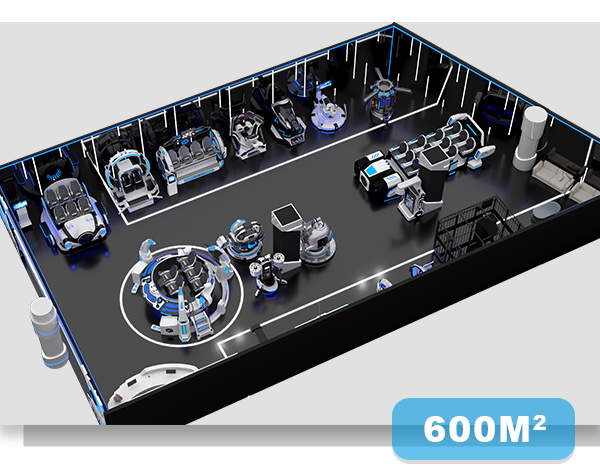
- Maximize revenue per square meter
- Improve customer traffic flow
- Reduce operational bottlenecks
- Create visually attractive entertainment spaces
- Plan for future equipment expansion
At VART VR, every international project begins with understanding the customer’s venue, business objectives, and target audience before recommending equipment or preparing a customized layout.
Ordering, Logistics & Customs Compliance
Once you have selected the right venue and validated your business plan, the next step is choosing a reliable commercial VR equipment supplier and preparing for international shipping.
For many first-time investors, this stage can seem overwhelming.
Questions such as:
- How do I import commercial VR equipment?
- Which certifications are required?
- How should I communicate with manufacturers?
- How long does international shipping take?
are all common concerns.
The good news is that with proper planning and an experienced supplier, international procurement is far simpler than many investors expect.
Choosing the Right Commercial VR Equipment Supplier
Not every manufacturer offers the same level of support.
Some suppliers simply sell machines.
Professional commercial manufacturers help customers build successful businesses.
When evaluating suppliers, look beyond product photos and compare their complete service capabilities.
A Professional Supplier Should Provide
- Commercial-grade equipment
- International certifications
- Factory quality control
- Customized equipment recommendations
- CAD venue planning
- Logistics coordination
- Remote technical support
- Spare parts availability
- Software updates
- Long-term after-sales service
A supplier that supports your project from planning through operation can significantly reduce risk and accelerate your return on investment.To benchmark your options against the industry’s highest standards, you can review our verified index of the global top 10 vr arcade machine manufacturers currently supplying the location-based entertainment market.
Questions You Should Ask Before Placing an Order
Before confirming your equipment list, prepare a detailed discussion with your supplier.
Important topics include:
Equipment Configuration
Confirm:
- Machine dimensions
- Power requirements
- Ceiling height requirements
- Recommended operating space
- Daily maintenance procedures
Game Library
Ask about:
- Number of included games
- Multiplayer compatibility
- Future content updates
- Language support
- Game licensing
Fresh content keeps customers returning and extends the commercial lifespan of your equipment.
Warranty & Technical Support
Understand:
- Warranty period
- Spare parts policy
- Remote technical assistance
- Software support
- Response time
Reliable after-sales service is often more valuable than a lower purchase price.
International Shipping & Logistics
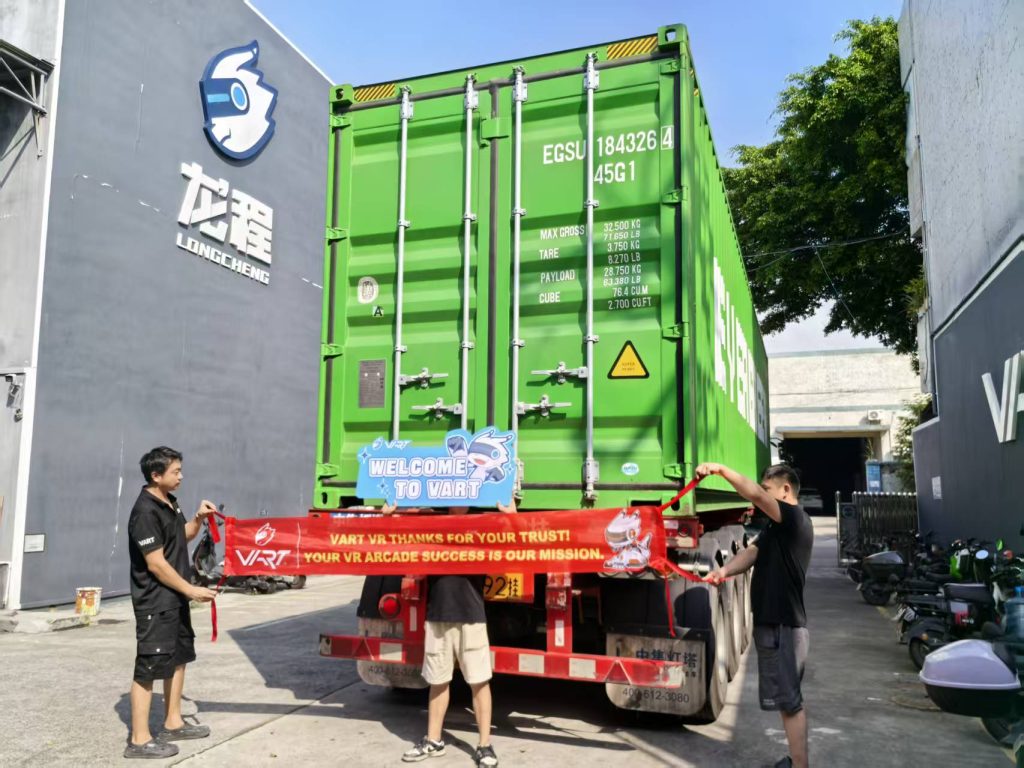
Commercial VR equipment is typically transported by sea freight because of its size and weight.
Depending on project requirements, air freight may also be available for smaller equipment or urgent replacement parts.
Typical International Logistics Process
| Step | Description |
|---|---|
| Equipment Manufacturing | Production and factory quality inspection |
| Export Packaging | Professional wooden crate protection |
| Container Loading | Secure loading for international transport |
| Ocean or Air Freight | International shipping to destination port |
| Customs Clearance | Import declaration and document verification |
| Local Transportation | Delivery from port to installation site |
| Equipment Installation | Remote guidance or on-site technical support |
Working with an experienced supplier helps ensure that every stage proceeds smoothly.
Why Export Packaging Matters
Commercial VR equipment contains precision motion systems, electronic components, and structural assemblies.
Professional export packaging protects equipment during long-distance transportation.
Quality packaging generally includes:
- Reinforced wooden crates
- Moisture protection
- Shock-resistant supports
- Component labeling
- Export documentation
Proper packaging reduces transportation risks and helps equipment arrive ready for installation.
Customs Documentation & International Compliance
International buyers often worry that customs procedures will delay their projects.
In reality, experienced suppliers prepare the required documentation before shipment leaves the factory.
Typical documents include:
- Commercial Invoice
- Packing List
- Bill of Lading or Air Waybill
- Certificate of Origin (when applicable)
- Product Certification Documents
Preparing these documents in advance helps simplify customs clearance.
Why Product Certifications Matter
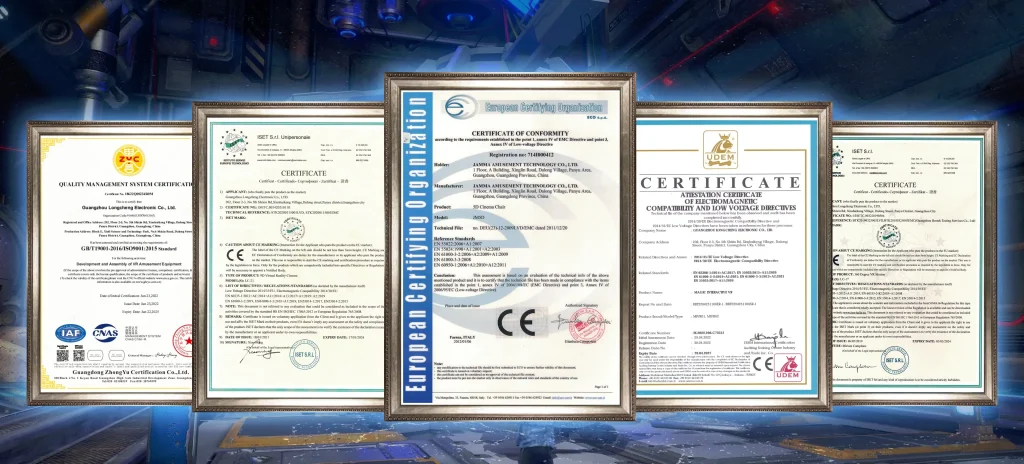
Many countries require commercial entertainment equipment to comply with safety and environmental regulations.
The most common certifications include:
| Certification | Purpose |
|---|---|
| CE | Demonstrates compliance with European safety requirements |
| RoHS | Restricts hazardous substances in electronic equipment |
| TUV | Independent product safety evaluation |
| SGS | Product inspection and manufacturing verification |
These certifications improve buyer confidence and help simplify import procedures in many international markets.
Always verify the certification requirements that apply in your destination country before placing an order.
International Import Checklist
Before your equipment ships, confirm the following items.
| Checklist | Status |
|---|---|
| Equipment specifications confirmed | □ |
| Factory inspection completed | □ |
| Export packaging prepared | □ |
| Shipping method selected | □ |
| Customs documentation verified | □ |
| Certifications confirmed | □ |
| Local unloading arranged | □ |
| Installation schedule confirmed | □ |
Completing this checklist before shipment helps reduce unexpected delays after the equipment arrives.
Common Mistakes International Buyers Should Avoid
Many first-time investors experience avoidable problems because they overlook important details.
The most common mistakes include:
Choosing Equipment Based Only on Price
lower purchase price may lead to higher maintenance costs, limited technical support, a shorter equipment lifespan, and reduced customer satisfaction. To fully understand how initial hardware costs impact your long-term business viability, you should calculate your potential payback period using our realistic mathematical models for commercial vr arcade cost and financial risk mitigation.
Ignoring Local Import Requirements
Every country has different regulations regarding commercial equipment.
Always verify:
- Certification requirements
- Electrical standards
- Import documentation
- Local safety regulations
before shipment.
Underestimating Shipping Time
Manufacturing, quality inspection, international freight, customs clearance, and local transportation all require planning.
Ordering equipment early helps ensure your project launches on schedule.
Forgetting Future Expansion
Successful VR entertainment businesses often grow over time.
When selecting equipment, consider whether your venue can easily expand with additional attractions in the future.
Layout Design & Technical Installation
Purchasing high-quality commercial VR equipment is only part of building a successful entertainment venue.
How the equipment is arranged inside the space has a direct impact on:
- Customer traffic flow
- Safety
- Queue management
- Revenue per square meter
- Visitor satisfaction
A professional layout can often improve operational efficiency without increasing investment.
Start with Customer Flow
Visitors should move naturally through the venue without confusion or congestion.
A well-designed layout generally follows this sequence:
Reception – Ticket Purchase – Waiting Area – High-Visibility Attractions – Premium Experiences – Photo Zone – Retail / Exit
This encourages customers to experience multiple attractions while improving overall spending.If you are unsure which specific hardware models act as the best entry-level anchors or high-throughput revenue engines within this layout, explore our detailed analysis of the top high-roi vr arcade machines leading the market today.
Safety Clearance Around Motion Simulators
Dynamic VR equipment requires adequate operating space.
When planning your layout, allow room for:
- Full machine movement
- Customer boarding and exiting
- Staff supervision
- Emergency access
- Queue barriers
- Spectator viewing
Avoid placing waiting lines directly beside moving attractions.
Separating operating zones from spectator areas creates a safer and more enjoyable environment.
Protective Padding & Venue Safety
Commercial entertainment venues should also include:
- Soft wall protection
- Non-slip flooring
- Clearly marked safety zones
- Emergency stop access
- Adequate lighting
- Security monitoring
These details improve both operational safety and customer confidence.
Professional CAD Layout Planning
Before installation begins, experienced operators typically request a customized CAD layout.
A professional floor plan helps determine:
- Equipment placement
- Rotation clearance
- Customer flow
- Utility connections
- Future expansion space
Rather than guessing where each attraction should go, operators can optimize the venue before construction begins.
Typical International Installation Process
| Stage | Description |
|---|---|
| CAD Layout Approval | Final equipment positioning confirmed |
| Electrical Preparation | Power infrastructure completed |
| Equipment Delivery | Machines unloaded and positioned |
| Mechanical Assembly | Structural installation completed |
| Software Configuration | Systems calibrated and tested |
| Staff Training | Daily operation and maintenance instruction |
| Trial Operation | Final inspection before opening |
Following this process helps reduce installation errors and shortens the time between equipment delivery and business launch.
At VART VR, international customers receive remote installation guidance, technical documentation, video support, and ongoing after-sales assistance to ensure a smooth deployment process.
Grand Opening & Marketing Tactics
Opening day is not the finish line—it is the beginning of your business journey.
Many VR arcades attract strong traffic during their first week but struggle to maintain momentum afterward.
Successful operators treat their grand opening as the launch of a long-term marketing strategy rather than a one-time event.
The objective is simple:
- Create excitement before opening.
- Maximize visitor traffic during launch.
- Convert first-time visitors into repeat customers.
- Build a recognizable local entertainment brand.
Build Excitement Before Opening
Marketing should begin several weeks before your venue officially opens.
Start by sharing behind-the-scenes content that shows your project coming to life.
Popular content ideas include:
- Equipment arriving at the venue
- Installation progress
- Motion simulator testing
- Staff training
- Venue decoration
- Countdown posts
These updates create anticipation while helping potential customers become familiar with your brand.
Social Media Should Be Your First Advertising Channel
Commercial VR entertainment is naturally visual.
People enjoy watching other people experience excitement.
Focus your content on short-form videos for platforms such as:
- TikTok
- Instagram Reels
- YouTube Shorts
- Facebook Reels
Content that performs particularly well includes:
- Customer reactions
- Slow-motion recordings
- Multiplayer competitions
- Behind-the-scenes setup
- First-time player experiences
- High-speed motion simulator footage
Instead of talking about specifications, show customers how exciting the experience feels.
Invite Local Creators Before Opening
One of the fastest ways to build local awareness is by collaborating with content creators.
Invite:
- Local influencers
- Family bloggers
- Gaming creators
- Lifestyle creators
- Travel creators
Offer complimentary experiences in exchange for authentic content.
Even small creators often generate significant local exposure because their audiences are highly engaged.
Organize a Community Preview Event
Rather than waiting for customers to discover your venue, introduce your business directly to the community.
Consider inviting:
- Schools
- Universities
- Local businesses
- Shopping mall staff
- Youth organizations
- Sports clubs
These preview events generate valuable word-of-mouth marketing before your official launch.
Create Membership Programs Immediately
Many operators wait several months before launching memberships.
This is a mistake.
Repeat customers generate the highest lifetime value.
Popular membership benefits include:
- Recharge bonuses
- Birthday rewards
- VIP discounts
- Early access to new games
- Tournament registration
- Priority booking
- Loyalty points
Membership programs increase customer retention while creating more predictable monthly revenue.
Turn Customers into Your Marketing Team
The best advertising is created by satisfied customers.
Encourage visitors to share their experiences by creating spaces that are naturally photo and video friendly.
Ideas include:
- Branded photo walls
- LED lighting zones
- Score leaderboards
- Live gameplay screens
- Interactive decorations
Every shared photo becomes free advertising for your venue.
Your First 90-Day Marketing Plan
The first three months are critical for building customer awareness.
The following timeline provides a practical roadmap.
| Time Period | Primary Objective | Recommended Activities |
|---|---|---|
| Weeks 1–2 | Generate Awareness | Grand opening, influencer visits, promotional videos |
| Weeks 3–4 | Build Customer Base | Membership launch, referral rewards, social media contests |
| Month 2 | Increase Repeat Visits | Weekly tournaments, themed events, birthday packages |
| Month 3 | Expand Brand Recognition | School partnerships, corporate events, local collaborations |
Maintaining consistent marketing activity is often more effective than relying on a single large advertising campaign.
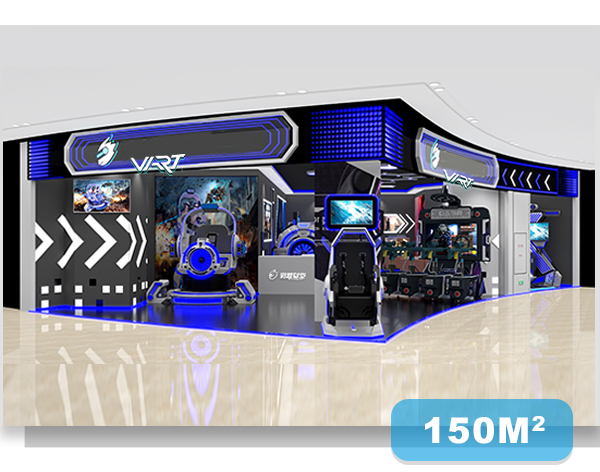
International VR Arcade Launch Checklist
Launching a commercial VR entertainment venue involves many moving parts.
Use this checklist to stay organized throughout the project.
| Project Stage | Status |
|---|---|
| Market Research Completed | □ |
| Business Plan Finalized | □ |
| Venue Confirmed | □ |
| Equipment Selected | □ |
| CAD Layout Approved | □ |
| Electrical Infrastructure Ready | □ |
| Shipping & Customs Completed | □ |
| Equipment Installed | □ |
| Staff Training Completed | □ |
| Trial Operation Finished | □ |
| Marketing Campaign Launched | □ |
| Grand Opening Scheduled | □ |
Completing each stage systematically helps reduce project risks while ensuring a smoother business launch.
Why Partner with VART VR?
Launching a commercial VR entertainment business is a significant investment, and choosing the right partner can make the difference between a smooth launch and costly delays.
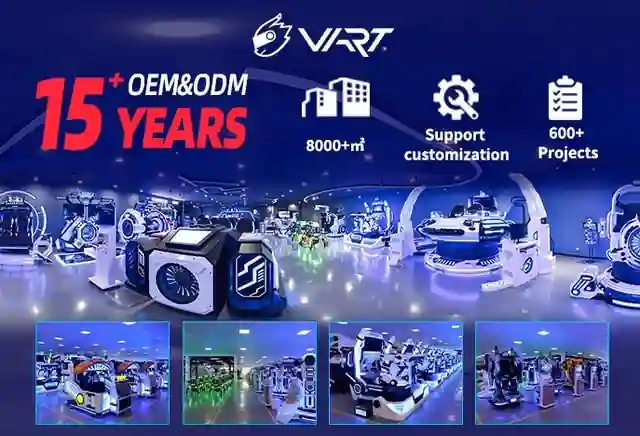
With more than a decade of experience in commercial VR manufacturing and exports to over 100 countries, VART VR supports customers through every stage of the project—not just equipment production.
Our complete turnkey services include:
- Free commercial consultation
- Customized equipment recommendations
- Complimentary CAD layout planning
- Venue traffic flow optimization
- Factory quality inspection
- International logistics coordination
- CE, RoHS, SGS, and other certification support
- Remote installation guidance
- Software configuration
- Staff training assistance
- Long-term technical support
- Continuous game content updates
Whether you’re opening a compact shopping mall VR corner or developing a large-scale VR theme park, our team helps simplify the entire process so you can focus on building a profitable entertainment business.
Conclusion
Starting a commercial VR arcade is about much more than purchasing equipment.
Long-term success comes from combining careful market research, intelligent venue selection, reliable commercial VR equipment, professional layout planning, efficient operations, and consistent marketing.
The most profitable operators understand that every stage of the project—from selecting the right location to creating memorable customer experiences—contributes to sustainable business growth.
As global demand for immersive entertainment continues to increase, there has never been a better time to invest in a professionally planned VR entertainment business.
With the right strategy and the right partner, your venue can become a destination that attracts visitors, encourages repeat business, and delivers long-term profitability.
Ready to Launch Your Commercial VR Arcade?
Whether you’re planning a shopping mall VR zone, a family entertainment center, or a large-scale VR theme park, VART VR is ready to help.
Contact our team today to receive:
- Free CAD floor plan design
- Customized equipment recommendations
- Professional venue planning
- International shipping guidance
- Remote installation support
- Complete commercial VR solution
Let’s build a VR entertainment destination that stands out in your market and continues generating revenue for years to come.
FAQ
What are the basic requirements for opening a VR arcade?
A successful VR arcade requires a suitable location, adequate ceiling height, stable electrical infrastructure, reliable internet, commercial-grade VR equipment, proper safety clearances, trained staff, and an effective marketing strategy.
How much space do I need for a commercial VR arcade?
The required space depends on your business model. Compact VR corners can begin with approximately 30–50 square meters, while family entertainment centers and VR theme parks often require significantly larger areas to accommodate multiple attractions and customer circulation.
How do I import commercial VR equipment from overseas?
Most commercial VR equipment is transported by sea freight. Working with an experienced manufacturer that provides export packaging, customs documentation, certification support, and logistics coordination helps simplify the import process.
Which certifications should commercial VR equipment have?
Depending on your market, commercial VR equipment may require certifications such as CE, RoHS, TUV, or SGS-related documentation. Always verify local regulatory requirements before importing equipment.
How long does a commercial VR project usually take?
The timeline varies depending on project size, manufacturing schedules, shipping, customs clearance, venue preparation, and installation. Careful planning at each stage helps reduce delays.
Why is CAD layout planning important?
A professional CAD layout improves customer flow, maximizes space utilization, ensures proper safety clearances, and allows operators to plan future expansion before installation begins.
How can I attract customers after opening?
The most effective strategies include short-form social media videos, influencer collaborations, membership programs, community events, referral campaigns, and regular content updates that encourage repeat visits.
Why choose VART VR as your commercial VR partner?
VART VR provides complete turnkey solutions, including equipment manufacturing, venue planning, CAD layout design, logistics coordination, installation guidance, and long-term technical support for customers around the world.
Ultimate Commercial VR Business Resource Hub
Planning to invest in the VR entertainment industry? Explore our complete knowledge cluster to secure your ROI:
Sourcing: Global Top 10 VR Arcade Machine Manufacturers and Suppliers
Investment: Commercial VR Arcade Cost and ROI Analysis: A Complete Investor’s Guide
Selection: How to Choose VR Arcade Equipment for Malls, Theme Parks, & FECs
Setup: Step-by-Step Guide to Starting a VR Arcade Business Internationally
Tech Trends: What’s New? Top Trends and VR Machine Upgrades in 2026