Maximizing LBVR ROI: How Space Re-routing and High-Throughput VR Theaters Boost Commercial Venue Revenues

Key Takeaways
- Successful Location-Based VR (LBVR) projects are driven by operational efficiency, customer throughput, and repeat visitation—not simply by purchasing advanced VR hardware.
- Commercial investors should evaluate six critical factors before purchasing equipment, including tracking stability, space re-routing technology, content updates, operational workflow, and long-term technical support.
- High-throughput VR theaters and multiplayer VR arenas can significantly improve revenue per square meter by supporting rolling admissions during peak operating hours.
- Choosing an experienced original equipment manufacturer with project delivery capabilities reduces installation risks, operational downtime, and future maintenance costs.
- A complete LBVR business turnkey solution integrates venue planning, hardware, software, content, training, and after-sales support into one scalable commercial investment.
Executive Summary
Selecting a Location-Based VR (LBVR) solution is a long-term business decision rather than a simple equipment purchase.
Commercial investors who achieve the strongest results typically focus on three key factors:
- Maximizing revenue per square meter through efficient venue layouts
- Increasing hourly throughput with high-capacity attractions and rolling admission systems
- Building long-term customer retention through immersive content and reliable technical support
When these elements work together, LBVR projects become scalable entertainment businesses capable of delivering stronger operational efficiency and sustainable return on investment.
Introduction
Location-Based VR (LBVR) has become one of the fastest-growing sectors in commercial entertainment. As shopping malls, family entertainment centers (FECs), museums, science centers, and tourism destinations compete to attract visitors seeking immersive experiences, investors are looking beyond individual VR machines toward complete venue solutions that deliver sustainable profitability.
One of the biggest misconceptions in today’s market is that purchasing lower-priced standalone VR equipment automatically reduces investment risk. In reality, many commercial entertainment projects struggle not because of equipment quality alone, but because they lack a scalable operational model. Poor venue planning, inefficient visitor flow, limited content updates, and inadequate after-sales support often result in lower hourly throughput, reduced customer satisfaction, and slower return on investment.
For commercial investors, the real objective is not simply buying VR hardware—it is building a venue capable of generating consistent revenue every operating day.
A profitable LBVR project depends on several interconnected factors:
- Efficient use of floor space
- High hourly customer throughput
- Reliable multiplayer synchronization
- Safe visitor movement
- Flexible content updates
- Standardized operational procedures
- Long-term technical support
When these elements work together, they create a business that is easier to operate, attracts repeat visitors, and delivers stronger revenue per square meter.
This guide explains how experienced venue owners evaluate Location-Based VR projects from a commercial perspective, what separates mature technology providers from equipment-only suppliers, and why operational efficiency has become the most important driver of VR Arcade cost and ROI.
The Commercial Evaluation Framework: Six Metrics That Determine Long-Term Success
Many investors begin their research by comparing headset specifications, promotional videos, or equipment pricing.
While these factors are important, experienced operators evaluate an LBVR project using business metrics rather than product specifications.
A commercial entertainment venue must operate reliably during weekends, holidays, and other high-traffic periods. Every interruption—whether caused by unstable tracking, inefficient layouts, or poor visitor management—reduces hourly throughput and directly impacts profitability.
The following six evaluation criteria provide a more accurate framework for comparing different Location-Based VR solutions.
| Evaluation Area | Why It Matters for Commercial Operations | Questions Investors Should Ask |
|---|---|---|
| Multiplayer Tracking Stability | Determines whether multiple players can move freely without losing synchronization. Stable tracking improves immersion and reduces operational interruptions. | How many players can operate simultaneously? What is the average tracking latency? |
| Space Re-routing & Footprint Optimization | Efficient virtual route design allows larger experiences within limited physical spaces, improving revenue per square meter. | How does the system maximize limited floor space without compromising gameplay? |
| 1:1 Mixed Reality Environmental Mapping | Aligning virtual walls, doors, bridges, and platforms with physical structures improves immersion while reducing accidental collisions and liability risks. | Does the virtual environment accurately match the physical venue layout? |
| Environmental Effects Integration | Wind, vibration, motion platforms, heat, water effects, and synchronized storytelling create more memorable experiences and encourage repeat visits. | Are environmental effects synchronized dynamically with gameplay or triggered independently? |
| Content Ecosystem | Regular content updates extend equipment lifespan, attract returning customers, and support different visitor demographics. | How frequently are new experiences released? Are customized educational or tourism-themed experiences available? |
| Project Delivery & Technical Support | Professional planning, installation, training, maintenance, and software support reduce operational risk and simplify long-term management. | Does the supplier provide complete project delivery or only hardware? |
Rather than evaluating each category individually, successful operators consider how these components interact throughout the customer journey.
For example, stable multiplayer tracking improves immersion, but it also allows operators to increase player capacity without increasing staffing requirements.
Similarly, Space Re-routing does far more than create larger virtual environments. By intelligently redirecting player movement within a limited footprint, venue owners can accommodate richer experiences without expanding physical floor space—an important advantage in shopping malls and premium retail locations where rent is calculated per square meter.
Another often-overlooked metric is 1:1 Mixed Reality Environmental Mapping. When physical structures accurately correspond to their virtual counterparts, players naturally navigate the environment with greater confidence. This not only enhances realism but also reduces the likelihood of accidental collisions, lowers operational liability, and improves overall visitor satisfaction.
Perhaps the most underestimated factor is the content ecosystem.
Unlike traditional amusement rides that deliver essentially the same experience every visit, modern Location-Based VR venues can continually refresh their attractions through new game scenarios, educational experiences, seasonal events, and multiplayer competitions. This continuous evolution increases replayability—one of the most important drivers of long-term commercial success.
Finally, project delivery capability often determines whether an investment succeeds or struggles.
Experienced suppliers assist with venue layout planning, electrical requirements, network infrastructure, operator training, safety procedures, and ongoing maintenance. These services reduce deployment delays and allow entertainment entrepreneurs to focus on operating a profitable venue rather than solving technical problems after installation.
High-Yield LBVR Configurations: Choosing Attractions That Maximize Revenue per Square Meter
One of the biggest mistakes new investors make is evaluating Location-Based VR equipment solely by purchase price or visual appeal.
In commercial entertainment, the most profitable attraction is rarely the one with the most impressive specifications—it is the one that consistently delivers the highest hourly throughput, attracts repeat visitors, and makes efficient use of valuable floor space.
For shopping malls, family entertainment centers, museums, science centers, and tourism destinations, every square meter represents an operating cost. Equipment that accommodates more visitors within the same footprint naturally generates stronger long-term returns.
Rather than selecting attractions based on novelty alone, experienced operators evaluate three core business indicators:
- Revenue generated per square meter
- Maximum hourly visitor throughput
- Customer replay potential
These metrics provide a far more accurate picture of commercial performance than hardware specifications alone.
The following two examples illustrate how different LBVR formats can serve distinct business objectives while maximizing operational efficiency.
Interstellar Traveler VR Theater: High-Throughput Entertainment for Continuous Visitor Flow
For venues that experience heavy foot traffic, such as shopping malls, tourism complexes, science museums, and family entertainment centers, maintaining continuous visitor flow is essential.
Traditional simulator rides often face operational bottlenecks because every customer must complete the full experience before the next group can enter. During weekends and holidays, these interruptions create long queues while reducing overall revenue capacity.
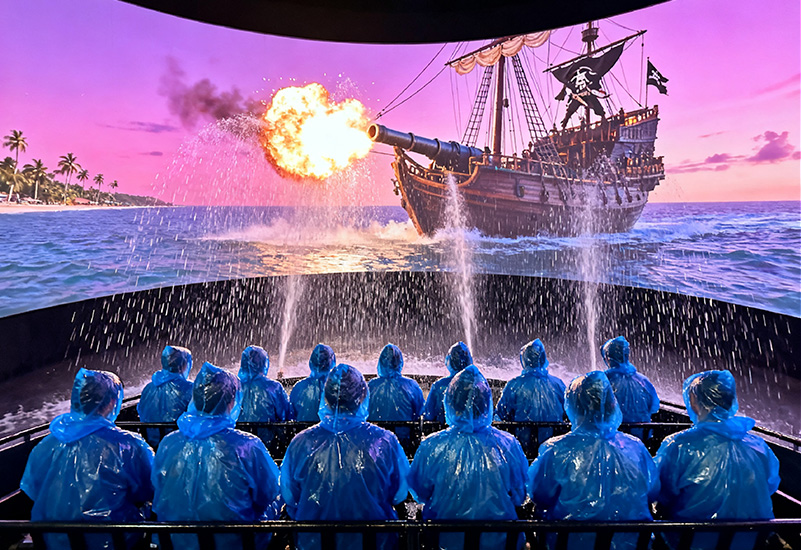
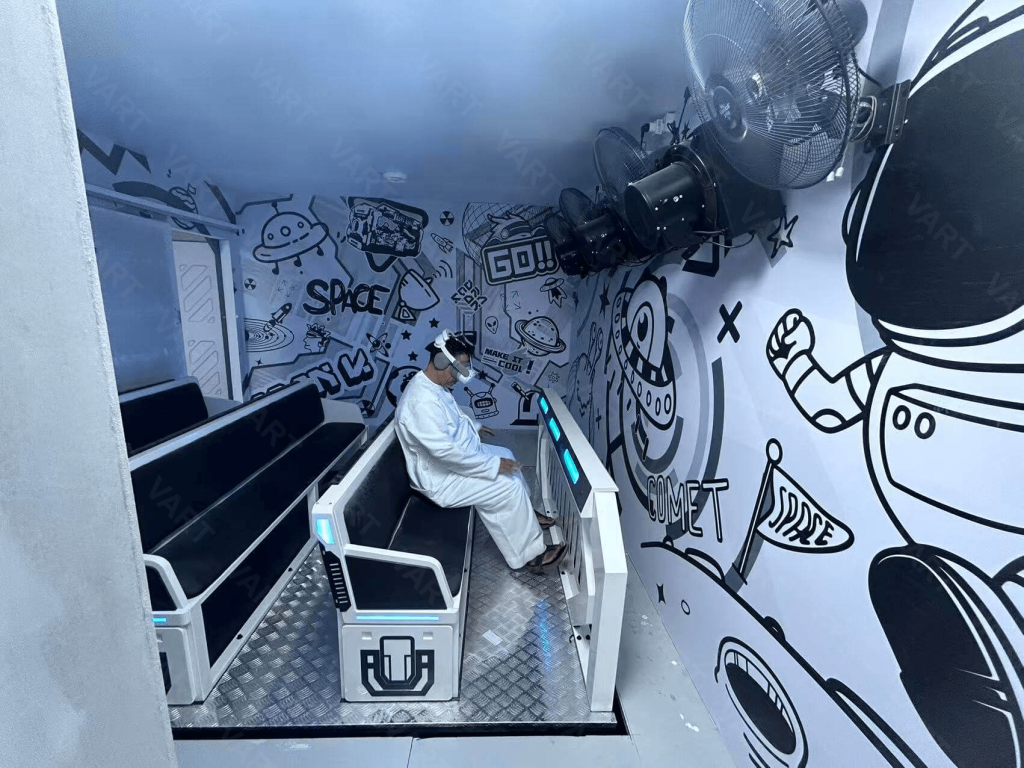
The Interstellar Traveler VR Theater addresses this challenge through a Rolling Admission System, allowing new visitors to enter the experience before the previous cycle has completely finished.
Instead of operating as isolated sessions, the attraction maintains a continuous operating rhythm throughout the day.
For commercial operators, this significantly improves venue productivity without requiring additional floor space.
Why Rolling Admission Matters
Rather than focusing only on ride duration, experienced investors examine how many visitors can actually be served each hour.
For example, if a traditional attraction accommodates twelve players every ten minutes but requires complete unloading and preparation before the next session, valuable operating time is lost.
A rolling admission model minimizes these idle periods by maintaining a steady customer flow.
This creates several operational advantages:
- Shorter waiting times during weekends
- Higher customer satisfaction
- Better queue management
- Increased hourly ticket sales
- More efficient staffing
Perhaps most importantly, it allows venue owners to maximize revenue during the busiest operating periods without increasing rent or expanding the venue.
Typical Operational Metrics
| Operational Metric | 12-Player Configuration | 24-Player Configuration |
|---|---|---|
| Recommended Area | Approximately 60㎡ | Approximately 60㎡ |
| Recommended Ceiling Height | 2.9m or above | 2.9m or above |
| Typical Experience Cycle | Around 10 minutes | Around 10 minutes |
| Admission Method | Rolling Admission | Rolling Admission |
| Maximum Hourly Throughput | Up to 24 visitors | Up to 48 visitors* |
| Best Applications | Shopping malls, museums, science centers | High-traffic entertainment complexes |
*Actual throughput depends on operating procedures, staffing efficiency, customer flow, and local demand.
Commercial Advantages
Compared with traditional VR simulators, a theater-based configuration provides several unique business benefits.
High Visitor Capacity
Multiple guests experience the attraction simultaneously, improving utilization during busy periods.
Excellent Visibility
The theater format naturally attracts attention from passing visitors, increasing impulse purchases.
Efficient Staffing
Standardized loading and unloading procedures simplify operations while reducing labor requirements.
Flexible Content Updates
Operators can introduce educational programs, science-themed adventures, tourism experiences, seasonal events, and family-oriented attractions without replacing hardware.
This flexibility extends the commercial lifespan of the installation and encourages repeat visitation.
Space Commando Arena: Competitive Multiplayer Experiences with Exceptional Throughput
While immersive theaters excel at accommodating large visitor volumes, multiplayer combat attractions focus on another important business objective—customer engagement.
Competitive gameplay encourages visitors to return with friends, participate in team challenges, and share their experiences on social media.
This social element significantly increases replayability, one of the strongest indicators of long-term profitability.
The Space Commando Arena combines lightweight VR headsets, multiplayer synchronization, realistic physical environments, and interactive mission-based gameplay into a complete commercial attraction.
Unlike traditional shooting simulators where participants remain stationary, players freely navigate a carefully designed physical environment that corresponds directly with the virtual battlefield.
This combination of 1:1 Mixed Reality Environmental Mapping and multiplayer interaction creates a far more immersive experience while maintaining high operational efficiency.
Commercial Operating Characteristics
The attraction is designed around a rolling admission workflow that minimizes downtime between visitor groups.
Instead of waiting for one session to finish completely before preparing the next group, operators introduce new players at carefully timed intervals.
This creates a continuous operating cycle that significantly increases hourly throughput.
Typical Operational Metrics
| Operational Metric | Space Commando Arena |
|---|---|
| Recommended Area | Approximately 84㎡ |
| Suggested Dimensions | 12m × 7m |
| Recommended Ceiling Height | Around 3m |
| Players per Group | 4 Players |
| Typical Experience Duration | Around 10 Minutes |
| Rolling Admission Interval | Approximately Every 4 Minutes |
| Maximum Hourly Throughput | Up to 52 Visitors* |
*Actual operating capacity depends on staffing, customer readiness, queue organization, and local operating procedures.
Why Throughput Matters More Than Session Length
Many first-time investors focus on the duration of each experience.
Experienced operators focus on something different:
How many paying visitors can be served each hour?
A slightly shorter experience that supports rolling admission often produces substantially greater revenue than a longer attraction with frequent idle periods.
High-throughput operations become especially valuable during:
- Weekends
- School holidays
- Public holidays
- Corporate events
- Tourism peak seasons
Instead of creating long waiting lines that discourage new customers, efficient throughput allows venues to accommodate larger crowds while maintaining a positive visitor experience.
Comparing Two High-Performance LBVR Business Models
Although both attractions belong to the Location-Based VR category, they serve different commercial objectives.
| Business Metric | Interstellar Traveler VR Theater | Space Commando Arena |
|---|---|---|
| Primary Goal | Large Visitor Capacity | High Replay Value |
| Core Experience | Immersive Storytelling | Competitive Multiplayer Gameplay |
| Recommended Venue | Shopping Mall, Museum, FEC | VR Arcade, Entertainment Center, Tourism Project |
| Recommended Area | Around 60㎡ | Around 84㎡ |
| Rolling Admission | Yes | Yes |
| Visitor Throughput | Very High | Extremely High |
| Social Sharing Potential | High | Very High |
| Family Appeal | Excellent | Strong |
| Repeat Visit Potential | High | Excellent |
| Revenue per Square Meter | Excellent | Excellent |
Why High-Throughput Equipment Improves Commercial ROI
Commercial rent continues to rise across shopping malls, tourism destinations, and urban entertainment districts.
For venue owners, the question is no longer:
“Which machine is the cheapest?”
Instead, the more important question becomes:
“Which attraction generates the highest revenue from the same amount of floor space?”
High-throughput VR equipment answers this question by increasing visitor capacity without requiring additional rental area.
Combined with intelligent queue management, standardized operating procedures, continuous content updates, and immersive storytelling, these systems help operators transform valuable commercial floor space into scalable entertainment businesses.
For investors planning long-term growth, evaluating attractions through the lens of operational efficiency rather than hardware specifications alone often leads to stronger financial performance and more sustainable return on investment.
Sourcing Pitfalls: Why the “Top 10 VR Equipment Manufacturers” Lists Often Mislead Investors
When investors begin researching commercial VR equipment, one of the first things they often search for is:
- Top 10 VR manufacturers
- Best VR equipment suppliers
- Largest VR companies
- Leading VR factory
While these rankings can provide useful background information, they rarely answer the questions that truly determine whether a project succeeds.
A company may manufacture impressive hardware or receive industry recognition, but that does not necessarily mean it can successfully deliver a complete commercial project.
For venue owners, the greatest risk is not purchasing the wrong VR headset—it is investing in equipment that cannot be deployed efficiently or operated profitably.
Many projects fail because investors focus on specifications and pricing while overlooking installation requirements, operational planning, local regulations, and long-term technical support.
The following areas deserve far more attention than online rankings.
1. Can the Equipment Actually Fit Your Venue?
One of the most common reasons commercial VR projects experience delays is poor site compatibility.
During the planning stage, many investors concentrate on equipment dimensions without considering the venue itself.
Before placing an order, confirm whether your location provides:
- Sufficient ceiling height for motion platforms
- Adequate electrical capacity
- Stable network infrastructure
- Safe emergency exits
- Proper air conditioning
- Comfortable queue areas
- Clear visitor circulation routes
A machine that performs perfectly in a showroom may become difficult to operate if these practical conditions are ignored.
Professional suppliers begin with the venue—not the equipment.
2. Can the Supplier Adapt to Local Infrastructure?
Every country has different infrastructure standards.
Successful international deployments require equipment that can be configured for local conditions rather than relying on a one-size-fits-all solution.
Important considerations include:
| Infrastructure Item | Why It Matters |
|---|---|
| Power Supply | Compatibility with local voltage and frequency standards |
| Electrical Protection | Stable operation for motion systems and computers |
| Network Requirements | Reliable multiplayer synchronization and software updates |
| Fire Safety Regulations | Compliance with local commercial building codes |
| Accessibility Standards | Visitor safety and operational approval |
| Import Documentation | Faster customs clearance and reduced project delays |
These factors often have a greater impact on project success than minor differences in hardware specifications.
3. Does the Supplier Understand Commercial Operations?
Some companies manufacture excellent equipment but have limited experience operating public entertainment venues.
Commercial operation requires much more than hardware.
An experienced project partner should understand:
- Peak-hour queue management
- Visitor circulation
- Staff workflow
- Ticketing systems
- Equipment maintenance schedules
- Customer safety procedures
- Revenue optimization strategies
Without these operational considerations, even advanced attractions may struggle to achieve expected profitability.
Five Common Mistakes That Reduce LBVR Profitability
Over the past decade, many commercial VR projects have encountered similar operational challenges.
Fortunately, most of these issues can be avoided through careful planning.
Mistake #1: Purchasing Equipment Before Completing Site Planning
Some investors order equipment before confirming venue dimensions.
Only after construction begins do they discover:
- Ceiling height is insufficient
- Queue areas are too small
- Emergency exits are obstructed
- Air conditioning is inadequate
- Power distribution requires modification
Professional venue planning should always precede equipment selection.
Mistake #2: Comparing Only Purchase Price
Lower-priced equipment may appear attractive initially.
However, commercial investors should evaluate the total cost of ownership, including:
- Spare parts availability
- Maintenance frequency
- Software updates
- Technical support
- Equipment lifespan
- Downtime during repairs
A slightly higher initial investment often produces lower operating costs over many years.
Mistake #3: Ignoring Content Lifecycle
New attractions naturally generate excitement.
However, repeat visitors eventually expect new experiences.
A supplier with an expanding content ecosystem allows operators to refresh attractions without replacing hardware.
Regular content updates help maintain:
- Customer interest
- Repeat visitation
- Membership value
- Seasonal promotions
- Educational programs
Mistake #4: Underestimating Operational Training
Even intuitive attractions require standardized procedures.
Well-trained staff improve:
- Guest safety
- Loading efficiency
- Equipment reliability
- Customer satisfaction
- Throughput during busy periods
Professional suppliers typically provide comprehensive operator training before opening.
Mistake #5: Choosing Hardware Without Long-Term Support
Commercial entertainment equipment is expected to operate every day.
Eventually, every venue requires:
- Software updates
- Replacement parts
- Technical consultation
- Operational advice
- Equipment optimization
Responsive after-sales support often determines whether a venue experiences hours—or weeks—of downtime.
Why Direct Factory Suppliers Reduce Long-Term Business Risk
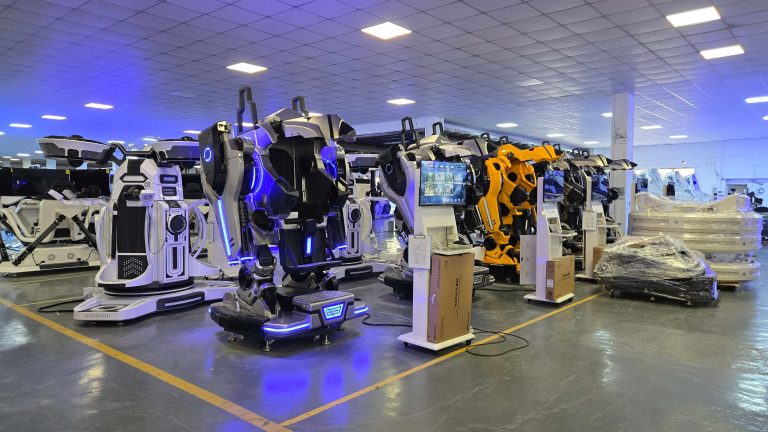
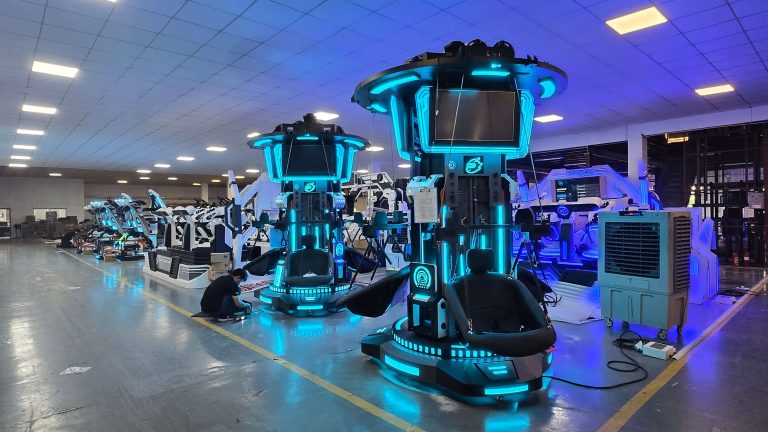
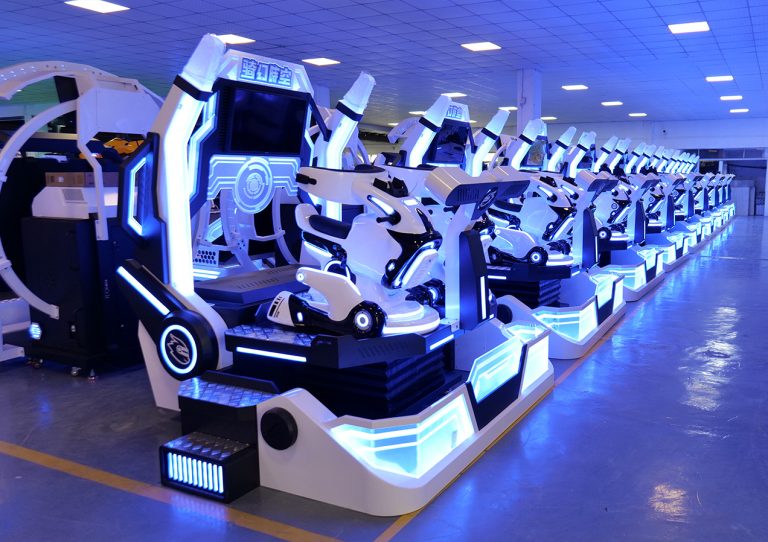
Working directly with an Original Equipment Manufacturer (OEM) provides advantages that extend far beyond equipment pricing.
Unlike trading companies that primarily coordinate transactions, an experienced factory can support the entire lifecycle of a commercial project.
This includes:
- Product engineering
- Custom manufacturing
- Venue planning
- Production scheduling
- Installation guidance
- Operator training
- Technical maintenance
- Future expansion
For investors planning multi-attraction venues, this integrated approach simplifies project management while reducing communication between multiple vendors.
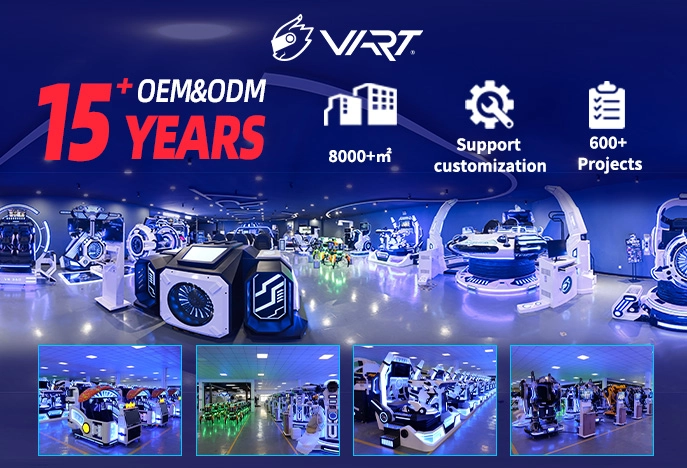
How VART VR Supports Complete Project Delivery
Rather than supplying individual machines, VART VR focuses on delivering complete commercial entertainment solutions.
With more than a decade of experience in immersive entertainment manufacturing and international project deployment, the company supports venue owners from initial planning through long-term operation.
Services typically include:
| Project Stage | Support Provided |
|---|---|
| Project Consultation | Equipment recommendations based on venue objectives |
| CAD Layout Planning | Optimized floor plans, customer flow, and safety clearances |
| Equipment Manufacturing | Commercial-grade production with quality inspection |
| Logistics Coordination | Export packaging and international shipping support |
| Installation Assistance | Remote guidance and technical documentation |
| Staff Training | Operational procedures and maintenance instruction |
| After-Sales Support | Software updates, spare parts, and technical assistance |
This integrated workflow helps reduce project uncertainty while allowing operators to focus on growing their entertainment business.
Investor Checklist Before Purchasing an LBVR Solution
Before making a purchasing decision, experienced investors typically review the following questions.
Venue Readiness
- Has the venue been professionally measured?
- Is the ceiling height suitable for the selected attraction?
- Is sufficient electrical capacity available?
- Does the layout allow smooth visitor circulation?
- Have queue areas been included?
Equipment Evaluation
- Does the attraction support multiplayer operation?
- What is the estimated hourly throughput?
- Is the content library updated regularly?
- Does the equipment support future expansion?
- Is the attraction suitable for the target customer demographic?
Supplier Evaluation
- Is the supplier an original equipment manufacturer?
- Can the supplier provide project planning?
- Is installation guidance available?
- What after-sales services are included?
- Are spare parts readily available?
- Has the supplier completed similar international projects?
Completing this checklist before purchasing significantly reduces implementation risks and helps investors compare suppliers based on long-term operational value rather than initial purchase price alone.
Which Types of Investors Benefit Most from a Mature LBVR Solution?
Location-Based VR is not a one-size-fits-all investment.
Different venue types have different operational priorities, customer demographics, and revenue models. Choosing equipment that aligns with your business objectives is often more important than purchasing the largest or most technologically advanced attraction.
The following table summarizes which commercial environments benefit most from mature LBVR solutions.
| Venue Type | Primary Business Objective | Recommended LBVR Solution |
|---|---|---|
| Shopping Malls | Increase foot traffic, improve dwell time, attract social media attention | High-throughput VR Theater, Compact Multiplayer Attractions |
| Family Entertainment Centers (FECs) | Encourage repeat family visits and maximize weekend throughput | Multiplayer VR Arena, Motion Simulators, Interactive VR Experiences |
| Museums & Science Centers | Combine education with immersive experiences | Story-driven VR Theater, Educational LBVR Programs |
| Tourism Destinations | Increase visitor spending and extend average stay duration | Theme-based VR Adventures, Interactive Exploration Experiences |
| Corporate Event Venues | Team building and group interaction | Multiplayer Competitive VR Arenas |
| Standalone VR Arcades | Maximize revenue per square meter and improve customer retention | Balanced mix of High-Throughput Theaters, Motion Simulators, and Competitive Multiplayer Attractions |
Rather than selecting attractions based solely on visual appeal, experienced venue owners choose equipment that complements their target audience, available space, and long-term operating strategy.

Conclusion
The commercial success of a Location-Based VR project depends on far more than purchasing advanced hardware.
The strongest-performing venues combine intelligent floor planning, efficient customer flow, immersive content, standardized operating procedures, and reliable technical support into one scalable business model.
Instead of asking:
“Which VR equipment looks the most impressive?”
Commercial investors should ask:
- Which attraction generates the highest hourly throughput?
- Which equipment makes the best use of premium commercial floor space?
- Which supplier can support the project throughout its entire lifecycle?
- Which solution encourages customers to return again and again?
When these questions become the foundation of your investment decision, Location-Based VR transforms from a collection of machines into a sustainable entertainment business.
With more than a decade of experience in immersive entertainment manufacturing and international project delivery, VART VR helps commercial investors develop turnkey entertainment projects through professional venue planning, commercial-grade equipment, customized content, installation guidance, and long-term technical support.
Whether you are developing a shopping mall attraction, expanding a family entertainment center, launching a science museum exhibit, or building a destination-scale VR park, choosing an experienced project partner can significantly reduce operational risk while improving long-term profitability.
Frequently Asked Questions
What is the most important factor when selecting a Location-Based VR supplier?
The most important consideration is the supplier’s ability to deliver a complete commercial solution rather than individual equipment. Investors should evaluate project planning, installation support, content updates, operational training, and after-sales service alongside hardware quality.
How much space does a commercial LBVR attraction typically require?
Space requirements vary depending on the attraction. Compact immersive theaters may require approximately 60㎡, while multiplayer competitive arenas generally require around 80㎡ or more. Additional space should also be allocated for reception, waiting areas, equipment maintenance, and emergency access.
How can I improve revenue per square meter in a VR entertainment venue?
Revenue per square meter can be improved by selecting high-throughput attractions, optimizing visitor circulation, implementing rolling admission systems, and combining multiple attractions that appeal to different customer groups throughout the day.
Why is content updating important for commercial VR projects?
Fresh content encourages repeat visits and extends the commercial lifespan of the equipment. Operators who regularly introduce new experiences are generally better positioned to maintain customer engagement than venues relying on a single attraction.
What should I prepare before contacting a VR equipment supplier?
Preparing the following information helps suppliers provide more accurate recommendations:
- Venue dimensions
- Ceiling height
- Intended customer demographics
- Local electrical standards
- Project timeline
- Expected daily visitor volume
- Preferred investment scale
Does VART VR provide assistance beyond equipment manufacturing?
Yes. VART VR supports commercial projects through venue consultation, CAD layout planning, equipment manufacturing, logistics coordination, installation guidance, operator training, and long-term technical support, helping investors streamline project implementation.