Launching a Tech-Driven VR Park in the US & UK: Power Supply, Safety Clearance, and Compliance Standards

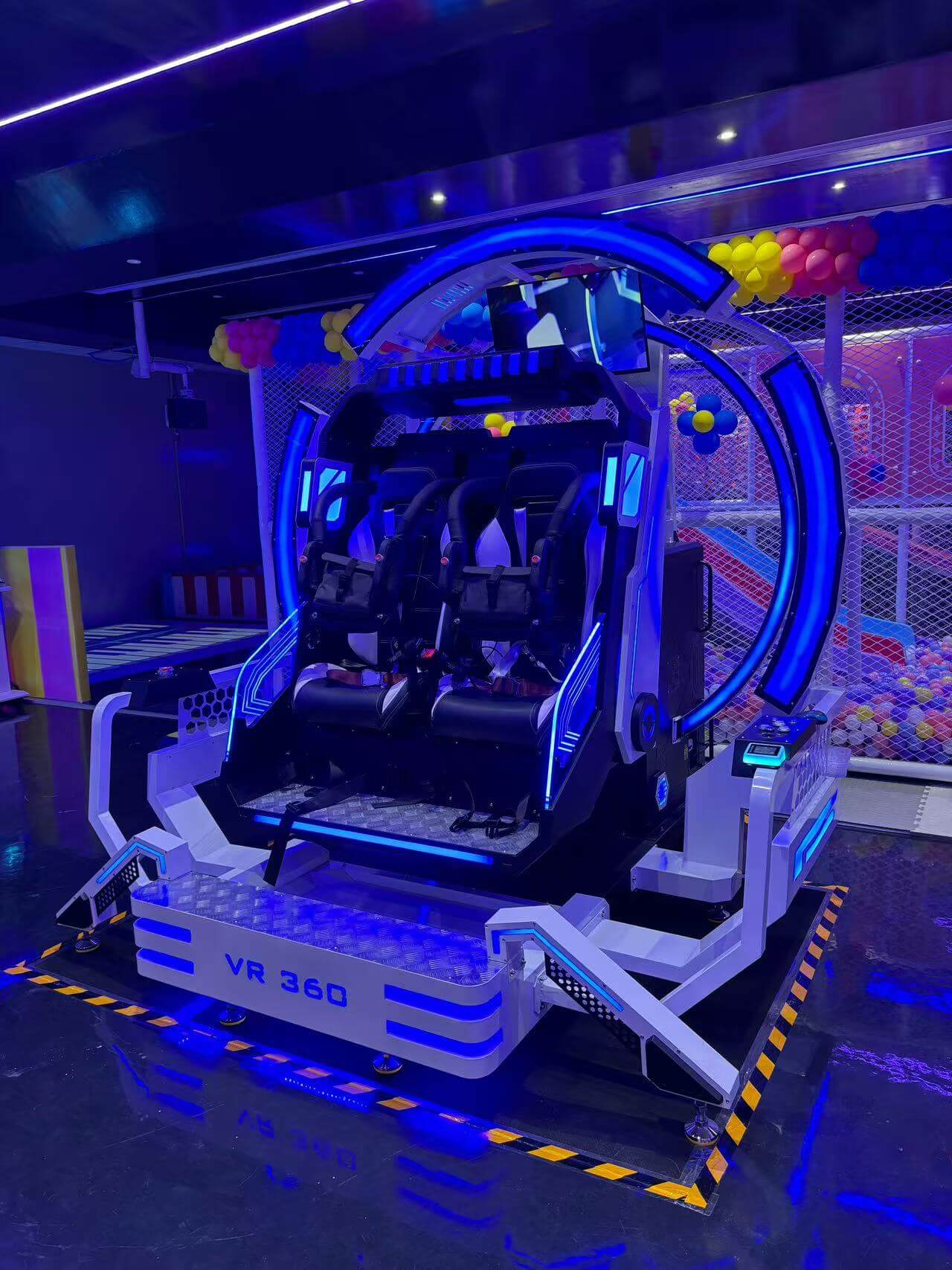
The US and UK continue to lead global spending on immersive entertainment.
Consumers in these markets are willing to pay premium prices for unique experiences, making them attractive destinations for investors exploring opportunities in VR arcades, family entertainment centers, and large-scale VR theme parks.
However, entering Western markets involves more than simply purchasing equipment.
Many entrepreneurs interested in starting a VR business in USA or launching a VR attraction in the UK quickly discover challenges involving power requirements, certification standards, venue design, safety regulations, and installation planning.
The good news is that these challenges are manageable when addressed early.
This guide explains the most important infrastructure, compliance, and planning considerations for launching a commercial VR entertainment project in the US or UK.
Why the US and UK Are Leading Markets for VR Entertainment
The location-based entertainment industry continues expanding rapidly across North America and Europe.
Several factors contribute to this growth:
- High disposable income
- Strong shopping mall ecosystems
- Growing family entertainment center networks
- Consumer demand for experiential entertainment
- Social media-driven attraction discovery
Unlike many traditional entertainment formats, VR attractions offer continuously evolving content, making them particularly attractive for repeat visitors.
For investors evaluating long-term opportunities, these markets often provide some of the strongest ROI potential in the global VR entertainment industry.
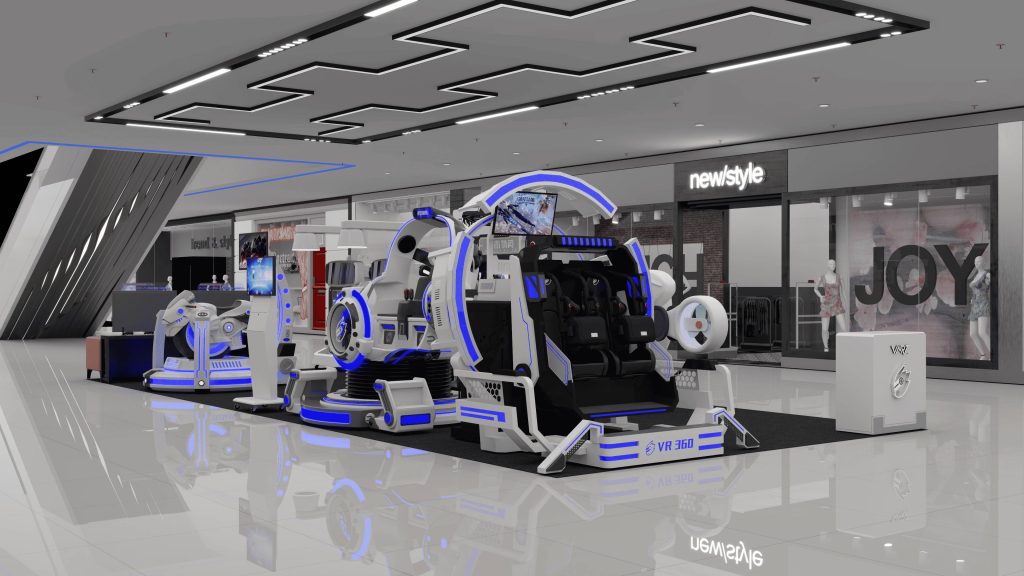
Understanding the Infrastructure Requirements Before Installation
Before selecting equipment, operators must evaluate venue infrastructure.
Many installation challenges occur because power, networking, or space planning were not considered during the early stages of project development.
The most successful venues begin with infrastructure planning before equipment purchasing decisions are finalized.
Power Supply Requirements for Commercial VR Equipment
Power compatibility is one of the most common concerns for international buyers.
Fortunately, most commercial VR equipment can be configured to match local electrical standards.
Understanding the differences helps avoid unnecessary delays during installation.
Power Standards in the United States
Most commercial locations in the United States operate using:
- 110V–120V systems
- 60Hz frequency
Commercial entertainment venues may also have access to higher-capacity circuits depending on building infrastructure.
Before installation, operators should verify:
- Available voltage
- Circuit capacity
- Distribution panel capacity
- Dedicated equipment circuits
This information helps ensure stable operation of motion simulators and other high-performance equipment.
Power Standards in the UK and Europe
Most UK and European venues operate using:
- 220V–240V systems
- 50Hz frequency
Commercial VR equipment exported to these markets is typically configured accordingly.
Before ordering equipment, confirm:
- Voltage requirements
- Plug standards
- Local electrical regulations
- Installation procedures
Professional suppliers can often provide pre-configured solutions for different regions.
Why Motion Platforms Require Stable Power
High-performance simulators frequently include:
- Motion actuators
- Hydraulic systems
- Electric motors
- Control systems
- High-end computers
- VR headsets
Unstable power can lead to:
- Unexpected shutdowns
- Motion errors
- Reduced equipment lifespan
- Customer dissatisfaction
For commercial venues, stable power infrastructure is essential.
Network Infrastructure for Multiplayer VR Attractions
Modern VR entertainment increasingly relies on connected experiences.
Many operators now install:
- Multiplayer shooting arenas
- Competitive VR tournaments
- Real-time leaderboards
- Cloud-based content management
These systems require reliable network performance.
Multiplayer Arena Requirements
Multiplayer attractions depend on low-latency communication between devices.
Network instability may cause:
- Gameplay interruptions
- Synchronization issues
- Score tracking errors
For best performance, operators should consider:
- Dedicated network hardware
- Commercial-grade routers
- Wired network connections where possible
- Network segmentation for gaming systems
Real-Time Scoreboards and Spectator Displays
Many successful VR venues display live scores and gameplay on large screens.
Benefits include:
- Increased customer engagement
- Spectator participation
- Competitive atmosphere
- Enhanced social sharing
Reliable networking helps maintain smooth operation of these systems.

Safety Regulations and Arcade Equipment Compliance
Safety remains one of the most important considerations when importing commercial VR equipment.
Buyers frequently ask about certification requirements.
Understanding the purpose of common certifications can simplify the purchasing process.
Understanding CE Certification
CE certification demonstrates compliance with applicable European safety and regulatory requirements.
For commercial entertainment equipment, CE documentation is often requested during import or installation processes.
Understanding RoHS Compliance
RoHS relates to restrictions on specific hazardous substances used in electronic equipment.
This certification is particularly important for products entering many international markets.
Understanding TUV Testing
TUV testing is widely recognized as an indicator of safety and quality evaluation.
Many buyers view TUV certification as an additional layer of confidence when selecting equipment.
Understanding SGS Verification
SGS inspection and verification services are frequently used within international trade.
These evaluations help demonstrate manufacturing quality and product consistency.
Certification Comparison Table
| Certification | Primary Purpose | Common Market Relevance |
|---|---|---|
| CE | Product Safety & Compliance | Europe |
| RoHS | Environmental Compliance | Europe & International |
| TUV | Independent Safety Evaluation | Global |
| SGS | Quality Verification & Inspection | Global |
Working with certified equipment helps reduce compliance concerns and simplifies project planning.
Safety Systems for Full 360-Degree Motion Equipment
Advanced motion simulators generate strong visual impact and immersive experiences.
However, they must also maintain high safety standards.
Structural Stability Matters
Commercial equipment experiences thousands of operating cycles each year.
Industrial-grade construction helps ensure:
- Long-term durability
- Stable operation
- Reduced maintenance
- Consistent performance
Structural integrity becomes especially important for:
- 360° rotating simulators
- Flight simulators
- Motion platforms
- Multi-axis attractions
Safety Belts and Restraint Systems
Proper restraint systems help protect riders during operation.
Key considerations include:
- Secure locking mechanisms
- Routine inspection schedules
- Staff verification procedures
- Operator training
Reliable restraint systems contribute significantly to customer confidence.
Emergency Stop Systems
Professional commercial VR equipment should include:
- Emergency stop controls
- Accessible operator controls
- Clear shutdown procedures
These systems provide additional operational protection.
Designing an Effective VR Theme Park Floor Plan
A successful VR theme park floor plan balances three objectives:
- Safety
- Customer flow
- Revenue generation
Poor layouts can reduce efficiency and create operational challenges.
Understanding Safe Clearance Zones
Moving equipment requires sufficient surrounding space.
Clearance zones help prevent accidental contact between:
- Riders
- Staff
- Passing customers
- Adjacent attractions
Ignoring clearance requirements can create safety risks and operational inefficiencies.
Typical Layout Planning Considerations
Professional planners evaluate:
- Rotation radius
- Customer waiting zones
- Queue management
- Emergency access
- Visibility from main walkways
- Spectator areas
Every attraction should have sufficient operational space while maintaining strong visual appeal.If you are comparing single-seat and double-seat machines, this 360 VR simulator profitability analysis can help you choose the better commercial option.
Customer Flow Design
Good layouts naturally guide visitors through the venue.
Effective traffic flow often increases:
- Dwell time
- Ticket purchases
- Attraction visibility
- Customer satisfaction
Strategic placement can improve overall venue performance.
Why Professional CAD Planning Matters
A professional VR theme park floor plan provides advantages beyond aesthetics.
It helps operators:
- Maximize space utilization
- Avoid installation conflicts
- Improve customer movement
- Reduce safety concerns
- Plan future expansion
Many costly mistakes can be avoided before construction begins.
How VART VR Supports International Freight and Installation
International procurement can feel complex for first-time buyers.
VART VR has spent more than a decade supporting customers across global markets.
With exports reaching over 100 countries, the company has developed experience in:
- International logistics
- Documentation support
- Customs preparation
- Equipment installation
- Remote technical assistance
This experience helps simplify the process for venue operators.
Pre-Certified Commercial Equipment
VART VR supplies commercial-grade attractions designed for international deployment.
Certification support helps customers navigate local compliance requirements more efficiently.
Remote Technical Support
Many installations can be completed with:
- Video guidance
- Online troubleshooting
- Remote software configuration
- Technical consultation
This reduces deployment costs while maintaining operational reliability.
Venue Planning Assistance
Professional planning services may include:
- CAD layouts
- Equipment recommendations
- Customer flow optimization
- Attraction placement strategies
These services help investors make informed decisions before committing to construction.

Common Mistakes International Buyers Should Avoid
Several issues frequently delay projects.
Avoid these mistakes:
- Ordering equipment before confirming electrical requirements
- Underestimating safety clearance zones
- Ignoring networking requirements
- Choosing equipment without certification documentation
- Failing to plan future expansion
- Overcrowding attractions within limited floor space
Proper planning significantly reduces project risk.
Final Thoughts
Launching a successful VR attraction in the US or UK requires more than exciting technology.
Long-term success depends on careful planning, regulatory awareness, infrastructure readiness, and professional installation support.
Whether you are starting a VR business in USA, expanding an entertainment center in the UK, or developing a larger immersive attraction, understanding compliance requirements and venue design principles can dramatically improve your project’s outcome.
Planning your venue layout?
Send VART VR your room dimensions, and our engineers will provide a complimentary, compliance-focused CAD layout proposal within 48 hours.
FAQ
What power supply is required for commercial VR equipment?
Requirements vary by machine type. Most US venues use 110V–120V systems, while UK and European venues typically use 220V–240V systems.
What certifications should commercial VR equipment have?
Common certifications include CE, RoHS, TUV, and SGS-related verification depending on market requirements and equipment categories.
Why is a VR theme park floor plan important?
A professional floor plan helps maximize space utilization, improve customer flow, maintain safety clearances, and increase operational efficiency.
Can multiplayer VR arenas operate on Wi-Fi?
While some systems can operate wirelessly, commercial environments often benefit from dedicated network infrastructure and wired connections for improved stability.
Does VART VR provide installation support for overseas customers?
Yes. VART VR provides remote technical support, installation guidance, logistics assistance, and venue planning services for international customers.