How to Combine VR Arcade Equipment: A Layout Guide by Customer Type, Floor Area and Guest Flow


Planning a VR arcade equipment mix, and choosing a reliable VR arcade equipment manufacturer, starts with your customers, your site and your budget. VART (Guangzhou Longcheng Electronics Co., Ltd.) works from the client’s budget, site and theme to build project combinations and CAD layouts, connecting content adaptation, hardware production, system integration, installation, commissioning and training. If you want an exclusive theme, the discussion can go further into player roles, story missions, hardware and content customization and effect triggers. The scope of custom content and delivery is confirmed in the specific proposal.
A workable pattern is “entrance showpiece + interactive group attraction + themed main experience,” then add or remove pieces according to your site and staffing. A small venue should first get short-session play and flexible reception right. A larger venue can add walk-through, story-driven main attractions so guests have more to choose from.
Start with three questions: Why does a passerby stop? How do two or three people play together? And after the experience, what gives guests a reason to come back? Equipment selection, content menu and VR arcade layout should all follow from these questions.
What Do Current Consumer Trends Mean for VR Arcade Equipment Planning?
Market signals from China, where VART is based, offer one early read. China’s Ministry of Culture and Tourism announced on October 9 that during the seven-day 2026 National Day holiday, domestic trips reached 826 million, with total domestic travel spending of RMB 738.375 billion. On a comparable daily-average basis, these figures are up 6.3% and 4.3% respectively over 2025. The announcement also noted that digital exhibitions, VR/AR experiences and the integration of culture, commerce, tourism and sports enriched the visitor experience.
Shopping districts are also folding shopping and activities into a single outing. A holiday review released by the Shanghai municipal government on October 8 described light shows, interactive installations, stamp collecting, markets and dining coming together as the district experience, with some programs linking nearby merchants through ticket benefits.
With these observations in mind, a VR arcade can first assess three things: Can passersby understand the gameplay at a glance? Can groups take part together? And can each attraction fit into a shopping, dining or dedicated-visit schedule? Holiday market performance offers a planning idea, but each venue still needs to verify it against its own ticket sales and guest-handling records.
Define Each Machine’s Role First, Then Choose the Specific Product
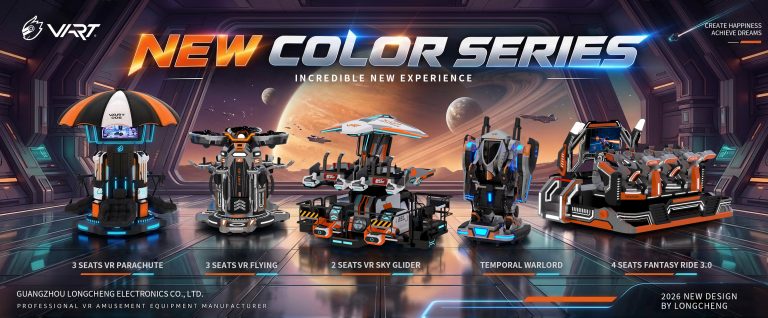
Using VART’s current lineup as an example, different machines can take on different jobs:
| Role | Product to evaluate | How players experience it | Planning focus |
|---|---|---|---|
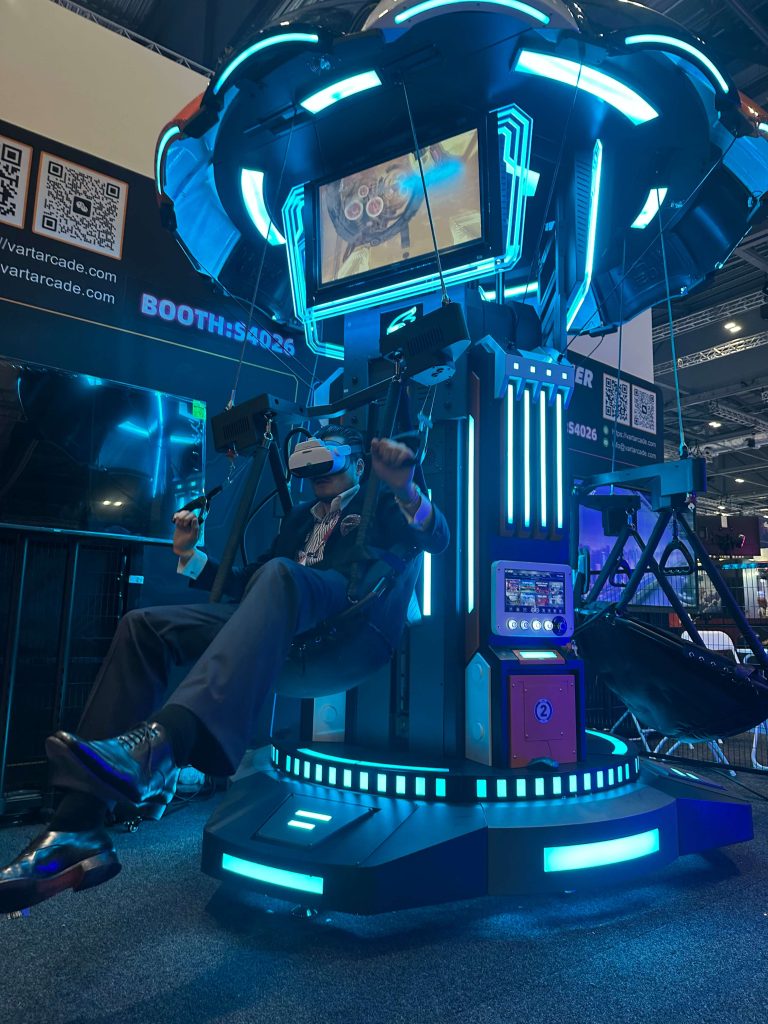
| Solo challenge and entrance display | Space-Time Warrior VR mech simulator | Wear a headset and grip dual shooting joysticks to fight in a mech | Serves solo guests; the mech’s motion helps onlookers understand the game |
| Walk-ins and small-group interaction | 3 Seats VR Parachute Simulator | In supported active content, pull the left and right cables and feel lift, side tilt and synced visual feedback | Three seats in one unit; independent reception, or a three-player race in supported content |
| Shared two-player experience | 2 Seats VR Sky Glider Simulator | Two players go from standing to prone level flight, with pitch, lift and wind effects | Gives friends and couples a shared flight and creates a visible show process |
| Multi-player themed exploration | Star Traveler XR Full-Sensory Theater | Wear a headset, walk and observe, follow the story and use gesture interaction in supported content | A themed main attraction; needs booking, gear-up, guidance and exit flow |
You do not have to use all four roles. One machine can handle display and interaction at the same time. What matters is that the gameplay in your lineup is distinct and fits the guests who actually visit.
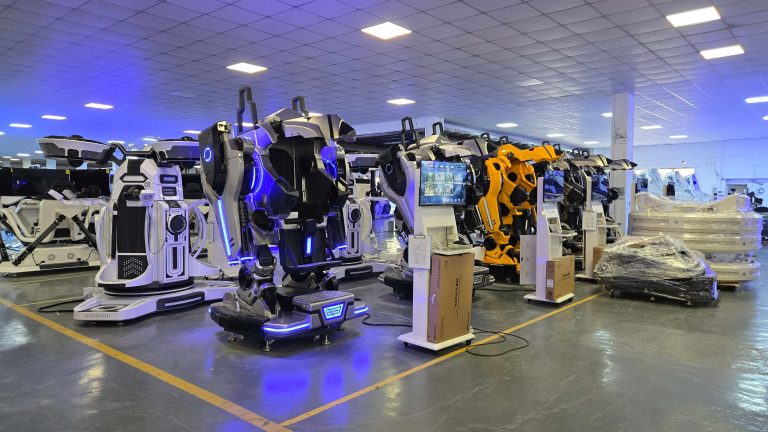
Space-Time Warrior suits guests who want to try something on their own. Players operate dual shooting joysticks, and onlookers can see the canopy open and close, the body rotate and the mechanical arms move. After supported content ends, a score ranking is displayed, so the venue can run score challenges. Paired with multi-player attractions, it gives guests a play option that is relatively easy to staff.
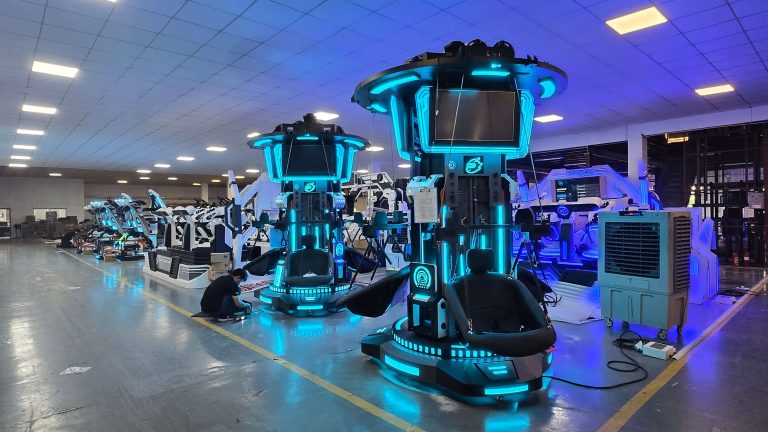
The 3 Seats VR Parachute Simulator serves both walk-in guests and groups. The three seats can each choose content, start and finish separately, so you do not have to wait for a full house during quiet hours. When three friends arrive together, they can pick content that supports a three-player race and compare scores afterward. Independent play and linked races should be scheduled separately, and a linked race follows the rules of the specific game. The content is compact and fun: players use stereoscopic interaction, controlling the left and right cables to lift and tilt, collecting points at different positions in the scene and using power-ups to defeat the boss.
The 2 Seats VR Sky Glider Simulator is about sharing one flight. While players stand ready, staff help them fasten in and put on their headsets, and the platform then moves into a forward-facing prone level-flight position. Together, the two players go through a steep 105° dive, 400 mm (15.7 in) of lift, wind and water-spray effects, and afterward they can compare how it felt. For display purposes, show boarding, the move into level flight and the ride itself as one continuous process so guests understand the attraction’s appeal.
Star Traveler suits venues that want a fuller themed experience. Content such as “VART Star Journey,” “Deep Blue Awakening” and “Heirloom of the Realm” offers space exploration, ocean conservation and Chinese-style time-travel storylines. Players walk through the physical space, touch real set pieces, feel the motion and full-sensory effects of each scene, and interact in supported content.
How Should Different Floor Areas Be Combined?
Floor area gives you a direction, but the final choice also depends on clear dimensions, walls and columns, minimum ceiling height, equipment motion range and the full service space. Treat the following as a planning starting point:
| Venue size | Combinations to evaluate first | Layout focus |
|---|---|---|
| About 30 to 50 m² (320 to 540 sq ft) | One solo-challenge attraction plus one two-seat or three-seat candidate | Limit the number of attractions; keep room for loading, staff operation and waiting |
| About 60 to 80 m² (650 to 860 sq ft) | Solo challenge plus two-player shared experience, or a three-seat interactive machine plus another distinct attraction | Decide by ceiling height, motion range and staffing; this size can generally cover different play formats |
| About 100 to 120 m² (1,080 to 1,290 sq ft) | Entrance display plus group interaction; where conditions allow, evaluate one themed main attraction | Draw the full service area first, then decide whether to add a large-space attraction |
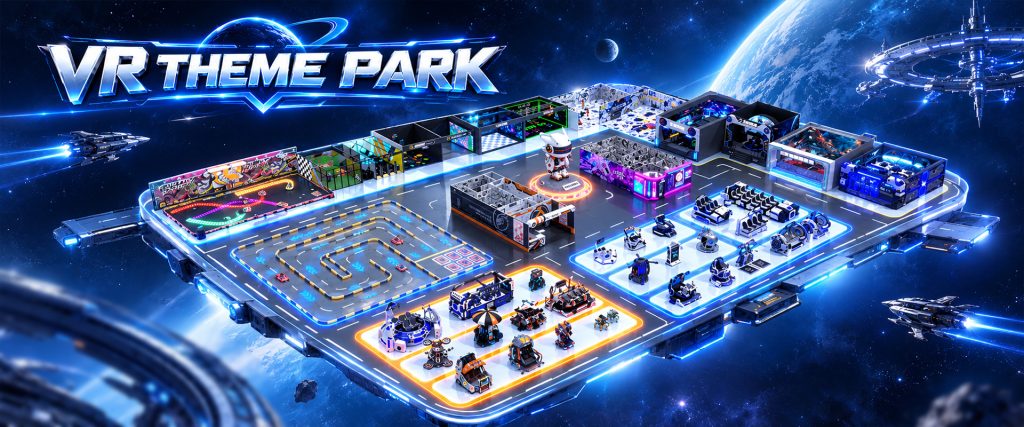
| About 150 to 200 m² and up (1,615 to 2,150+ sq ft) | Short-session zone plus multi-player theme zone plus a central waiting area | Splits guest types, supports both booked and walk-in sessions; a large theater attraction can be considered |
For example, the 3 Seats VR Parachute Simulator has an outer footprint of about 2.5 m × 2.5 m (8.2 × 8.2 ft), and the 2 Seats VR Sky Glider Simulator about 2.5 m × 3.0 m (8.2 × 9.8 ft). These numbers describe the size of the machine only. The layout drawing must also include the safe motion zone, loading and unloading, staff assistance, maintenance access and queue space.
If you are considering the Star Traveler XR Full-Sensory Theater, the 12-player version has a reference size of 6.2 m × 8.2 m (20.3 × 26.9 ft), and the 24-player rolling version 6.2 m × 10.2 m (20.3 × 33.5 ft). For an initial screening, reserve a clear ceiling height of at least 2.9 m (9.5 ft), plus gear-up, waiting and entry/exit paths. So the question “can a 100 m² (about 1,076 sq ft) venue fit a large-space attraction?” has to be judged together with the shape of the unit, columns, aisles and service areas.
Avoid three situations when planning:
- Placing several machines with similar gameplay and content in a row, which makes it hard for guests to see the difference between experiences.
- Filling the floor with machines without thinking about guest flow.
- Adding several attractions that all need staff assistance at the same time, without scheduling matching staff positions.
How Can the Equipment Mix Fit Both Weekdays and Weekends?
Weekdays and weekends can use the same set of equipment, with a different emphasis in reception and product offering.
On weekdays, you can test solo challenges, two-player shared experiences and small-group bookings. The independent seats on the Parachute Simulator let walk-in guests play at their own pace, while the themed attraction can take concentrated bookings, making it easier to schedule guide and gear-up staff.
On weekends, you can link short-session attractions and the themed attraction into a play route. For example, a guest picks a solo or group experience first, then enters the themed theater at a booked time. Make each product page state clearly how many people, how many sessions, what content and what booking requirements each attraction includes, so guests know how to plan their time before they buy a ticket.
A machine’s reception capacity has to be calculated over the complete cycle. After a game ends, there are still headset removal, cleaning, briefing, safety restraint and handover steps. The interactive content on the Parachute Simulator typically runs about 5 to 6 minutes per session, but when the next guest can actually start depends on recording all of this service time together.
A trial run can start with one combo ticket that clearly states the included attractions, number of people, number of sessions, validity period and applicable time slots, and then track four metrics:
- Redeemed guest count: record solo, two-player and group guests separately.
- Effective reception cycle: from the start of preparation for one round to the moment the next round can begin.
- Waiting time: see which attraction guests queue at in concentrated numbers.
- Redeemed revenue on a consistent basis: net of refunds, with a note on how channel fees are treated.
If most guests choose only one attraction, adjust the combo benefits or the machine roles. If the themed attraction has long queues, first adjust the booking batches, gear-up staffing and the way remaining on-site spots are sold.
Settle the Equipment Mix Together With Content and Delivery
An executable plan connects equipment, content, layout and people.
VART’s team can take a project from CAD layout through content adaptation, hardware production, system integration, on-site installation, commissioning and staff training, working from your budget, site and theme. For a venue that wants an exclusive theme, player roles, story missions, hardware customization and effect triggers can be worked out in detail, and the final scope is confirmed in the written proposal.
Before you buy, arrange a full trial run: start from the briefing, gear-up and safety check, and finish with the experience, cleaning and handover to the next round. This makes it easier to judge whether your planned staff can run the machine smoothly, and which content suits your target guests.
FAQ: VR Arcade Equipment Mix and Layout
What type of equipment should a small VR arcade buy first?
Choose one attraction that can serve your main customer group. If you get many walk-in guests, evaluate a solo challenge or an independent-seat attraction. If you get more groups of friends, evaluate a two-player shared experience or content that supports team play, then add other gameplay as space allows.
How do I choose between a two-seat and a three-seat machine?
Look at how many people usually arrive together and what gameplay you want. The 2 Seats VR Sky Glider Simulator is about flying together. The 3 Seats VR Parachute Simulator offers independent reception plus three-player races in supported content. You can choose by customer type, or let the two machines create different experiences where space permits.
Which attractions suit families with children?
First check height, age, physical condition and content intensity, then choose a shared experience or themed exploration. The Sky Glider’s current specification lists a height range of 1.2 to 1.9 m (about 3 ft 11 in to 6 ft 3 in), and actual admission must follow the operating instructions. Sci-fi horror content should carry a separate note on age suitability and intensity.
Do multi-player machines always improve revenue per square foot?
Multiple seats create the conditions for reception, but revenue per square foot also depends on seat utilization, the full service cycle, redeemed revenue and staff input. Calculate it over your full operating area, and look at weekdays and weekends separately.
What information do I need to provide for an equipment mix plan?
Share your city, floor plan, clear length and width, minimum ceiling height, floor level and delivery route, fire exits, budget, main customer groups, planned staffing and opening date. With these, the VART team can evaluate the equipment mix and layout in more detail.