


How Much Does a Commercial VR Arcade Machine Cost? 2026 Price & ROI Guide


Key Takeaways
- Commercial VR arcade equipment pricing varies widely based on hardware, motion systems, multiplayer capability, and content licensing.
- Entry-level VR stations are ideal for small entertainment venues, while dynamic simulators and multiplayer arenas deliver higher long-term ROI.
- The real question is not “How much does a VR machine cost?” but “How quickly can it generate profit?”
- Most professionally operated VR arcades can recover equipment investment within 3–12 months depending on traffic and pricing strategy.
- Bundled package solutions often reduce overall setup costs for VR theme parks and family entertainment centers.
The commercial VR industry is no longer a “future trend.” In 2026, it has become one of the fastest-growing segments in indoor entertainment.
If you are searching for the real commercial VR arcade machine price, the answer is more complex than a simple number. A VR simulator is not just another arcade cabinet—it is a revenue-generating attraction designed to increase customer traffic, session time, and repeat visits.
For most venue owners, the most important metric is not the initial purchase cost. It is the return on investment.
A properly selected VR simulator can become the centerpiece of an entertainment venue and generate stable daily income for years.
In this guide, we will break down:
- What affects VR simulator cost
- Different commercial VR equipment price ranges
- Real operational expenses
- Estimated ROI and profit potential
- How to choose the right VR arcade equipment for your business
Why Commercial VR Arcades Continue Growing in 2026
Traditional arcade machines still attract players, but immersive entertainment is now driving higher customer engagement.
Consumers today want:
- Interactive gameplay
- Motion-based experiences
- Multiplayer attractions
- Social-media-friendly entertainment
- Premium “cannot-play-at-home” experiences
This is exactly where commercial VR equipment stands out.
Modern VR arcades are now commonly found in:
- Shopping malls
- Family entertainment centers
- Theme parks
- Tourism destinations
- Indoor playgrounds
- Gaming centers
- Event venues
- Resorts and cruise entertainment zones
For investors, VR machines offer something very attractive:
High perceived value with relatively low floor space requirements.
A 20–50㎡ VR area can often generate revenue comparable to much larger traditional attractions.
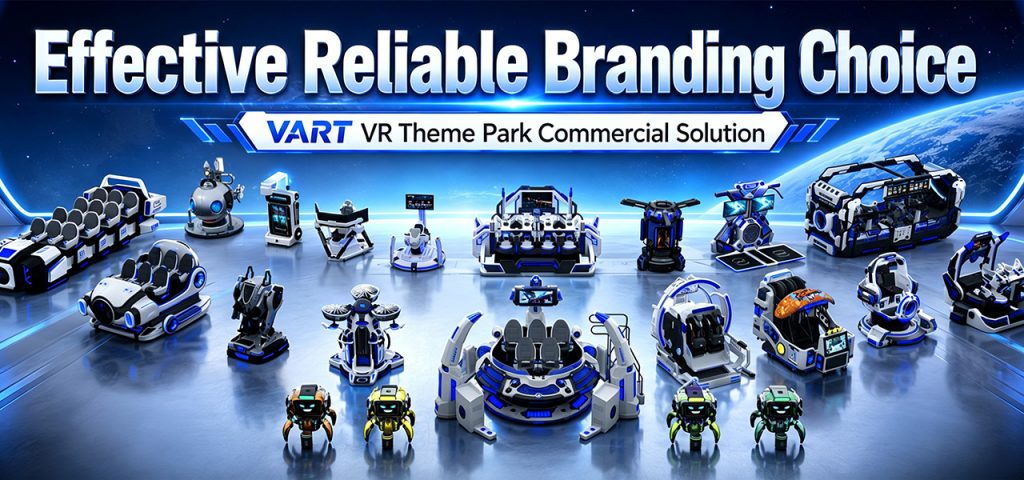
What Affects Commercial VR Arcade Machine Prices?
Not all VR machines are built the same.
The difference between a small VR station and a large multiplayer simulator can be enormous—not only in price, but also in earning potential.
Here are the biggest factors that affect commercial VR simulator cost.
Hardware Configuration
The hardware setup directly impacts immersion quality and player satisfaction.
Higher-end systems usually include:
- 4K or 8K VR displays
- Advanced motion platforms
- Wind, vibration, and environmental effects
- High refresh rate headsets
- Industrial-grade frames
- Multiplayer synchronization systems
For example:
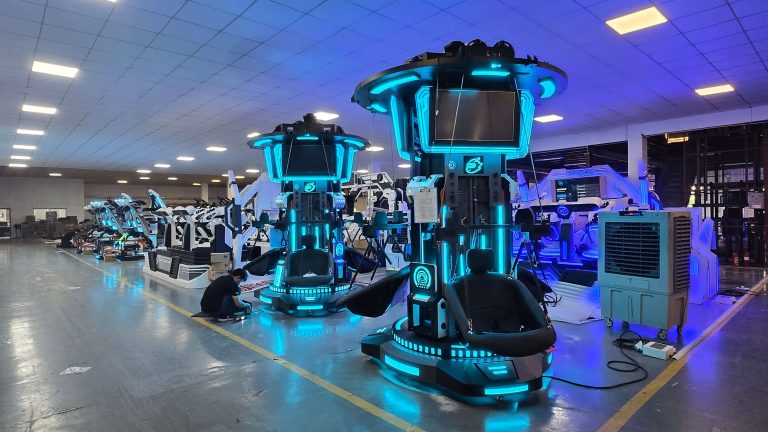
A basic standing VR station costs far less than a 360-degree motion simulator with dynamic movement.
The more realistic the experience feels, the easier it becomes to charge premium ticket pricing.
Degrees of Motion and Dynamic Effects
Motion systems significantly impact pricing.
Commercial VR simulators may include:
| Motion Type | Experience Level | Typical Application |
|---|---|---|
| Static VR | Basic | Small game corners |
| 2DOF Motion | Medium | Racing simulators |
| 3DOF Motion | High | Flight simulators |
| 360° Rotation | Premium | Extreme thrill rides |
| Full Interactive Platform | Ultra Premium | Theme park attractions |
Dynamic effects can include:
- Wind simulation
- Seat vibration
- Mist spray
- Lighting synchronization
- Environmental interaction
These features improve player immersion and justify higher ticket prices.
Content Library and Game Licensing
Software is often underestimated when calculating VR simulator cost.
Commercial-grade VR equipment usually includes:
- Exclusive games
- Multiplayer content
- Licensed experiences
- Regular updates
- Operator management systems
A simulator with high-quality exclusive games generally produces stronger repeat business than systems using generic downloadable content.
At VART VR, many commercial clients prioritize long-term content updates over low upfront pricing because updated games help maintain customer retention.
Build Quality and Commercial Durability
Consumer VR systems are not designed for heavy commercial operation.
Commercial VR arcade equipment must survive:
- Continuous daily usage
- High player turnover
- Transportation
- Public operation environments
- Frequent cleaning and maintenance
Industrial-grade components naturally increase equipment pricing but dramatically reduce downtime.
Lower downtime means higher monthly revenue.
Technical Support and Warranty
After-sales support is often the hidden factor behind price differences.
Professional manufacturers typically provide:
- Remote troubleshooting
- Installation guidance
- Spare parts support
- Software updates
- Training assistance
- Long-term technical maintenance
Cheaper equipment without global support may initially appear attractive but can become extremely costly if the machine experiences prolonged downtime.
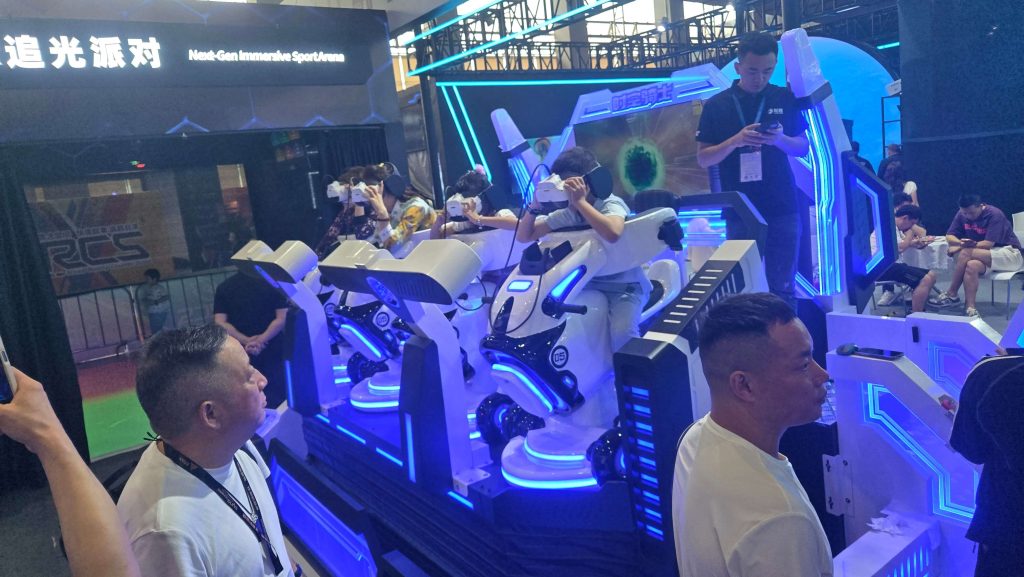
Estimated Commercial VR Arcade Equipment Price Ranges in 2026
The following ranges represent general commercial market estimates.
Actual pricing depends on:
- Country
- Shipping costs
- Custom branding
- Motion configuration
- Quantity ordered
- Software package
- Multiplayer requirements
Entry-Level VR Stations
Ideal for:
- Small malls
- Coffee shops
- Beginner arcades
- Compact entertainment corners
Estimated Range:
$3,XXX – $9,XXX
Typical features:
- Single-player VR gameplay
- Basic motion interaction
- Compact footprint
- Lower operational cost
These machines are excellent for testing local market demand with lower initial investment.
However, they usually generate lower ticket pricing compared to dynamic simulators.
Professional Dynamic VR Simulators
Ideal for:
- Commercial VR arcades
- Family entertainment centers
- Theme parks
- High-traffic venues
Estimated Range:
Custom pricing based on configuration
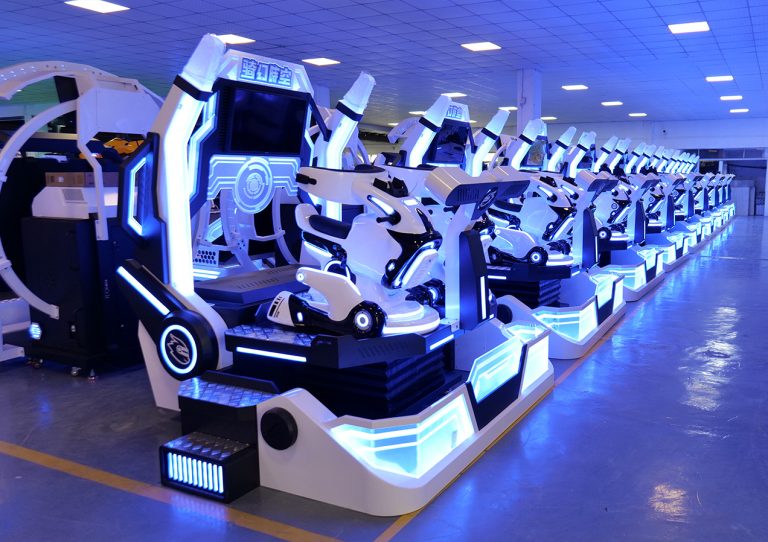
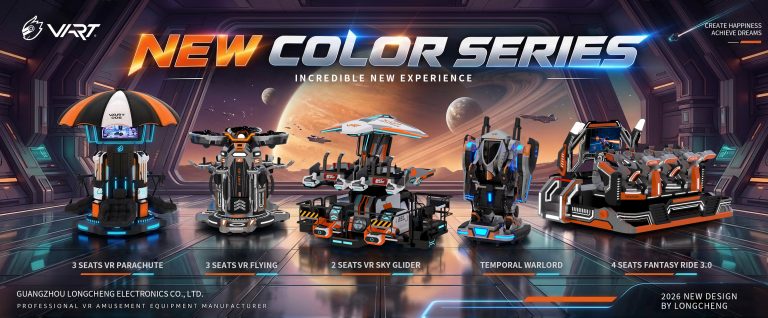
Common categories include:
- VR racing simulators
- VR flight simulators
- VR roller coaster rides
- VR motorcycle simulators
- VR parachute simulators
These machines generally deliver:
- Higher replay value
- Better social media exposure
- Premium ticket pricing
- Stronger visual attraction
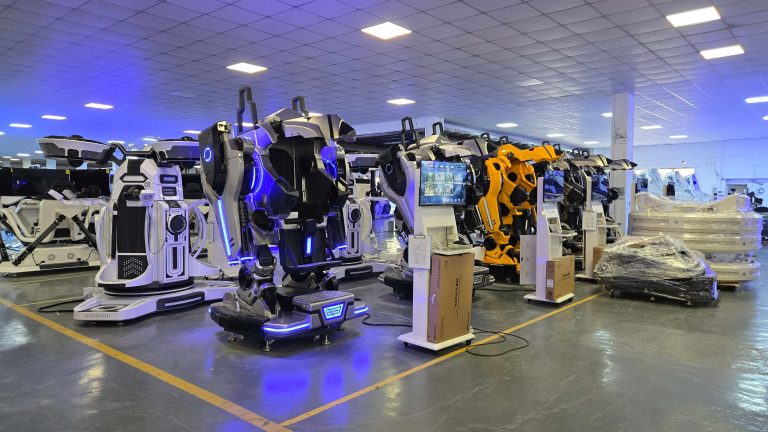
Many operators consider these machines the “traffic magnets” of a venue.
Multiplayer Interactive VR Arenas
Ideal for:
- Large entertainment venues
- Group activities
- Competitive gaming experiences
Estimated Range:
Custom pricing based on space and player capacity
Typical features:
- Free-roam gameplay
- Multiplayer combat
- Team cooperation
- Interactive tracking systems
- Custom arena layouts
Although the investment is higher, multiplayer VR attractions often produce stronger long-term revenue because they increase group bookings and repeat visits.
Commercial VR Equipment vs Traditional Arcade Machines
| Category | Traditional Arcade | Commercial VR Equipment |
|---|---|---|
| Customer Attraction | Medium | Very High |
| Ticket Pricing | Low | Premium |
| Social Media Appeal | Limited | Excellent |
| Repeat Visits | Moderate | High |
| Space Efficiency | Medium | High |
| Revenue Potential | Stable | High Growth |
| Immersion Level | Basic | Advanced |
Traditional arcade games remain valuable, but VR creates experiences that are difficult to replicate at home.
This is why many modern entertainment centers are gradually shifting toward immersive attractions.
Hidden Operational Costs You Must Consider
A successful VR arcade business is not only about machine pricing.
Operational costs also matter.
Fortunately, VR attractions often require lower maintenance compared to many mechanical amusement rides.
Venue Rent
Rent is usually the largest monthly expense.
The advantage of VR is that it generates high visual impact within relatively compact spaces.
Many operators start with:
- 30㎡ mini VR zones
- 50㎡ VR gaming areas
- 100㎡+ immersive entertainment centers
Space optimization is critical for profitability.
Electricity Consumption
Commercial VR simulators generally consume less power than large amusement rides.
Typical power usage depends on:
- Motion intensity
- Number of players
- Lighting systems
- Air conditioning
- Auxiliary effects
Energy-efficient systems can significantly reduce monthly operating costs.
Staffing Costs
Most VR arcades require relatively small teams.
A medium-sized VR venue can often operate with:
- 1–2 attendants
- 1 cashier/operator
- Basic cleaning staff
Automation systems further reduce labor requirements.
Maintenance and Consumables
Common operational expenses include:
- VR headset cleaning
- Face mask replacements
- Minor spare parts
- Software updates
- Routine inspections
High-quality commercial systems typically reduce long-term maintenance frequency.
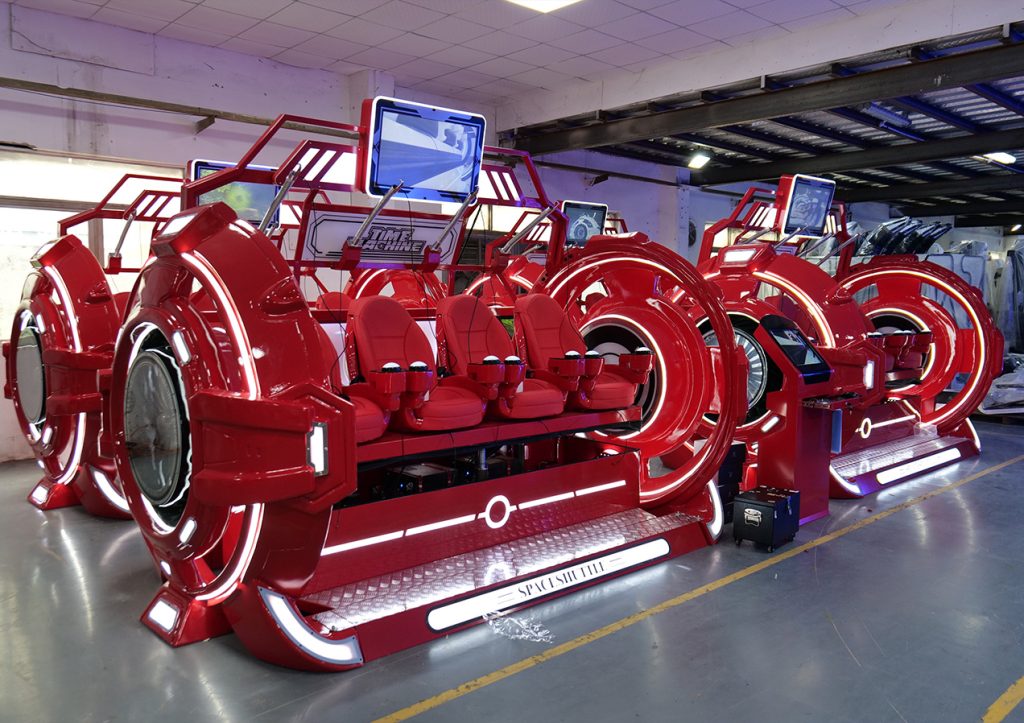
VR Arcade ROI Calculation — How Fast Can You Recover Investment?
This is the most important question for most buyers.
Fortunately, commercial VR equipment usually offers attractive profit margins when operated correctly.
Basic ROI Formula
A simplified calculation looks like this:
Daily Profit=(Ticket Price×Daily Players)−Operating Costs
The higher the venue traffic and replay rate, the faster the investment recovery.
Example ROI Scenario
Let’s look at a simplified example.
| Item | Example Value |
|---|---|
| Average Ticket Price | $10 |
| Daily Players | 80 |
| Daily Revenue | $800 |
| Estimated Daily Operating Cost | $150 |
| Estimated Daily Profit | $650 |
At this level, many operators can potentially recover equipment investment within several months.
Actual results vary depending on:
- Location
- Marketing quality
- Equipment selection
- Customer traffic
- Local pricing power
Estimated Payback Cycle by Venue Type
| Venue Type | Typical ROI Period |
|---|---|
| Small VR Corner | 6–12 Months |
| Mid-Size VR Arcade | 4–8 Months |
| High-Traffic Mall Location | 3–6 Months |
| Large Multiplayer VR Arena | 8–18 Months |
The key factor is not simply equipment price.
It is choosing attractions that maximize customer throughput and replay value.
Why Package Deals Often Deliver Better Value
Many new investors focus only on individual machine pricing.
Experienced operators usually think differently.
Instead of buying a single attraction, they build a balanced entertainment mix.
A package solution may include:
- VR racing simulator
- VR roller coaster
- VR flight simulator
- Multiplayer shooting arena
- Kid-friendly VR games
This approach offers several advantages:
- Better audience coverage
- Improved customer retention
- Stronger visual impact
- Higher average customer spending
- Reduced per-unit procurement cost
Many commercial VR equipment manufacturers offer discounted package pricing for multi-machine purchases.
How to Choose the Right Commercial VR Equipment
Before purchasing, ask yourself these questions:
What is your target audience?
Families, teenagers, tourists, or hardcore gamers?
What is your venue size?
A small VR corner requires different equipment than a large theme park.
What is your business positioning?
Premium immersive attraction or casual entertainment?
Do you prioritize fast ROI or long-term branding?
Different machines serve different investment strategies.
Does the manufacturer provide global support?
Reliable technical support is critical for commercial operation.
Choosing the wrong equipment can delay profitability.
Choosing the right equipment can transform a venue into a local entertainment destination.

Final Thoughts — Commercial VR Equipment Is an Investment, Not Just a Cost
The commercial VR industry in 2026 continues expanding rapidly because immersive entertainment delivers something customers actively seek:
Experiences they cannot get at home.
When evaluating commercial VR arcade machine price, smart investors focus on:
- Customer attraction
- Throughput
- Replay value
- Operational efficiency
- Long-term ROI
The cheapest machine is rarely the most profitable.
The best investment is the equipment that consistently brings customers back.
If you are planning to launch or upgrade a VR entertainment venue, choosing the right partner can dramatically reduce operational risk while maximizing long-term profitability.
Want to see real commercial VR arcade solutions and customized equipment packages?
Explore professional immersive entertainment solutions from VART VR or request a customized quotation based on your venue size and business goals.For a complete roadmap, check out our VR arcade business plan guide.
FAQ
How much does a commercial VR arcade machine cost?
Commercial VR arcade machine prices vary depending on hardware configuration, motion systems, software content, and multiplayer capability. Entry-level systems may start from several thousand dollars, while advanced simulators and multiplayer arenas require customized quotations.
What affects VR simulator cost the most?
The biggest pricing factors include motion platform complexity, VR display quality, software licensing, multiplayer functionality, and after-sales support services.
Are VR arcades profitable in 2026?
Yes. Well-operated VR arcades can generate strong profit margins due to premium ticket pricing, high replay value, and compact space utilization.
How long does it take to recover investment in VR arcade equipment?
Many commercial VR venues achieve ROI within 3–12 months depending on customer traffic, operational efficiency, and equipment selection.
Is it better to buy a single VR simulator or a package solution?
For most entertainment venues, package solutions provide better customer variety, stronger visual attraction, and improved long-term profitability.

I like this
Thank you for your inquiry. Our sales team will contact you and provide you with the corresponding product pricing.