Commercial VR Equipment Buying Guide: Software, Warranties & Support


Key Takeaways for Commercial VR Equipment Buyers
- A reliable commercial VR equipment buying guide should look far beyond the machine’s initial purchase price. Software licensing, daily operating durability, spare-parts access, technical support, and customization all affect long-term ownership cost.
- VART VR games are supplied with the corresponding equipment and are frequently updated and synchronized, helping operators avoid purchasing unrelated consumer software separately.
- Different VART VR systems support different capacities, from single-player and two-player attractions to three-player and multi-player machines, with selected systems supporting approximately four to five players per batch.
- VART VR reports that its commercial equipment has been tested for operating periods of up to 20 hours per day, although the recommended operating schedule must be confirmed for each individual product.
- Buyers can request installation assistance, remote technical support, spare parts, and OEM options including logos, branding elements, and equipment colors.
- Before placing an order, evaluate the complete operating system: hardware, games, warranty terms, replacement components, venue layout, installation, and long-term service.
Buying commercial VR simulators for an arcade, Family Entertainment Center, shopping mall, theme park, or indoor entertainment venue is very different from purchasing a consumer headset.
The equipment may look impressive in a showroom, but long-term profitability depends on what happens after opening day. Can the games continue operating without unexpected subscription costs? Can the machine withstand long commercial operating hours? What happens when a controller or shooting gun wears out? Can your team receive technical support after the equipment has been shipped overseas?
These questions matter because every hour of downtime can mean lost ticket sales.
This guide explains the ten questions buyers should ask when evaluating a VR simulator manufacturer, with a particular focus on software licensing, player capacity, maintenance, VR arcade hardware warranty support, spare parts, installation, remote assistance, and custom VR arcade hardware options.
1. Understand VR Game Software Licensing Before You Buy
Hardware price is easy to compare.
Software is where many operators forget to look.
A VR simulator may seem attractively priced, but the commercial operating cost can change significantly if the content requires recurring subscriptions, separate commercial licenses, or additional fees for every new title.
Is the Game License Included?
For VART VR equipment, the VR games designed for the corresponding machine are included with that device. VART VR also states that its VR games are frequently updated and synchronized.
This makes the software model easier for venue operators to understand because the machine and its compatible game content are supplied together.
However, buyers should still confirm the exact software terms for the specific model being purchased.
Ask your supplier:
- Which games are included?
- How many titles are installed?
- Are future updates included?
- Does the equipment require any third-party software?
- Are there region-specific licensing requirements?
- Can content be changed or expanded later?
A professional VR game software licensing discussion should happen before the purchase order, not after the venue opens.
Why Compatible Software Matters
Commercial VR software is not only about visual content.
On motion-based machines, the game may need to synchronize with:
- Seat movement
- Rotation
- Vibration
- Wind effects
- Shooting feedback
- Operator controls
The hardware and software therefore need to function as one system.
A visually impressive game that does not synchronize properly with the physical machine can reduce immersion and create unnecessary technical problems.
2. Match Player Capacity to Your Customer Traffic
Another important purchasing question is:
How many customers can the machine serve at the same time?
There is no single correct answer.
VART VR provides equipment in different capacity formats, including:
- Single-player systems
- Two-player VR chairs and simulators
- Three-player flight simulators
- Multi-player VR attractions
- Multi-sensory VR games and cinema systems
Selected equipment can support approximately four to five players per batch, depending on the product.
Player Capacity Changes Your Revenue Ceiling
Consider a simplified throughput example.
If a five-player attraction completes one session every ten minutes:
5 players × 6 sessions per hour = theoretical capacity of 30 players per hour
That is theoretical capacity, not guaranteed actual traffic.
Real throughput is affected by:
- Loading and unloading
- Headset fitting
- Cleaning
- Customer instructions
- Late arrivals
- Content duration
- Staff efficiency
Still, capacity matters.
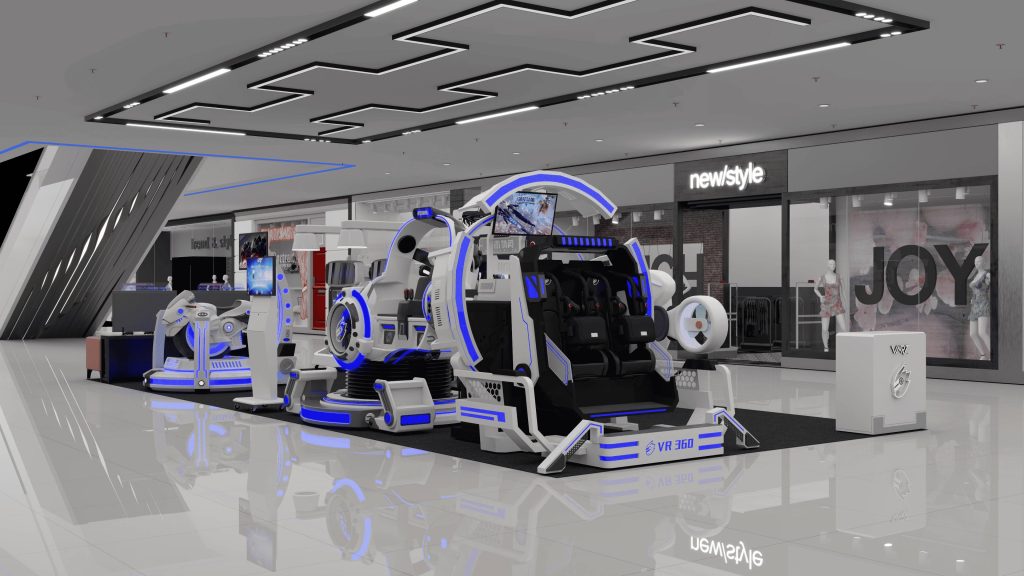
A shopping mall with strong weekend family traffic may benefit from multi-player systems, while a smaller venue may need compact single- or two-player equipment to avoid consuming too much floor space.
Choose Capacity Around the Venue, Not the Catalog
A good commercial VR equipment buying guide should never tell every operator to buy the largest-capacity machine available.
Instead, match equipment to:
- Daily customer traffic
- Peak-hour demand
- Group size
- Available floor area
- Ticket structure
- Waiting space
- Staffing
Large machines sitting half-empty do not automatically produce higher ROI.
3. Ask How Long the Equipment Can Operate Each Day
Consumer electronics are generally not designed for constant public use.
Commercial VR equipment has a much harder life.
During a busy day, a machine may experience:
- Repeated startups and sessions
- Continuous motor movement
- Hundreds of controller interactions
- Frequent headset adjustments
- Repeated cleaning
- Heavy customer turnover
That is why durability should be discussed before buying.
VART VR Testing for Extended Daily Operation
According to the information provided by VART VR, its commercial equipment has been tested for daily operating periods of up to 20 hours.
That does not mean every machine should automatically be operated for 20 continuous hours under every condition.
The actual recommended schedule depends on the individual model and its technical specifications.
Before purchase, ask for:
- Recommended daily operating time
- Cooling requirements
- Rest-cycle recommendations, if applicable
- Preventive maintenance schedule
- Maximum environmental temperature
- Power requirements
This is especially important in high-traffic entertainment centers where equipment uptime directly affects revenue.
4. Evaluate the VR Arcade Hardware Warranty and Spare-Parts Policy
Even high-quality commercial equipment contains components that may eventually wear.
Typical replacement items can include:
- Controllers
- Shooting guns
- Buttons
- Harness components
- Cables
- Headset accessories
- Motion-related components
The important question is not whether parts will ever wear.
It is whether replacement parts are available quickly when they do.
Spare Guns, Controllers and Replacement Components
VART VR states that spare guns, controllers, and replacement parts can be provided during the warranty period, depending on the applicable warranty terms.
For longer-term replacement needs, discounted parts pricing may also be available in some cases.
Buyers should ask for the exact policy before signing the order.
| Buyer Concern | What to Confirm Before Purchase |
|---|---|
| Warranty Duration | Exact period for the selected model |
| Covered Components | Motors, electronics, controllers, guns, headset accessories |
| Spare Parts | Which parts are included or available |
| Shipping Responsibility | Who covers replacement-part freight |
| Long-Term Parts Supply | Availability after warranty |
| Replacement Pricing | Standard or discounted pricing after warranty |
A cheap machine with difficult-to-source parts can become expensive very quickly if it sits unused for weeks.
5. Confirm Installation Support in Your Country
International purchasing adds another layer of complexity.
The machine must arrive, be assembled correctly, connected to local power, calibrated, tested, and handed over to venue staff.
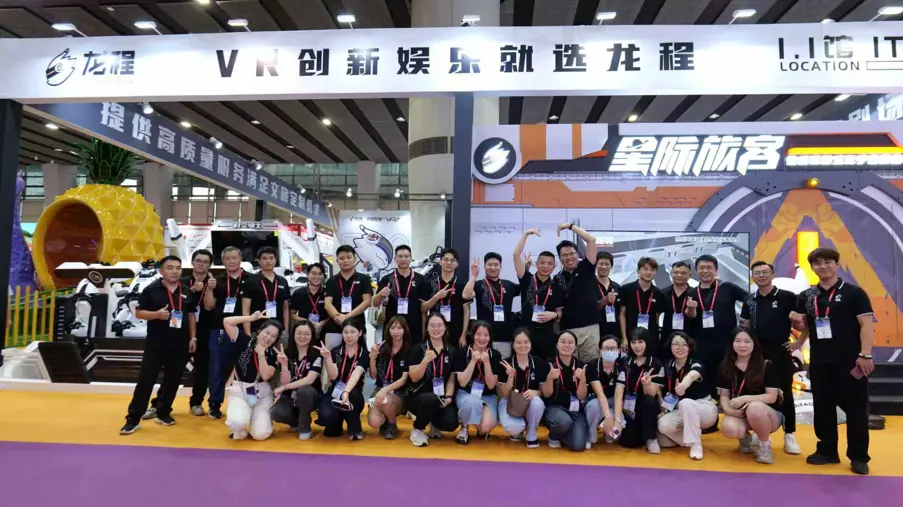
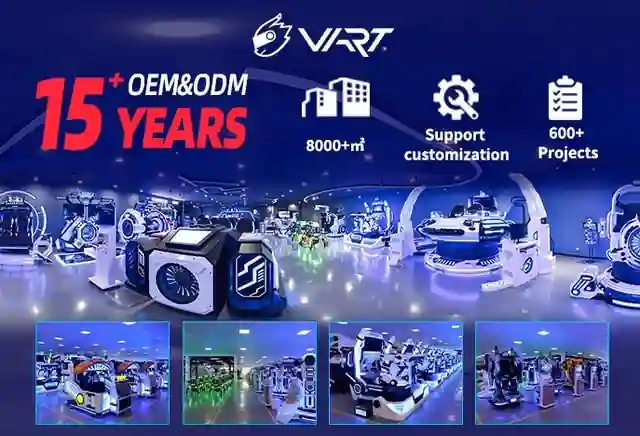
VART VR states that it can provide installation and after-sales support and has more than 15 years of industry experience with R&D and service teams.
Installation Planning Should Start Before Shipping
Before production is complete, confirm:
- Equipment dimensions
- Entry-door dimensions
- Floor loading requirements
- Electrical voltage
- Plug and connector requirements
- Internet/network requirements
- Ceiling height
- Safety clearance
- Air conditioning and ventilation
- Maintenance access
A commercial installation problem is often not caused by the machine itself.
It may come from discovering too late that:
- A doorway is too narrow
- A ceiling is too low
- The power supply is insufficient
- A moving platform has inadequate clearance
- The planned queue blocks customer circulation
This is why equipment drawings and venue planning should be completed before shipment.
6. Ask About Remote Technical Support
International buyers cannot depend entirely on an engineer physically traveling to the venue every time a problem occurs.
Remote support is therefore an important part of supplier evaluation.
VART VR provides remote technical support through its after-sales team, covering the equipment from shipment through commercial operation.
Depending on the issue, remote assistance can help operators with:
- Operation guidance
- Software troubleshooting
- Equipment checks
- Calibration guidance
- Maintenance instructions
When evaluating a manufacturer, ask how support requests are submitted and what information your staff should prepare when reporting a fault.
A clear technical-support process reduces diagnosis time.
7. Verify Whether You Can Test the Equipment Before Ordering
Videos are useful.
Actual experience is better.
VART VR equipment is sold internationally, and prospective buyers can contact the company to ask whether there are installed locations in their region where they can experience relevant VR equipment.
Availability will naturally depend on location and the specific product.
This option can be valuable because buyers can evaluate:
- Visual quality
- Motion intensity
- Comfort
- Customer loading process
- Game content
- Physical build quality
- Real operating workflow
For shooting attractions, buyers can also ask whether software demonstrations or other testing arrangements are available for the system under consideration.
8. Check Whether OEM Branding and Customization Are Available
For an independent arcade or FEC, the equipment is part of the venue’s visual identity.
Generic-looking machines may work functionally, but branded hardware creates a more consistent environment.
VART VR supports customization options including:
- Brand/logo labeling
- Custom visual branding
- Equipment color customization
Depending on the project, buyers should confirm the available options for the exact machine.
Why Custom VR Arcade Hardware Matters
Customization can help a venue create a stronger visual identity across:
- Storefront
- Equipment
- Signage
- Staff uniforms
- Booking website
- Social media
Instead of customers remembering only “the VR place in the mall,” the goal is for them to remember the venue brand.
This becomes especially valuable for operators planning multiple locations.
9. Look Beyond Individual Machines to the Complete Venue
Buying one simulator is different from building an arcade.
A complete venue requires machines that work together commercially.
One attraction may generate walk-up attention.
Another handles couples.
A multi-player system serves families.
A racing simulator creates competition.
The vr arcade equipment layout therefore affects both capacity and revenue.
VART VR provides complete entertainment venue solutions for VR arcades, theme parks, children’s entertainment venues, and family entertainment centers, including support from product selection through venue design.
Before ordering several machines, provide the supplier with:
- Venue dimensions
- Door positions
- Columns
- Ceiling height
- Customer entrance
- Expected audience
- Target machine categories
Then develop the equipment mix around the room.
10. Evaluate the Manufacturer as a Long-Term Operating Partner
A VR simulator manufacturer should not be evaluated only by the machine that arrives in the shipping crate.
Commercial buyers should evaluate the complete ownership cycle:
| Evaluation Area | Questions to Ask |
| Software | Are compatible games included and updated? |
| Capacity | How many players can each system serve? |
| Durability | What daily operating schedule is recommended? |
| Warranty | Which components are covered? |
| Spare Parts | How quickly can replacements be supplied? |
| Installation | What setup assistance is available? |
| Technical Support | Is remote assistance available? |
| Customization | Can logo, branding and colors be customized? |
| Venue Planning | Can the supplier assist with equipment layout? |
| Testing | Can buyers experience an installed machine? |
The cheapest quotation is not automatically the lowest-cost ownership option.
For a commercial venue, uptime and support have real financial value.
Frequently Asked Questions
Can I test the shooting game software remotely or visit an installed location?
VART VR products are sold worldwide. Buyers can contact VART VR to ask whether there are installed locations in their region where relevant VR devices can be experienced. Testing arrangements depend on the product and location.
Is the game license included, or is it a yearly subscription?
The VR games supplied for the corresponding VART VR equipment are included with that device. VART VR also frequently updates and synchronizes its VR game content. Buyers should confirm the exact software and update terms for the specific machine they plan to purchase.
How many players can connect at the same time?
Player capacity depends on the VR simulator model. VART VR offers single-player, two-player, three-player, and multi-player equipment, with selected products supporting approximately four to five players per batch.
What is the expected daily operating time before maintenance?
VART VR reports that its equipment has been tested for daily operating periods of up to 20 hours. The recommended operating schedule varies by product, so buyers should request the technical specifications for the specific machine before operation.
Do you provide spare guns, controllers, and replacement parts?
Yes. Depending on the warranty terms, VART VR can provide spare guns, controllers, and replacement components during the warranty period. Additional replacement parts may also be available afterward, sometimes with discounted pricing. Confirm the exact terms for your order.
Can you provide installation and after-sales support in my country?
Yes. VART VR provides installation and after-sales support services and has more than 15 years of industry experience with R&D and service teams. The exact support method depends on the project and destination.
Can the machine be customized with my brand or logo?
Yes. VART VR supports customized branding and logo labeling and can also customize equipment colors for suitable models and projects.
How many commercial venues are currently operating VART VR equipment?
VART VR equipment is sold internationally and is used across different commercial entertainment environments. The company also provides complete solutions for VR venues, theme parks, children’s entertainment areas, and family entertainment centers. For exact current installation numbers or references in a specific region, buyers should request the latest information directly from VART VR.
Is multiplayer supported?
Yes. VART VR offers several multiplayer options, including two-person VR chairs, three-person flight simulators, multi-player multi-sensory VR attractions, VR cinemas, and other group entertainment equipment.
Do you provide remote technical support?
Yes. VART VR has an after-sales team that supports customers from product shipment through commercial operation and can provide remote technical assistance to help keep equipment operating properly.
Conclusion: Buy the Operating System, Not Just the Machine
Commercial VR equipment should be evaluated as an operating asset.
The exterior design may attract customers, but the long-term value comes from the system behind it:
Hardware durability. Software. Player capacity. Warranty. Spare parts. Technical support. Installation. Customization.
Before purchasing, ask for the exact specification sheet, software terms, warranty conditions, recommended operating schedule, spare-parts policy, installation requirements, and venue drawings.
That is how buyers reduce risk before money is committed.
VART VR provides commercial VR equipment for arcades, FECs, malls, theme parks, and other entertainment environments, together with game content, technical support, customization options, and venue planning services.
If you are planning a new VR venue or comparing simulator configurations, contact VART VR with your available floor area, target audience, preferred attraction types, and expected customer traffic.
Request product specifications, a customized 2D/3D venue layout, and an equipment quotation from VART VR before finalizing your investment.