Commercial VR Arcade Cost and ROI Analysis: A Complete Guide for Investors

Key Takeaways
- A successful VR arcade investment depends on balancing startup costs, operating expenses, and customer throughput—not simply purchasing the cheapest equipment.
- Commercial VR arcade costs include equipment, shipping, venue preparation, electrical upgrades, safety measures, and working capital.
- Well-operated VR entertainment centers can achieve attractive profit margins through optimized pricing strategies and efficient equipment utilization.
- The fastest payback periods are usually achieved by combining high-traffic attractions with premium multiplayer experiences.
- Choosing reliable commercial VR equipment with strong after-sales support significantly improves long-term ROI.
Introduction
Opening a commercial VR arcade is no longer just an entertainment project—it has become a serious investment opportunity.
As shopping malls, family entertainment centers (FECs), and indoor amusement parks continue expanding their immersive attractions, investors are asking one question above all others:
Is a commercial VR arcade profitable in 2026?
The short answer is yes—but only when the numbers make sense.
Many first-time investors focus entirely on the purchase price of VR simulator machines. In reality, equipment represents only one part of the investment. Shipping costs, venue preparation, staffing, software updates, pricing strategy, and customer throughput all determine whether a project reaches profitability quickly or struggles to recover its investment.
The most successful operators think like business owners rather than equipment buyers. They calculate every dollar invested against expected customer flow, average ticket value, and long-term operating efficiency.
This guide breaks down the complete commercial VR arcade cost structure, explains the key factors affecting profit margins, and demonstrates how professional operators calculate realistic payback periods before purchasing their first machine.
Is a commercial VR arcade profitable in 2026?
Yes. A professionally operated VR arcade can achieve attractive returns when equipment selection, venue layout, pricing strategy, and customer throughput are properly optimized. Most successful operators focus on revenue per square meter rather than equipment price alone. Working with an experienced supplier such as VART VR also helps reduce operational risks through reliable equipment, ongoing technical support, and efficient venue planning.
The Initial Investment: Breakdown of VR Arcade Start-up Costs
Starting a commercial VR arcade involves more than selecting exciting attractions.
Every successful project begins with a carefully planned capital expenditure (CapEx) budget that covers both visible and hidden costs.
Understanding this investment structure helps avoid budget overruns and ensures that sufficient working capital remains available after opening.
For most commercial projects, startup costs can be divided into five major categories:
- Commercial VR equipment
- International shipping and customs
- Venue renovation and decoration
- Electrical and network infrastructure
- Initial operating capital
Rather than minimizing each category individually, experienced investors focus on optimizing the balance between investment and expected return.
Equipment Capital Expenditure (CapEx)
Commercial VR equipment typically represents the largest portion of the startup budget.
Depending on venue size, investors may purchase:
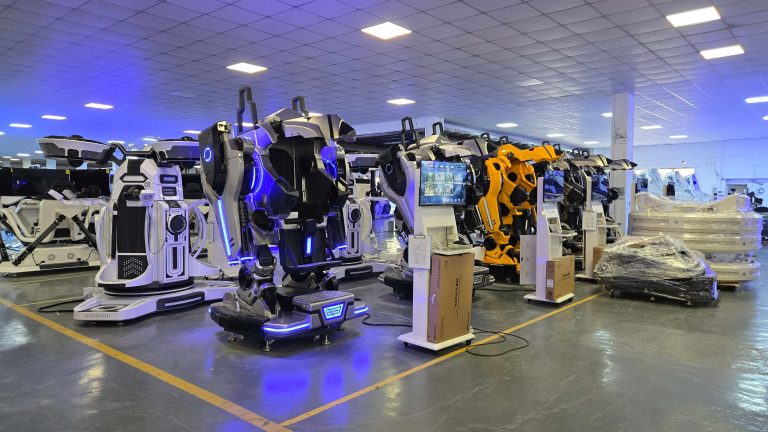
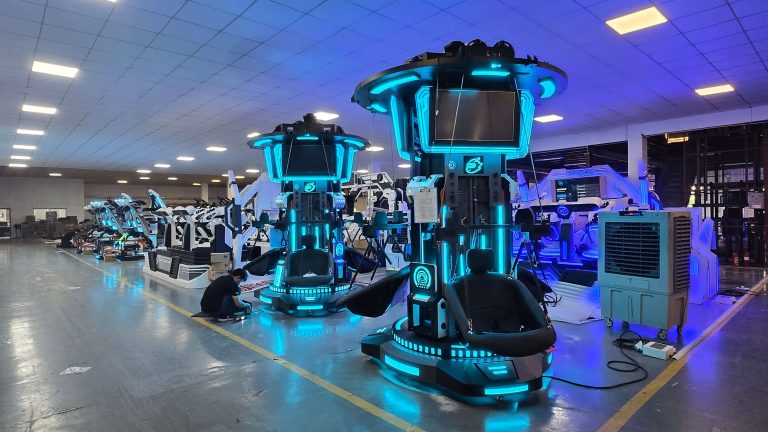
- 360° VR motion simulators
- VR egg chairs
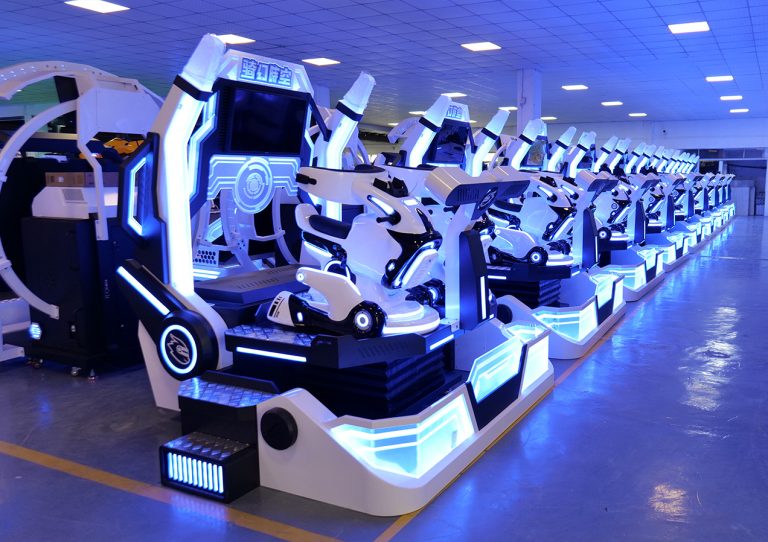
- VR motorcycle simulators
- Multiplayer shooting systems
- VR flight simulators
- Free-roam arenas
- Multi-seat VR cinemas
Instead of asking,
“Which machine is cheapest?”
professional buyers usually ask,
“Which machine generates the highest revenue per square meter?”
This mindset often produces stronger long-term profitability.
Several factors influence VR simulator machine price:
- Motion platform complexity
- Number of seats
- Display technology
- Motion algorithm precision
- Interactive accessories
- Game library
- Commercial durability
- Warranty coverage
Machines with stronger industrial construction and commercial-grade components often require a higher initial investment but significantly reduce maintenance costs throughout their operating life.To ensure you are buying from a certified brand with proven build quality, you can cross-reference our vetted list of the global top 10 vr arcade machine manufacturers to source hardware directly from verified industry leaders.
Investment Planning Template
| Planning Module | Description |
|---|---|
| Equipment Planning | Select equipment according to venue size and customer profile. |
| Venue Layout | Optimize customer flow and machine spacing. |
| Electrical Planning | Confirm local voltage and infrastructure requirements. |
| Revenue Forecast | Estimate customer throughput and pricing strategy. |
| ROI Planning | Evaluate expected return based on operational assumptions. |
| Equipment Mix | Balance high-throughput attractions with premium experiences. |
| CAD Layout | Prepare a professional venue layout before installation. |
For most investors, commercial equipment remains the foundation of the project.
However, purchasing too many machines at launch can reduce financial flexibility.
Many successful operators begin with a carefully selected equipment mix and expand after establishing stable customer traffic.
Shipping, Customs Duty, and International Logistics
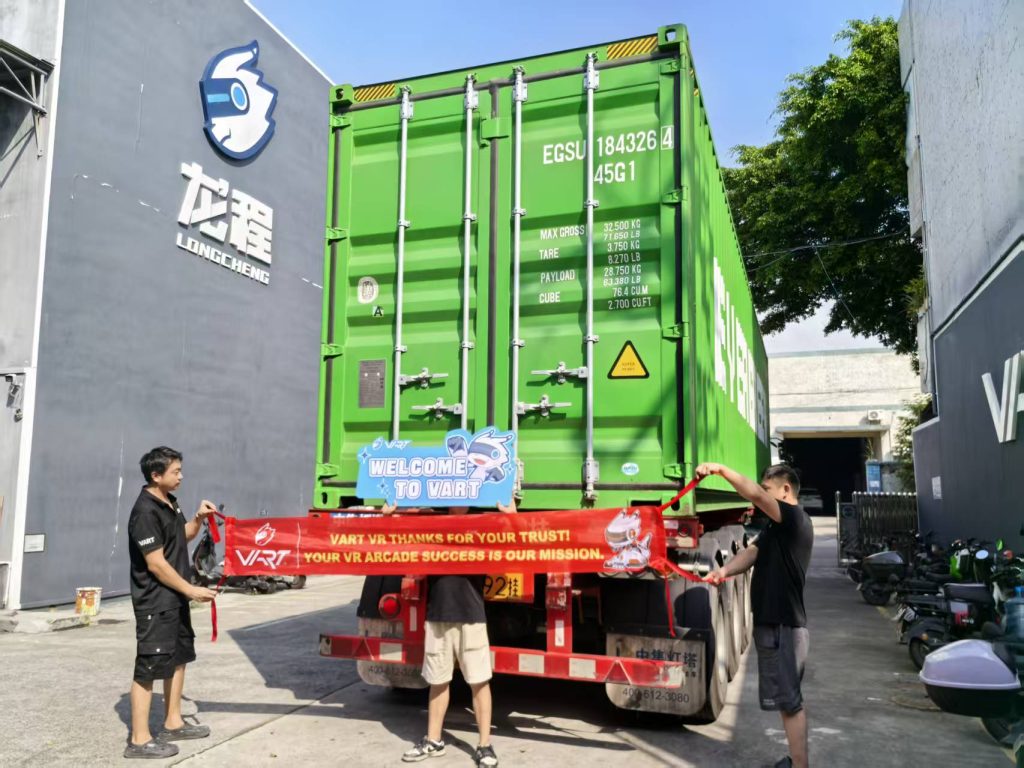
For international buyers, logistics are an essential part of the total commercial VR arcade cost.
Shipping expenses vary according to:
- Destination country
- Machine dimensions
- Gross weight
- Container utilization
- Shipping season
- Freight method
- Customs clearance procedures
Professional suppliers generally help customers prepare:
- Commercial invoices
- Packing lists
- Customs documentation
- Export certificates
- Shipping coordination
This support reduces delays and simplifies the import process.
Common Logistics Cost Factors
| Cost Item | Notes |
|---|---|
| Ocean Freight | Most economical for full commercial projects |
| Air Freight | Suitable for urgent spare parts only |
| Customs Duty | Depends on local regulations |
| VAT / GST | Country-specific |
| Local Transportation | Port to venue delivery |
| Insurance | Recommended for commercial equipment |
Although logistics increase the initial investment, choosing an experienced exporter often reduces hidden costs caused by customs delays or documentation errors.
Venue Renovation, Electrical Upgrades, and Safety Protection
Even the most advanced VR equipment performs poorly inside an unsuitable venue.
Proper preparation includes:
- Decorative renovation
- Branded signage
- Lighting design
- Flooring
- Queue management
- Safety barriers
- Power distribution
- Internet infrastructure
- Emergency access planning
Motion simulators also require sufficient safety clearance.
Operators should reserve adequate space for:
- Rotation radius
- Customer entry and exit
- Staff supervision
- Spectator viewing
- Emergency stopping distance
Professional CAD layout planning often prevents costly redesigns after installation.Depending on whether your venue is a tight mall corridor or a sprawling entertainment zone, your layout and machine mix will vary drastically. We highly recommend reviewing our dedicated guide on how to choose the best commercial vr arcade equipment based on your specific venue size and physical constraints.
Typical Renovation Checklist
- Decorative wall finishes
- LED lighting
- Ticket counter
- Reception area
- Safety padding
- Equipment spacing
- Power outlets
- Network cabling
- Fire safety compliance
- Security cameras
Well-designed environments improve customer experience while supporting efficient operations.
Monthly Operational Expenses (OpEx) to Forecast
After opening, operational expenses become the primary factor affecting profit margins.
Many new investors underestimate these recurring costs.
A realistic operating budget usually includes:
- Rent
- Staff salaries
- Electricity
- Software licensing
- Content updates
- Equipment maintenance
- Internet services
- Marketing
- Cleaning
- Insurance
Managing these expenses efficiently is just as important as generating revenue.

Software Licensing and Game Updates
Modern commercial VR equipment generally follows two software models.
Pay-per-play model
Advantages:
- Lower monthly commitment
- Flexible content purchases
- Easier for smaller venues
Subscription model
Advantages:
- Continuous game updates
- Larger content library
- Better long-term customer retention
Regular content updates encourage repeat visits and improve customer lifetime value.
Staffing Costs
Labor requirements vary according to venue size.
Typical roles include:
- Reception staff
- Equipment operators
- Customer service
- Technical support
- Cleaning personnel
Smaller venues often combine several responsibilities into one position, while larger theme parks may employ specialized teams.
Staff efficiency directly affects operating margins.
Electricity and Daily Operations
Commercial VR motion platforms consume more electricity than traditional arcade cabinets.
Monthly energy usage depends on:
- Machine quantity
- Daily operating hours
- Motion intensity
- Air conditioning
- Lighting
- Display systems
Although electricity represents a recurring expense, it is generally much lower than labor and rent for most projects.
Revenue Projection Model: The Math Behind a Profitable VR Arcade
Every investor asks the same question before purchasing commercial VR equipment:
“How much revenue can my VR arcade actually generate?”
The answer depends on four key variables rather than the price of the equipment itself.
A simple revenue model looks like this:
Daily Revenue = Average Ticket Price × Number of Players per Day
Once daily revenue is calculated, monthly profit becomes much easier to estimate.
The key variables include:
- Average ticket price
- Customer traffic
- Equipment throughput
- Operating days per month
Even small improvements in any of these variables can significantly shorten the VR arcade payback period.
Step 1: Estimate Daily Customer Traffic
Traffic usually differs between weekdays and weekends.
A realistic scenario may look like this:
| Time Period | Estimated Daily Visitors |
|---|---|
| Monday–Thursday | 50–80 |
| Friday | 80–120 |
| Saturday | 150–250 |
| Sunday | 120–220 |
| Public Holidays | 250–400 |
Shopping malls and family entertainment centers often experience significant spikes during weekends and school holidays.
Planning equipment capacity around these peak periods helps maximize revenue.
Step 2: Estimate Average Ticket Price
Commercial VR attractions generally use one of three pricing models.
Option 1 — Pay Per Ride
Ideal for:
- Shopping malls
- Tourist attractions
- High-footfall areas
Example:
- $8–15 per experience
Option 2 — Time Pass
Visitors purchase access for a fixed period.
Example:
- 30 Minutes
- 60 Minutes
- Unlimited Day Pass
This model encourages customers to try multiple attractions.
Option 3 — Membership System
Memberships improve customer retention through:
- Recharge bonuses
- VIP discounts
- Birthday rewards
- Priority reservations
- Exclusive tournaments
Although membership pricing reduces revenue per ride slightly, it increases lifetime customer value.
Quick VR Arcade ROI Calculator
Although every commercial VR arcade operates under different market conditions, investors can still estimate the financial potential of a project using a simple ROI planning worksheet.
Before making any purchasing decision, we recommend calculating the following key business indicators based on your local market, expected customer traffic, and ticket pricing strategy.
Quick ROI Planning Worksheet
| Planning Item | Your Estimate |
|---|---|
| Average Ticket Price | ______ |
| Average Daily Visitors | ______ |
| Operating Days Per Month | ______ |
| Monthly Revenue | ______ |
| Monthly Operating Expenses | ______ |
| Monthly Net Profit | ______ |
| Estimated Payback Period | ______ |
This worksheet provides a simple starting point for evaluating the financial feasibility of a commercial VR arcade. Actual results depend on factors such as venue location, equipment selection, customer traffic, pricing strategy, staffing efficiency, and local operating costs.
For investors planning a shopping mall VR arcade, family entertainment center, or VR theme park, preparing a realistic financial projection before purchasing equipment can significantly reduce investment risk.
Need a customized ROI estimate?
VART VR can prepare a free investment analysis based on your venue size, local market conditions, ticket pricing, and recommended equipment combination.
Pricing Strategy That Maximizes Profit
Successful commercial VR arcade operators rarely rely on a single pricing strategy.
Instead, they build multiple revenue streams that increase customer lifetime value, improve cash flow stability, and reduce seasonal fluctuations.
A diversified pricing model also allows operators to serve different customer groups, including families, tourists, corporate clients, and repeat visitors.
Recommended Revenue Mix
| Revenue Source | Business Objective |
|---|---|
| Single Ride Tickets | Attract first-time visitors and impulse purchases |
| Time Pass Packages | Encourage longer visits and higher equipment utilization |
| Membership Programs | Increase customer loyalty and repeat business |
| Group Bookings | Generate stable revenue from birthdays, schools, and corporate events |
| Seasonal Promotions | Boost traffic during holidays and off-peak periods |
Rather than focusing on one pricing method, successful operators continuously adjust their pricing strategy according to customer traffic, local competition, and seasonal demand.
Revenue Projection Framework
Every commercial VR entertainment project operates under different market conditions.
Instead of relying on fixed revenue figures, investors should build their own financial projection based on local ticket pricing, customer traffic, operating hours, and venue size.
The following worksheet provides a practical framework for estimating business performance before making an investment decision.
Revenue Planning Worksheet
| Planning Metric | Your Estimate |
| Average Ticket Price | ______ |
| Average Daily Visitors | ______ |
| Operating Days per Month | ______ |
| Estimated Monthly Revenue | ______ |
| Estimated Monthly Operating Expenses | ______ |
| Estimated Monthly Net Profit | ______ |
This planning framework helps investors understand how pricing strategy, customer throughput, and operational efficiency work together to determine long-term profitability.
Typical Monthly Operating Expenses
Although operating costs vary depending on country, labor costs, and venue size, every commercial VR arcade should prepare for the following recurring operational expenses.
| Expense Category | Typical Planning Consideration |
| Venue Rent | Shopping mall, commercial storefront, or family entertainment center lease |
| Staff Salaries | Reception staff, equipment operators, technicians, and customer service |
| Electricity | Motion platforms, VR headsets, computers, lighting, and air conditioning |
| Software & Game Updates | Content licensing, subscriptions, and software maintenance |
| Marketing | Social media advertising, local promotions, influencer campaigns |
| Equipment Maintenance | Preventive servicing, spare parts, and routine inspections |
| Insurance & Compliance | Public liability insurance and local regulatory requirements |
A well-managed operating budget helps improve cash flow, reduce unexpected expenses, and support sustainable long-term growth.
Step-by-Step ROI & Payback Period Planning
One of the first questions every investor asks is:
“How long will it take for my VR arcade to recover its investment?”
The answer depends on several business variables rather than a fixed financial target.
Key factors include:
- Customer traffic
- Average ticket value
- Equipment utilization
- Venue operating costs
- Equipment reliability
- Pricing strategy
- Customer retention
A simplified planning formula is shown below:
Estimated Payback Period = Total Project Investment ÷ Estimated Monthly Net Profit
Completing each planning module before installation helps reduce project risks and ensures a smoother business launch. If you need an operational blueprint for executing these phases—such as managing local customs, preparing fire safety compliance, or setting up ticketing systems—check out our comprehensive guide on how to start a vr arcade business internationally.
Project Planning Framework
Before launching a commercial VR arcade, investors should prepare the following project components.
| Investment Module | Planning Status |
| Commercial VR Equipment Selection | □ |
| International Shipping & Logistics | □ |
| Venue Renovation & Decoration | □ |
| Electrical Infrastructure | □ |
| Safety Clearance Planning | □ |
| Marketing Preparation | □ |
| Working Capital Reserve | □ |
Completing each planning module before installation helps reduce project risks and ensures a smoother business launch.
Operational Performance Indicators
Rather than chasing a specific monthly revenue target, successful operators continuously monitor the business indicators that have the greatest impact on long-term profitability.
| Key Performance Indicator | Why It Matters |
| Customer Throughput | Measures equipment utilization and visitor capacity |
| Average Ticket Value | Indicates pricing effectiveness |
| Repeat Customer Rate | Reflects customer satisfaction and loyalty |
| Equipment Utilization | Improves revenue per square meter |
| Operating Efficiency | Controls labor and maintenance costs |
| Customer Reviews | Supports long-term organic growth and local reputation |
Monitoring these indicators allows operators to optimize business performance while continuously improving the customer experience.
Typical ROI Characteristics by Venue Type
Every commercial VR project has unique investment requirements and operating conditions. Instead of comparing projects by equipment cost alone, experienced investors evaluate throughput, scalability, and long-term profitability.
| Venue Type | Recommended Equipment Strategy | Throughput Potential | ROI Characteristics |
| Mall VR Corner | Compact motion simulators and standalone attractions | High | Fast deployment and efficient use of limited space |
| Small VR Arcade | Mixed portfolio of motion simulators and interactive games | Medium–High | Balanced customer flow and operational flexibility |
| Family Entertainment Center | Multiplayer attractions with premium experiences | High | Strong repeat business and diversified revenue streams |
| Large VR Theme Park | Customized immersive attractions and free-roam arenas | Very High | Long-term scalability and destination-level appeal |
The actual payback period varies according to local operating costs, customer traffic, pricing strategy, equipment utilization, and overall business management.
Rather than selecting equipment based solely on purchase price, successful operators prioritize revenue per square meter, customer throughput, equipment reliability, and long-term operational stability, as these factors have a much greater influence on return on investment.
Commercial VR vs Other Entertainment Investments
Many investors compare commercial VR arcades with other entertainment businesses before making a final decision.
While every project has unique characteristics, VR attractions generally provide one of the strongest combinations of high customer engagement, flexible content updates, and attractive revenue per square meter.
| Entertainment Business | Initial Investment | Space Efficiency | Content Refresh | Typical Payback |
|---|---|---|---|---|
| Commercial VR Arcade | Medium | ★★★★★ | Easy | 3–12 Months |
| 5D Cinema | High | ★★★ | Limited | 12–24 Months |
| Bowling Center | Very High | ★★ | None | 24–48 Months |
| Indoor Playground | High | ★★★ | Low | 18–36 Months |
| Claw Machine Store | Low | ★★★★ | Medium | 8–18 Months |
3 Hidden Pitfalls That Can Destroy Your VR Arcade ROI
Many unsuccessful projects fail because of avoidable mistakes rather than insufficient customer demand.
Understanding these risks before investing can save substantial time and money.
1. Choosing Low-Quality Equipment Based Only on Price
The cheapest machine often becomes the most expensive investment.
Common problems include:
- Frequent breakdowns
- Unstable motion systems
- Poor VR synchronization
- Limited spare parts
- Weak structural durability
Every day a machine is out of service represents lost revenue.
Commercial-grade equipment should be evaluated based on reliability, maintenance requirements, and long-term operating performance—not just purchase price.
2. Ignoring After-Sales Support
A commercial VR arcade depends on continuous operation.
Without reliable technical support, even minor software or hardware issues can interrupt business.
Before selecting a supplier, ask:
- Are remote diagnostics available?
- How quickly can spare parts be shipped?
- Is online technical support available?
- How frequently is game content updated?
- Is installation guidance included?
Strong after-sales service reduces downtime and protects long-term profitability.
3. Poor Equipment Selection and Low Replay Value
Some attractions generate excitement initially but fail to encourage repeat visits. High-performing commercial VR venues balance high-visibility attractions, premium-ticket experiences, and multiplayer games. To see which specific machines deliver the highest customer retention, explore our detailed review of the top high-roi vr arcade machines currently driving massive replay rates for global investors.
High-performing commercial VR venues balance:
- High-visibility attractions
- Premium-ticket experiences
- Multiplayer games
- Family-friendly content
- Regular software updates
This combination helps maintain customer interest and supports sustainable revenue growth.
Commercial VR Investment Checklist
Before placing an order, experienced investors verify every critical detail that may affect long-term profitability.
The checklist below can help ensure your project is financially and operationally prepared before construction begins.
Commercial VR Arcade Pre-Investment Checklist
| Checklist Item | Status |
|---|---|
| Confirm the total available floor space for the project | ☐ |
| Identify the primary target customers (families, tourists, teenagers, corporate events, etc.) | ☐ |
| Estimate expected weekday and weekend customer traffic | ☐ |
| Calculate your preliminary ROI and expected payback period | ☐ |
| Select a balanced mix of high-throughput and premium-ticket attractions | ☐ |
| Verify local electrical requirements and power capacity | ☐ |
| Reserve adequate safety clearance around all motion simulators | ☐ |
| Confirm shipping, customs, and installation arrangements | ☐ |
| Prepare an opening marketing and promotional plan | ☐ |
| Establish a maintenance and after-sales support plan | ☐ |
Completing this checklist before purchasing equipment helps avoid unnecessary delays, budget overruns, and operational challenges after opening.
Professional suppliers can also assist with equipment recommendations, CAD layout planning, logistics coordination, and long-term technical support to ensure a smoother project launch.
Free Commercial VR Investment Planning Template
Every successful commercial VR project begins with a well-prepared business plan.
Instead of making investment decisions based solely on equipment prices, experienced operators evaluate the complete financial picture—including startup costs, operating expenses, projected revenue, and expected return on investment.
To simplify the planning process, VART VR provides a complimentary Commercial VR Investment Planning Template for qualified business inquiries.
What’s Included in the Planning Template?
| Planning Module | Included |
|---|---|
| Commercial VR Equipment Budget | ✔ |
| Shipping & International Logistics Estimate | ✔ |
| Venue Renovation Budget | ✔ |
| Electrical & Infrastructure Planning | ✔ |
| Monthly Operating Expense Worksheet | ✔ |
| Revenue Projection Framework | ✔ |
| ROI & Payback Planning Worksheet | ✔ |
| Recommended Equipment Combination | ✔ |
| CAD Layout Planning Suggestions | ✔ |
The template is designed to help investors organize project information before making purchasing decisions. It can also be customized according to your venue size, target market, and preferred business model.
Whether you are planning a compact shopping mall VR corner, a family entertainment center, or a large-scale VR theme park, having a structured investment plan can improve decision-making and reduce project risks.
Ready to evaluate your project?
Contact VART VR today to receive a free Commercial VR Investment Planning Template, personalized equipment recommendations, and a complimentary CAD venue layout designed specifically for your project.
Conclusion
A profitable VR arcade is built on smart planning—not guesswork.
While equipment investment is an important part of the project, long-term success depends on selecting the right attractions, controlling operating costs, optimizing customer throughput, and partnering with an experienced commercial VR equipment supplier.
Investors who focus on business fundamentals rather than simply comparing purchase prices are far more likely to achieve attractive profit margins and shorter payback periods.
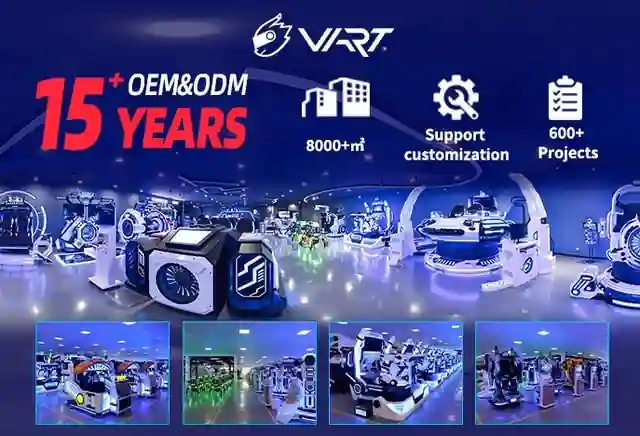
With more than 10 years of experience serving customers in over 100 countries, VART VR provides complete commercial solutions, including equipment recommendations, free CAD layout planning, logistics coordination, installation guidance, and long-term technical support.
Whether you’re planning a compact mall VR zone or a large-scale family entertainment center, careful investment planning today can create a more profitable business tomorrow.
Ready to evaluate your project? Contact VART VR today for a customized investment proposal, free CAD venue layout, and a tailored commercial VR equipment recommendation.
Ultimate Commercial VR Business Resource Hub
Planning to invest in the VR entertainment industry? Explore our complete knowledge cluster to secure your ROI:
Sourcing: Global Top 10 VR Arcade Machine Manufacturers and Suppliers
Investment: Commercial VR Arcade Cost and ROI Analysis: A Complete Investor’s Guide
Selection: How to Choose VR Arcade Equipment for Malls, Theme Parks, & FECs
Setup: Step-by-Step Guide to Starting a VR Arcade Business Internationally
Tech Trends: What’s New? Top Trends and VR Machine Upgrades in 2026
FAQ
Is a commercial VR arcade profitable in 2026?
Yes. A well-managed commercial VR arcade can achieve attractive profit margins by combining efficient equipment utilization, optimized pricing strategies, and consistent customer traffic. Success depends on careful planning, operational efficiency, and selecting reliable commercial VR equipment.
What is the breakdown of costs to start a VR arcade business?
Typical startup costs include commercial VR equipment, international shipping, customs duties, venue renovation, electrical infrastructure, safety improvements, marketing, and working capital. Equipment usually represents the largest share of the initial investment.
How long does it take to recover the investment?
Payback periods vary depending on project size, customer traffic, and operational efficiency. Well-planned commercial VR arcades may recover their investment within several months, while larger entertainment projects typically require a longer period to reach full return on investment.
What affects the price of a commercial VR simulator?
Pricing depends on motion platform technology, seating capacity, hardware configuration, software content, safety systems, warranty coverage, and after-sales support.
How can I improve my VR arcade profit margin?
Operators can improve profitability by selecting high-throughput equipment, optimizing venue layouts, offering multiple pricing packages, introducing membership programs, updating game content regularly, and minimizing equipment downtime through reliable maintenance and technical support.