9D Simulator Cinema Investment Guide: Costs, Footprint, ROI Explained

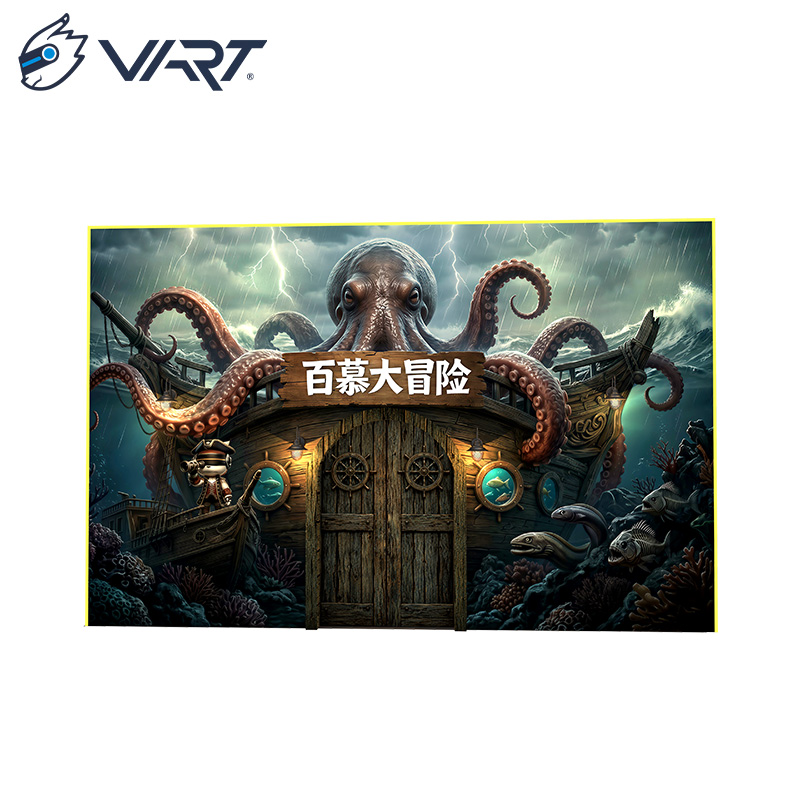
Any buyer considering a 9D Simulator Cinema investment faces the same dilemma: the hardware is more expensive than a typical arcade machine, but it also takes up much less space on the floor than a ride with an equal guest count, and can operate sessions all day long.
The true investment question when purchasing a 9D Simulator Cinema is balancing upfront cost, operating footprint, and long-term earning potential, and why motion cinema attractions have become such a popular anchor attraction choice by malls and family entertainment centers (FECs) that wish to get consistent foot traffic without necessarily taking up a large retail-equivalent area.
This article breaks down the real cost-driving factors, the footprint to plan, the scale of throughput by the number of seats, and what to validate before you sign with a supplier, without creating ROI percentages and fake case histories to decide on your behalf. You can compare a VR Cinema small unit or a bigger flagship set, but the logic of costs and size is the same.
What Determines the Cost of a 9D Simulator Cinema?
The price of a 9D Simulator Cinema depends on several engineering and configuration decisions rather than a single fixed number:
Seat count/capacity: Seat capacity is one of the biggest pricing factors for any 9D Simulator Cinema. A 12-seat cabin is significantly cheaper than a 30-seat or 40-seat design, not only in hardware, but also in the motion system required to propel a heavier, larger cabin around easily.
Motion cabin complexity (DOF): The motion platform of a 9D Simulator Cinema largely determines both cost and ride quality. More dimensionalities: heave, pitch, roll, yaw, weightlessness, acceleration, and diving are more expensive to actuate, engineer, and more complex to control software, but are also more expensive to buy compared to a simple 2-3 axis system.
Screen technology: The display technology selected for your 9D Simulator Cinema also affects overall investment. A 4K panoramic display, glasses-free, and curved-screen with optical blending is pricier than a typical projector-based flat-screen, but eliminates the continuing expenses and effort of managing individual 3D glasses or headsets.
Environmental FX systems: Each effect (wind, water spray, mist, snow, bubbles, lightning, and structural impact) will need its own hardware and maintenance, and therefore a unit consisting of five or more effects will be more expensive than one with two or three.
Customization and branding: A themed cabin with a particular theme (ocean adventure, space travel, flight) and aligning it with your particular venue also introduces design and production costs over a generic and unbranded unit.
9D Simulator Cinema Footprint and Installation Requirements
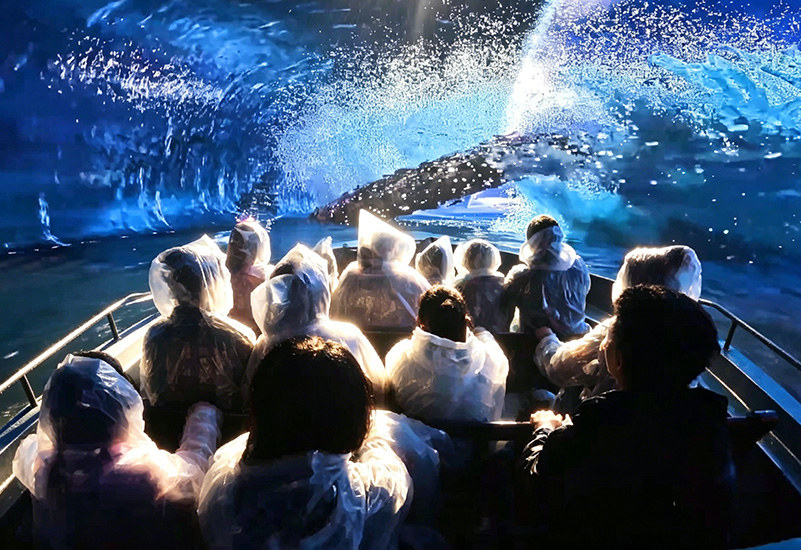
A 9D Simulator Cinema offers one of the highest rider capacities per square meter among indoor attractions. A typical 30-seat 9D Simulator Cinema occupies approximately 35–48 square meters, and the footprint is increased or decreased as the number of seats goes up or down. The footprint reduces with the number of seats per square meter; the footprint increases with the number of seats (more than 40).
That efficiency is the most important in high-rent situations. It is in the best interest of a mall paying high rent per square meter to have an attraction that can carry 20-30 riders in one sitting inside a footprint that can carry only a handful of retail units to have the attraction act as a traffic generator (as opposed to a pure cost center). The same reasoning is applicable to scenic and tourism sites, where the footprint of the site can often be constrained by the site.
9D Simulator Cinema Revenue Model and Throughput Explained
Instead of showing fabricated dollar amounts, it is more helpful to comprehend the throughput dynamics that drive the potential of revenue, as these figures will differ by location, ticket cost, and local pedestrian activities:
- Duration of session: The average length of each ride is 8 to 12 minutes per cycle, including boarding and alighting.
- Number of seats per session: This is determined by your preferred configuration: 12, 20, 30, and 40+ seats.
- Sessions/hour: A 10-minute average session time will enable approximately 5-6 sessions/hour, taking into consideration loading/unloading.
- Hourly throughput: Seats per session multiplied by sessions per hour provides a rough capacity limit – at 5 sessions per hour and a 30-seat configuration, in theory a capacity of about 150 riders per hour at full capacity, but reality will be less due to staffing, queue control, and actual demand.
The math of the revenue there is simply based on your price of local tickets and actual attendance rate numbers that are too market- and season-dependent to responsibly generalize. The common thing in the markets is that the scaling of the number of seats has a direct and predictable impact on the limit on the number of hours throughput that can be achieved, which is the variable that is worth strategizing over before committing to a configuration.
What to Look for in a Supplier
| Checklist Item | Why It Matters |
| Content library size and update cadence | A larger, regularly refreshed movie library supports repeat visitation instead of a one-time novelty visit |
| Warranty and after-sales support | Motion cabins have moving mechanical parts that require maintenance access and spare parts availability |
| Customization options (theming, seat count) | Ensures the unit matches your venue’s footprint, branding, and expected foot traffic |
| Safety certifications | Confirms the motion cabin and electrical systems meet relevant safety standards for public use |
| Lead time | Manufacturing and shipping timelines affect how quickly the attraction can open and start generating revenue |
Which Venues See the Best Returns
Mall FECs enjoy the above footprint efficiency, which is large seat capacity within a relatively smaller area, which is located as an anchor draw amongst other retail and dining.
Scenic and tourism destinations are the beneficiaries of thematic alignment; an ocean-adventure or flight-themed Immersive Cinema experience, like the Bermuda Storm Theater of VART, aligns with the nature of a coastal or nature-based destination and provides the visitor with something to take a photo of and share.
The educational framing of motion cinema content that science museums can take advantage of is especially in the context of content that is themed on exploration, space, or natural history.
Entertainment complexes have the advantage of offering the attraction with other attractions (arcades, dining, retail) to lengthen their average visitor stay on-premises, which facilitates secondary purchases beyond the ticket price itself.
Why Choose VART as Your Commercial 7D Simulator Cinema Supplier
All the checklist items above are actual risk factors when the wrong supplier is decided upon; this is why the relationship with the manufacturer is as important as the hardware spec sheet.
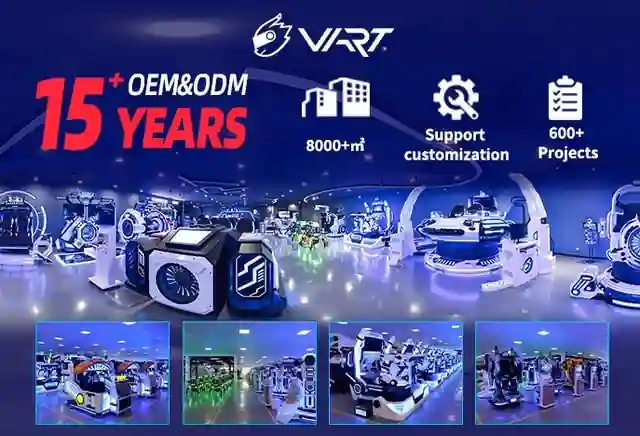
- Experience in manufacturing VR technology for 15 years: The company producing the VART brand, Guangzhou Longcheng Electronics, has been commercially producing VR and simulator cinema equipment since 2011, providing the purchaser with a track record to compare to, instead of a startup company.
- In-house R&D and complete-set production: VART designs its motion cabins, screens, and effects systems in-house instead of assembling third-party components, effectively eliminating the after-sales and compatibility risk listed in the checklist above, supplier.
- Theming and customizable seating (12-100+ seating): Theming and seating can be configured to your desired footprint and throughput targets instead of inflexible capacity being imposed on your venue.
- Constant refreshing content library (30+ titles): Solves the content-refresh issue head-on, playing into the repeat-visitation model on which this type of attraction relies.
- Turnkey B2B support: Turnkey B2B support includes installation advice, catalog access, price transparency, and after-sales support, minimizing the operational risk associated with the introduction of unfamiliar equipment.
- International deployment history: Worldwide theme park, mall, scenic and FEC installations furnish a genuine business benchmark, such as the 9D Bermuda Storm Cinema, the flagship naked-eye format of VART.
Frequently Asked Questions
How much floor space does a 9D cinema need?
A typical 30-seat design requires between 35 and 48 square meters, and the footprint is scaled accordingly to smaller (12-20 seat) and larger (40+ seat) designs.
How many riders per hour can a 9D simulator handle?
This varies based on the number of seats and the length of the session. A 30-seat unit with 8-12 minute sessions (approximately 5-6 sessions per hour including loading time) could serve around 150 riders per hour at capacity, but will be limited by real-world considerations of staffing and demand.
What’s the typical experience length?
The majority of sessions last 8-12 minutes, which include boarding and disembarking.
Do I need special staff training to operate one?
Simple operation training is normally needed to operate boarding, safety checks, as well as the control system, though it is normally included in supplier onboarding and need not be performed with special outside certification.
Conclusion
Investing in a 9D Simulator Cinema is a balance between hardware cost, installation footprint, seating capacity, and long-term operational efficiency and a throughput model that is predictable with a reasonable level of accuracy.
It doesn’t matter whether you are considering a VR Motion Cinema or a 5D Simulator Cinema, or even the naked-eye 10D level of the Bermuda Adventure Cinema or the Virtual Reality Flying Cinema format; the same checklist can be used: be aware of your footprint, be conscious of your realistic throughput, and check the track record of your supplier before committing.
Request VART’s free VR arcade catalog and price list, or reach out through the Bermuda Adventure Cinema page and product catalog to get a configuration and quote matched to your venue’s footprint and seat-count goals.