9 Questions to Ask a Chinese VR Machine Manufacturer Before You Order

Before ordering a VR arcade machine from a Chinese manufacturer, ask about warranty terms and coverage, factory certification and audit history, actual production capability versus trading-company resale, shipping and import logistics, content library and update policy, after-sales technical support, customisation lead time, payment and contract terms, and reference installations you can verify. These nine questions surface the differences between suppliers that a spec sheet alone won’t show — and they matter regardless of which manufacturer you ultimately choose.
Why These Questions Matter More Than the Spec Sheet
Most VR arcade machine listings look similar on paper — similar motion ranges, similar headsets, similar claimed capacities. The real differentiation between suppliers shows up after the purchase: in how fast a fault gets resolved, whether spare parts actually arrive, and whether the machine that ships matches what was demonstrated. The questions below are designed to surface that difference before you commit, not after.
The 9 Questions
1. What exactly does the warranty cover, and for how long?
“Warranty included” can mean very different things. Ask specifically: does it cover parts only, or parts and labour? Does it cover the motion system and electronics, or just a subset of components? What is excluded — normal wear items like restraint padding, for example, are commonly excluded and worth confirming upfront rather than discovering later.
2. Are you the actual factory, or a trading company reselling someone else’s product?
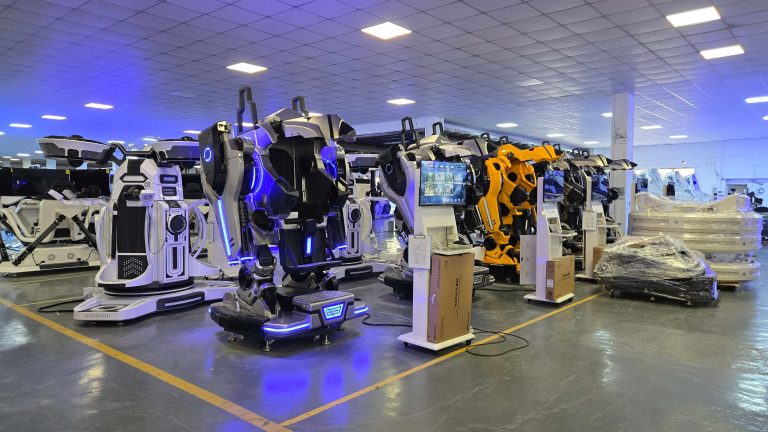
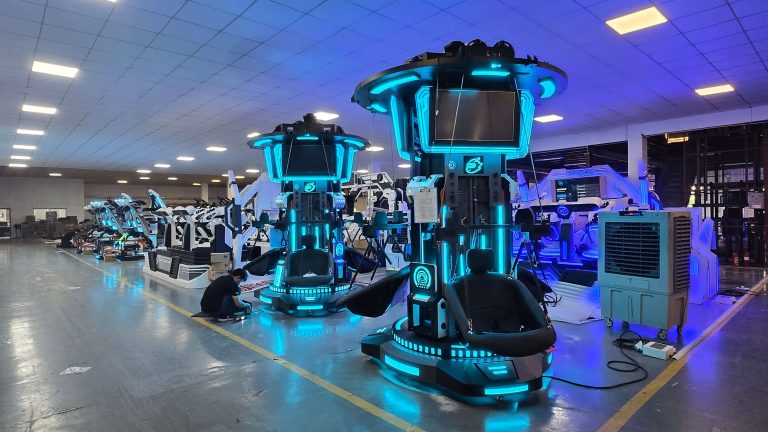
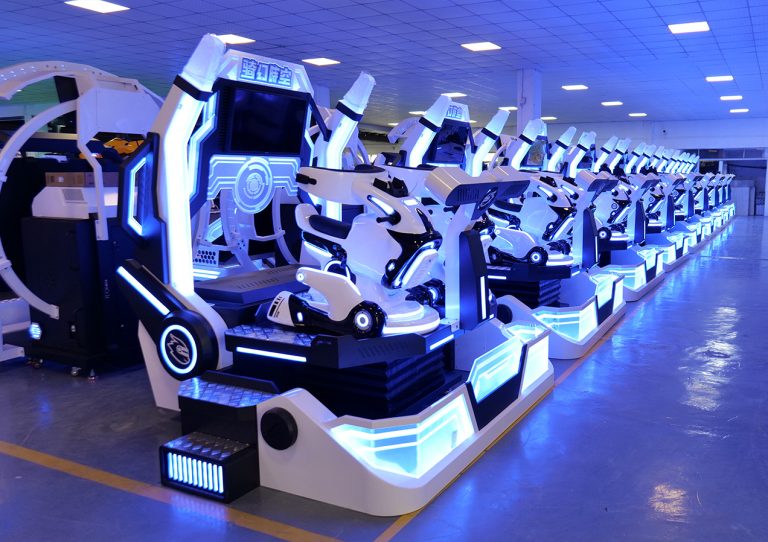
Many VR equipment listings online are placed by trading companies that don’t manufacture anything themselves — they take an order, place it with a factory, and add a margin without adding accountability. Ask directly whether the company operates its own factory, and ask for photos or a video call showing the actual production floor. A manufacturer with nothing to hide will generally show this without hesitation.
3. How long has the company been manufacturing VR equipment specifically?
VR arcade hardware is a specific engineering discipline — motion platforms, restraint safety systems, and VR content integration all require accumulated experience that’s different from general electronics manufacturing. A company that recently pivoted into VR from an unrelated product category is not automatically a red flag, but it’s worth asking directly how long VR-specific manufacturing has been the core business.
4. What certifications does the machine carry, and can you provide documentation?
Ask for whatever safety or quality certification is relevant to your destination market, and ask to see the actual certificate, not just a claim that “it’s certified.” A legitimate manufacturer can produce documentation on request without delay.
5. Who handles shipping, customs, and import logistics — and what’s included in the quote?
Confirm whether the quoted price is ex-factory, FOB (free on board at the origin port), or CIF (cost, insurance, and freight to your destination port) — these are very different numbers, and comparing a CIF quote from one supplier against an ex-factory quote from another will make one look artificially cheaper than it is. Also ask who is responsible for import duties and customs clearance at your end.
6. What content is included, and how often is it updated?
Ask exactly how many games or experiences ship with the machine, whether that content library is proprietary to the manufacturer or licensed from a third party, and what the update cadence has actually been over the past year — not just what’s promised going forward. A thin or stagnant content library is one of the most common reasons repeat-visit rates decline on an otherwise well-built machine.
7. What does after-sales technical support actually look like?
Ask how technical issues get resolved in practice: is there remote video support, a local service partner in your region, or does every issue require shipping parts internationally with the associated delay? Ask about typical response time for a support request and, if possible, ask to speak with an existing customer in a similar time zone to yours.
8. How does customisation affect lead time and cost?
If you want OEM/ODM branding — a custom logo, specific LED colour presets, or bespoke exterior design — ask how much this extends the production timeline compared to a standard configuration, and get it quoted as a separate line item so the customisation cost is transparent rather than folded into a single total.
9. Can you provide reference installations I can verify?
Ask for examples of venues currently running the manufacturer’s machines — ideally ones in a comparable market or venue type to yours — and, where possible, verify independently rather than relying solely on photos supplied by the manufacturer. A company with a genuine installation history will generally be willing to share this.
Quotation Checklist
| # | Confirm in writing before ordering |
|---|---|
| 1 | Warranty scope, duration, and specific exclusions |
| 2 | Factory vs. trading company status, with visual proof of production |
| 3 | Relevant safety/quality certification, with documentation provided |
| 4 | Whether the quoted price is ex-factory, FOB, or CIF, and who handles customs |
| 5 | Exact content library size and update history |
| 6 | After-sales support process and typical response time |
| 7 | Customisation cost and lead time as a separate line item |
| 8 | Verifiable reference installations |
| 9 | Payment terms and what triggers each payment milestone |
Once you have clear answers to these nine questions, comparing quotes becomes far more straightforward — see our VR simulator price guide for the specific cost drivers behind a quote, and our site requirements checklist to confirm your venue is ready before you commit to an order.
Frequently Asked Questions
Is it safe to buy VR arcade machines directly from a Chinese manufacturer?
It can be, provided you verify the manufacturer’s production capability, certification, warranty terms, and after-sales support before ordering — the same due diligence you’d apply to any significant equipment purchase, regardless of the supplier’s country.
What’s the difference between a factory and a trading company?
A factory manufactures the equipment itself and has direct accountability for build quality and after-sales support. A trading company resells a factory’s product with an added margin and typically has less direct control over production quality or support timelines. Asking for proof of an owned factory is the fastest way to tell them apart.
What does FOB vs CIF mean in a manufacturer’s quote?
FOB (free on board) means the quoted price covers the goods loaded onto a ship at the origin port, with the buyer arranging and paying for onward shipping. CIF (cost, insurance, and freight) means the manufacturer’s quote already includes shipping and insurance to your destination port. Comparing quotes without confirming which basis each one uses will make one look cheaper than it actually is.
How important is content library size when choosing a VR machine?
Very important for long-term revenue. A larger, regularly updated content library supports higher repeat-visit rates, while a thin or stagnant library is a common reason an otherwise well-built machine underperforms over time.
Should I ask for reference installations before ordering?
Yes. Verifiable reference installations, ideally in a venue type or market comparable to yours, are one of the strongest indicators of a manufacturer’s actual track record beyond what’s shown in marketing materials.
Next Steps
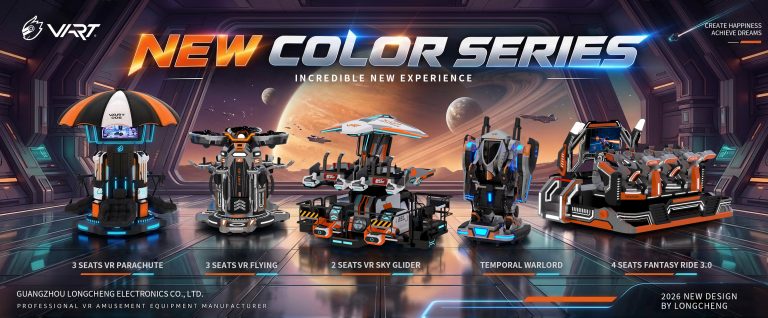
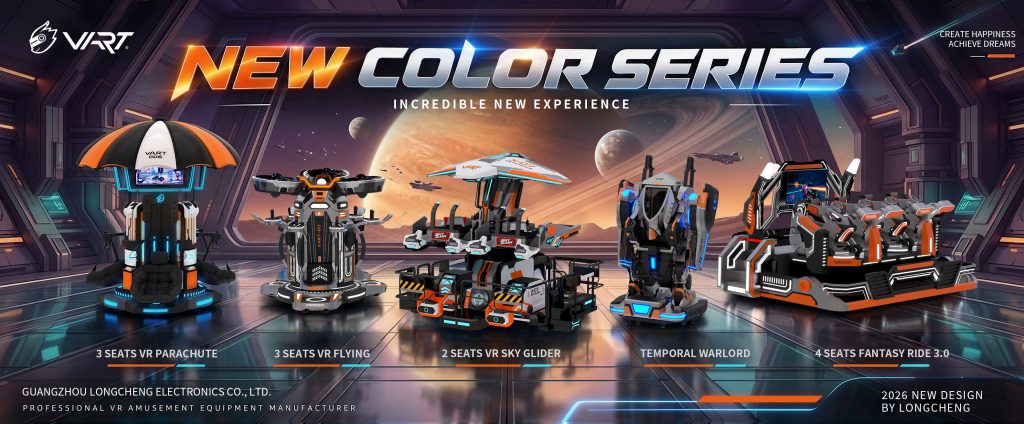
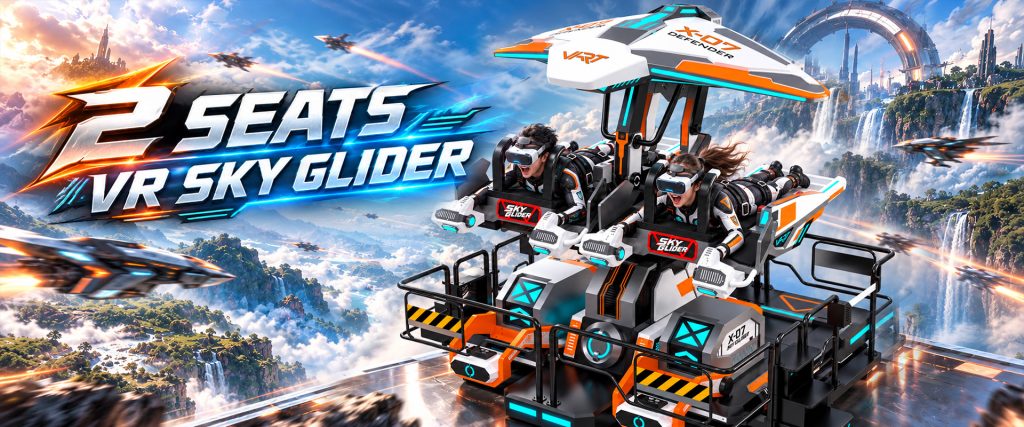
VART has manufactured VR attraction equipment in Guangzhou since 2011 — learn more about our factory and history, review the VR Sky Glider and VR Parachute Simulator specifications, or use this checklist as the basis for your first conversation when you contact us.