5D/7D Cinema vs. VR Arcade: Which is More Profitable in 2026?

Key Takeaways
- 5D and 7D cinemas focus on group-based movie experiences, while VR arcades prioritize personal interaction and immersive gameplay.
- VR arcades generally offer stronger replay value and easier content updates compared to traditional cinema systems.
- 5D/7D cinemas are ideal for high-capacity tourist traffic, while VR attractions perform better for repeat visits and younger audiences.
- Venue size, local competition, and target demographics should determine your investment decision.
- Hybrid entertainment centers combining cinema and VR attractions are becoming increasingly popular in 2026.
The immersive entertainment industry is evolving quickly in 2026.
For many investors, one major question continues to appear during project planning:
Should you invest in a traditional 5D/7D cinema or build a modern VR arcade?
Both business models can generate strong revenue when operated correctly. However, they attract different audiences, require different operational strategies, and create different customer experiences.
The wrong investment can lead to slow customer growth and weak long-term profitability.
The right investment can transform your venue into a high-traffic entertainment destination.
In this guide, we will compare:
- 5D cinema vs VR arcade business models
- Revenue potential
- Space requirements
- Customer behavior
- Operational advantages
- Long-term profitability
- Which option fits different venues best
Whether you are planning a shopping mall attraction, family entertainment center, or immersive theme park project, this comparison will help you make a smarter business decision.
Why Immersive Entertainment Continues Growing in 2026
Traditional entertainment is no longer enough for modern consumers.
Today’s customers want:
- Interactive experiences
- Social-media-friendly attractions
- Motion-based gameplay
- Immersion
- Personalized entertainment
This is why both 5D cinemas and VR arcades continue expanding globally.
However, the market trend is shifting.
Customers increasingly prefer experiences they can actively participate in rather than simply watch.
This shift is one of the biggest reasons VR entertainment has grown rapidly over the past few years.
What’s the Difference Between 5D/7D Cinema and VR Arcade?
At first glance, both categories may seem similar.
Both involve immersive visuals, motion systems, and sensory effects.
But their entertainment logic is completely different.
5D/7D Cinema — Group-Based Immersive Viewing
A 5D or 7D cinema is primarily a group movie experience.
Customers sit together on motion seats while watching synchronized content on a large screen.
The experience often includes:
- Motion seats
- Wind effects
- Water spray
- Vibration
- Lighting effects
- Environmental simulation
The audience watches the same content simultaneously.
This makes 5D/7D cinemas highly suitable for:
- Tourist attractions
- Theme parks
- Museums
- Family destinations
- Large visitor groups
The experience is structured and easy to operate.
VR Arcade — Interactive Personal Immersion
VR arcades focus on interaction rather than passive viewing.
Each player enters their own immersive virtual world using a VR headset and motion simulator.
Unlike cinema systems, VR attractions emphasize:
- Gameplay
- Interaction
- Competition
- Exploration
- Physical movement
- Personalized experiences
Modern commercial VR equipment also supports:
- Multiplayer gameplay
- Free-roam interaction
- Motion synchronization
- Real-time game updates
This makes VR arcades more dynamic and flexible.
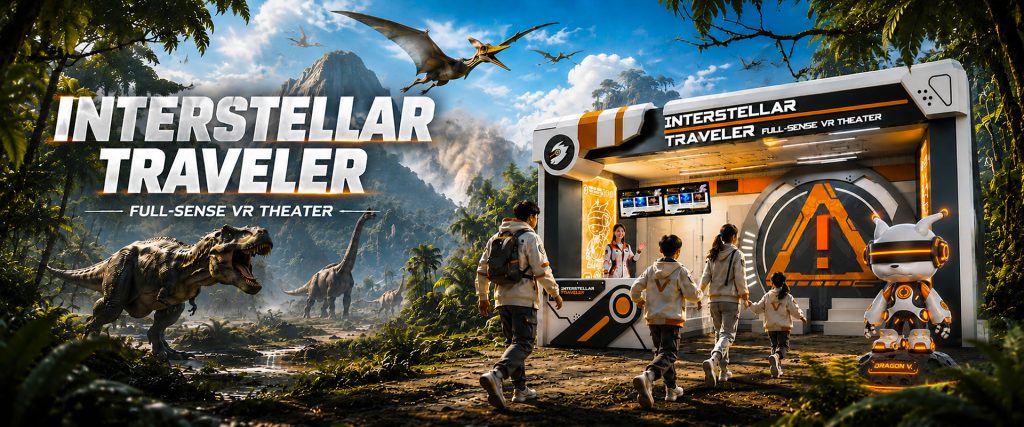
Example of Modern Immersive VR Cinema Equipment
One of the biggest changes in 2026 is the rise of hybrid immersive attractions.
Some VR simulators now combine cinema-style immersion with interactive gameplay.
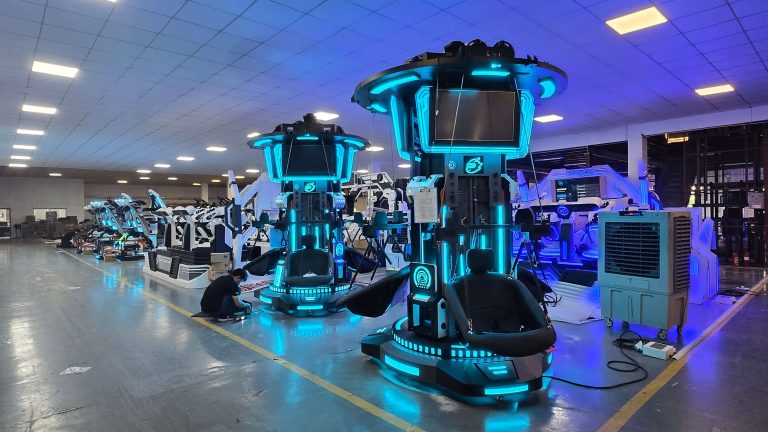
A good example is the Interstellar Traveler VR Simulator.
This attraction combines:
- Futuristic sci-fi design
- Dynamic motion systems
- VR immersion
- Environmental effects
- Interactive storytelling
Unlike traditional 5D cinemas, modern VR cinema attractions provide more personalized immersion while still maintaining strong visual appeal for spectators.
For many entertainment venues, this hybrid approach creates a better balance between throughput and customer engagement.
5D Cinema vs VR Arcade — Core Comparison
Here is a simplified comparison between the two business models.
| Feature | 5D/7D Cinema | VR Arcade |
|---|---|---|
| Experience Style | Group viewing | Interactive gameplay |
| Customer Participation | Passive | Active |
| Content Flexibility | Limited movies | Diverse games |
| Replay Value | Moderate | High |
| Social Media Appeal | Medium | Very High |
| Upgrade Frequency | Lower | Faster |
| Customer Engagement | Shared experience | Personal immersion |
| Ticket Pricing Potential | Stable | Premium |
| Trend Appeal in 2026 | Traditional immersive | Highly trendy |
Both models can succeed.
The key is understanding which one matches your venue strategy.
Pros and Cons of 5D/7D Cinemas
5D and 7D cinemas still perform well in many entertainment environments.
Especially in tourism-heavy locations, they remain profitable attractions.
Advantages of 5D/7D Cinemas
High Seating Capacity
A major advantage of 5D cinemas is throughput.
Multiple viewers can experience the attraction simultaneously.
This is especially useful for:
- Tourist attractions
- High-footfall venues
- Family destinations
- Large entertainment complexes
Easy Operational Structure
The operational process is straightforward.
Customers:
- Buy tickets
- Enter theater
- Watch movie
- Exit
Minimal gameplay instruction is required.
Strong Group Experience
Families and tourist groups often enjoy shared entertainment experiences.
This group atmosphere can create emotional value.
Limitations of 5D/7D Cinemas
Limited Content Variety
Most 5D cinemas rely on fixed movie content.
After customers experience the attraction once or twice, replay interest may decrease.
Lower Interactivity
Modern audiences increasingly prefer interactive entertainment.
Passive viewing experiences may feel less exciting to younger visitors.
Higher Space Requirements
Cinema seating layouts often require larger dedicated areas.
This can reduce floor-space flexibility.
Pros and Cons of VR Arcades
VR arcades represent the more modern side of immersive entertainment.
Their biggest strength is flexibility.
Advantages of VR Arcades
Strong Interactivity
Customers actively participate in the experience.
They can:
- Compete
- Explore
- Fight
- Race
- Cooperate with friends
This dramatically increases immersion.
Diverse Game Library
Unlike fixed movie systems, VR attractions support multiple games and content updates.
Operators can continuously refresh the customer experience.
Higher Replay Value
Different games encourage repeat visits.
This is one of the biggest long-term advantages of VR entertainment.
Strong Social Media Marketing
VR reactions, movement, and gameplay perform extremely well on:
- TikTok
- Instagram Reels
- YouTube Shorts
- Facebook Reels
This organic visibility reduces marketing pressure.
Limitations of VR Arcades
More Technical Operation
VR attractions require:
- Headset maintenance
- Software management
- Staff training
- Technical support
Professional after-sales support becomes extremely important.
Individual Gameplay Flow
Unlike cinemas, some VR attractions focus on individual experiences.
Throughput planning is important to avoid customer waiting times.
Which Option Is More Profitable in 2026?
Profitability depends on more than equipment pricing.
The answer depends on:
- Venue location
- Audience demographics
- Foot traffic
- Competition
- Operational strategy
However, market trends increasingly favor interactive entertainment.
Why VR Arcades Often Generate Higher Long-Term ROI
VR arcades usually benefit from:
- Better replay value
- Content flexibility
- Higher engagement
- Easier social marketing
- Faster trend adaptation
Modern customers often revisit VR venues multiple times because new games and experiences continue appearing.
This creates stronger customer retention.
Why 5D Cinemas Still Work in Certain Markets
5D cinemas remain highly effective for:
- Tourist attractions
- Family destinations
- Museums
- Scenic areas
- Theme parks
In these environments, customers may only visit once, making replay value less important.
The group viewing format also supports large visitor throughput.
Which Is Better for Small Venues?
Smaller venues usually require:
- Flexible layouts
- Compact equipment
- High visual attraction
- Efficient space usage
In most cases, VR arcades perform better for smaller commercial spaces.
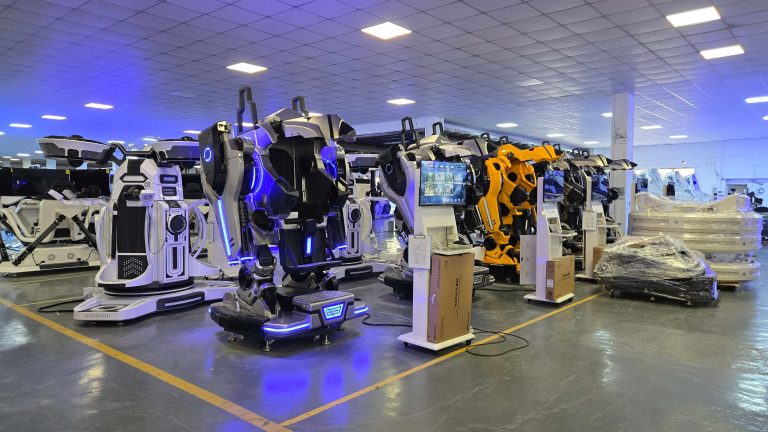
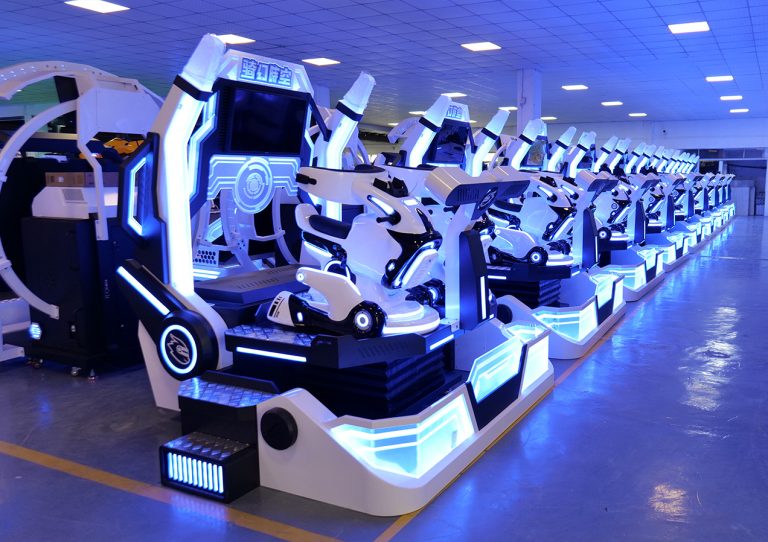
Compact VR simulators can create strong visual impact without requiring a large theater structure.
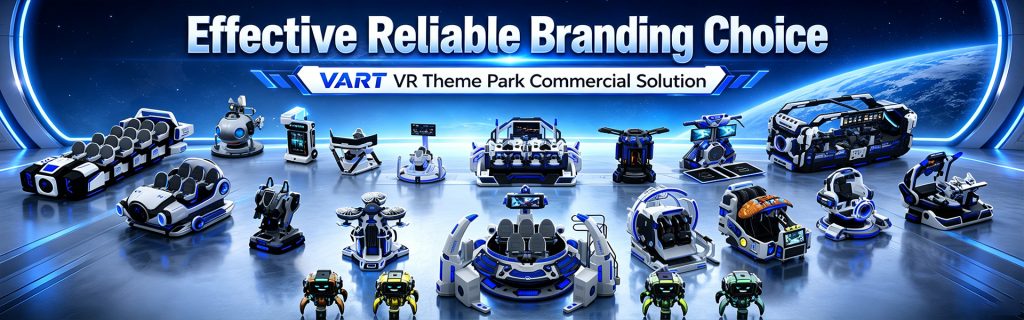
Popular compact VR attractions include:
- VR motorcycles
- VR racing simulators
- VR 360 chairs
- VR flight simulators
These attractions are highly effective in shopping malls and compact entertainment zones.
Which Is Better for Large Entertainment Centers?
Larger venues often benefit from combining both models.
Many modern family entertainment centers now include:
- VR arcade areas
- Motion cinemas
- Interactive multiplayer zones
- Simulator attractions
This hybrid strategy broadens audience coverage and improves revenue diversity.
The Importance of Local Competition Analysis
Before investing, always analyze your local market.
Ask yourself:
Are there already traditional cinemas nearby?
If yes, a VR arcade may help differentiate your business.
Are customers looking for trendy entertainment?
Younger audiences often prefer interactive experiences.
Is your city tourism-driven?
Tourist markets may still support large-capacity cinema attractions effectively.
Do competitors already offer VR?
If the local market lacks immersive gaming, VR can become a strong competitive advantage.
Market positioning matters more than simply following trends.
Recommended Investment Strategy for 2026
For many new investors, the safest strategy is:
Start with flexible VR attractions
VR systems are easier to update and adapt over time.
Focus on visual impact
Highly visible simulators attract more walk-in customers.
Prioritize replay value
Repeat customers improve long-term profitability.
Leave room for future expansion
Many operators later expand into hybrid immersive entertainment centers.
The entertainment industry is becoming increasingly experience-driven.
Flexibility matters.

Final Thoughts — Which Investment Is Right for You?
Both 5D cinemas and VR arcades can succeed in 2026.
The right choice depends on your:
- Venue size
- Audience type
- Market positioning
- Budget
- Long-term operational strategy
If your goal is:
High-capacity group entertainment
A 5D/7D cinema may be the better option.
Interactive, trendy, and highly shareable experiences
A VR arcade is likely the stronger long-term investment.
For many entertainment businesses, the future is no longer “cinema OR VR.”
It is immersive hybrid entertainment.
Want a professional recommendation based on your venue size and business goals?
Explore immersive entertainment solutions from VART VR and request a customized comparison report today.For a complete roadmap, check out our VR arcade business plan guide.
FAQ
What is the difference between 5D cinema and VR arcade?
5D cinemas focus on group movie experiences with synchronized motion seats, while VR arcades provide interactive personal gameplay using VR headsets and motion simulators.
Which is more profitable in 2026, 5D cinema or VR arcade?
In many markets, VR arcades offer stronger long-term profitability due to higher replay value, flexible content updates, and stronger social media appeal.
Are 5D cinemas still popular?
Yes. 5D cinemas remain effective in tourist attractions, theme parks, museums, and family-oriented entertainment venues.
Do VR arcades require more maintenance?
VR arcades typically require more technical maintenance because they involve headsets, software systems, and interactive gameplay equipment.
Can a venue combine both 5D cinema and VR attractions?
Yes. Many modern entertainment centers successfully combine cinema systems with VR attractions to increase customer variety and maximize revenue opportunities.