How to Calculate ROI and Payback Time for a VR Arcade?

Why ROI Calculation Matters in the VR Arcade Business?
Launching a VR arcade is exciting, but success isn’t defined by opening day — it’s determined by how fast you can recover your investment and start earning profit.
Calculating your ROI (Return on Investment) and understanding your payback time are essential steps for every investor. These figures guide you in setting realistic goals, managing expenses, and scaling smartly.
In this guide, you’ll learn how to estimate ROI, what affects profitability, and how VART VR supports investors worldwide in achieving fast, sustainable returns.
1. Understanding ROI: What It Really Means
ROI (Return on Investment) measures how efficiently your investment generates profit.
Formula:
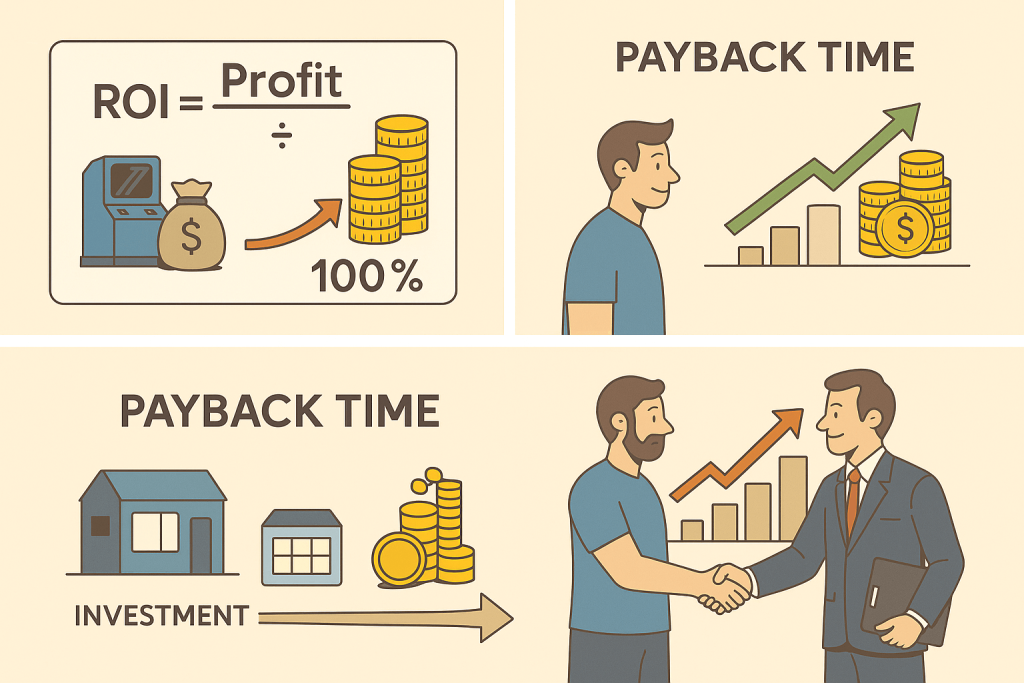
ROI = (Net Profit ÷ Total Investment) × 100%
Where:
- Net Profit = Total Revenue – Total Expenses
- Total Investment = Initial Setup Cost + Operational Costs
Example: If you invest a certain amount and earn more than that after expenses, your ROI indicates how quickly you’re growing your returns.
In short — a higher ROI means your business is performing better.
2. Step-by-Step Guide: How to Calculate ROI for Your VR Arcade
Let’s walk through the process using insights from VART VR’s global operator network.
Step 1: Estimate Your Total Investment
Your total investment typically includes:
- VR simulators and motion platforms
- Space renovation and design
- Marketing and branding
- Staff hiring and training
- Permits, insurance, and initial operation fees
Small starter arcades generally begin with lower budgets, while full-scale multi-machine VR parks require higher capital investment.
(Exact pricing depends on simulator models, configuration, and regional setup — consult VART VR for customized project planning.)
Step 2: Estimate Monthly Revenue
Revenue depends on your:
- Ticket pricing strategy
- Daily visitor numbers
- Operating schedule
- Group bookings or events
A small VR setup in a shopping center may generate moderate returns, while a larger VR park in a tourist hub can multiply monthly earnings several times.
(Revenue performance always reflects location, marketing effort, and customer flow.)
Step 3: Estimate Monthly Expenses
Your operational costs include:
- Rent and utilities
- Employee salaries
- Maintenance and cleaning
- Content updates and licensing
- Marketing campaigns
On average, these expenses account for 10–20% of monthly revenue depending on the business model.
Step 4: Calculate ROI and Payback Time
Now, apply the formulas:
ROI = (Net Profit ÷ Total Investment) × 100%
Payback Time = Total Investment ÷ Monthly Net Profit
A well-managed VR arcade typically achieves payback within 6-12 months.
(Figures vary based on region, scale, and operational efficiency.)
Step 5: ROI Range by Business Size (Approximate)
| VR Arcade Type | Estimated Investment Range | Typical ROI (Annual) | Payback Time (Range) |
|---|---|---|---|
| Small Setup (2–3 simulators) | Low to medium investment | 50–100% | 12–18 months |
| Medium Arcade (5–8 simulators) | Moderate investment | 80–150% | 9–14 months |
| Large VR Park (10+ simulators) | Higher investment | 120–180% | 6–12 months |
All figures are indicative industry averages. Actual performance depends on machine utilization, location, and local market demand.
3. Key Factors That Influence ROI
A. Location and Foot Traffic
Foot traffic is the single biggest ROI driver.
A high-traffic mall or entertainment complex ensures steady visitors and better profitability.
B. Ticket Pricing and Bundles
Find balance — set prices that attract customers while sustaining profit.
Many operators use “play packages” or “membership cards” to boost repeat purchases.
C. Marketing Effort
Consistent visibility on Google Maps, TikTok, and local social media drives engagement.
VART VR offers marketing kits and promotional templates for new arcade owners.
D. Content Variety
Fresh content equals repeat customers.
VART VR continuously updates simulator games and experiences to keep customers returning.
E. Maintenance and Uptime
The fewer breakdowns, the higher your ROI.
VART VR’s global support and remote diagnostics help reduce downtime and protect profitability.
4. Common Mistakes When Calculating ROI
- Ignoring Hidden Costs
Don’t forget rent, marketing, or content renewals.
Related reading: The Hidden Costs of Running a VR Arcade - Overestimating Foot Traffic
Always base calculations on realistic visitor data. - Ignoring Seasonal Variation
Expect peak months (holidays, weekends) and slower off-seasons. - Skipping Depreciation
Simulators gradually lose value — factor this in for accurate ROI. - Neglecting Staff Training
Well-trained teams improve customer satisfaction and operational efficiency.
5. How to Improve Your ROI?
- Optimize space design: Improve flow and comfort to increase throughput.
- Bundle experiences: Offer combo deals and group packages.
- Build loyalty: Reward frequent visitors and corporate clients.
- Automate operations: Use booking systems and kiosks to cut labor costs.
6. Calculating Payback Time: Understanding Recovery Speed
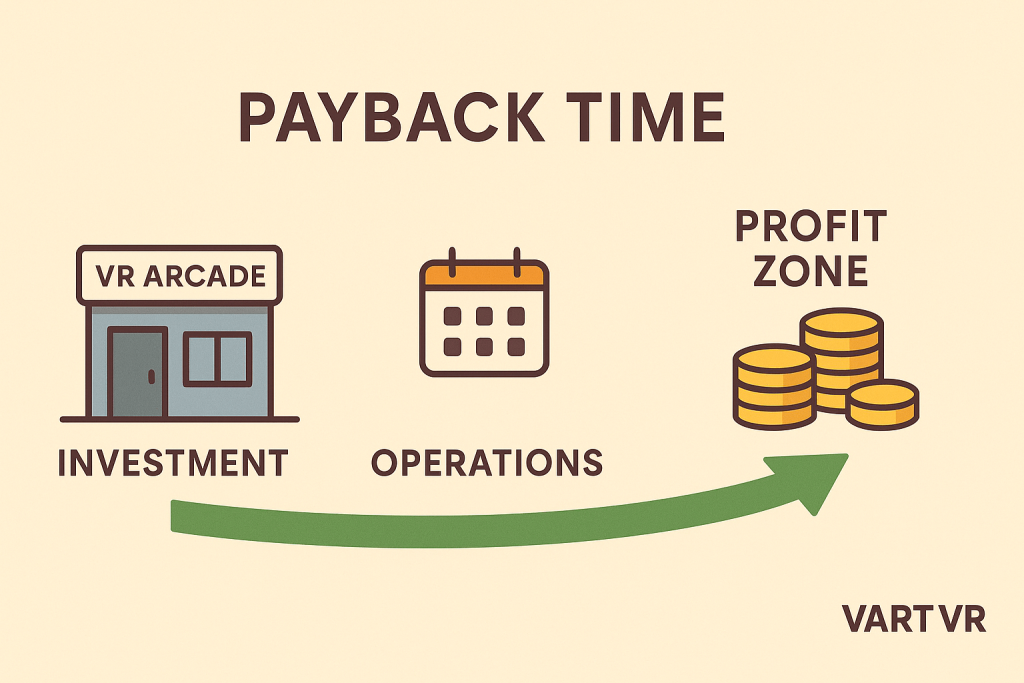
Payback Time measures how long it takes to recover your initial investment.
Payback Time = Total Investment ÷ Monthly Net Profit
A shorter payback means healthier cash flow and faster expansion potential.
Operators working with VART VR often reach payback within the first year of operation.
7. Case Example (ROI Projection)
A medium-sized VR arcade with multiple simulators, located in a busy shopping district, may achieve:
- ROI range: 80–130% annually
- Payback period: under 12 months
VART VR’s clients report similar outcomes through smart site planning, content rotation, and technical support.
8. When to Expand or Reinvest
Once you’ve reached breakeven, consider scaling up:
- Add more simulators or experiences
- Open a second location
- Upgrade to a VR park model
VART VR provides turnkey solutions for expansion — ensuring consistency and profitability as your business grows.
9. Disclaimer
All investment, ROI, and payback figures provided are approximate industry averages for reference purposes.
Actual results depend on factors such as equipment type, regional market conditions, and operator strategy.
For an accurate financial forecast, please contact VART VR for a customized ROI assessment and business consultation.
Conclusion: ROI Is the Compass of Your VR Investment
Calculating ROI and payback time isn’t just about math — it’s about foresight and strategy.
By understanding your costs, optimizing operations, and partnering with experts like VART VR, you can build a VR arcade that grows steadily and sustainably.
Ready to project your profitability?
Next Read: How Much to Invest in a VR Arcade
FAQ: ROI and Payback Time for VR Arcades
1. What’s a good ROI for a VR arcade business?
A strong ROI typically falls between 50%–150% per year, depending on scale and efficiency.
2. How long does it take to recover my investment?
Most operators achieve payback within 6-12 months, depending on traffic and management.
3. Which factors affect ROI the most?
Location, ticket pricing, marketing, and equipment reliability.
4. Can ROI improve over time?
Absolutely. As your brand grows and customer loyalty strengthens, ROI and profit margins naturally increase.