How Family-Friendly VR Machines Deliver Faster ROI in 2025?


Introduction: Family Entertainment as a Smart Investment
As virtual reality (VR) continues to redefine global entertainment, one segment is quietly outperforming the rest — family-oriented VR machines.
While high-adrenaline simulators and eSports arenas attract young crowds, it’s the family VR experience that consistently delivers better revenue stability and a faster return on investment (ROI).
In 2025, entertainment investors are realizing that success doesn’t just depend on excitement — it depends on accessibility, repeat visitors, and balanced design.
1. Why Family-Friendly VR Machines Are a Financial Advantage?
Family customers represent a unique and steady audience.
Unlike single-player gaming centers, family VR venues attract groups — parents, kids, and friends — who tend to stay longer and spend more.
Key Advantages:
- Higher group ticket sales per session (2–5 players per experience)
- Increased dwell time, leading to more food, drink, and merchandise sales
- Greater repeat visits due to safe, accessible experiences
Families look for experiences that are interactive, not intimidating — and that’s where family-focused VR simulators outperform high-end, niche setups.
2. ROI Factors: What Makes Family VR More Profitable
The ROI of a VR arcade isn’t only about machine cost — it’s about efficiency per square meter and engagement per visitor.
| ROI Factor | Family VR Machines | Traditional Simulators |
|---|---|---|
| Average Group Size | 3–5 players | 1–2 players |
| Play Frequency | High (kids and parents both participate) | Medium |
| Maintenance Cost | Low to moderate | Higher (due to motion parts) |
| Energy Consumption | Moderate | High |
| Payback Time | 8–12 months | 14–18 months |
The wider audience base shortens the payback cycle and diversifies your customer flow.
Understanding hidden costs is also vital when planning your ROI.
Learn more in The Hidden Costs of Running a VR Arcade

3. Designing for Multi-Age Engagement
A profitable arcade layout isn’t about maximizing machines — it’s about optimizing engagement zones.
A. Tiered Design Strategy
- Kids Zone: colorful, safe, easy-to-learn games that run continuously
- Family Zone: 2–4 player pods or group simulators
- Adult Challenge Zone: advanced motion or shooting VR
B. Machine Mix Example
- 40% family-oriented simulators
- 30% kids-friendly rides
- 20% immersive cinematic pods
- 10% competitive or high-intensity machines
This balance allows high throughput during weekends and sustainable weekday revenue.
4. Calculating ROI: Family VR vs. Solo Machines
Let’s consider an example from a typical mid-size VR arcade:
- Total Investment: $100,000
- Family VR Section (50%) → Average revenue: $9,000/month
- Other Simulators (50%) → Average revenue: $6,000/month
Within 10–12 months, the family section covers its cost, while high-end solo simulators often need 14–18 months.Before calculating ROI, it’s essential to understand your total setup and investment structure.
You can explore detailed investment planning in our guide How Much to Invest in a VR Arcade
5. Psychological Value: Comfort = Conversion
One of the most overlooked ROI drivers is comfort and confidence.
Families are more likely to spend when the environment feels safe, bright, and inclusive.
Key emotional factors that increase conversion:
- Safety perception (no extreme motion or discomfort)
- Visual friendliness (bright lighting and colorful machines)
- Accessibility (quick onboarding, intuitive controls)
This translates directly into repeat bookings and positive word-of-mouth — two of the strongest ROI accelerators.

6. The VART VR Business Advantage
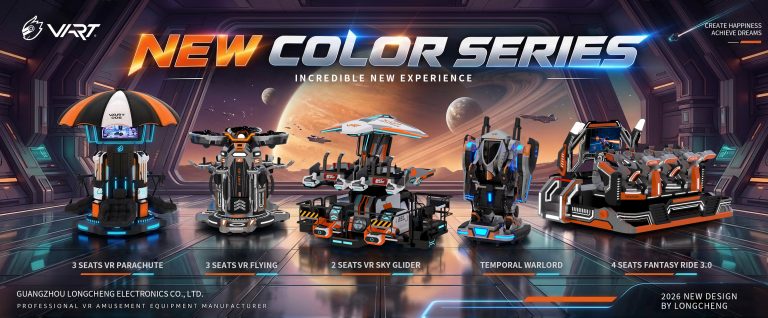
VART VR specializes in designing machines optimized for family entertainment profitability.
Our simulators combine:
- Modular hardware for flexible setup
- Multi-player options for higher per-session income
- Global warranty and maintenance support
Whether your venue is 50㎡ or 500㎡, VART VR provides full ROI consultation to help you plan your investment timeline wisely.
Conclusion: Smart Investment Meets Happy Visitors
The future of VR entertainment belongs to spaces that welcome everyone — not just thrill-seekers.
By focusing on family-friendly VR machines, investors create a business model that’s more sustainable, accessible, and profitable.
Once your investment is optimized, the next step is to plan your layout and customer flow.
Stay tuned for our upcoming guide on Space Planning for Profitable VR Arcades
FAQ: ROI and Family VR Machines
1. How soon can I recover my investment in family VR machines?
Most operators report full ROI within 8–12 months, depending on location and traffic.
2. Are family VR rides less durable than advanced simulators?
No. VART VR’s family-focused models are built for high daily usage with minimal maintenance.
3. How much space is required for a profitable VR setup?
A well-optimized 60–80㎡ area can host up to six multi-player VR experiences efficiently.
4. Do these machines support multiplayer modes?
Yes, most family-oriented simulators can accommodate 2–5 players, increasing revenue per session.
5. Does VART VR offer ROI consultation?
Yes. Our team provides investment analysis, layout planning, and long-term operational support.