Why 3-Seat Multiplayer Beats Single-Rider VR for FEC Throughput

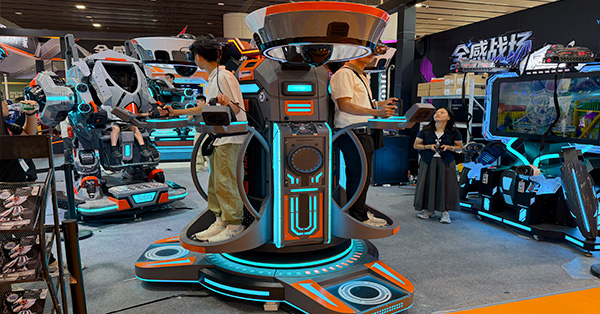
A 3-seat multiplayer VR ride with independently operated stations, like the VR parachute simulator, serves more riders per hour per square metre of floor than a bank of single-rider VR stations, because a shared queue across three independent seats absorbs uneven walk-up traffic that a single-rider station cannot. This matters more to an FEC’s bottom line than headset resolution or game variety, because throughput — not immersion quality — is usually what caps daily revenue on a busy floor.
The Core Problem With Single-Rider Stations
A single-rider VR station has one queue feeding one seat. When that seat is occupied, every waiting customer queues behind it regardless of how many other stations sit idle nearby, because most single-rider setups are sold and queued individually rather than as a shared pool. The result is a familiar FEC floor pattern: one station with a five-person line, three others standing empty, and an operator with no easy way to rebalance the crowd without physically redirecting customers.
Why Independent 3-Seat Operation Solves This
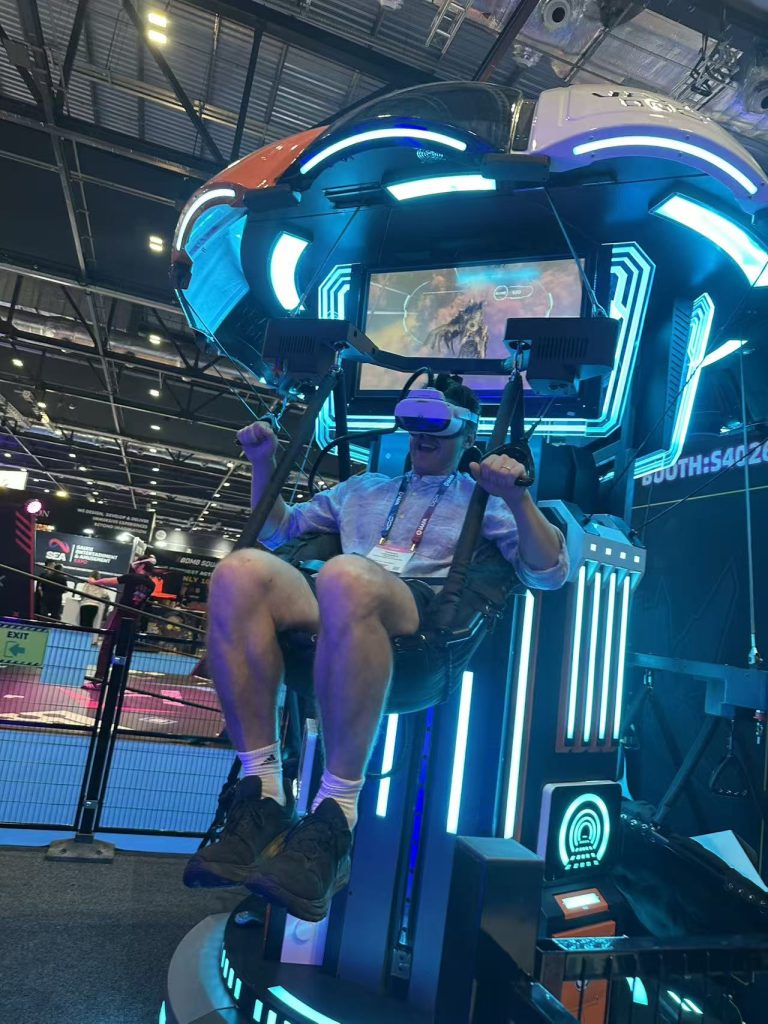
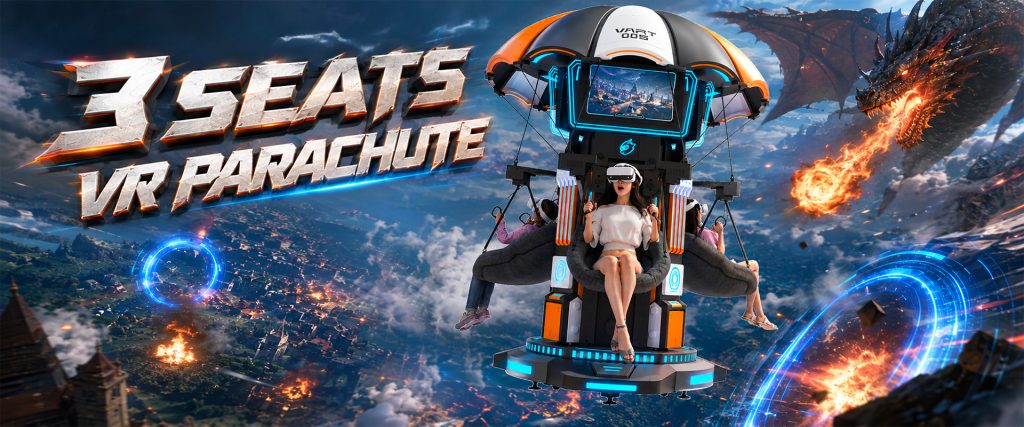
The 3-seat VR parachute simulator is built around independently operated stations — each of the three suspended seats can start, run, and stop on its own schedule. In practice this means:
- One shared queue, three service points. The next available seat serves the next waiting customer, the same logic that makes a single winding queue at a bank faster than three separate lines.
- No forced group sync. A single walk-up rider does not need to wait for two more people to arrive before a cycle can start, unlike attractions built around a synchronized group cycle.
- Flexible pricing by seat. Operators can run one seat as a quick single-rider option and the other two as a group package simultaneously, adapting to whatever mix of customers is currently in line.
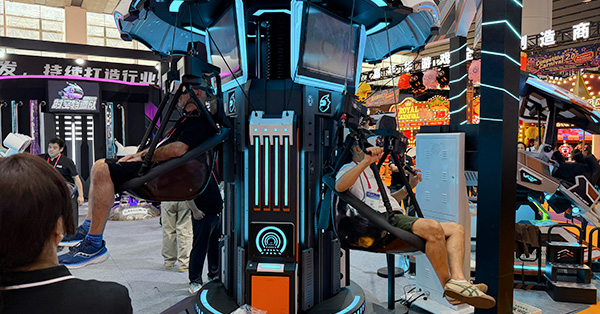
Throughput Math: 3 Independent Seats vs 3 Single-Rider Stations
| Scenario | Queue Behaviour | Effective Throughput |
|---|---|---|
| 3 separate single-rider stations, 3 separate queues | Uneven — customers pick a line and are stuck behind whoever is ahead of them, even if another station is free | Limited by the slowest queue, not the fastest station |
| 1 three-seat unit, independently operated, shared queue | Balanced — the next free seat takes the next customer regardless of which seat that is | Approaches the combined capacity of all three seats |
This is the same operational principle that airport check-in counters and modern bank branches switched to decades ago: pooling service points behind a single queue reduces average wait time without adding a single extra server. Applied to a VR floor, it means the same three seats generate meaningfully more completed rides per hour purely from how the queue is structured — no faster headset or shorter game required.
Revenue Per Square Metre
FEC operators typically evaluate attractions on revenue per square metre of floor space, because floor space is usually the hardest constraint to expand. A 3-seat VR parachute simulator occupies 6.25 m² total and, because its independent-seat throughput advantage lifts effective rides per hour without adding footprint, tends to generate more revenue from that same 6.25 m² than three separately-housed single-rider cabinets, which typically require more combined floor space once individual queue lanes are accounted for.
The underlying formula — rides per day × riders per ride × ticket price — is the same one covered in our VR attraction ROI guide; independent multi-seat operation is simply a lever that raises the “rides per day” term without touching price or floor space.
Where Single-Rider Stations Still Make Sense
Multiplayer, independently-operated units are not the right fit for every situation. Single-rider stations remain a better choice when:
- Content variety matters more than throughput — a bank of single-player racing or shooting cabinets lets customers self-select very different game genres, which a shared-theme multiplayer ride cannot replicate.
- Floor space is fragmented — several small pockets of space scattered around a venue may each fit one single-rider cabinet but not a single larger multi-seat unit.
- Budget requires phased investment — single stations can be added one at a time as revenue allows, where a multiplayer unit is typically a single larger purchase.
The decision is really about what’s limiting revenue on your specific floor: if it’s queue time and walk-up conversion, an independently-operated multiplayer unit addresses that directly; if it’s a lack of content variety for a captive repeat-visit audience, single-rider stations with different game genres may serve that better.
Group Sales: The Additional Revenue Layer
Independent seat operation doesn’t just fix queue bottlenecks — it also unlocks group sales that single-rider stations structurally can’t offer. A birthday party or corporate group can book all three seats together for a synchronized group flight, while between bookings the same three seats revert to serving the general walk-up queue individually. Single, separately-housed stations cannot offer this dual mode without physically coordinating three independent bookings across three different machines.
Frequently Asked Questions
Why does independent multi-seat operation increase throughput?
Because all seats share one queue instead of each customer being locked into whichever single station’s line they joined. The next available seat serves the next waiting customer, which reduces average wait time compared with several separately-queued single-rider stations.
Does a 3-seat VR parachute simulator take up more floor space than three single-rider stations?
No — it occupies 6.25 m² total, which is typically less combined floor space than three separately housed single-rider cabinets once individual queue lanes for each are accounted for.
Can a multiplayer VR ride still serve solo riders?
Yes. Because each seat operates independently, a single walk-up rider can be served on one seat without needing two more people to fill the other seats.
Is multiplayer VR better for every FEC?
Not universally. Venues that prioritise content variety across many game genres, or that have only small, scattered pockets of floor space, may still get more value from individual single-rider stations.
Does independent seat operation support group bookings?
Yes. All three seats can be booked together for a synchronised group experience, then revert to independent walk-up operation between bookings — a mode single, separately-housed stations cannot replicate.
Next Steps
See the full specification for the 3-Seat VR Parachute Simulator, read how independent seat operation works in detail, or contact us to discuss throughput planning for your venue.