VR Skydiving vs Indoor Wind Tunnel: Cost, Space and Safety Comparison

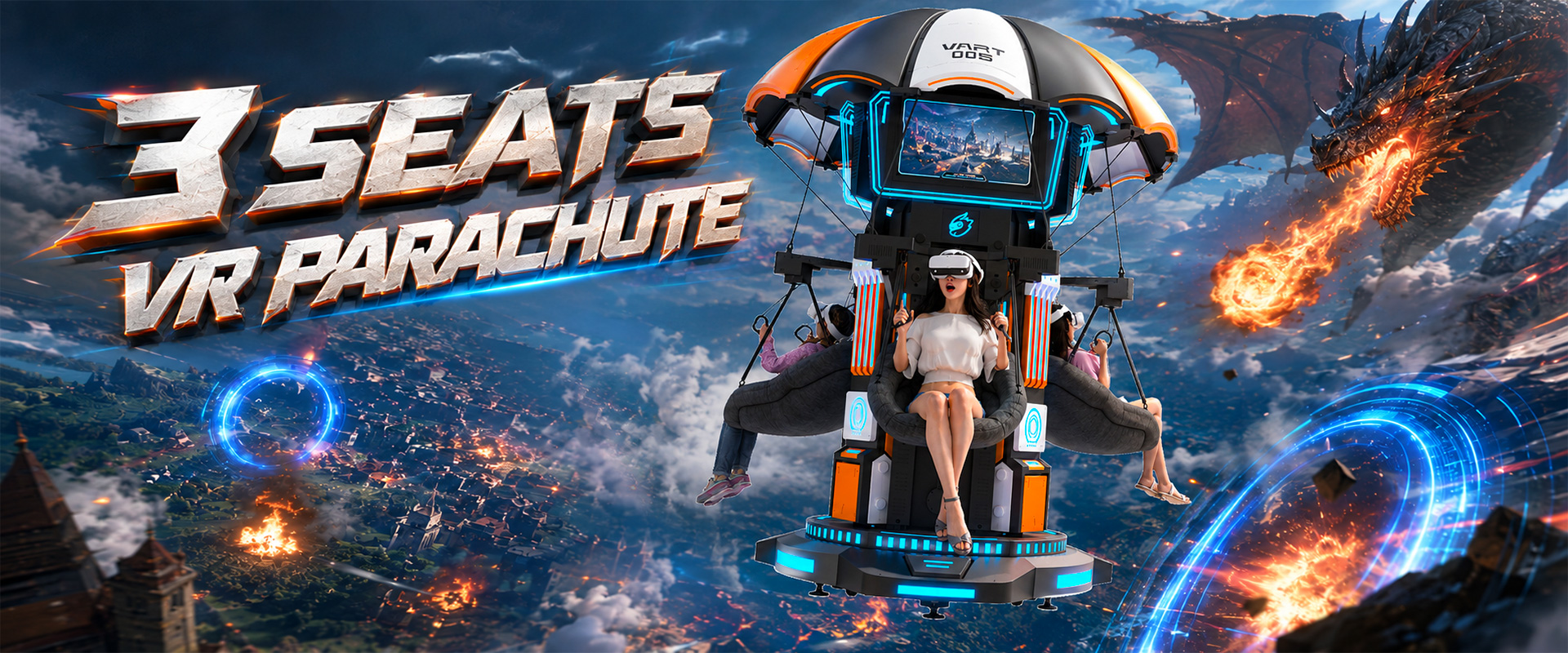
A VR parachute simulator delivers a skydiving sensation in 6.25 m² of floor space, on a standard commercial power connection, at a fraction of the capital cost and lead time of an indoor wind tunnel. A wind tunnel delivers genuine, unassisted human flight in real free-fall air — but that authenticity comes with a purpose-built structure, industrial-scale power infrastructure, and a construction timeline measured in months rather than days. This article compares the two on the factors that actually decide which one fits a given venue.
Quick Comparison
| Factor | VR Parachute Simulator | Indoor Wind Tunnel |
|---|---|---|
| What it simulates | Visual + motion simulation of free fall and canopy flight | Genuine aerodynamic human flight in real air |
| Footprint | 6.25 m² (2500 × 2500 mm) | A dedicated structure, typically hundreds of square metres including the flight chamber, mechanical plant, and support areas |
| Ceiling / structure | 3200 mm — fits inside a standard commercial unit | Purpose-built vertical structure, often multiple stories tall |
| Power draw | 9.0 kW on a standard 220V/50Hz supply | Industrial-scale power for large air-recirculation fans, typically requiring dedicated utility infrastructure |
| Installation timeline | Days to weeks — ships largely pre-assembled | Months to years, including civil construction and permitting |
| Capital cost | A single commercial-attraction purchase | A major capital construction project |
| Rider training required | None — headset and restraint only | Mandatory safety briefing and instructor supervision per flight |
| Typical venue fit | Malls, arcades, FECs, theme parks — added to an existing space | Standalone destination attraction, usually its own facility |
1. What Each Experience Actually Delivers
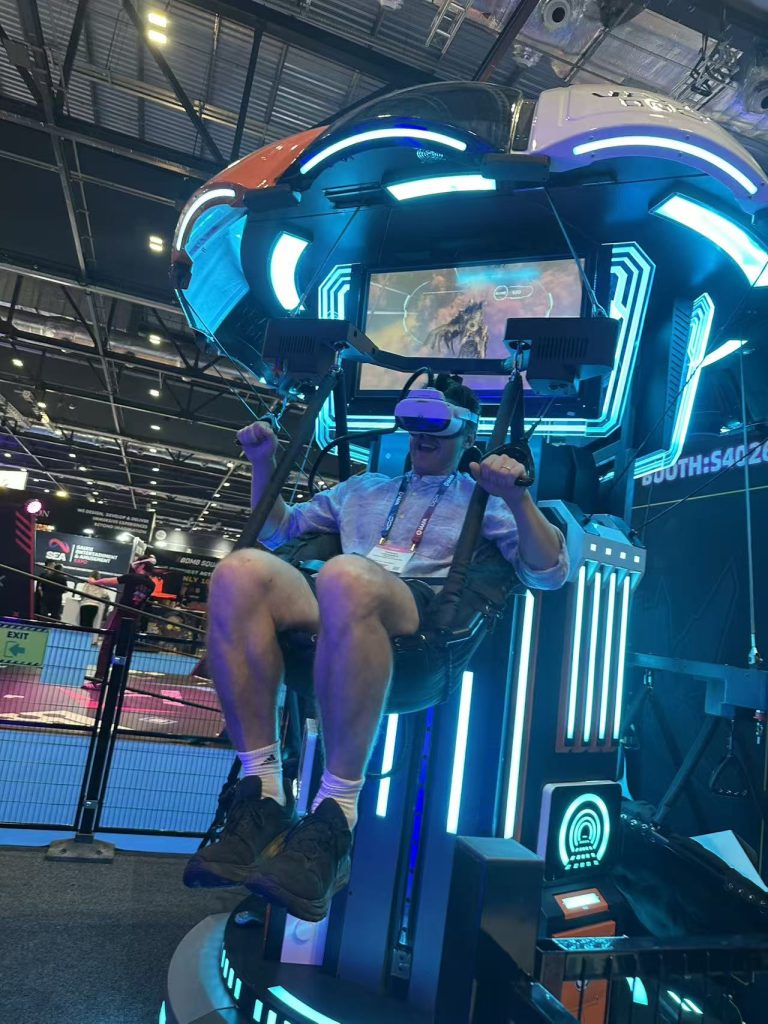
The two attractions solve different problems and shouldn’t be judged as competing on the same axis. A wind tunnel produces real free fall — a column of fast-moving air holds the rider’s body aloft, and the flight sensation, wind noise, and physical exertion are all genuine. A VR parachute simulator reproduces the sensation through a synchronised motion platform, an 1100 mm vertical drop, ±30° tilt, adaptive wind, and a matching VR visual sequence. It is a simulation of the experience rather than the experience itself — but for the walk-up entertainment market, that distinction matters less than most venue operators initially assume, because most riders are seeking the sensation and the story to tell, not literal flight training.
2. Footprint and Structural Requirements
This is where the two diverge most sharply. A 3-seat VR parachute simulator occupies 6.25 m² and stands 3.2 m tall — dimensions that fit inside a standard commercial unit, a mall concourse, or an existing arcade floor without any structural modification to the building.
A wind tunnel requires a purpose-built vertical flight chamber plus supporting mechanical plant for air recirculation, along with staff and spectator areas — a footprint and structural commitment more comparable to constructing a small standalone building than to installing an attraction. This is the single biggest factor separating the two: one is equipment you install, the other is a building you construct.
3. Power and Infrastructure
The VR parachute simulator runs on a 9.0 kW, 220V/50Hz connection — the kind of commercial power supply already available in most malls, arcades, and FECs. A wind tunnel’s recirculating fans require industrial-scale power delivery, typically demanding dedicated utility infrastructure planned in from the building’s design stage rather than retrofitted into an existing venue.
4. Installation Timeline and Capital Cost
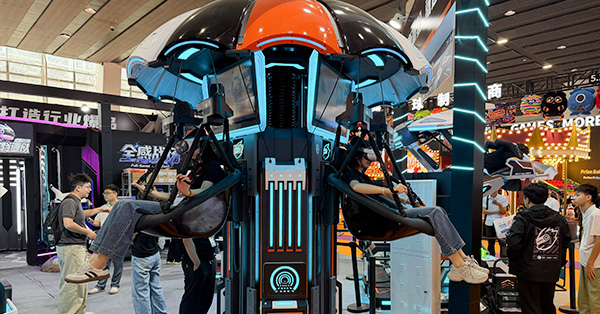
A VR parachute simulator ships largely pre-assembled, with installation measured in days once the site meets the power and footprint requirements. A wind tunnel is a construction project: architectural design, structural engineering, permitting, and civil works typically extend the timeline to many months or longer before the first flight takes place. The capital outlay follows the same pattern — a simulator is a single commercial-equipment purchase, while a wind tunnel is a facility-scale investment.
5. Safety Profile and Staffing
Because wind tunnel flight involves genuine unassisted aerodynamic lift, every session requires a supervising instructor and a structured safety briefing, and rider supervision continues throughout the flight. A VR parachute simulator’s motion is fully mechanically controlled and restrained — riders are secured in a fixed seat throughout the experience — so operation does not require flight-instructor-level staffing, and the machine’s backend even supports fully unattended operation for lower-touch venues.
6. Throughput and Revenue Model
A VR parachute simulator’s three independently operated seats let an operator run continuous, staggered sessions without waiting for a full group cycle — a throughput model built for high-frequency walk-up traffic. Wind tunnel sessions are typically sold in short timed flight slots per rider with mandatory briefing time built in, which caps how many riders a single tunnel can serve per hour regardless of demand. For a full breakdown of how cycle time and occupancy affect daily revenue on a VR motion ride, see our VR attraction ROI guide.
Which One Fits Your Venue?
| If you are… | Consider |
|---|---|
| Adding a skydiving-themed attraction to an existing mall, arcade, or FEC | VR parachute simulator — fits the existing footprint and power supply |
| Building a standalone destination attraction from the ground up | A wind tunnel may be worth the larger capital investment for the authenticity it delivers |
| Prioritising fast time-to-revenue | VR parachute simulator — operational in days, not months |
| Targeting a niche audience specifically seeking real flight training or licensed skydiving practice | A wind tunnel serves that audience directly; a VR simulator does not attempt to replace it |
The two attractions are not always mutually exclusive positioning choices — some larger entertainment complexes install a VR parachute simulator as a lower-cost, higher-throughput complement near the entrance, distinct from a wind tunnel positioned as a premium standalone experience elsewhere in the same development.
Frequently Asked Questions
Is a VR parachute simulator cheaper to install than a wind tunnel?
Yes, substantially. A VR parachute simulator is a single commercial-equipment purchase that fits a standard 6.25 m² footprint and 220V power supply, while a wind tunnel requires purpose-built structural construction, industrial power infrastructure, and a much longer project timeline.
Does a VR skydiving simulator feel like a real wind tunnel?
It reproduces the sensation through motion (a 1100 mm drop and ±30° tilt), adaptive wind, and matched VR visuals rather than genuine aerodynamic lift. It is a simulation of the experience, built for high-throughput commercial entertainment rather than authentic flight training.
Which requires more staffing to operate?
A wind tunnel requires a supervising instructor and safety briefing for every flight because riders experience genuine unassisted lift. A VR parachute simulator’s riders are mechanically restrained throughout, so it does not require flight-instructor-level staffing and supports unattended operation.
Can a VR parachute simulator fit inside an existing mall or arcade?
Yes. At 6.25 m² and 3.2 m in height, it fits inside a standard commercial space without structural modification, unlike a wind tunnel, which typically requires a purpose-built structure.
Which has higher rider throughput per hour?
A VR parachute simulator’s independently operated seats support continuous, staggered sessions without a mandatory group briefing cycle, generally allowing higher walk-up throughput than a wind tunnel’s timed-slot flight sessions.
Next Steps
See the full specification for the 3-Seat VR Parachute Simulator, read how the motion and VR systems work together, or contact us for current pricing and a free venue layout drawing.