VR Sky Glider vs Traditional Seated VR Flight Simulator: 7 Differences That Affect Revenue

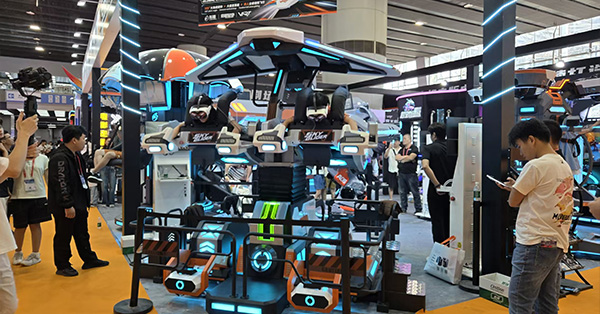
A VR sky glider uses a prone, suspended riding position with a 105° pitch range and a 400 mm vertical drop, while a traditional seated VR flight simulator keeps riders upright in a fixed chair with a smaller motion envelope. Both are flight-themed attractions, but they compete for different budgets, footprints and audiences. This comparison covers the seven factors that actually move an operator’s revenue, not just which machine looks more advanced on a spec sheet.
Quick Comparison
| Factor | VR Sky Glider | Seated VR Flight Simulator |
|---|---|---|
| Rider posture | Prone, chest-down, suspended | Upright, seated in a fixed chair |
| Motion range | 105° pitch, 400 mm vertical drop | Smaller tilt/vibration envelope |
| Typical capacity | 2 riders | 1–3 riders depending on model |
| Environmental effects | Variable wind + water spray | Usually vibration only, effects vary by model |
| Visual draw from a distance | Very high — unusual silhouette in motion | Moderate — reads as a standard arcade cabinet |
| Footprint | 7.5 m² for a 2-seat unit | Varies by model, often smaller per seat |
| Best-fit venue | Open concourse, high foot traffic | Arcade floor, content-driven repeat play |
1. Rider Posture: Prone vs Seated
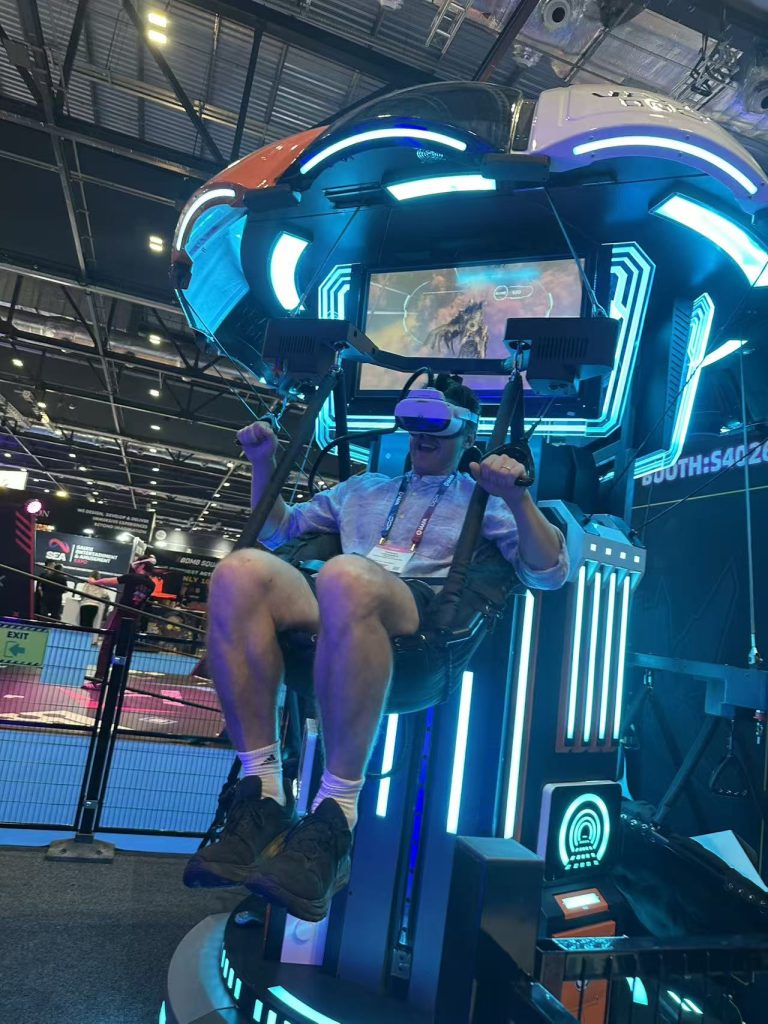
This is the difference every other factor in this article flows from. A seated simulator holds the rider upright, so the platform’s tilt is felt mostly through the inner ear and the seat back. A sky glider holds the rider face-down and suspended, so the same degree of tilt is felt through the whole body — closer to how an actual hang-glider pilot experiences a dive or climb. That is why a 105° pitch on a prone platform produces a noticeably stronger sensation than a similar or even larger tilt angle on a seated chair.
For operators, the practical read is: posture is what riders remember and describe to friends afterward, which is the mechanism behind word-of-mouth foot traffic.
2. Motion Range and Physical Sensation
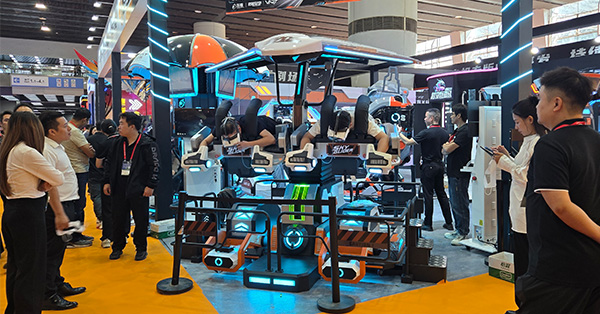
Seated flight simulators typically use vibration, small-angle tilt, and screen-synced turns to simulate banking and rough air. This works well for dogfight or racing-style content where the rider is actively “flying” the craft.
The sky glider’s 105° pitch and 400 mm vertical drop is built for passive gliding content — dives, climbs, and altitude drops rather than active steering. It is a different motion vocabulary aimed at a different emotional beat: awe and adrenaline rather than skill and control.
3. Capacity and Throughput
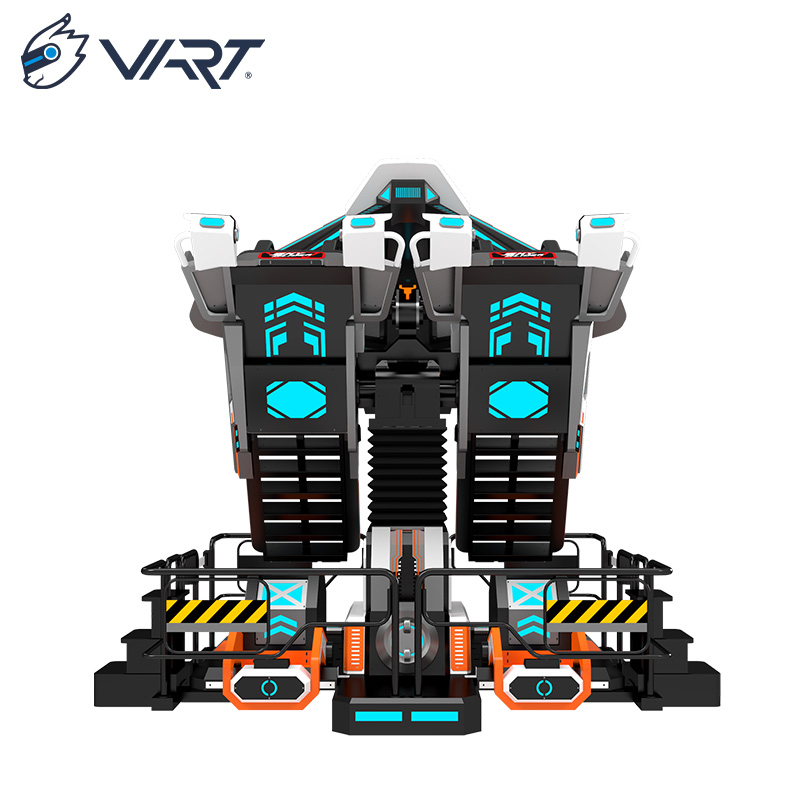
Seated simulators range from single-player cockpits up to multi-seat cabin formats. A 2-seat sky glider serves two riders per cycle at a roughly 6-minute cycle time, which caps throughput at around 20 rider-turns per hour at full occupancy — the same throughput math covered in our VR sky glider ROI guide. Multi-seat seated formats, such as our three-person VR flight simulator, can move more riders per cycle where floor space allows a larger footprint.
The takeaway: if your priority is maximum riders per square metre per hour, compare cycle time and seat count directly rather than assuming either format wins by default — it depends on the specific model.
4. Environmental Effects
The sky glider integrates variable-speed wind jets and water spray that respond to the flight content in real time — wind intensifies during a dive, mist fires when the flight path skims water or passes through cloud. Seated simulators more commonly rely on seat vibration and audio, with environmental effects varying significantly by model and manufacturer.
Multi-sensory effects add to build and maintenance cost, so this is a deliberate trade-off: more sensory immersion versus simpler upkeep.
5. Visual Draw and Walk-Up Conversion
This is the factor operators most often underweight. A seated simulator, however good the content, largely reads as “another arcade cabinet” from across a mall or park concourse. The sky glider’s open-air suspended seating and wide pitch motion are visible from a distance and function as continuous, passive advertising — the machine markets itself to anyone walking past while a ride is in progress.
In locations chosen for foot traffic rather than for a captive gaming audience, this difference in walk-up conversion often matters more to daily revenue than either machine’s technical specification.
6. Footprint and Site Requirements
A 2-seat sky glider needs 7.5 m² of floor space and roughly 3.0 m of ceiling clearance to clear its 2.9 m peak pitch height. Seated simulators vary more widely — single-player cabinets can fit a much smaller footprint, while multi-seat cabin formats can require comparable or larger space. Ceiling clearance is rarely a constraint for seated formats the way it is for a platform that lifts riders into a steep pitch.
Before committing to either format, measure your venue against the manufacturer’s peak-motion dimensions, not just the machine’s resting footprint — this is one of the most common and expensive site-planning mistakes.
7. Content Style and Revenue Model
Seated simulators tend to support a wider range of content genres — racing, dogfighting, roller coasters — which suits venues that want one machine to serve varied tastes and support longer content libraries for repeat visits. The sky glider’s content is narrower by design: eight or more flight routes built specifically around its prone, gliding motion profile, optimised for short 3–5 minute sessions and high turnover rather than content variety.
Neither approach is universally better — a venue built around repeat, engaged gamers benefits from content depth; a venue built around casual foot traffic and one-time impulse rides benefits from the glider’s shorter, higher-turnover format.
Which One Should You Buy?
| If your venue is… | Consider |
|---|---|
| High foot traffic, low existing engagement (mall concourse, transit hub) | VR sky glider — visual draw drives walk-up conversion |
| Existing arcade floor with a committed gaming audience | Seated flight simulator — content depth supports repeat play |
| Theme park or FEC wanting both a spectacle and a gaming anchor | Both, positioned differently on the floor plan |
| Tight footprint or low ceiling clearance | Seated single-player format |
Many operators running larger venues install both: a sky glider positioned for visibility near the entrance to pull in traffic, and seated simulators further inside to convert that traffic into longer, repeat-play sessions.
Frequently Asked Questions
Is a VR sky glider more profitable than a seated VR flight simulator?
It depends on placement and audience, not the machine alone. The sky glider tends to outperform on walk-up conversion in high-traffic, low-engagement locations; a seated simulator tends to outperform on repeat play in venues with a committed gaming audience. Compare the two using the throughput and ticket-price model in our ROI guide against your specific venue.
Does a VR sky glider need more floor space than a seated simulator?
A 2-seat sky glider needs 7.5 m² and about 3.0 m of ceiling clearance. Seated simulators vary by model — single-player units often need less floor space, while multi-seat cabin formats can require a comparable footprint.
Can I install both formats in the same venue?
Yes, and many FECs and theme parks do — a sky glider for visual draw near high-traffic areas, and seated simulators positioned for longer, repeat-play sessions elsewhere on the floor.
Which format has lower maintenance requirements?
Seated simulators without integrated wind and water-spray systems generally have fewer moving environmental subsystems to service. The sky glider’s added effects deliver stronger immersion at the cost of one or two additional maintenance items.
Which is better for a tourist attraction versus a shopping mall?
Tourist attractions with dwell time and a novelty-seeking audience tend to suit the sky glider’s shorter, high-impact ride. Shopping malls benefit from the same visual draw for foot traffic, but may pair it with a seated format to extend visitor dwell time inside the venue.
Next Steps
Compare full specifications for the 2-Seat VR Sky Glider Simulator against our full VR flight simulator range, or contact us for a venue-specific recommendation and current pricing on either format.