VR Paraglider Simulator vs VR Flight Simulator: Which Is Better for Your Business?


Introduction
Flying attractions are among the most powerful traffic-driving experiences in modern location-based entertainment. For arcade owners, shopping mall operators, and theme park investors, choosing the right flying simulator can significantly impact profitability.
Two of the most common options are:
• VR Paraglider Simulator
• VR Flight Simulator
Although both simulate aerial experiences, they differ in immersion level, motion technology, investment structure, and commercial performance. This guide compares the two to help you make an informed business decision.
What Is a VR Paraglider Simulator?
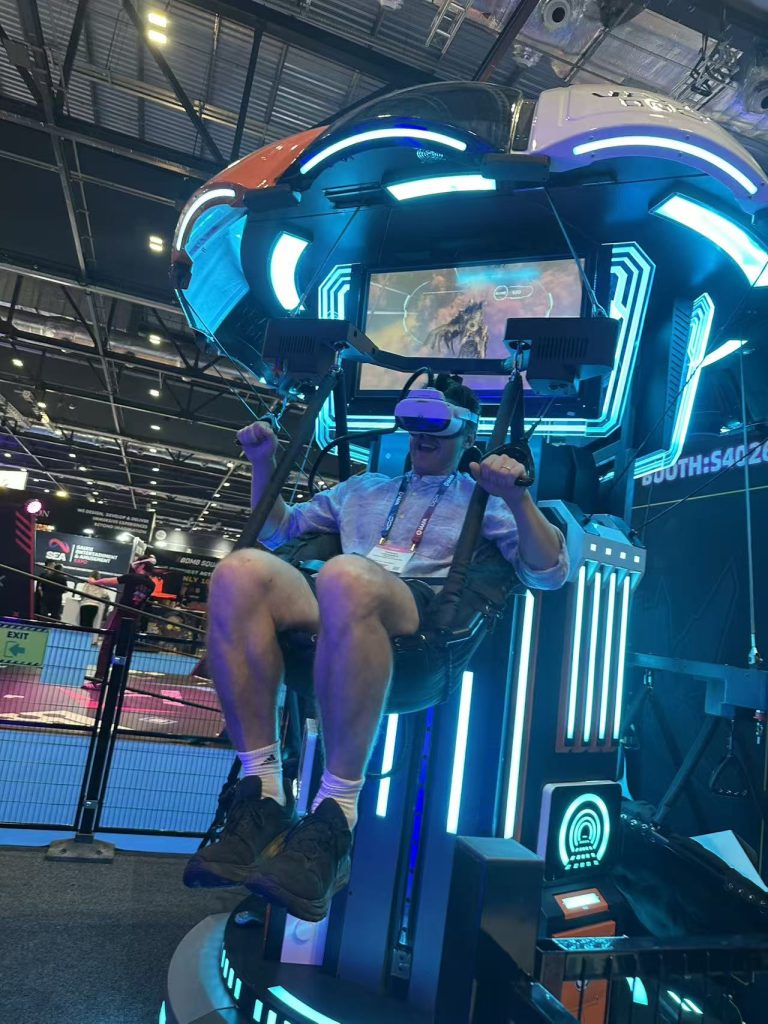
A VR Paraglider Simulator is a motion-based virtual reality system designed to recreate the sensation of freefall and aerial maneuvering. Unlike traditional cockpit simulators, it focuses on dynamic movement and environmental immersion.
Modern commercial VR Paraglider Simulators typically feature:
• Dynamic vertical lift technology
• Left-right tilting motion
• Impact and vibration feedback
• Wind simulation during dives
• Environmental effects such as mist or rainfall
• 360° surround sound
These elements create a powerful sense of weightlessness and freedom, making the experience highly attractive in entertainment venues.
What Is a VR Flight Simulator?
A VR Flight Simulator typically recreates aircraft piloting experiences such as airplanes or helicopters. Players are usually seated in a cockpit-style structure and interact with control devices like joysticks or steering systems.
Common characteristics include:
• Cockpit-based gameplay
• Aviation-themed content
• Emphasis on control realism
• Less vertical motion
Flight simulators are often more simulation-oriented and may appeal to aviation enthusiasts or niche audiences.
Immersion & Motion Experience Comparison
VR Paraglider Simulator
• Strong vertical motion for freefall sensation
• Visible dynamic movement
• Multi-sensory effects (wind, vibration, sound)
• High emotional excitement
The combination of lift, tilt, and environmental effects creates a dramatic and visually engaging attraction.
VR Flight Simulator
• Seated cockpit experience
• Limited vertical motion
• Focused on piloting mechanics
• More technical than physical
While flight simulators offer realism, they generally produce less physical thrill compared to paragliding systems.
For commercial entertainment venues, high-impact experiences often perform better in attracting spontaneous customers.
Commercial Visibility & Customer Attraction
In shopping malls and entertainment centers, visual impact directly influences revenue.
A VR Paraglider Simulator’s dynamic movement and lifting action naturally draw attention from passersby. The motion itself becomes part of the marketing.
By contrast, cockpit-style VR Flight Simulators are visually more static and may not generate the same impulse-driven participation.
For high-foot-traffic locations, paragliding simulators often achieve higher conversion rates.
Space & Installation Considerations
VR Paraglider Simulator:
• Compact commercial design
• Flexible installation layout
• Suitable for malls and FECs
VR Flight Simulator:
• Larger cockpit footprint
• More fixed structural space required
If your venue has limited floor area, a paragliding simulator may provide better flexibility and layout efficiency.

Investment & ROI Comparison
When comparing equipment, the most important factor is return on investment (ROI).
VR Paraglider Simulator advantages:
• Broad audience appeal
• High replay value
• Strong visual attraction
• Balanced investment-to-revenue ratio
VR Flight Simulator advantages:
• Appeals to aviation-focused audiences
• Suitable for aviation-themed venues
In most commercial entertainment environments, paragliding simulators tend to generate faster payback periods due to wider demographic appeal.
Target Audience Differences
VR Paraglider Simulator attracts:
• Teenagers
• Young adults
• Families
• Tourists
• Casual VR users
VR Flight Simulator attracts:
• Aviation enthusiasts
• Older simulation-focused users
• Niche interest groups
If your business model depends on high-volume traffic and broad participation, paragliding systems often provide stronger performance.
Which Simulator Should You Choose?
Choose a VR Paraglider Simulator if:
• You operate in a shopping mall or entertainment center
• You prioritize high-visibility attractions
• You aim for strong impulse participation
• You want faster ROI
Choose a VR Flight Simulator if:
• Your venue has an aviation theme
• You target a niche audience
• You have sufficient installation space
For most commercial VR arcades and theme parks, the VR Paraglider Simulator offers a stronger balance between excitement, audience appeal, and profitability.
Why Choose VART VR?
VART VR specializes in commercial VR arcade equipment engineered for durability, immersive motion, and global market demand.
Our VR Paraglider Simulator systems are designed to:
• Deliver dynamic freefall experiences
• Operate reliably in high-traffic environments
• Provide customizable configurations
• Support long-term business growth
If you are planning to upgrade your venue with a flying attraction, our team can help you evaluate the best solution for your market.If you are planning to start a VR paragliding business, read our complete business guide.

Frequently Asked Questions
Is a VR Paraglider Simulator more profitable than a VR Flight Simulator?
In high-traffic entertainment venues, paragliding simulators often achieve faster ROI due to broader audience appeal and stronger visual attraction.
Does a VR Paraglider Simulator require a large space?
Most systems are designed for commercial installation and can fit within moderate floor areas.
Which system creates stronger immersion?
Paragliding simulators typically provide stronger physical immersion due to vertical motion and environmental effects.
Are both suitable for theme parks?
Yes, but paragliding systems often generate higher impulse participation in general entertainment environments.