VR Flying Simulator: The Complete Guide for Arcade Owners (2026)


VR flying simulators, also known as virtual reality flight simulators, are among the most popular commercial entertainment machines in modern VR arcades. It makes the players feel like flying an actual plane – turning, diving, and maneuvering through virtual skies. And it does so with a mixture of a VR headset, a moving platform, and a strong wind effect.
This guide will make you know everything, whether you are running an arcade, a theme park, or an entertainment center. You will discover how a VR flying simulator works, what constitutes a great one, and why the VART three-person VR flying machine is superior to all others in the market.
What Is a VR Flying Simulator?
The Basic Idea: Real Motion + Virtual Reality
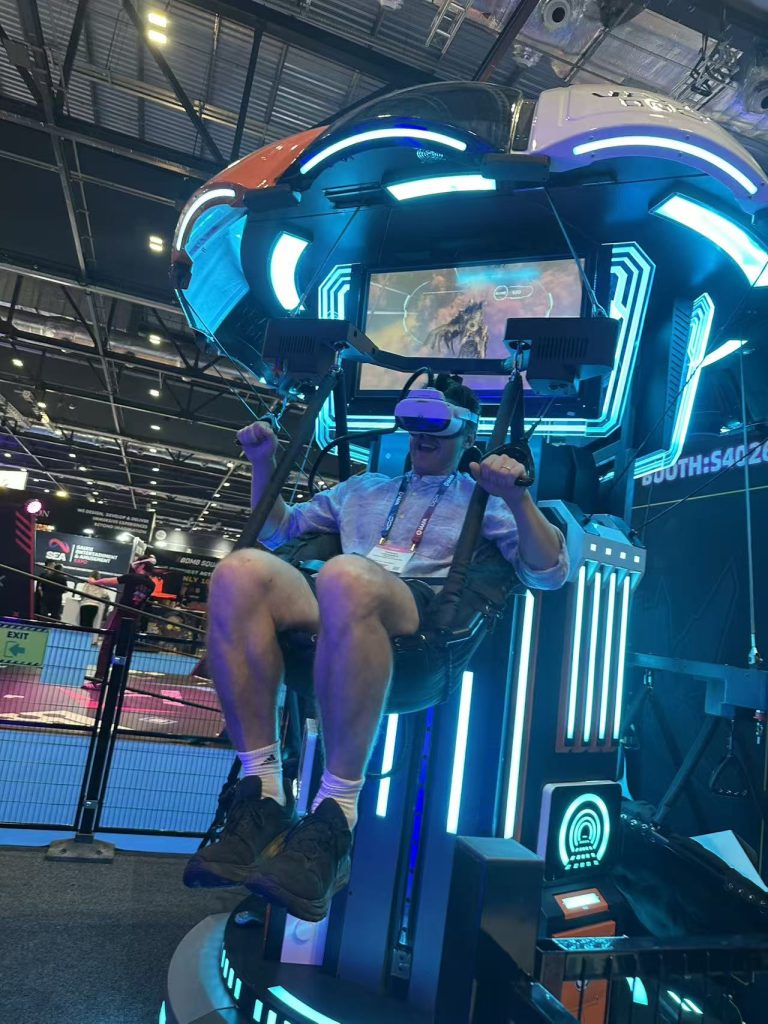
A VR flying simulator is a commercial device that combines a motion platform with a virtual reality headset. When the game indicates a bank, climb, or dive, the platform moves in sync with the virtual action to create a stronger sense of immersion. As you climb, the platform elevates. The same forces that a pilot would experience in an actual cockpit are experienced in your body.
It is that mix of visual, physical, and sensory that makes this experience so strong. Players don’t just watch flight happen. They feel it.
How It’s Different From a Home VR Setup
The VR headset installed at home can also present you with a flight simulation game. However, it is not able to spin your body around 360 degrees, lift you high 620mm into the air, or even blow realistic wind at your face as you jump. Those are business-grade technologies that do not exist in consumer products.
This is precisely the reason why individuals go to arcades and entertainment parks to experience VR flying, as they cannot do it at home. That opens a massive and expanding prospect to venue operators.
Why It’s the Best Flight Simulator for VR Arcades
For commercial venues, choosing the best flight simulator for VR is essential. Unlike home systems, these machines offer full-body motion, wind effects, and multi-player interaction, making them far more engaging and profitable.
The Sci-Fi Design That Stops People in Their Tracks
Interstellar White and Deep Space Black — Built to Be Noticed
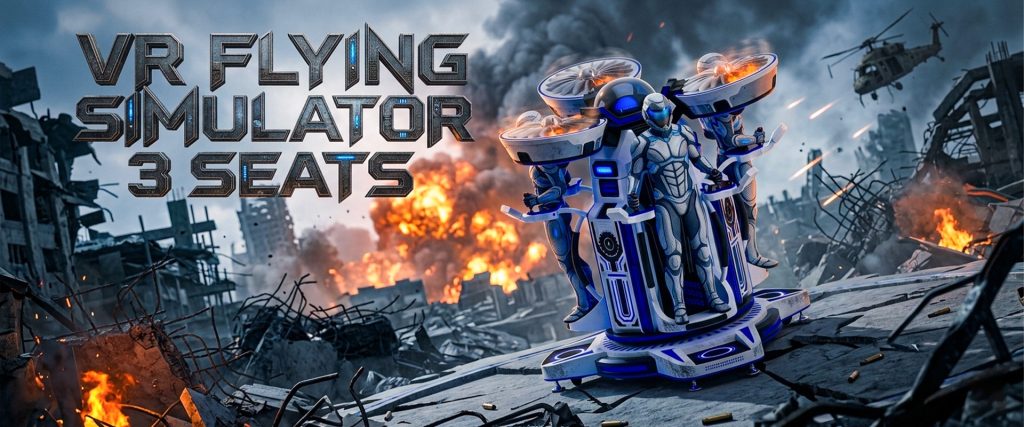
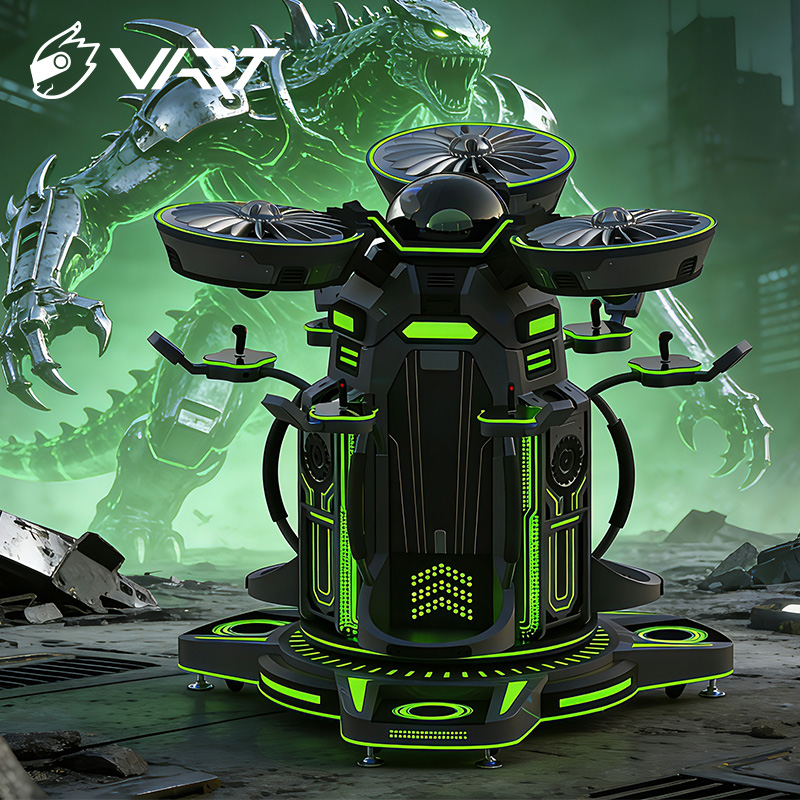
The VART three-person VR flying simulator is set to be impossible to overlook. It is painted in a contrasting color scheme of Interstellar White and Deep Space Black – a mix that appears to be the matter of a sci-fi blockbuster. The machine is distinguished by heavy mecha armor panels, sharp geometrical cuts, and a futuristic profile that you are unlikely to encounter anywhere on the floor.
This is more than most operators can fathom. A machine that appears to be out of this world attracts walk-up customers- individuals who did not intend to spend money, but cannot help after seeing something that has this visual appeal.
Biomimetic Turbines and Illuminated Chassis
Three biomimetic turbine propellers are triangularly positioned at the top of the machine. They resemble the engines of a spaceship of the future precisely. The star-ring design, multi-layered and illuminated chassis at the base, mechanical gears, and heavy-duty structural lines provide a dramatic glow that attracts attention across the room.
Even when the machine is off or stopped, as the three players are responding to a world that only they can see, it is still live entertainment to the onlookers. People film it. They share it. They revisit it to have a taste.
The Three-Person Independent Cockpit
Ergonomic Armrests, Non-Slip Pedals, and Red Dual Joysticks
The three independent cockpit stations are designed to make players feel like real pilots as soon as the experience begins. Each station features ergonomic arm supports, non-slip foot placement, and highly responsive top red dual joysticks for immersive control.
The cockpit design is outward-facing and centrally symmetrical. The cockpit stations face in different directions, and hence, no player disrupts another. Each one receives his or her own cockpit, although they are on the same machine.
Why Three Players Is the Perfect Group Size
The primary clients of entertainment facilities are groups and not individual players. Friends and families normally come in groups of two to four. This is perfectly captured in a three-player machine. A single session will fill a small group and provide the ticket revenue three times simultaneously.
When three individuals are flying together, they experience the same thrills. They laugh, cheer, and act in unison. It is that mutual recollection that makes them go back- and makes them share their friends.
360° Rotation and 620mm Lift: What Makes the Motion Platform Special
Full 360-Degree Omnidirectional Rotation
The VART VR flying simulator employs a high-precision servo motion VR standing platform that rotates in 360 degrees with no blind spots or delays. That is to say that all actions performed by the virtual plane, barrel rolls, sharp banks, and tight spirals, the physical platform replicates all of them. There is no delay, no restriction, and no time when the experience becomes artificial.
Less expensive machines have restricted rotation. When the platform fails to maintain the game, the brain picks it up, and the immersion is lost. Complete 360-degree rotation eliminates this altogether.
How 620mm of Vertical Lift Changes Everything
There is also a rise and fall of the platform, and the vertical difference is as much as 620mm. Now that is over two feet of actual, physical motion. As you step into the game, the platform hoists you. As you plunge, it sinks. Your stomach really does react in the manner that it does in actual flight.
Such a degree of vertical action is what will make the difference between an experience of flight that is truly convincing and one that is merely visually pleasing on a screen. Together with 360-degree rotation, it is an ideal simulation of the intense acceleration of fighter jet rolls, steep dives, and hard climbs.
The 620mm lift differential is the spec that alters your body perception of the game, not merely your eyes’ perception of it. It’s the line between ‘impressive’ and ‘unforgettable.’
VR Flying Simulator vs Standard VR Arcade Machine Systems
| Feature | VR Flying Simulator | Standard VR Arcade Machine |
| Motion System | Full 360° rotation + vertical lift | Limited or no motion |
| Player Capacity | 2–3 players (group experience) | Usually 1 player |
| Immersion Level | High (motion + wind + VR sync) | Moderate (visual only) |
| Physical Feedback | Yes (tilt, drop, airflow) | Minimal |
| Price Per Play | Higher ($5–$10 typical) | Lower ($2–$5 typical) |
| Revenue Potential | High (premium pricing) | moderate |
| Social Appeal | Strong (spectacle + group play) | Limited |
| Installation Cost | Higher | Lower |
This is why a virtual reality flight simulator consistently outperforms standard VR arcade machines in both engagement and revenue.
The 4D Wind Effect System: The Detail Players Never Forget
Intelligent Wind That Matches Your Speed and Direction
The majority of VR machines end with motion. The VART VR flying simulator introduces another layer: a 4D realistic wind effect system, which is closely connected with the mechanical movements of the platform. The wind increases as the machine ascends. The airflow is relieved as it decelerates or levels. Any acceleration and deceleration result in an equivalent variation in the air flow.
This is not a fan that has a single speed. The system is able to calculate the correct intensity on the fly, depending on the speed and direction in which the machine is moving. It’s dynamic, intelligent, and completely synchronized with the game.
Why Wind Is the Most Memorable Part of the Experience
Most customers will refer to the wind after playing. Not the visuals. Not the motion. The wind. It is so because the skin is extremely sensitive to air. It is used in your body to determine speed and altitude. When the wind is as real as you see and feel, your brain perceives the experience as real.
It is this degree of realism that makes players desire to return. And it is what makes them share their experience on the internet. The 4D wind system is a small system that has a big influence on the satisfaction and re-business. This feature is what separates a basic VR experience from a true virtual reality headset flight simulator.
Revenue Potential: What This Machine Can Earn for Your Venue
Real Revenue Numbers Based on Operational Data
With three players paying $5–$7 per session, each operating cycle can generate about $15–$21 in gross revenue. At an average of three sessions per hour during normal business hours, monthly revenue potential can reach approximately $8,760 to $12,264, depending on foot traffic, pricing, and operating hours. High-traffic venues such as shopping malls may achieve even stronger results.
This is supported by industry data. VR experiences attract 3-5 times more per-play rates than conventional arcade games. The global location-based entertainment (LBE) market would be 6.18 billion dollars in 2025 and would be 7 to 9 billion dollars in 2026. There is a high demand for high-quality motion VR experiences.
Social Media: Free Marketing That Never Stops
Suspended cockpits with three people in them, spinning, blown about, responding to a world they are the only ones who see, is precisely the type of content strangers desire to shoot and share. Each of the clips that you upload to the internet attracts new customers to your venue without the need to spend more money on marketing.
Research indicates that effective VR establishments have a 60 to 70 percent repeat customer base. Arcade games have a traditional limit of 20 to 30 percent. The VR flying machine does not only make money on the first day. It continues to generate profits each week.
Why Choose VART VR Arcade for Your VR Flying Simulator
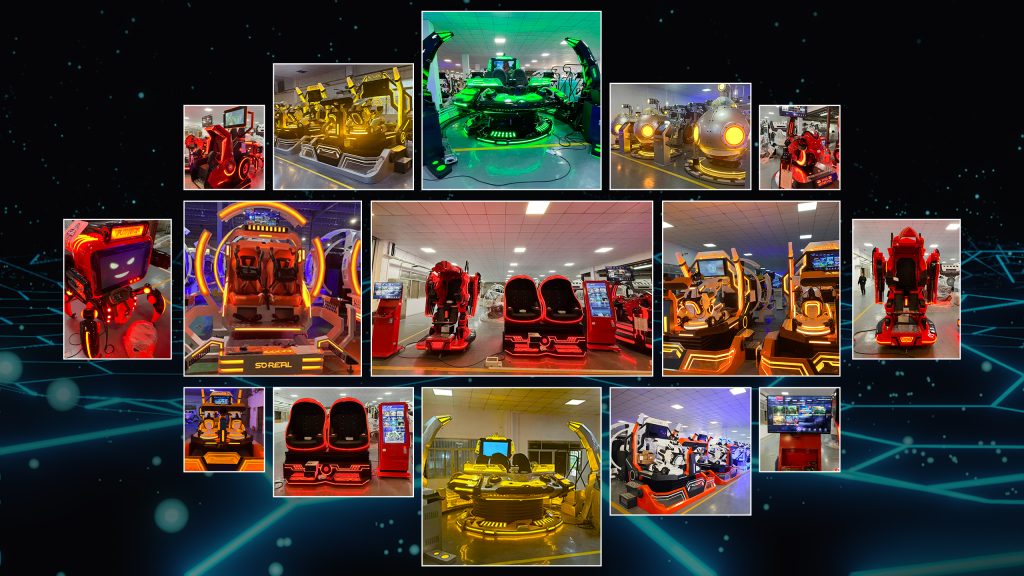
VART VR Arcade, which was established in 2011. Having more than 15 years of experience in creating commercial VR machines, VART is one of the oldest and most reliable manufacturers of VR equipment in the world. They have over 970 cities and are deployed in 97 countries with their machines.
The VR flying machine is a three-person flagship flight product of VART. It will have an all-in-one payment VR standing platform that supports both coins, QR codes, and card payments, and a complete library of exclusive VR games that are designed to be played on this platform.
VART also offers a profit model analysis, installation service, and 24/7 technical services.
You’re not just buying a machine. You are getting a tested business solution that is supported by 15 years of practical business experience.
Conclusion
The VR flying simulator market is rapidly growing, with virtual reality flight simulators becoming essential equipment for modern VR arcades. The machines that grab it are those with the real motion specs, smart wind systems, multi-player cockpits, and designs that attract attention without needing any marketing assistance. The three-person VR flying machine by VART provides all these.
The venues will have the best machines, the largest audiences, and the most proven reputation, before their competitors even begin to shop.
For more details and to see the three-person VR flying machine, contact VART Arcade and download the full technical specifications and request a custom quote from the VART commercial team today.
Frequently Asked Questions About VR Flying Simulators
1. What is the cost of a VR flying simulator for arcades?
Commercial VR flying simulators have a range of between 10,000 and 50,000 and above, depending on motion features, players capacity, and quality of construction. The cost differs depending on the manufacturer, like VART, thus the precise cost will be dependent on configuration and customization.
2. Does a VR flying simulator make an arcade profitable?
Yes, a flying simulator VR can be very profitable because of high prices and multiplayer mode. As an example, 3 players who pay a total of $5 per session would yield about $10,800 per month in a constant use scenario.
3. How much area do you need to install a VR flying simulator?
Installation space requirements depend on the machine design, operating layout, and manufacturer’s safety clearance recommendations. Always confirm the final installation dimensions with the manufacturer before site planning.
4. Does it have VR motion sickness?
Some users might feel uncomposed by Motion Sickness following dissimilar sensory indications. The best simulators minimize this problem by aligning visual motion, physical movement, and the effects of the environment, such as wind.
5. What is unique about a VR flying simulator compared to other VR arcade machines?
A VR flying simulator is an integration of motion platforms, vertical lift, and environmental effects to form a multi-sensory experience. This renders it more realistic and participatory as opposed to conventional VR systems, which are predominantly visual-based.