VR Flight Simulator Safety and Compliance: CE, Load Limits and Insurance for Operators

Before you buy a VR flight simulator, confirm four things: the machine meets the safety rules of your market (for example CE in Europe), the rider weight and height limits are clear, your staff can run a daily check and emergency procedure, and your venue has the right insurance. Ask for documents in writing and check them against the exact model you are buying.
Key takeaways
- Request a declaration of conformity, certificates and test reports that apply to your market and match your model.
- Get exact rider weight, height and age limits from the manual, and display them at the entrance.
- Run a written daily checklist and keep a log of checks, faults and repairs.
- Train every operator before opening, including the emergency stop and evacuation routine.
- Talk to an insurance broker early and share the machine’s documents with them.
Why safety matters more for VR flight rides
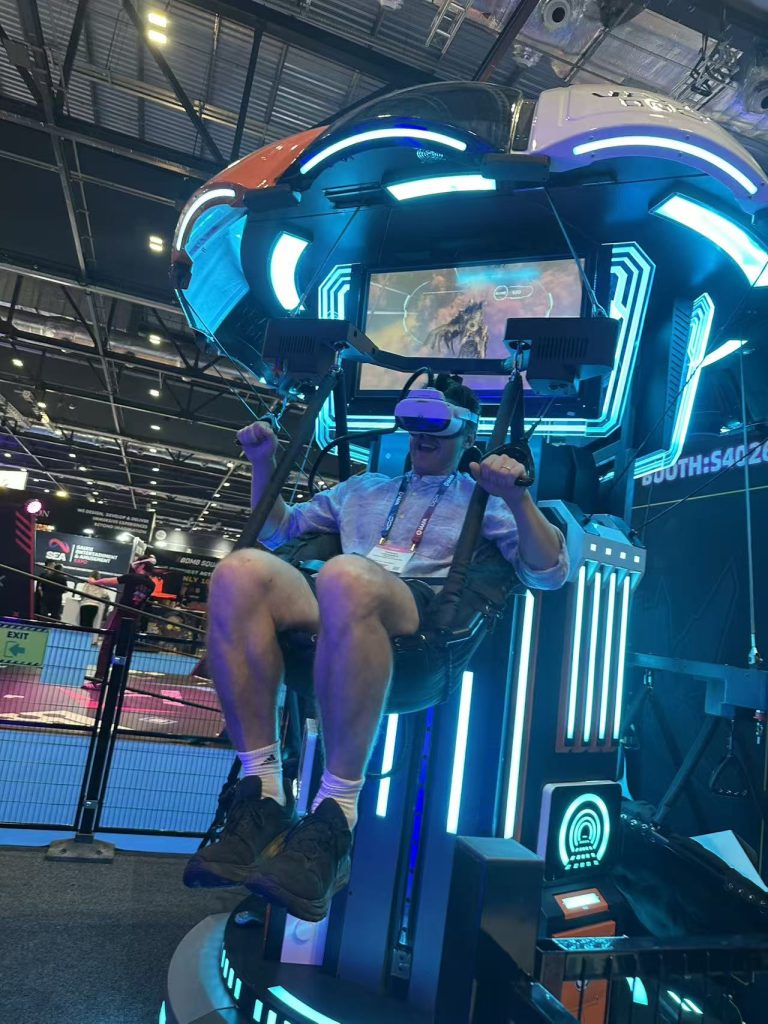
A VR flight simulator is a motion ride. Riders are strapped into a moving seat with their eyes covered by a headset, so they cannot see the room around them. That makes three things especially important: reliable restraints, a clear emergency stop, and trained staff who watch riders throughout the ride. A well-run ride also protects your brand, since one bad incident can damage a venue’s reputation far more than a good ride builds it.
Certificates and documents to request
Certificate names and requirements depend on where you operate. These are the documents buyers commonly ask for:
| Document | Why it matters |
|---|---|
| Declaration of conformity (CE, where applicable) | Shows the manufacturer states that the machine meets the applicable EU requirements. Check that the model name matches yours. |
| Test reports and certificates | Evidence from testing, for example for electrical safety, electromagnetic compatibility and restricted substances such as RoHS. |
| Market-specific documents | Other markets may ask for their own marks or registrations (for example UKCA in the UK or local ride inspections). Ask what applies where you are. |
| User manual and maintenance schedule | Should be in a language your staff can read and include operating limits and inspection intervals. |
| Electrical specification and wiring diagram | Needed by your electrician and for inspections. |
| Rider limits sheet | States maximum rider weight, minimum and maximum height and any age rules. |
| Warranty and spare parts list | Shows what is covered and what you should keep in stock. |
Standards for amusement rides are also worth knowing. Depending on the market, buyers and inspectors may refer to standards such as EN 13814, ISO 17842 or ASTM F24. Ask your supplier which standards and directives apply to the model and how they were assessed. Requirements change over time, for example when EU machinery rules are updated, so check the current rules for your market before you order.
When you ask us, we will tell you which certificates and test reports are available for each VART model. We recommend asking for copies before you place an order, and again at delivery, so you can check that the documents match the machine you receive.
Rider limits: weight, height and age
Every ride has limits set by the manufacturer, and local rules may add more. Do not guess. For each model, get these from the spec sheet and manual:
- Maximum weight per seat and in total
- Minimum and maximum rider height
- Minimum age or the rule for children riding with an adult
- Medical and comfort warnings (for example pregnancy, heart conditions, motion sickness, recent surgery, or a tendency to dizziness)
Then make them visible. Put a clear sign at the entrance and a short briefing script at the loading point. Train staff to apply the limits in the same way for every guest, including when the guest is disappointed.
Safety features to look for on the machine
- Restraints: seat belts, safety bars or other restraints that are easy for staff to check and difficult for riders to open during the ride.
- Emergency stop: a clearly marked stop that the operator can reach at all times.
- Controlled motion: limits that keep movement within a safe range, and a safe stop position.
- Secure structure: a sturdy frame, safe cable routing and covers over moving parts.
- Headset fit and hygiene: adjustable headsets that stay secure and can be cleaned between riders.
- Operator view: a way for staff to see every rider, or to monitor what riders see.
The best way to evaluate these is to ride the machine and watch it run. Our checklist on how to visit a VR simulator factory in China covers what to inspect during a visit.
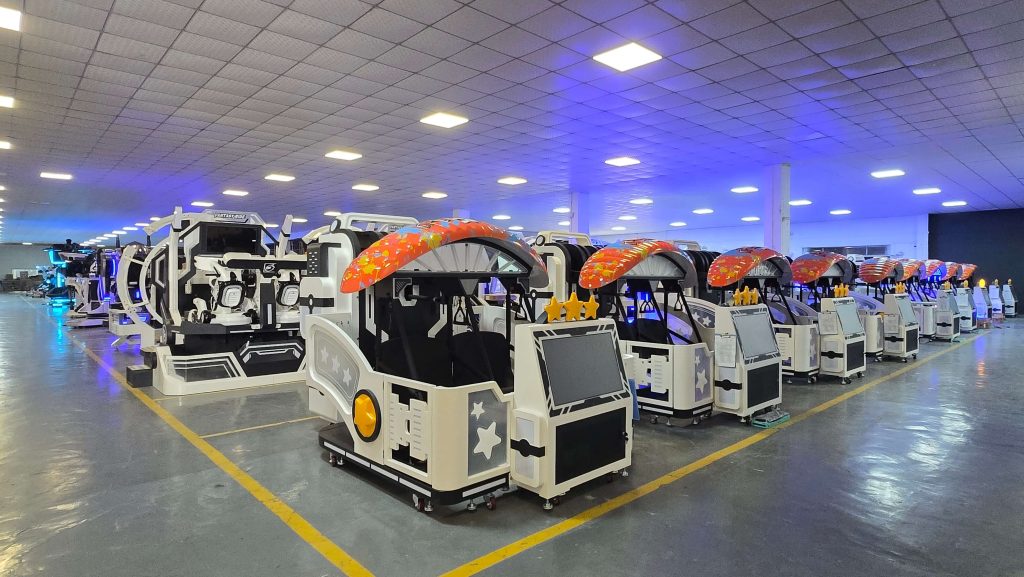
Daily checklist for operators
Use a written checklist and sign it every day. This is a sample to adapt to your machine’s manual:
| Check | What to do |
|---|---|
| Restraints | Inspect seat belts and safety bars for wear and correct locking. |
| Emergency stop | Test that it works and is reachable. |
| Moving parts and fasteners | Look for loose bolts, unusual noise, leaks or damage. |
| Cables and power | Check connectors and cable routing for damage. |
| Headsets | Check function, straps and lenses; clean and sanitize. |
| Test cycle | Run an empty cycle and watch the motion and the display. |
| Signs and queue area | Check that rider limits and warnings are visible and the area is clear. |
| Log | Record the result, any fault and who signed off. |
Follow the maintenance schedule in the manual as well, for example weekly, monthly and yearly tasks. If a check fails, do not run the ride until it has been fixed.
Operator training and the rider briefing
Even a well-built machine needs a trained operator. Before opening, make sure every staff member can:
- Explain the rider limits and politely refuse riders who do not meet them.
- Seat riders, adjust headsets and fasten restraints correctly.
- Give a short, clear safety briefing (stay seated, keep hands inside, tell staff if you feel unwell).
- Watch riders during the ride and stop the machine if anyone shows distress.
- Use the emergency stop and run the evacuation routine.
- Clean headsets between riders and record incidents.
Ask your supplier for training materials, videos or remote training. Keep a record of who was trained and when.
Motion comfort and special cases
- Motion sickness: some people feel uncomfortable in VR. Let guests choose calmer content, tell them they can ask to stop, and keep a place to sit afterward.
- Children: follow the manufacturer’s age and height rules, and require adult supervision where the rules say so.
- Accessibility: be clear about who can ride safely, and offer alternatives such as watching or a non-VR display where you can.
- Hygiene: clean headsets and contact surfaces between riders and keep disposable face covers if your venue uses them.
Insurance basics for a VR attraction
Insurance requirements depend on your country, your landlord and the kind of venue. Operators commonly look at:
- Public liability: covers injury or damage to guests and third parties.
- Product liability: sometimes asked for by landlords or event organizers.
- Equipment cover: covers theft, fire or damage to the machine.
- Business interruption: covers lost income if the ride is out of service after an insured event.
Talk to a local insurance broker before you open. Share the manual, certificates, rider limits and your daily checklist, since good documentation makes cover easier to arrange. Also ask your landlord or mall management what they require, since many have their own rules.
Incident handling and records
Plan for the day something goes wrong. Write down a simple procedure: who stops the ride, how guests are helped off, who calls medical help, and who records what happened. Keep a log of incidents, near misses, repairs and inspections. Records help you improve safety, and they help with insurers and inspectors.
Questions to ask a supplier about safety
- Which certificates and test reports apply to this exact model for my market?
- What are the rider weight, height and age limits?
- How do the restraints and emergency stop work?
- What is the maintenance schedule, and which parts need regular replacement?
- Is operator training or a training video included?
- How quickly can you supply spare parts and respond to a safety issue?
- Can I see the machine run and test the safety features in person?
If you are still choosing a model, read our guides on 2-seat vs 3-seat VR flight simulators and VR sky glider vs VR parachute simulator, or go straight to the product pages for the 2 Seats VR Sky Glider Simulator and the 3 Seats VR Parachute Simulator.
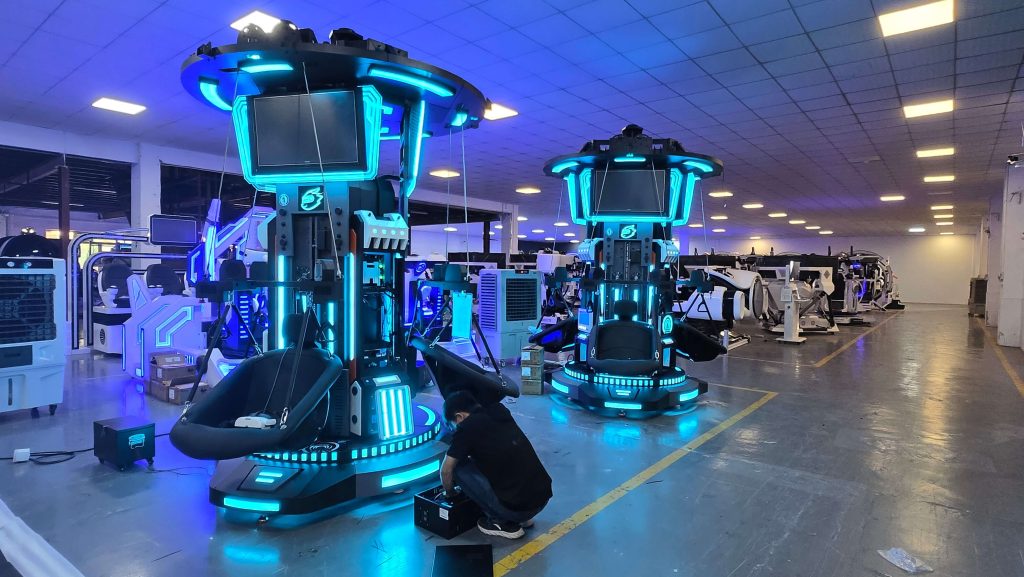
Check the safety features in person
Documents tell you what a supplier says. A visit shows you how the machine actually works. Our factory is in Panyu District, Guangzhou, about 30 minutes by car from the Canton Fair venue, depending on traffic. Our team can run the machines, show you the restraints and emergency stop, and go through the documents with you.
Book a visit
- Phone / WhatsApp: +86 18122722483
- Email: [email protected]
- Address: 202, Floor 2-3, No 5th Shixin Rd, Xinshuikeng Village, Dalong Street, Panyu District, Guangzhou, China
Please send your name, group size, preferred date, your target market and the models you want to see. Tell us which certificates you need so we can prepare them.
Frequently asked questions
Does a VR flight simulator need CE certification?
If you sell or operate the machine in the European Economic Area, it generally needs to meet applicable EU requirements and carry CE marking with a declaration of conformity. Other markets have their own rules. Always check the requirements for your country and ask the supplier for documents that match your exact model.
What documents should I ask a VR simulator supplier for?
Ask for the declaration of conformity, certificates and test reports that apply to your market, the user manual in your language, the maximum rider weight and height limits, the wiring and electrical specification, and the warranty and spare parts list.
What rider limits apply to a VR flight simulator?
Weight, height and age limits are set by the manufacturer and by local regulation. Get the exact limits for your model from the spec sheet and manual, display them at the entrance, and train staff to apply them consistently.
What should staff check every day before opening?
Typical daily checks include seat belts and restraints, emergency stop, moving parts and fasteners, cables and power, headset cleanliness and function, and a test cycle. Record the results in a daily log and follow the manufacturer’s maintenance schedule.
What insurance does a VR attraction need?
Requirements vary by country and landlord. Operators commonly look at public liability insurance, and sometimes product liability, equipment and business interruption cover. Speak to a local insurance broker and share the machine’s manual and certificates.
Can I check the safety features of VART machines in person?
Yes. Visit the VART factory in Panyu District, Guangzhou, ride the machines and review restraints, emergency stops and documents with our team. Message us on WhatsApp at +86 18122722483 or email [email protected] to book a visit.
Final thoughts
Good safety is a mix of a well-built machine, clear documents, trained staff and simple daily habits. Ask for the paperwork before you buy, check it against the model you receive, write down your checks and keep your insurer informed. If you tell us your market, we can help you work out which documents to prepare for the machines you are considering.