VR Flight Attractions Buyer’s Guide 2026

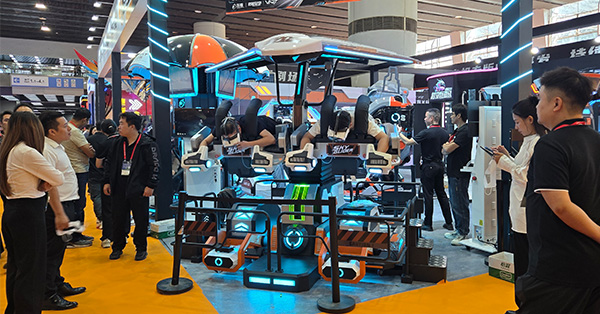
Choosing a VR flight attraction for a mall, theme park, or FEC comes down to four decisions: which motion format fits your visual and revenue goals, whether your site can support its footprint and power requirements, how it will be staffed and priced, and how to validate the quote you receive. This guide walks through each decision and links to a deeper article on every sub-topic, so you can go as broad or as deep as you need.
The Three VR Flight Formats at a Glance
| Format | Posture | Best For | Learn More |
|---|---|---|---|
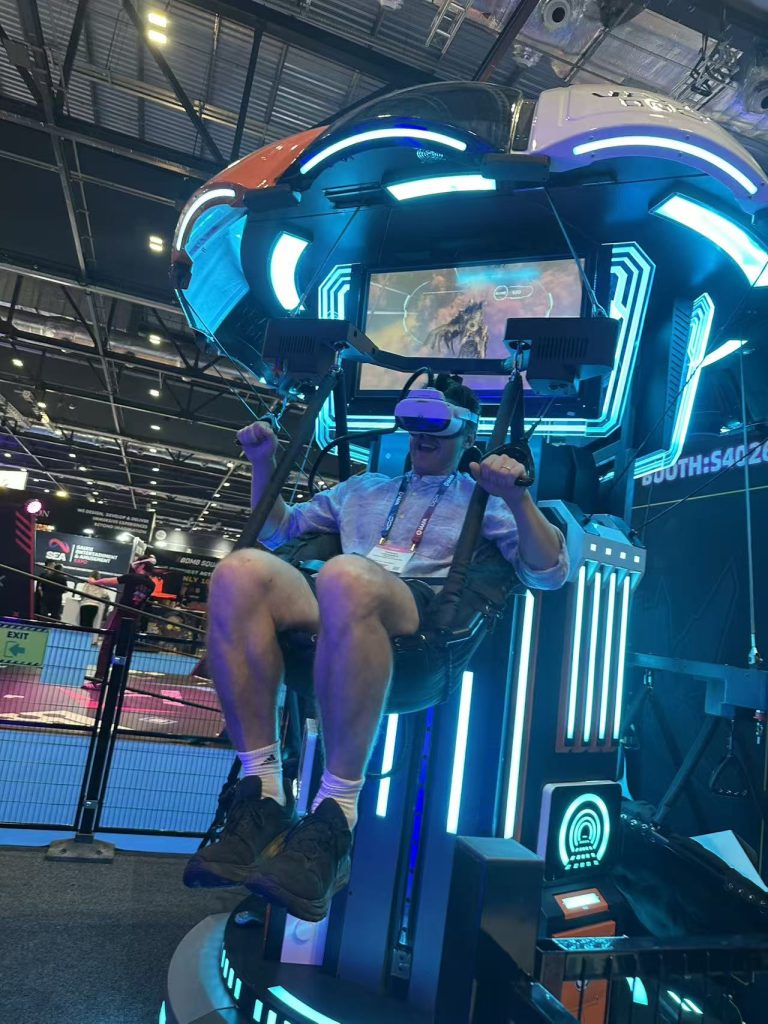
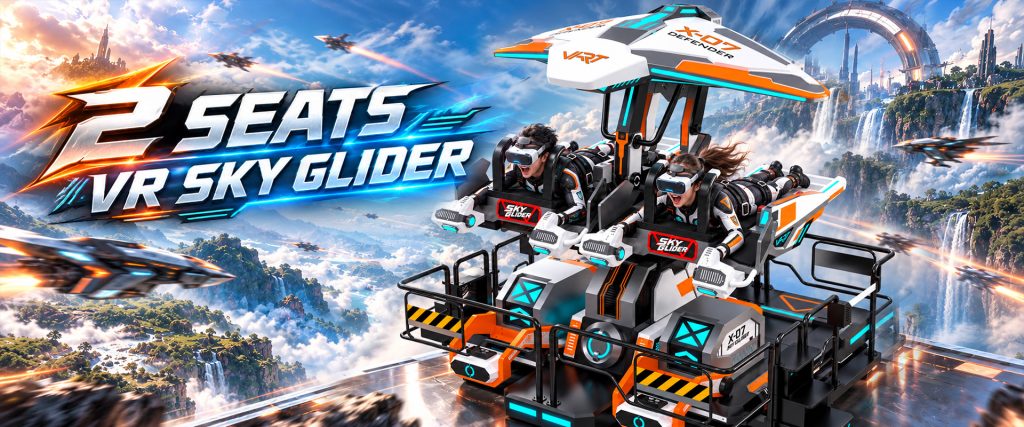
| VR Sky Glider | Prone, suspended | Maximum visual draw and walk-up conversion in high-traffic locations | How it works → |
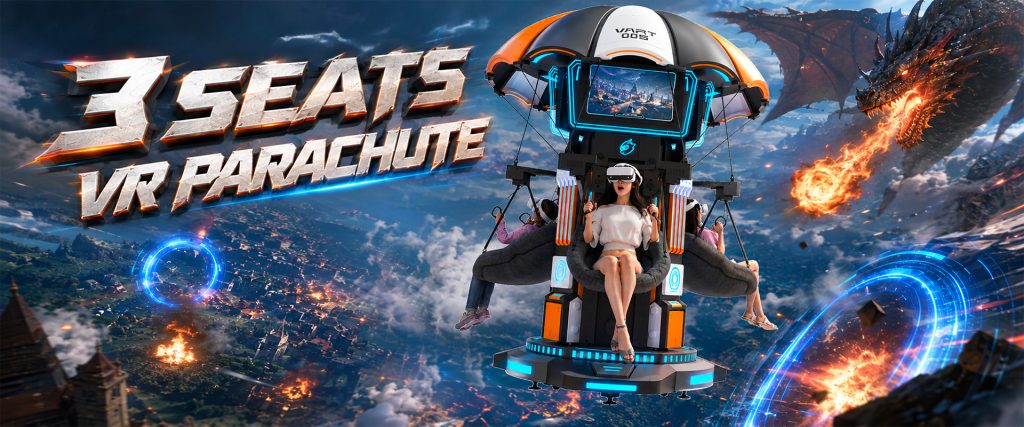
| VR Parachute Simulator | Suspended, 3 independent seats | High-throughput multiplayer FEC floors and group bookings | How it works → |
| Seated VR Flight Simulator | Upright, seated | Content-driven repeat play for engaged gaming audiences | Explore the range → |
Step 1: Decide What Your Venue Actually Needs
Before comparing specific machines, be honest about what’s limiting your venue’s revenue today. The three formats above solve different problems:
- Low walk-up conversion, high existing foot traffic? A machine with strong visual draw does more for you than one with deep content variety. See VR Sky Glider vs Seated VR Flight Simulator for how posture and motion affect visibility.
- Long queues and uneven crowd flow? Independent multi-seat operation solves this structurally. See Why 3-Seat Multiplayer Beats Single-Rider VR for FEC Throughput.
- Comparing against a bigger-ticket attraction, like a wind tunnel? See the full cost, space and safety breakdown in VR Skydiving vs Indoor Wind Tunnel.
Step 2: Confirm Your Site Can Support It
Every VR motion ride has real physical requirements — ceiling height, floor footprint, power supply, and floor load capacity. Getting these wrong after ordering is the single most expensive mistake in this category. Before requesting a quote, review:
- Site Requirements for a 2-Seat VR Glider: Ceiling Height, Power and Layout — a full pre-installation checklist covering clearance, floor load, drainage, and connectivity.
The same categories of questions apply to a parachute simulator or seated unit — always confirm peak-motion height (not resting height), dedicated electrical capacity, and floor load rating against your specific building before signing a lease on a location.
Step 3: Model the Revenue Before You Buy
Every VR attraction’s return on investment reduces to the same formula: rides per day × riders per ride × ticket price, minus fixed costs. Two guides walk through this in detail:
- VR Sky Glider ROI: Throughput, Ticket Price and Payback Period — the full payback formula, worked through against a 7.5 m² footprint.
- 3-Seat Multiplayer vs Single-Rider Throughput — how shared-queue, independently operated seats change the throughput math on a busy floor.
Step 4: Plan for Staffing and Payment
Most modern commercial VR attractions support unattended or hybrid operation — but “unattended” doesn’t mean unmanaged. Payment systems, safety restraints, and backend revenue auditing all need to be planned before launch. See Operating a VR Parachute Ride Unattended: Payments, Safety and Backend Data for the full checklist, including when a hybrid staffed/unattended model outperforms either extreme.
Step 5: Get and Compare Real Quotes
Commercial VR ride pricing depends on seat capacity, motion specification, content library, backend hardware, customisation, and shipping — not a single published number. Before requesting quotes from any manufacturer, read VR Parachute Simulator Price Guide: What Drives the Cost for the six cost drivers and the exact questions to ask so you can compare quotes on a like-for-like basis.
Quick-Reference Specification Table
| Spec | 2-Seat VR Sky Glider | 3-Seat VR Parachute Simulator |
|---|---|---|
| Capacity | 2, shared cycle | 3, independently operated |
| Footprint | 7.5 m² | 6.25 m² |
| Height | 2.5 m resting / 2.9 m peak pitch | 3.2 m |
| Power | 5.0 kW, 220V/50Hz | 9.0 kW, 220V/50Hz |
| Primary motion | 105° pitch, 400 mm drop | 1100 mm drop, ±30° tilt |
| Rider height range | 1.2 m – 1.9 m | 1.2 m – 2.1 m |
| Included content | 8+ flight games | 12+ flight and skydiving games |
Which Machine Should You Buy?
| If your priority is… | Start here |
|---|---|
| Maximum visual draw from a distance | VR Sky Glider |
| Highest walk-up throughput on a busy FEC floor | VR Parachute Simulator |
| Deep content variety for a repeat-visit gaming audience | Seated VR Flight Simulator range |
| A full venue plan, not just one attraction | 8 Steps to Open a VR Theme Park |
Many larger venues don’t choose just one — a sky glider positioned for visibility near the entrance, a parachute simulator further inside for high-throughput group play, and seated units for content-driven repeat visits, each doing the job the others don’t.
Frequently Asked Questions
What’s the difference between a VR sky glider and a VR parachute simulator?
A sky glider uses a prone, hang-gliding posture with a wide pitch motion built for visual draw and gliding content. A parachute simulator uses three independently operated suspended seats with a deep vertical drop and left-right tilt, built for free-fall content and high multiplayer throughput.
How do I know which VR flight attraction is right for my venue?
Start with what’s limiting your venue’s revenue today — low walk-up conversion favours a high-visibility machine like the sky glider, while long queues and uneven crowd flow favour independently operated multi-seat units like the parachute simulator.
What should I check before ordering a VR motion ride?
Ceiling clearance at peak motion height (not resting height), floor footprint including queue space, floor load capacity, and a dedicated power circuit rated for the machine’s full power draw.
How is VR attraction pricing determined?
Seat capacity, motion system specification, content library size, payment and backend hardware, customisation, and shipping to your destination all factor into the final quote, which is why manufacturers typically quote per inquiry rather than publishing a fixed price.
Can I install more than one VR flight format in the same venue?
Yes, and many larger venues do — combining formats to cover different jobs: visual draw, high-throughput multiplayer, and content-driven repeat play.
Next Steps
Explore the full specification sheets for the 2-Seat VR Sky Glider Simulator and the 3-Seat VR Parachute Simulator, or contact us for a venue-specific recommendation, free layout drawing, and current pricing.