Virtual Reality Headset Flight Simulator: How Genuine Immersion Actually Works


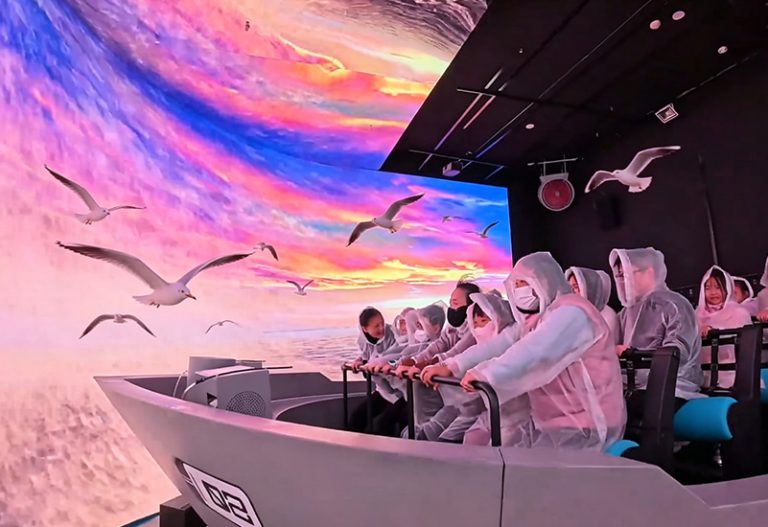
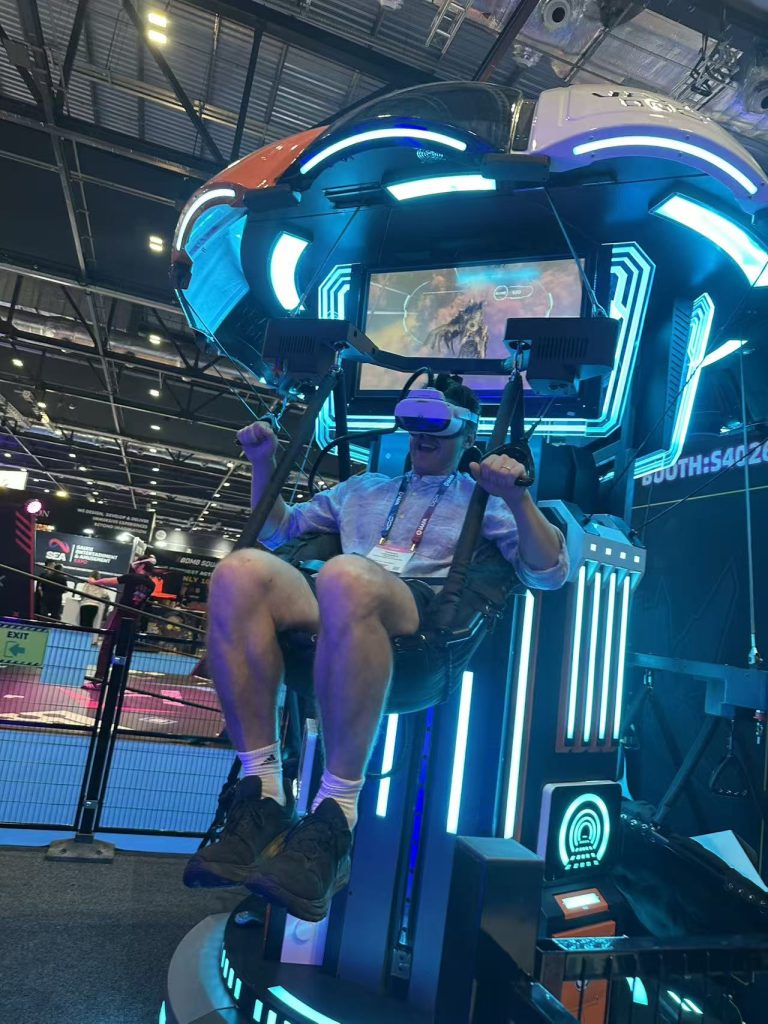
Have you ever asked yourself why you find yourself holding on to your armrests when you are enjoying a flight in VR, yet you are fully aware that you are in a VR flying machine? It is not only great graphics. It’s the combination of five separate sensory systems all working together at exactly the same time.
This article explains what makes a virtual reality headset flight simulator feel truly immersive. We will break the experience down into clear layers to show how each part contributes to realistic immersion.
Why Most VR Experiences Don’t Feel Truly Real
The Brain’s Conflict-Detection System
Your brain is constantly comparing what you see with what your body feels. When those signals match, the experience feels real. When those signals do not align, the brain notices the mismatch immediately, that is, when the eyes move, and the body does not feel the movement. That is what provides motion sickness and interrupts the immersion in poor-quality VR.
To have the experience of being truly immersed in a virtual reality headset flight simulator, your senses have to get the same information simultaneously. The wind system, the cockpit, the VR headset, and the motion platform must all convey the same narrative.
The Five Sensory Layers That Create Real Flight
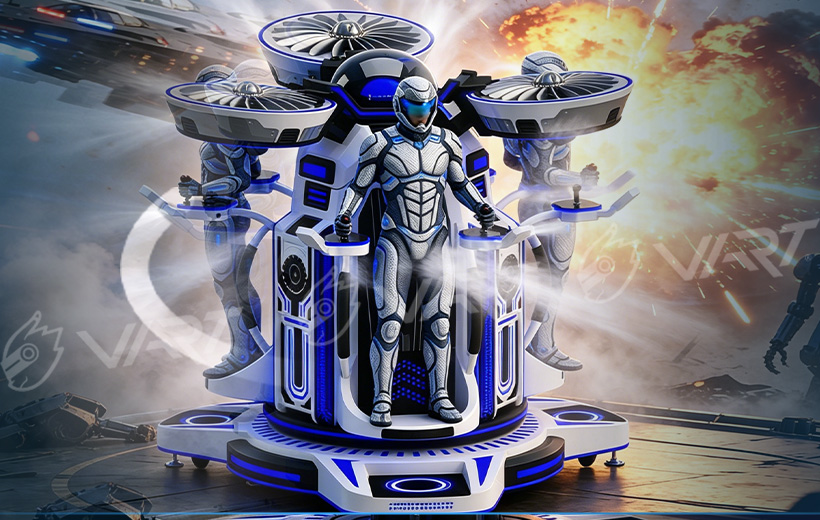
VART’s three-person VR flight simulator is built around five sensory layers: the VR headset display, the servo motion platform, the 4D wind effect system, the cockpit structure, and the machine’s exterior design. All of them have a certain role. Together, these elements create a more convincing and believable flight experience.
The VR flight simulator market increased 35 percent between 2023 and 2026 as the type of multi-sensory engineering had finally become commercially available. Customers can recognize the difference, and many are willing to pay more for a premium experience.
Layer One: The VR Headset — Building the Virtual World
What a Commercial VR Headset Needs to Deliver
The VR headset creates the virtual world that the player sees. For a commercial VR flight simulator, the headset needs high resolution, a wide field of view, and a refresh rate of 90Hz or higher.
All these requirements are well handled by the modern commercial headsets. The difference between a commercial-grade and a consumer-grade headset becomes apparent immediately, not only in the quality of pictures, but also in the degree to which the environment is believable.
The Critical Link Between Visual and Physical Coherence
In a flight simulation setting, the headset has to display information about altitude, speed, orientation, and the surroundings, all in real time, yet in perfect time with the real movement of the platform. The unique game library in VART is designed to play on this VR flying machine, and as such, the visuals and motion in the platform always align. It is this synchronization that avoids the sensory clash that destroys immersion.
Once the headset and the platform are telling the same story, the players begin to forget about the technology and begin to fly.
Layer Two: The High-Precision Servo Platform — Motion the Body Can’t Ignore
Full 360-Degree Rotation With No Mechanical Limits
The VART motion platform is powered by a high-accuracy servo drive system to provide complete 360-degree omnidirectional rotation with no blind spots. It means that each barrel roll, every spiral climb, every inverted dive in the game results in a corresponding physical movement. There is no cutting off. Nothing hesitates. Players see the motion in VR and feel it through the platform at the same time.
In a flight simulator, even small mechanical limits can reduce realism. When physical movement no longer corresponds to virtual movement, the brain quickly notices this mismatch. Full 360-degree rotation helps solve that problem by keeping physical motion aligned with the virtual action.
How 620mm of Vertical Lift Creates Real G-Force Sensations
The platform also has an up and down movement, with a lift difference of 620mm between the lowest point and the highest point. When the game has a fast ascending scene, the platform will bring you up, and your body will have a true upward force – not an illusion, but a physical force. Your weightlessness is experienced when the plane is diving.
This specification helps turn the simulator from a visually impressive ride into a more physically convincing experience. The 620mm lift range adds stronger physical feedback, helping the flight feel more realistic.
It does not matter to your body whether the G-force is on the jet or on the platform. When the physical feeling corresponds with what you see, your brain takes it as flight. That’s what 620mm of lift achieves.
Layer Three: The 4D Wind System — Your Skin Tells You It’s Real
Dynamic Airflow Calibrated to Real-Time Movement
VART’s 4D wind system responds to the simulator’s movement in real time, helping players feel speed, direction, and altitude more vividly. Up against the wind: a fierce breeze. Rolling level: moderate airflow. Calming down: wind decreases. It is not programmed; it is computed on the fly.
Unlike a basic fan effect, this system changes airflow dynamically to make the ride feel more realistic. It is an active sensory layer that corresponds to the aerodynamics of the virtual situation being simulated, and not a predetermined effect caused by game events.
Why Wind Is the Sensory Layer Players Remember Most
The movement of air passes through your skin automatically, which is below the conscious thought level. These signals help the brain to estimate the speed at which you are traveling and the elevation. When the wind is parallel to the pictures and the physical movement, it provides an additional confirmation that no reasonable skepticism can nullify.
Gamers, who have received the 4D wind system by VART, regularly report that it was the small thing that allowed them to feel like they were in the real world. It is what will make a good VR ride and an actually believable VR flight.
Layer Four: The Cockpit — Where Psychology Meets Hardware
Ergonomic Armrests, Non-Slip Pedals, and Red Dual Joysticks
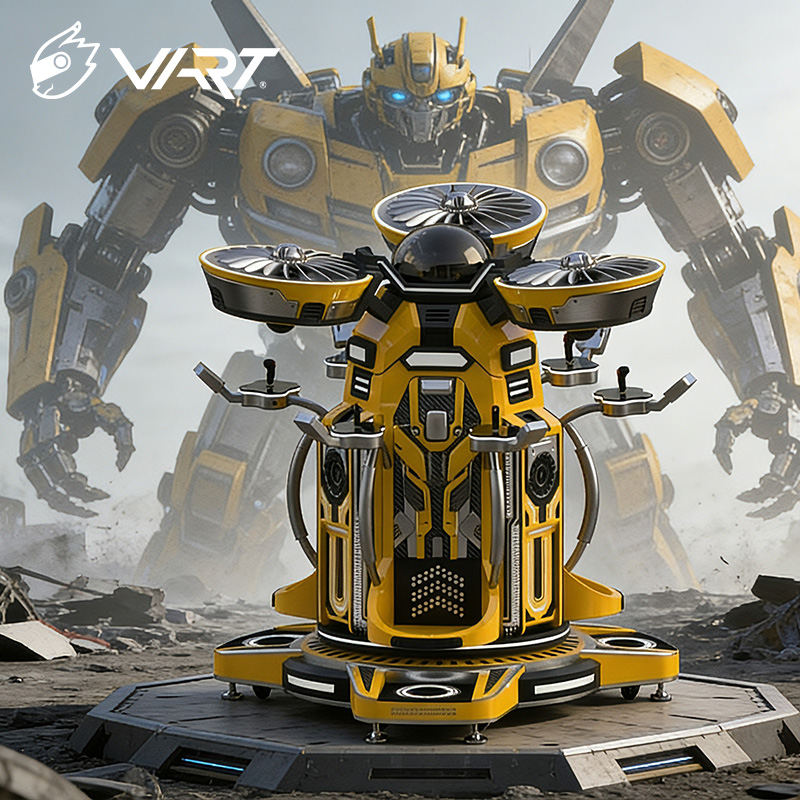
The cockpit helps players feel like real pilots before the ride even begins. The suspended three-person independent cockpit of VART achieves this through its ergonomic armrests that allow the real piloting posture, non-slip foot pedals to anchor the body during a 360-degree rotation, and the highly responsive red dual joysticks, which are located where the hands of a pilot would be.
Something instinctive occurs when a player grips the controls and enters the cockpit position. The body takes a piloting pose. This setup encourages a natural pilot posture and strengthens immersion. All the following sensory impulses, the headset, the movement, and the wind, build on that sense of readiness and deepen immersion. It renders the immersion more comprehensive.
How the Outward-Extending Layout Protects Each Player’s Immersion
The three cockpit positions extend outward in different directions. The players are turned back to each other. Each cockpit position functions as an independent flight station – its own space, its own lines of sight, its own sense of solitude in the virtual world. Three individuals are on the stage and in the adventure, yet each person feels that he or she is the only pilot of his or her plane.
This independent cockpit layout allows three players to share the attraction while still enjoying a personal, immersive experience.
Layer Five: The Sci-Fi Design — Immersion Starts Before the Headset
Interstellar White, Deep Space Black, and the Heavy Mecha Aesthetic
The outer design of the VR flying machine is the initial layer of immersion for players. The color scheme of the Interstellar White and Deep Space Black of VART, featuring heavy mecha armor, sharp geometric lines, and a silhouette of a spacecraft, sends a clear message before any player enters the cockpit position: this is something strong and extraordinary.
Players who are coming to a machine that resembles a spacecraft of the future are already starting the process of using their minds to travel into space. The exterior design does more than attract attention — it builds anticipation before the ride starts.
Turbines, Illuminated Chassis, and the Crowd Magnet Effect
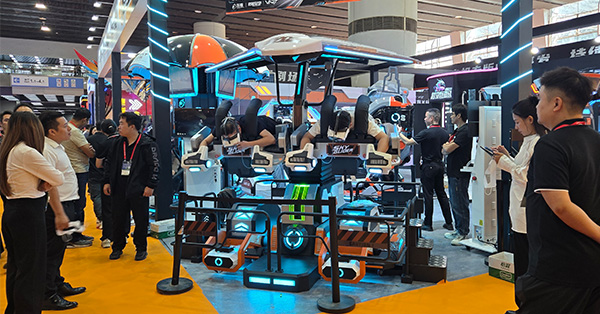
Even while the machine is idle, the three top biomimetic turbines look spectacular with the lighted star-ring chassis and the mechanical gears and structural support lines at the bottom. When the machine is in motion, it becomes a strong visual centerpiece for the venue.
That is what makes the crowd magnet effect: people passing by halt, look on, become interested, and form a queue. Each ride acts as a live advertisement, drawing attention from nearby visitors and helping the attraction generate interest.
Why VART Arcade Is a Strong Choice for Commercial VR Flight Simulation
Since 2011, VART Arcade has focused on developing commercial VR flight simulators for entertainment venues. The three-person virtual reality headset flight simulator is the culmination of 15 years of sensory engineering that has been put to the test and proven in the real commercial world. All the layers of the immersion stack, such as visual, motion, wind, cockpit, and design, are designed to work in a commercial context.
The machine comes with an exclusive game library, an all-in-one payment gateway, 24/7 technical service, and a complete profit model analysis. It is implemented in over 97 countries in 970 cities – the best possible testimony to the fact that the immersion is a commercial success.
VR Arcade vs Static VR Setup: Why Motion-Based Systems Win
VR systems do not provide the same amount of immersion. The major distinction is the fact that the experience is full-bodied or visual only.
The setup of the VR is static, where the headset and handheld controllers are the only requirements. Although it is capable of producing good-quality images, the body of the user will remain motionless. This generates a lack of correlation between what is observed with the eyes and what is experienced with the body.
An example of this is a motion-based VR arcade machine, such as a virtual reality flight simulator, which combines physical movement with visual feedback. The platform is controlled to rotate, tilt, and lift in real-time depending on the in-game actions. Such correspondence between the sight and the movement makes sensory conflict much less and adds more immersion.
| Feature | Static VR Setup | VR Motion Arcade Simulator |
| Movement | None | 360° rotation + lift motion |
| Physical feedback | Minimal | Full-body motion response |
| Wind/effects | Not available | Real-time airflow system |
| Player engagement | Individual, limited | Shared, immersive experience |
| Arcade suitability | Low | High |
Who Should Invest in a VR Flight Simulator?
A three-person virtual reality flight simulator is designed for commercial venues where foot traffic, visibility, and player engagement matter.
This system is particularly appropriate for:
- VR arcades and gaming centers
- Family entertainment centers (FECs)
- Shopping mall entertainment zones
- Theme parks and amusement zones
- Tourist attractions and experience centers
- Event-based entertainment installations
This system is especially valuable for operators who want a highly visible attraction that supports group participation and repeat interest.
- attract attention from a distance
- support multi-user engagement
- create visible motion-based spectacle
Conclusion
There is no single fantastic technology that enables a true experience of flying in a virtual reality headset flight simulator. It is the product of 5 sensory systems, visual, motion, wind, cockpit, and design, in an ideal synchronization with each other. Once the five are aligned, the engineering is not felt by the players. They simply feel like they are flying.
This is the kind of immersive experience VART designed its three-person VR flying simulator to deliver. That is why players are more likely to remember the experience and return to your venue.
To view the actual operation videos, obtain the complete technical specifications, and have your own quotation prepared by the VART commercial team, contact VART Arcade.
Faqs
Q1: Can a VR flying simulator be used by beginners?
Yes. The majority of systems have guided play and easy-to-use controls, so that even the new user can play it.
Q2: What is the maximum number of players on the simulator?
The system is able to accommodate 3 players at the same time in different cockpit positions.
Q3: Does motion affect VR sickness?
Motion synchronization is meant to minimize sensory mismatch, which is among the primary factors of VR discomfort. But sensitivity is relative to a person.
Q4: What is the difference between a VR arcade machine and home VR?
VR arcade machines are motion platforms, environmental effects, and multi-user configurations, not available in home VR systems.
Q5: Is maintenance required?
Yes. As with all motion-based VR arcade machines, regular checkups and maintenance are suggested to ensure performance and safety.