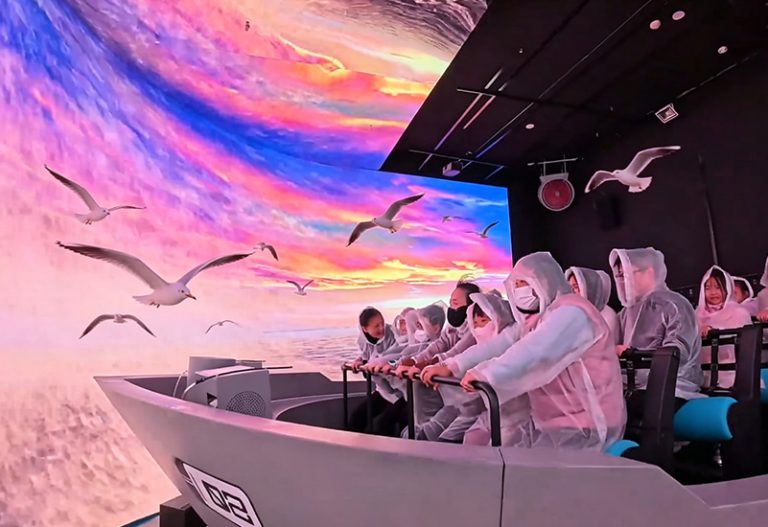
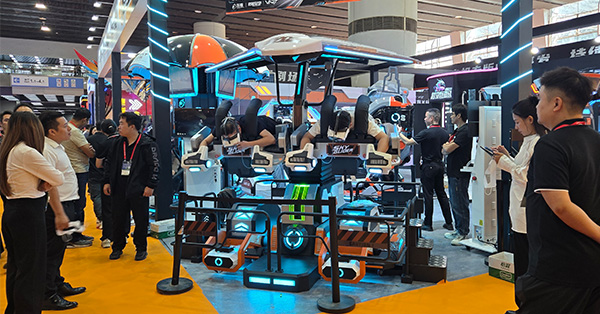
Parachute Simulator Guide: How VR Skydiving Rides Work and How Venues Use Them

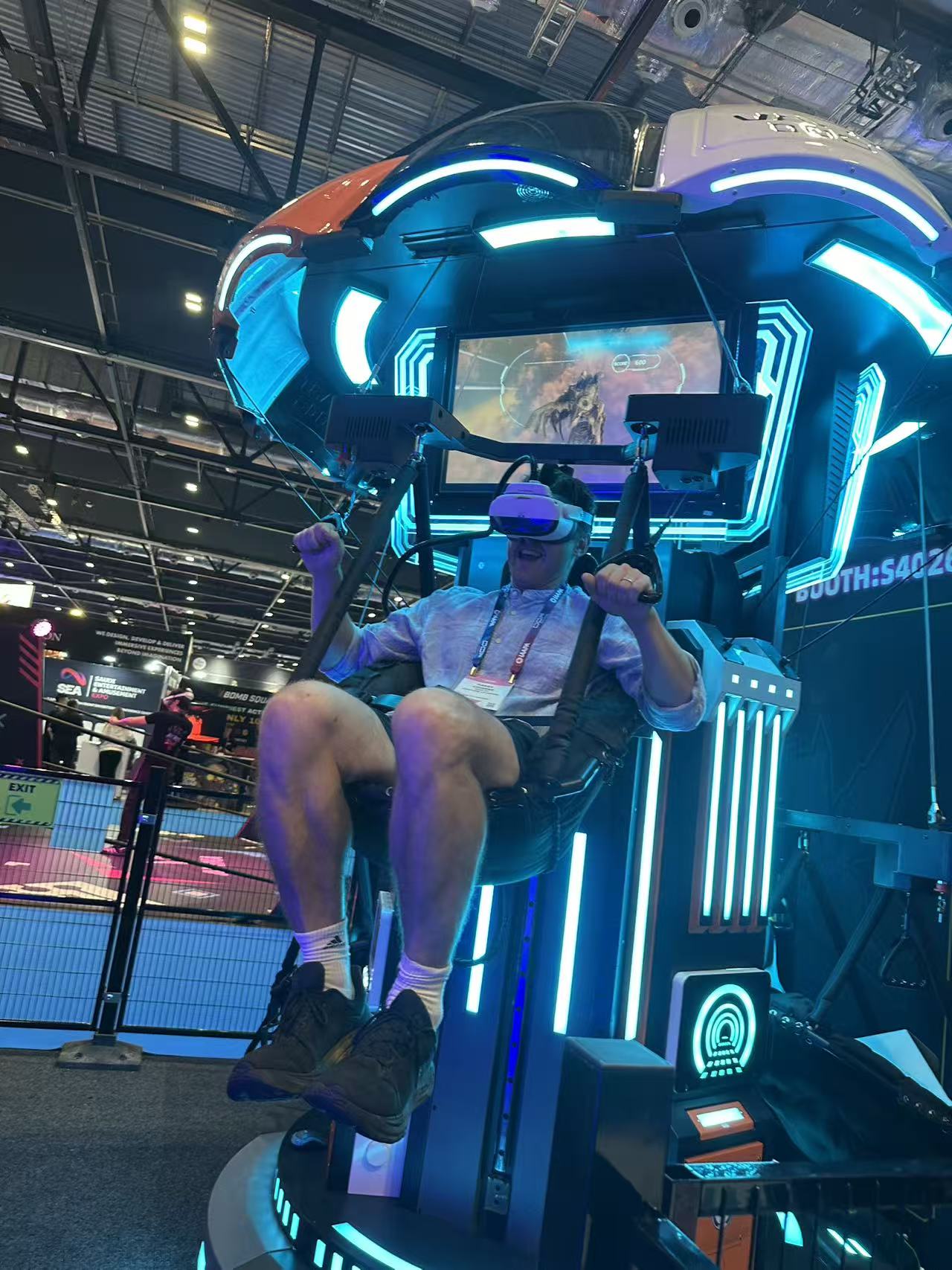
A parachute simulator is a ride that recreates a skydive with virtual reality and a motion platform. Riders wear a VR headset while the machine drops, tilts and blows wind in time with the scene. The VART 3 Seats VR Parachute Simulator, for example, combines an 1100 mm vertical drop and ±30° tilt with three independently operated seats in a 6.25 m² footprint.
Key takeaways
- A parachute simulator, also called VR skydiving or VR parachuting, simulates a jump and descent in a controlled venue. Riders do not actually jump.
- It differs from real skydiving, indoor wind tunnels and home VR games in cost, space, staffing and experience.
- For venues, the main questions are audience, throughput, space and power, content, support and total cost.
- Independent seats mean one rider does not have to wait for a full group before the ride can start.
- You can ride the machine at our Guangzhou factory.
Parachute simulator guide map: where to read more
This page is the overview. Each topic below has its own detailed article.
| If you want to know… | Read |
|---|---|
| How the ride works, station by station | How a 3-Seat VR Parachute Simulator Works: From Jump to Landing |
| How it compares with a wind tunnel | VR Skydiving vs Indoor Wind Tunnel: Cost, Space and Safety Comparison |
| Why independent multi-seat rides earn more | Why 3-Seat Multiplayer Beats Single-Rider VR for FEC Throughput |
| What drives the price | VR Parachute Simulator Price Guide: What Drives the Cost |
| How to choose a flight attraction | VR Flight Attractions Buyer’s Guide 2026 |
| The 2-seat sky glider alternative | What Is a VR Sky Glider Simulator? |
What is a parachute simulator?
A parachute simulator is an attraction that recreates the experience of parachuting using virtual reality. Riders put on a headset and see a 3D scene, such as leaving an aircraft, falling through the sky or gliding down over scenery. The machine moves in time with the picture, so riders feel the motion as well as see it.
People search for this experience in many ways: VR parachute, parachute VR, VR parachuting, VR skydiving, virtual reality skydiving and skydiving in VR. In everyday use they mean the same type of experience: a VR version of a parachute jump or skydive.
At a glance: the VART 3 Seats VR Parachute Simulator
| Attribute | Specification |
|---|---|
| Capacity | 3 riders, with independent operation supported |
| Vertical drop | 1100 mm |
| Tilt | ±30° left and right |
| Effects | Adaptive wind, binaural 3D audio, haptic seat feedback |
| Footprint and height | 6.25 m² (2500 × 2500 mm), 3200 mm high |
| Power | 9.0 kW, 220V / 50Hz |
| Rider height range | 1.2 m to 2.1 m |
| Included content | 12+ flight and skydiving VR games |
See the full specification on the 3 Seats VR Parachute Simulator page.
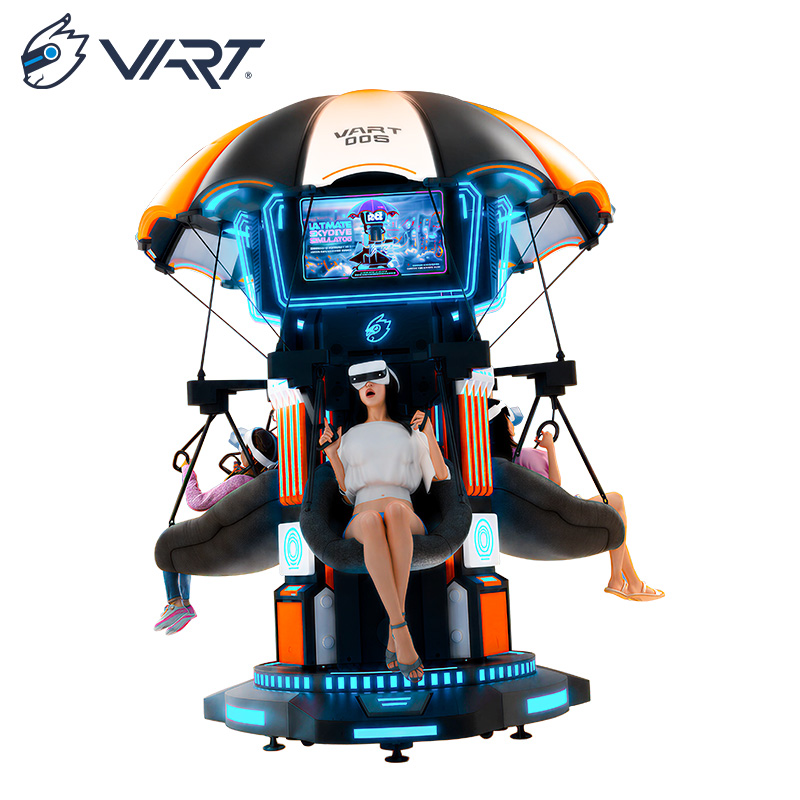
How a VR parachute simulator works, in brief
- The headset shows the skydiving scene and follows head movement.
- The motion platform drops and tilts in time with the scene, so the body feels the jump and the turns.
- Wind, sound and haptics add the feeling of speed, direction and impact.
- The content sets the route and story, from the jump to the landing.
- Restraints and operator controls keep riders secure and let staff run the ride.
The key is synchronization: when picture and motion match, the brain accepts the illusion of height and descent. For the full ride sequence, content and sensory effects, read how a 3-seat VR parachute simulator works, from jump to landing.
VR skydiving vs real skydiving vs wind tunnel vs home VR games
| Option | What it is | What it needs | Best for |
|---|---|---|---|
| Real skydiving | A person jumps from an aircraft | Training or a tandem instructor, suitable weather, health and age rules | People who want the real thing |
| Indoor wind tunnel | A person floats on a column of moving air | A purpose-built structure, industrial power and an instructor for every flight | Standalone destination attractions |
| VR parachute simulator | A ride-style machine plus a VR scene that simulates a jump | Floor space, power and trained staff | Malls, arcades, FECs, VR parks and theme parks |
| Home VR skydiving game | A headset game at home | A headset and a compatible device | Personal entertainment |
A simulator is not a replacement for real flight: it simulates the sensation and the story. For a detailed comparison of footprint, power, installation time, staffing and throughput, see VR Skydiving vs Indoor Wind Tunnel.
Who rides a parachute simulator?
- Thrill-seekers who want the feeling of skydiving without the real jump.
- Families and friends who want a shared experience on a multi-seat machine.
- Tourists looking for something memorable at a scenic spot or resort.
- Mall and arcade visitors who want something new and photogenic.
- Groups and parties, such as birthdays and team events.
On the VART 3-seat unit the published rider height range is 1.2 m to 2.1 m. Display limits clearly at your entrance and follow the manufacturer’s manual and local rules.
Parachute simulators as a commercial attraction
For a business, a parachute simulator is an attraction that can draw people to your venue and give them something to talk about. This is where the details matter most.
Where parachute simulators fit
| Venue | Why it works |
|---|---|
| VR park or VR arcade | A headline ride that adds variety next to smaller VR games |
| Shopping mall | An eye-catching attraction that fits an existing unit and draws families |
| Family entertainment center | A group-friendly ride for parents, children and friends |
| Tourist site or scenic area | A weather-proof activity when outdoor options are limited |
| Resort, hotel or cinema lobby | An extra activity with a compact footprint |
Independent seats and throughput
Many VR motion rides run all seats on one shared cycle, so the ride cannot start until the group is ready and an empty seat wastes capacity. On the VART 3-seat parachute simulator each seat supports independent operation. A walk-up rider can ride alone, three riders can ride together, and the operator can stagger starts during busy periods. That flexibility matters most when foot traffic is uneven. Read why 3-seat multiplayer beats single-rider VR for FEC throughput for the revenue logic.
Space and power
According to VART’s published specification, the machine needs a 6.25 m² footprint, 3200 mm of height and a 220V/50Hz supply rated at 9.0 kW. Ceiling clearance above 3200 mm plus a safety margin should be confirmed before installation. For a worked example of site planning on a related ride, see site requirements for a 2-seat VR glider, and ask us for a venue layout drawing.
Marketing angles that work for venues
- A simple promise. “Skydive without leaving the ground” is easy to understand at a glance.
- Photo and video moments. Guests love sharing their reactions, so plan a safe photo area.
- Group offers. Family and friends packages fit a multi-seat ride.
- Fresh content. A library of 12+ flight and skydiving games gives repeat visitors a reason to return.
- Pairing with other rides. Combine with a sky glider or other VR attractions for a full flight zone.
Parachute simulator vs sky glider: how the two compare
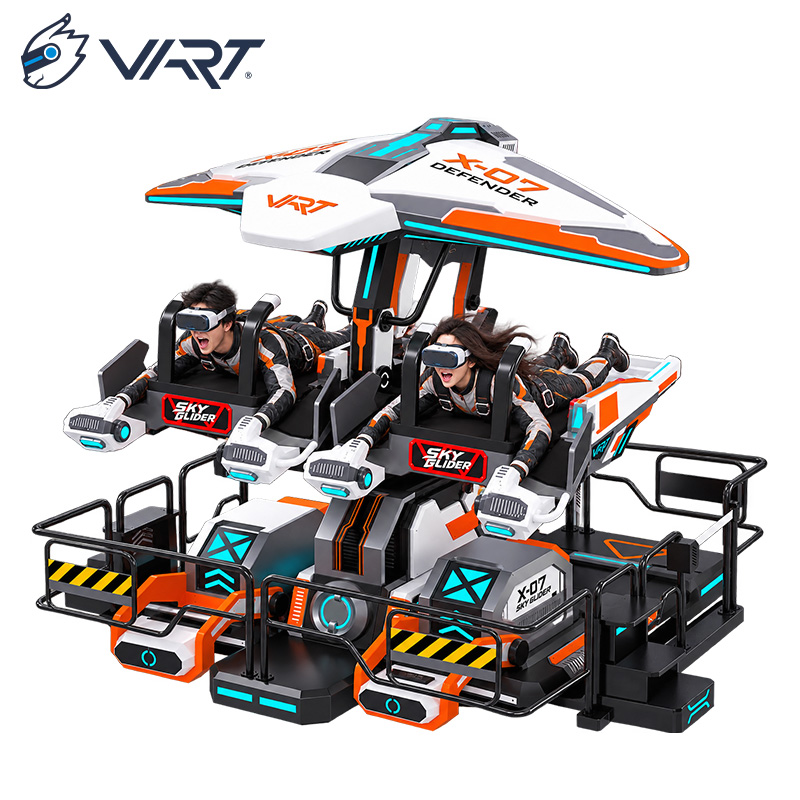
VART builds both. Based on VART’s published specifications:
| Spec | 3 Seats VR Parachute Simulator | 2 Seats VR Sky Glider Simulator |
|---|---|---|
| Capacity | 3, independently operated | 2, shared cycle |
| Footprint | 6.25 m² | 7.5 m² |
| Height | 3200 mm | 2500 mm (2900 mm at peak pitch) |
| Power | 9.0 kW | 5.0 kW |
| Primary motion | 1100 mm drop, ±30° tilt | 105° pitch, 400 mm drop |
Which fits better depends on your ceiling height, power supply and visitor mix. Learn more in What Is a VR Sky Glider Simulator?, VR Sky Glider vs Traditional Seated VR Flight Simulator and the sky glider ROI guide.
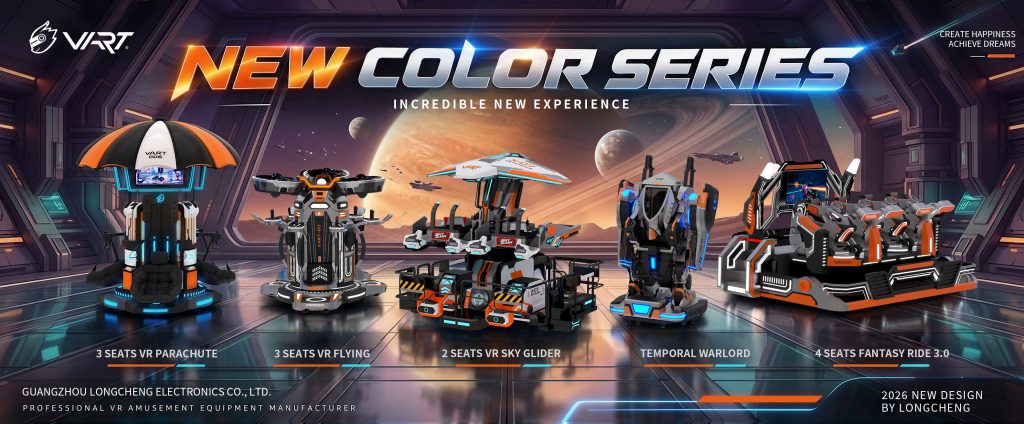
VART’s VR parachute and flight simulators
- 3 Seats VR Parachute Simulator: three independently operated seats with an 1100 mm drop and ±30° tilt.
- VR Parachute Simulator for Sale: purchase information and quotation details.
- 2 Seats VR Sky Glider Simulator: a two-seat gliding flight.
- Three-Person VR Flight Simulator: a group flight attraction.
For the wider range, see our VR flight simulator page, or read the virtual reality flight simulator guide.
What it costs, and what to check before you buy
The machine price is only part of the picture. Our VR parachute simulator price guide explains what drives the cost. When you compare quotations, also include shipping and packing, installation and training, electricity, staff, content updates, spare parts and local safety or insurance requirements.
- Your visitors. Singles, pairs, families or groups decide how much independent operation matters.
- Space and power. Confirm footprint, ceiling height and power supply for your site.
- Certificates. Ask for the declaration of conformity and test reports that apply to your market, for the exact model.
- Safety features. Check restraints, emergency stop and rider limits.
- Content and updates. Ask how many games are included and how updates work.
- Warranty and spare parts. Know what is covered and what to keep in stock.
- A test ride. Ride it and watch it run for several cycles.
For supplier due diligence, read 9 Questions to Ask a Chinese VR Machine Manufacturer Before You Order and the VR Flight Attractions Buyer’s Guide 2026. To see what operators are buying across the industry, see VR Attraction Trends 2026.
Is VR parachuting safe?
A VR parachute simulator is a simulated experience, so riders do not actually jump or fall. Because it is a motion ride, safety still matters. A well-run attraction should have secure restraints checked for every rider, an emergency stop within the operator’s reach, clear height and age limits displayed at the entrance, trained operators and a daily inspection routine. Some people feel uncomfortable in VR, such as dizzy or queasy, so tell riders they can ask to stop and offer a place to rest afterward.
Try the VART parachute simulator in Guangzhou
The best way to understand a parachute simulator is to ride one. Our factory is in Panyu District, Guangzhou. Our team can run the machine, answer your questions and prepare a quotation and a free venue layout drawing.
Book a test ride
- Phone / WhatsApp: +86 18122722483
- Email: [email protected]
- Address: 202, Floor 2-3, No 5th Shixin Rd, Xinshuikeng Village, Dalong Street, Panyu District, Guangzhou, China
Please send your name, group size, preferred date and your venue size. We recommend contacting us at least one day ahead.
Frequently asked questions
What is a parachute simulator?
A parachute simulator is a ride that uses virtual reality and a motion platform to give riders the experience of a skydive. Riders wear a VR headset while the machine drops, tilts and blows wind in time with the scene.
How is VR skydiving different from real skydiving or an indoor wind tunnel?
Real skydiving and wind tunnel flying are real physical flight and need training, supervision and, for tunnels, a purpose-built building. VR skydiving simulates the experience with a headset and a motion platform, so riders do not actually fly or jump. It fits into an existing venue.
How does a VR parachute simulator work?
A headset shows a skydiving scene while a motion platform moves in sync with it. On the VART 3 Seats VR Parachute Simulator, the platform provides an 1100 mm vertical drop and ±30° of tilt, with adaptive wind, 3D audio and haptic seat feedback.
Can all three seats of the VART parachute simulator run at the same time?
Yes. Each of the three seats supports independent operation, so riders can be started and stopped separately, or all three can ride together as a group.
How much space and power does a 3-seat VR parachute simulator need?
According to VART’s published specification, the machine needs a 6.25 m² footprint (2500 × 2500 mm), a height of 3200 mm and a 220V/50Hz supply rated at 9.0 kW. Always confirm ceiling clearance and power with the supplier before installation.
Who can ride a VR parachute simulator?
VART’s published rider height range for the 3-seat unit is 1.2 m to 2.1 m. Venues should also follow the manufacturer’s manual and local rules, and let riders ask to stop at any time.
How many games come with a VR parachute simulator?
VART states that more than 12 flight and skydiving VR games are included, with the content library updated periodically.
Can I try the VART VR parachute simulator in person?
Yes. Visit our factory in Panyu District, Guangzhou. Message us on WhatsApp at +86 18122722483 or email [email protected] with your name, group size and preferred date. We can also prepare a free venue layout drawing.
Final thoughts
A parachute simulator gives guests the thrill of a jump and descent in a controlled, shareable setting. For venues, the right choice comes down to your visitors, your space and power, and the quality of the machine and support behind it. Use this guide as the overview, follow the links for the detail you need, and ride the machine before you decide. If you tell us about your venue, we will help you choose the right setup.