How to Start a Successful 5D Cinema or VR Theater Business in 2026

Key Takeaways
Key Takeaways
- A commercial 5D cinema or VR theater can transform unused space into a high-value entertainment attraction with strong revenue potential.
- The success of a 5D theater business depends on choosing the right equipment configuration, location, capacity, and content strategy.
- A complete 5D cinema setup includes motion seats, projection systems, environmental effects, control systems, and professional installation.
- Understanding the real 5d theater setup cost helps investors avoid hidden expenses and plan their return on investment.
- Working with an experienced 5d simulator manufacturer ensures better customization, technical support, and long-term operation stability.
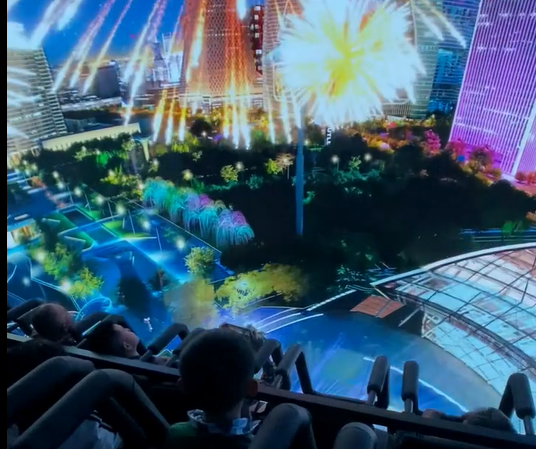
The entertainment industry is rapidly changing.Before investing in equipment, it is useful to understand what a 5D theater is and how immersive cinema technology works.
Customers today are no longer satisfied with simply watching a movie. They want experiences that combine movement, interaction, and unforgettable sensations.
This is why commercial attractions such as 5D cinemas and VR theaters are becoming popular choices for shopping malls, family entertainment centers, and amusement businesses.
A successful project does not require the largest venue.
Instead, it requires the right combination of:
- High-quality 5D cinema equipment
- Attractive content
- Efficient customer flow
- Professional installation
- Smart business planning
This guide explains how to start a profitable 5D cinema or VR theater business, including equipment selection, investment costs, setup steps, and how to choose the right manufacturer.
Why Invest in 5D & VR Attractions Today?
The entertainment market is moving toward immersive experiences.
Traditional entertainment often depends on large spaces, expensive construction, and long customer sessions.
In contrast, immersive attractions such as 5D theaters and VR experiences provide:
- Strong visual appeal
- Short experience cycles
- High customer engagement
- Flexible installation options
For many operators, these advantages create better use of commercial space.
1. Small Footprint With High Revenue Potential
One of the biggest advantages of a 5D cinema is space efficiency.
Unlike traditional movie theaters requiring multiple large halls, a compact 5D attraction can operate in a much smaller area.
Typical applications include:
- Shopping mall entertainment zones
- Indoor amusement parks
- Tourist attractions
- Science museums
- Family entertainment centers
A small footprint means lower:
- Rental pressure
- Decoration costs
- Daily operation expenses
At the same time, short movie cycles allow continuous customer turnover.
2. High Customer Throughput
Commercial entertainment businesses depend heavily on visitor flow.
A traditional movie may last two hours.
A 5D movie experience usually lasts:
- 5 minutes
- 10 minutes
- 15 minutes
This creates a continuous operation model.
Example:
| Experience Type | Duration | Customer Flow |
|---|---|---|
| Traditional Movie | 90–120 minutes | Lower daily turnover |
| 5D Cinema | 5–15 minutes | High hourly capacity |
| VR Simulator | 3–10 minutes | High repeat usage |
For locations with strong foot traffic, short immersive experiences can generate excellent space efficiency.
3. Broad Audience Appeal
Another advantage of 5D and VR attractions is their wide customer range.
They appeal to:
- Children
- Families
- Teenagers
- Tourists
- Corporate groups
Popular content themes include:
- Roller coaster adventures
- Space exploration
- Dinosaur worlds
- Ocean journeys
- Fantasy adventures
- Horror experiences
This flexibility allows operators to adjust content according to different markets.
Key Components of a Commercial 5D Cinema Setup
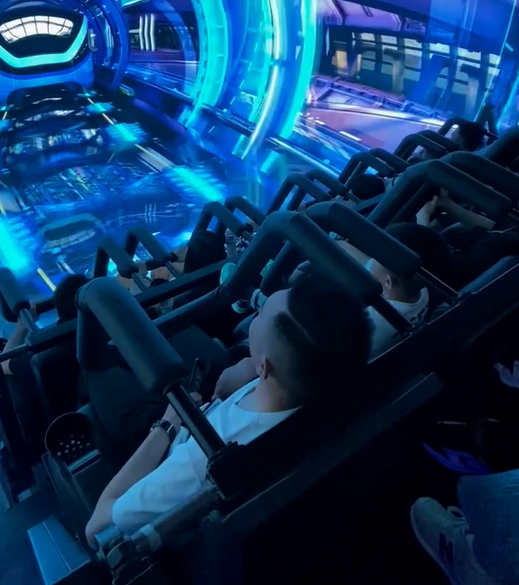
A professional 5D cinema setup is much more than installing several seats and a screen.
A complete system combines multiple technologies working together.
1. Projector & Screen System
The visual system creates the foundation of the experience.
Commercial 5D theaters typically use:
- High brightness projectors
- 3D projection technology
- Large-format screens
- Professional playback systems
The goal is to maintain clear images in public environments where:
- Lighting conditions vary
- Customers sit at different angles
- Daily operation is intensive
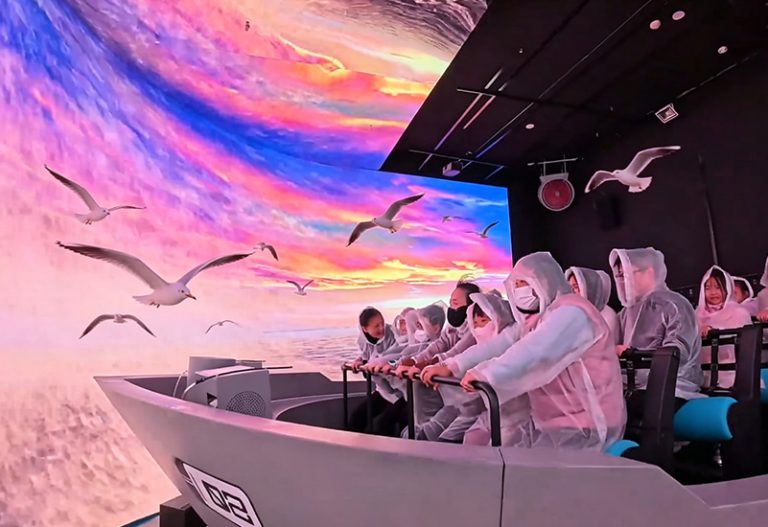
Some modern venues may also choose LED screen solutions.
Advantages of LED displays include:
- Higher brightness
- Longer lifespan
- Lower maintenance
- Better image consistency
2. Motion Platform System
The motion system creates the physical experience.
Depending on the configuration, commercial seats may provide:
- Forward movement
- Backward movement
- Tilting
- Vibration
- Lifting effects
There are two common motion technologies:
Electric Motion Platforms
Advantages:
- Lower maintenance
- Cleaner operation
- Suitable for compact venues
- Lower noise
Suitable for:
- Shopping malls
- FECs
- Indoor entertainment centers
Hydraulic Motion Platforms
Advantages:
- Stronger movement capability
- Suitable for larger installations
- More powerful simulation effects
Suitable for:
- Large theme park attractions
- Premium motion theaters
3. Control System & Effect Generators
The control system connects every part of the attraction.
It synchronizes:
- Movie scenes
- Seat movement
- Wind effects
- Water effects
- Lighting
- Sound
For example:
Movie Scene:
A spaceship launches.
System Response:
- Seats tilt upward
- Vibration starts
- Wind increases
- Lighting changes
This synchronization creates the feeling of being inside the story.
4. Customized Theater Cabin or Enclosure
The physical design of the theater also affects customer experience.
A customized cabin can provide:
- Better sound isolation
- More immersive atmosphere
- Professional appearance
- Brand customization
For commercial venues, appearance matters.
A well-designed 5D theater becomes an attraction that naturally draws customer attention.
How Much Does a 5D Theater Cost? (Complete Expense Breakdown)
One of the first questions investors ask is:
“How much does a 5D theater cost?”
The answer depends on:
- Seat capacity
- Hardware configuration
- Screen system
- Motion technology
- Special effects
- Installation requirements
- Venue preparation
A professional budget should consider all costs, not only equipment price.
Main Investment Categories
| Cost Category | Typical Details |
|---|---|
| 5D Cinema Equipment | Motion seats, projector, effects, control system |
| Installation | Technical setup and commissioning |
| Content | Movie library and licensing |
| Venue Decoration | Interior design and customer area |
| Electrical Preparation | Power supply and safety upgrades |
| Staff Training | Operation and maintenance training |
Example Budget Structure
| Expense | Percentage of Total Investment |
|---|---|
| Equipment | 50–70% |
| Venue Preparation | 15–25% |
| Installation & Training | 5–10% |
| Marketing & Opening Costs | 5–10% |
Understanding 5D Theater Setup Cost Before Investment
Many new operators focus only on the machine price.
However, successful projects require considering:
- Customer capacity
- Ticket pricing
- Daily visitors
- Operating hours
- Maintenance costs
A low initial price does not always mean better value.
A reliable system with stable operation often creates better long-term returns.
Step-by-Step Guide to Opening a Successful 5D Cinema Business
Launching a 5D cinema or VR theater business requires more than purchasing equipment.
A successful project combines:
- Correct location planning
- Suitable equipment selection
- Professional installation
- Effective customer operation
Below is a practical roadmap for investors.
Step 1: Select the Right Location and Space
Location is one of the biggest factors affecting entertainment business performance.
A good 5D cinema location should have:
- High pedestrian traffic
- Family visitors
- Entertainment demand
- Good visibility
Popular locations include:
| Location Type | Advantages |
|---|---|
| Shopping Mall | Stable daily visitors and family traffic |
| Theme Park | Strong entertainment demand |
| Tourist Attraction | High visitor curiosity |
| FEC | Perfect customer matching |
| Science Museum | Educational immersive experience |
Space Requirements
The required area depends on seat capacity and design.
Typical considerations include:
| Factor | Recommendation |
|---|---|
| Ceiling Height | Usually 2.8m+ depending on system |
| Electrical Supply | Stable commercial power |
| Ventilation | Good airflow for customer comfort |
| Entrance Area | Enough space for waiting customers |
| Safety Space | Clear customer movement paths |
A professional supplier should evaluate the venue before production.
This prevents common problems such as:
- Insufficient space
- Poor customer flow
- Difficult installation
- Unexpected renovation costs
Step 2: Choose the Right Seat Capacity
The ideal capacity depends on your business model.
A small attraction may focus on flexibility.
A large attraction may focus on maximum visitor throughput.
Common configurations include:
| Capacity | Best For | Characteristics |
|---|---|---|
| 6 Seats | Small venues | Lower investment, easier operation |
| 9 Seats | FECs and malls | Balanced capacity and footprint |
| 12+ Seats | Large attractions | Higher hourly customer volume |
How Capacity Affects Revenue
Higher capacity does not always mean higher profit.
The right choice depends on:
- Local visitor volume
- Ticket price
- Available space
- Operating hours
For example:
A 6-seat theater in a busy mall may outperform a 12-seat system in a poor location.
The goal is not simply buying the largest machine.
The goal is maximizing:
Revenue per square meter.
Step 3: Select the Right Movie Content
Content determines whether customers want to return.
A successful 5D theater usually requires a diverse content library.
Popular themes include:
| Content Theme | Target Customers |
|---|---|
| Space Adventure | Families, science visitors |
| Dinosaur World | Children and schools |
| Ocean Exploration | Museums and education centers |
| Roller Coaster | General entertainment |
| Horror Adventure | Teenagers and adult |
Why Content Updates Matter
The first visit is usually driven by curiosity.
Repeat visits depend on:
- New stories
- Different themes
- Seasonal content
- Localized experiences
For commercial venues, content strategy is as important as hardware quality.
Step 4: Professional Installation and Staff Training
A commercial 5D cinema should be professionally installed.
The installation process normally includes:
- Site inspection
- Equipment delivery
- Hardware assembly
- System calibration
- Effect synchronization testing
- Staff training
Staff Training Should Cover:
- Daily startup procedures
- Customer guidance
- Emergency operation
- Basic troubleshooting
- Equipment cleaning
- Safety inspection
Well-trained staff improve:
- Customer satisfaction
- Equipment lifespan
- Daily efficiency
How to Choose a Reliable 5D Cinema or VR Theater Manufacturer
Choosing the right supplier is one of the most important decisions in the entire project.Different immersive formats have different operating models. Compare 5D cinema vs VR Theater technology before selecting your attraction type.
A low-cost supplier may provide equipment quickly, but long-term operation depends on:
- Manufacturing quality
- Technical support
- Spare parts availability
- Software updates
- Installation experience
1. Check Real Manufacturing Capability
A professional 5d simulator manufacturer should have the ability to handle:
- Product design
- Mechanical engineering
- Electrical systems
- Software integration
- Production testing
A true manufacturer should be able to explain:
- How the motion platform works
- How effects synchronize
- How maintenance is handled
2. Verify Certifications and Quality Control
Commercial entertainment equipment must meet safety expectations.
Important certifications and documents may include:
- CE certification
- Quality management systems
- Third-party testing reports
For international projects, certification support also helps with:
- Customs clearance
- Local compliance
- Installation approval
3. Evaluate After-Sales Support
Many buyers focus only on initial price.
However, entertainment equipment operates every day.
Long-term costs include:
- Maintenance
- Spare parts
- Technical support
- Software updates
A reliable supplier should provide:
- Remote assistance
- Operation guidance
- Replacement parts
- Technical consultation
4. Choose a Partner With Complete Solutions
The best suppliers do not only sell machines.
They help customers build complete attractions.
A complete solution may include:
- Equipment recommendation
- Floor layout design
- Installation planning
- Staff training
- Business consultation
For investors, this reduces project risk.
Why VART VR Is a Trusted Partner for Commercial Immersive Attractions
VART VR focuses on designing and manufacturing commercial immersive entertainment solutions.
The company provides:
- 5D cinema equipment
- VR theater systems
- VR arcade attractions
- Complete venue solutions
The advantage of working with an experienced manufacturer is that every part of the project can be coordinated:
Hardware.
Software.
Space design.
Operation planning.
Complete Commercial Experience Solutions
VART VR supports different venue types:
| Venue | Suitable Solutions |
|---|---|
| Shopping Mall | 5D Theater, VR Attractions |
| FEC | Family Immersive Experiences |
| Theme Park | Large Motion Attractions |
| Tourist Destination | Adventure Experiences |
| Science Center | Educational VR Content |
Frequently Asked Questions About Starting a 5D Cinema Business
How much does it cost to start a 5D cinema business?
The investment depends on:
- Theater size
- Seat capacity
- Equipment configuration
- Venue renovation
A small project may require a lower initial investment, while larger attractions with advanced motion systems require more budget.
A complete evaluation should include equipment, installation, venue preparation, and operation costs.
What equipment is needed for a 5D cinema?
A complete 5D cinema system usually includes:
- 3D projection system
- Motion seats
- Effect generators
- Control software
- Audio system
- Theater structure
Additional features may include:
- Wind effects
- Water effects
- Fog
- Lighting systems
Is a 5D theater profitable?
A 5D theater can generate strong returns when properly located and operated.
Important factors include:
- Customer traffic
- Ticket pricing
- Daily operating hours
- Equipment reliability
- Content selection
High visitor locations usually provide stronger earning potential.
How long does a 5D movie experience last?
Most commercial 5D experiences last:
5–15 minutes
The short duration helps operators achieve:
- Higher customer turnover
- More daily sessions
- Better peak-hour capacity
Can a 5D theater be combined with VR attractions?
Yes.
Many modern entertainment venues combine:
- 5D cinema
- VR simulators
- Racing simulators
- Interactive games
This creates a more complete entertainment destination.
Get a Free Layout Design & Quote for Your Project
Planning to start a 5D cinema business or VR theater project?
VART VR can help you evaluate:
- Suitable equipment configuration
- Venue layout
- Investment planning
- Complete attraction solutions
Contact our team today to receive:
- Product catalog
- Floor design recommendation
- Customized quotation
Build an immersive entertainment attraction designed for your market.