How to Open a Successful VR Free-Roam Arena: 90-Day Operator’s Guide

Key Takeaways
- Learn how to start a VR free roam business with a practical 90-day roadmap, from venue planning to customer retention.
- Understand why successful VR arenas sell team experiences and memorable moments instead of simply selling machine time.
- Discover how to optimize VR arcade setup cost, ticket structures, local marketing, and operational metrics.
- Learn how multiplayer VR experiences, creator campaigns, leaderboards, and corporate events can create long-term revenue growth.
Opening a successful VR free-roam arena in 2026 is not only about purchasing advanced VR equipment. The strongest operators build a complete entertainment experience that combines immersive technology, smart venue design, effective marketing, and repeat-visit strategies. A profitable VR arena focuses on creating unforgettable team experiences, increasing hourly capacity, and turning first-time visitors into returning customers.
Whether you are planning a small VR attraction inside a shopping mall, upgrading an existing FEC, or building a dedicated location-based entertainment venue, this VR arena startup guide explains the practical steps needed during the first 90 days — from validating your space and pricing model to launching marketing campaigns and building a loyal community.
Why VR Free-Roam Arenas Are Becoming the Next Generation of Location-Based Entertainmen
Traditional arcade businesses often depend on individual machines where customers play separately. Modern free-roam VR changes this model by creating shared missions where players communicate, cooperate, compete, and experience a story together.
The customer is no longer buying “10 minutes of VR.”
They are buying:
- A team challenge with friends
- A memorable activity for birthdays or events
- A unique attraction they can share on social media
- A competitive experience they want to repeat
This operating philosophy is especially important for multiplayer VR arenas. As highlighted in VART VR’s operational framework, the real product is not simply equipment usage time, but the complete journey of discovering, experiencing, sharing, and returning.
For operators, this creates more opportunities:
| Traditional Arcade Model | VR Free-Roam Arena Model |
|---|---|
| Individual player experience | Multiplayer team experience |
| Short entertainment session | Story-driven mission |
| Equipment-focused sales | Experience-focused sales |
| Limited customer interaction | Strong social sharing |
| One-time visit | Repeat challenges and events |
Phase 1 (Days 1–14): Market Positioning and Venue Footprint Validation
Before purchasing equipment or designing advertisements, successful operators first answer one important question:
Who is your ideal customer, and why will they choose your VR arena?
Many unsuccessful projects make the mistake of starting with hardware selection instead of market positioning.
A VR arena inside a shopping mall, for example, has a different business model compared with a standalone entertainment center.
Validate Your Venue Location and Space Efficiency
The first two weeks should focus on understanding:
- Customer traffic flow
- Available floor area
- Visibility from walking paths
- Nearby entertainment attractions
- Target customer groups
- Peak visiting hours
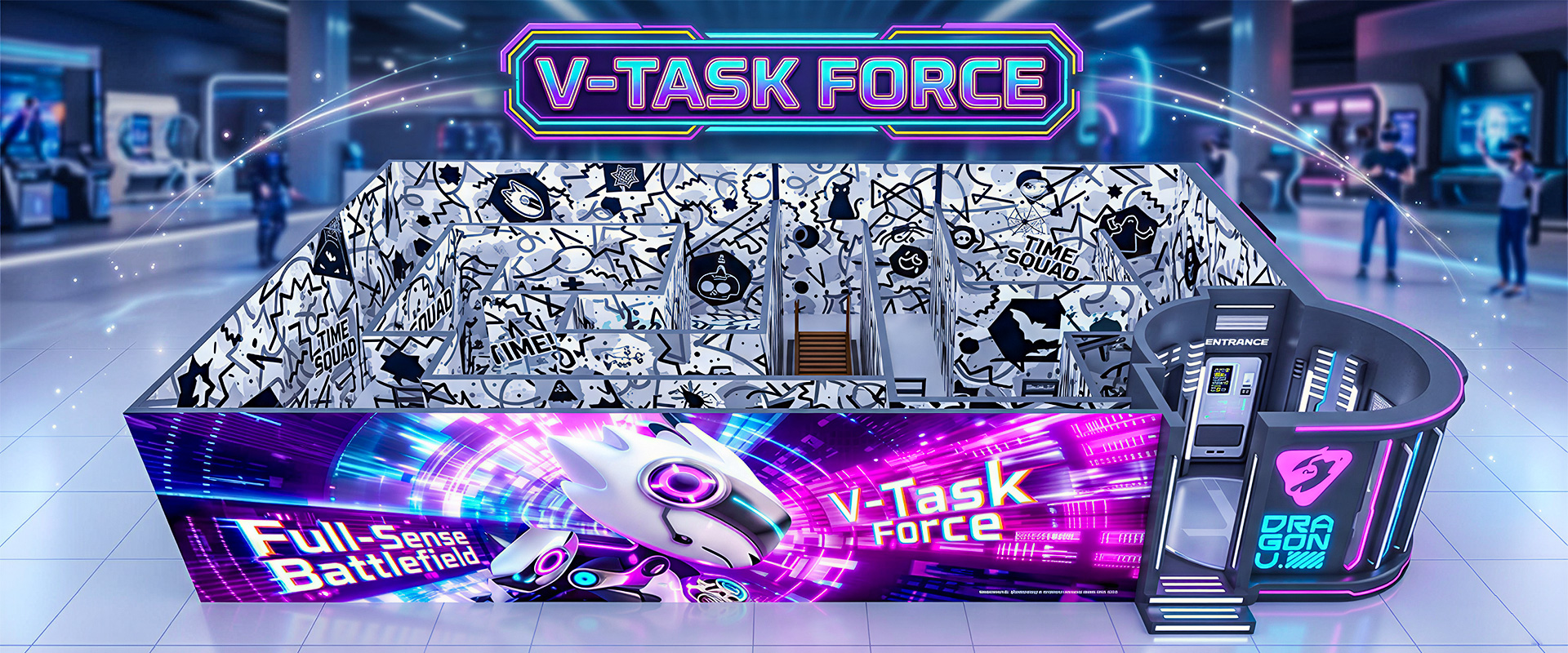
For many commercial VR free-roam projects, a compact but highly visible space can create strong revenue efficiency.
A recommended starting footprint is often:
35–50 square meters
This size can support a focused multiplayer experience while maintaining reasonable rent pressure.
Important evaluation factors include:
| Venue Factor | Questions Operators Should Ask |
|---|---|
| Location | Can customers easily see the attraction? |
| Traffic Flow | Do people naturally pass the entrance area? |
| Space | Is there enough room for experience + waiting area? |
| Visibility | Can visitors understand the attraction within seconds? |
| Nearby Businesses | Are there complementary stores, cinemas, restaurants, or family attractions? |
| Operations | Can staff manage groups efficiently during peak hours? |
Sell Team Experiences, Not Equipment Time
One of the biggest differences between ordinary VR machines and successful VR arenas is the sales message.
Customers rarely wake up thinking:
“I want to buy 15 minutes of VR.”
Instead, they think:
“I want something fun to do with my friends this weekend.”
This is why multiplayer experiences are powerful.
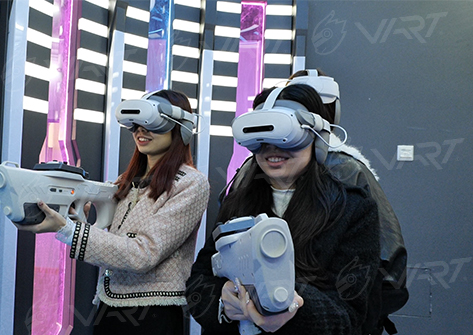
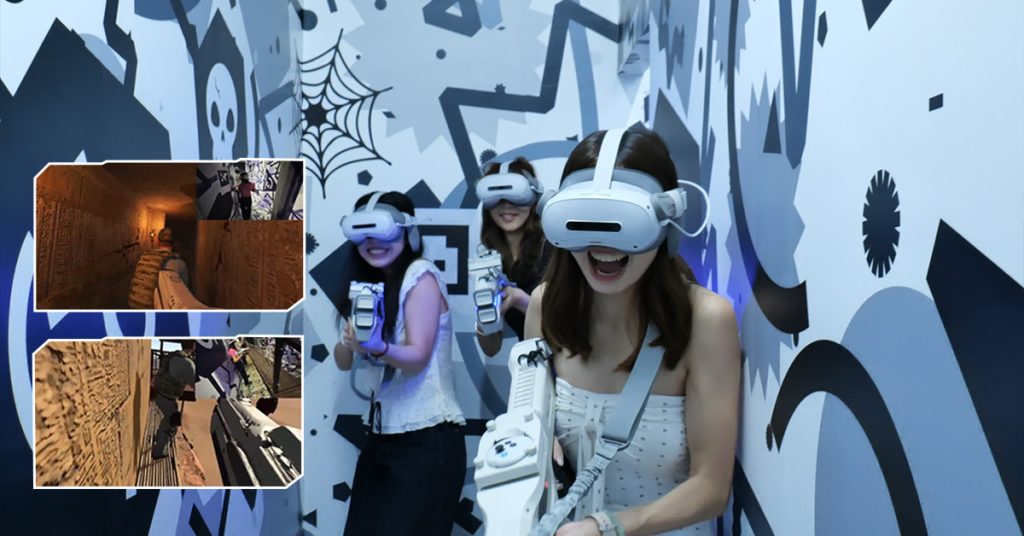
A product such as VART VR’s full-sensory multiplayer battlefield is designed around group cooperation. Players enter the same mission, communicate with teammates, complete objectives, and experience physical interaction elements together.
The commercial value comes from:
- Group purchases
- Higher average order value
- Social sharing
- Birthday bookings
- Team-building opportunities
Phase 2 (Days 15–30): Pre-Opening Setup and Ticket Architecture
Once the location and positioning are confirmed, the next step is designing the customer journey.
A profitable VR arena needs more than equipment installation. It needs a clear product structure.
Build a Multi-Level Ticket Strategy
Different customers have different reasons for visiting.
A student group, a family, and a corporate team should not receive the same product offer.
A practical ticket structure can include:
| Product Type | Target Customer | Business Purpose |
|---|---|---|
| Single Experience Ticket | First-time visitors | Reduce purchase hesitation |
| Friends Group Package | Young adults and social groups | Increase group spending |
| Family Package | Parents and children | Capture weekend traffic |
| Team Challenge Package | Corporate groups | Generate higher-value bookings |
| Membership / Pass Package | Existing customers | Encourage repeat visits |
The goal is not always to reduce price.
Instead, increase perceived value by adding:
- Team rankings
- Bonus challenges
- Photos or achievement cards
- Priority booking
- Special event access
Create a Smooth Booking and Customer Flow System
Waiting time strongly influences customer satisfaction.
A professional VR arena should prepare:
Before Arrival
Customers should clearly know:
- Location
- Experience duration
- Number of players
- Safety instructions
- Booking rules
At Arrival
Staff should quickly confirm:
- Group size
- Customer expectations
- Suitable content difficulty
- Available session time
During Waiting
Waiting should become part of the entertainment.
Operators can display:
- Gameplay highlights
- Team rankings
- Customer reactions
- Upcoming missions
A well-designed flow reduces confusion and improves peak-hour capacity.
Phase 3 (Days 31–60): Launching Local Marketing and Creator Campaigns
After opening, the biggest challenge is not attracting attention once.
It is creating continuous local awareness.
For VR arenas, short-form video is one of the strongest marketing tools because customers need to see the reaction before understanding the technology.
The 15-Second VR Arena Video Formula
A high-performing short video usually follows this structure:
| Time | Content |
|---|---|
| 0–2 seconds | Strong emotional reaction or exciting moment |
| 2–5 seconds | Explain the mission and number of players |
| 5–12 seconds | Show real-world movement + virtual action |
| 12–15 seconds | Show victory moment and booking information |
The goal is not to show only the equipment.
People want to see:
- Friends laughing
- Players reacting
- Team cooperation
- Unexpected moments
The operational guide provided for VART VR emphasizes that content should show the complete experience journey rather than simply recording the machine itself.
Phase 3 (Days 31–60): Launching Local Marketing and Creator Campaigns (Continued)
How to Evaluate Local Creator Partnerships
Working with local creators can quickly introduce a VR arena to the right audience, but views alone do not guarantee business results.
A creator campaign should be evaluated based on actual customer actions:
| Measurement | What It Shows | Why It Matters |
|---|---|---|
| Video Views | Content exposure | Shows awareness level |
| Profile Visits | Customer interest | Indicates whether people want more information |
| Booking Clicks | Purchase intention | Measures conversion potential |
| Redemption Code Usage | Actual customers generated | Connects creator content with revenue |
| Customer Reviews | Experience quality | Helps build long-term trust |
| Repeat Visits | Product value | Shows whether customers enjoyed the experience |
A strong creator partnership usually includes:
- A unique booking code for each creator
- A dedicated landing page
- Clear experience rules before filming
- Permission to reuse successful content
- Tracking after the campaign
The goal is not simply to make a viral video.
The goal is to build a predictable customer acquisition channel.
Phase 4 (Days 61–90): Driving Repeat Visits and Corporate Team-Building
Opening a VR arena is only the first milestone.
The long-term success of a location-based entertainment business depends on one question:
Why should customers come back after their first experience?
A VR attraction that only relies on first-time curiosity will eventually slow down.
Successful operators create reasons for customers to return.
Build a Repeat Visit Ecosystem Through Competition and Community
Multiplayer VR naturally creates competitive opportunities.
Operators can introduce:
Leaderboards
A ranking system encourages customers to:
- Beat previous scores
- Challenge friends
- Return with new teammates
- Share achievements online
Example categories:
| Ranking Type | Customer Motivation |
|---|---|
| Highest Score | Personal achievement |
| Fastest Completion | Skill competition |
| Weekly Champion | Short-term return incentive |
| Team Ranking | Group engagement |
Create Seasonal Missions and Events
Instead of treating content as a fixed product, operators can package experiences into events.
Examples:
Monthly Challenge
“Can your team survive the hardest mission?”
Holiday Events
- Halloween horror challenges
- Christmas team missions
- School holiday competitions
Community Events
- University competitions
- Gaming clubs
- Local creator tournaments
This transforms a VR arena from a simple attraction into a local entertainment destination.
Using VR Arenas for Corporate Team-Building Revenue
One of the strongest growth opportunities for multiplayer VR is corporate events.
Companies are constantly looking for:
- Team-building activities
- Employee engagement events
- Group entertainment
- New social experiences
A VR arena fits naturally because it creates:
- Communication
- Team cooperation
- Shared challenges
- Memorable moments
The sales approach should not focus on:
“Book 60 minutes of VR.”
Instead, package it as:
“Complete a team mission together and receive your final challenge result.”
A corporate package can include:
| Package Element | Business Value |
|---|---|
| Team Mission | Creates cooperation |
| Multiple Groups | Increases booking size |
| Competition Mode | Adds excitement |
| Score Report | Creates memorable results |
| Group Photo | Supports internal sharing |
| Catering Partnership | Increases total spending |
This approach follows the same operational principle: customers purchase a complete experience, not simply equipment usage time.
Weekly Management Dashboard: 8 Metrics Every VR Arena Should Review
Many operators focus only on daily revenue.
However, revenue is the result of many smaller operational factors.
A professional VR arena should review key numbers every week.
| Metric | What to Monitor | Why It Matters |
|---|---|---|
| Redemption Rate | Purchased tickets converted into visits | Shows customer commitment |
| Booking Arrival Rate | Scheduled customers who actually arrive | Helps reduce empty slots |
| Waiting Time Accuracy | Actual waiting vs promised time | Directly affects reviews |
| New Customer Conversion | First-time visitors purchasing | Measures sales efficiency |
| Content Conversion | Which missions attract customers | Helps optimize marketing |
| Customer Reviews | Satisfaction problems | Reveals service weaknesses |
| Sharing Rate | Photos, videos, social posts | Shows experience value |
| Repeat Visits & Group Leads | Returning customers and event inquiries | Predicts future growth |
The operational material for VART VR also emphasizes reviewing conversion, waiting experience, customer feedback, sharing behavior, and repeat opportunities as important indicators for continuous improvement.
Common Mistakes When Starting a VR Free-Roam Business
Even advanced VR technology cannot guarantee success without proper operations.
Mistake 1: Buying Equipment Before Understanding Customers
A common mistake is choosing hardware first.
The correct order is:
- Understand target customers
- Select venue type
- Design experience positioning
- Choose suitable equipment
Mistake 2: Selling Minutes Instead of Experiences
Low-value messaging:
“10-minute VR game.”
Higher-value messaging:
“4-player sci-fi mission experience.”
Customers remember stories, challenges, and emotions.
Mistake 3: Ignoring the Waiting Experience
A customer may spend 15 minutes waiting before playing.
That time affects their opinion.
Use waiting time to create excitement:
- Show gameplay
- Display rankings
- Explain missions
- Introduce upcoming events
Mistake 4: Depending Only on New Customers
Long-term profitability comes from:
- Returning players
- Membership programs
- Corporate events
- School groups
- Community partnerships
A Practical 90-Day Launch Roadmap Summary
| Period | Main Goal | Key Actions |
|---|---|---|
| Days 1–14 | Validate Business Model | Select venue, define audience, confirm space efficiency |
| Days 15–30 | Prepare Opening | Build ticket system, booking process, customer flow |
| Days 31–60 | Acquire Customers | Launch videos, creator campaigns, local promotions |
| Days 61–90 | Build Growth Engine | Introduce rankings, events, memberships, group sales |
Frequently Asked Questions About Starting a VR Free-Roam Arena
How much does it cost to start a VR free roam business?
The total investment depends on venue size, equipment selection, decoration requirements, and operating model.
A small VR attraction may require a lower initial investment, while a larger multiplayer VR arena with multiple stations, custom design, and commercial-grade systems requires a larger budget.
Important cost factors include:
- VR equipment
- Venue preparation
- Installation
- Software/content
- Marketing
- Staff training
- Daily operation expenses
The best approach is to calculate expected customer capacity and revenue potential instead of choosing equipment only by purchase price.
How much space is needed for a VR free-roam arena?
The required area depends on the number of players and experience design.
A compact commercial VR attraction can work efficiently in approximately 35–50 square meters, while larger arenas require more space for:
- Player movement
- Safety zones
- Waiting areas
- Reception
- Equipment maintenance
A professional layout should balance customer experience with revenue per square meter.
What makes a successful VR arena different from a normal arcade?
A successful VR arena focuses on complete experiences.
The difference comes from:
- Multiplayer interaction
- Story-driven missions
- Social sharing
- Repeat challenges
- Group packages
- Community events
The equipment creates the experience, but operations create the business.
Can VR arenas make money from corporate events?
Yes.
Corporate team-building is one of the strongest opportunities for multiplayer VR venues because companies are willing to pay for organized experiences.
Successful packages usually include:
- Team challenges
- Competition formats
- Group booking options
- Achievement results
- Event support

Start Building Your VR Free-Roam Arena Today
Launching a profitable VR attraction requires more than selecting machines.
It requires a complete strategy covering:
- Venue planning
- Equipment configuration
- Customer journey
- Marketing
- Ticket design
- Repeat engagement
VART VR provides commercial VR solutions including multiplayer VR attractions, immersive equipment, and venue planning support.
If you are planning to start a VR free-roam business or upgrade an existing entertainment venue, contact VART VR for a customized equipment recommendation and layout solution.