How Does a VR Flying Simulator Work?


Introduction
A VR Flying Simulator may look like a simple amusement ride from the outside, but behind the experience lies a complex integration of motion systems, virtual reality technology, and real-time synchronization software. Understanding how a VR Flying Simulator works helps operators, investors, and venue owners better evaluate its value, performance, and long-term profitability.
To start with the basics of the attraction itself, it is helpful to first understand what a VR Flying Simulator is and why it has become one of the most popular immersive VR rides worldwide.
Core Components of a VR Flying Simulator System
A VR Flying Simulator is not a single device but a complete system made up of several coordinated components. Each element plays a critical role in delivering a smooth and immersive flying experience.
The main components include:
- Motion platform and mechanical structure
- VR headset and visual display system
- Control system and synchronization software
- Sensory effects and safety systems

Motion Platform and Flying Simulation Mechanics
Multi-Axis Motion Structure
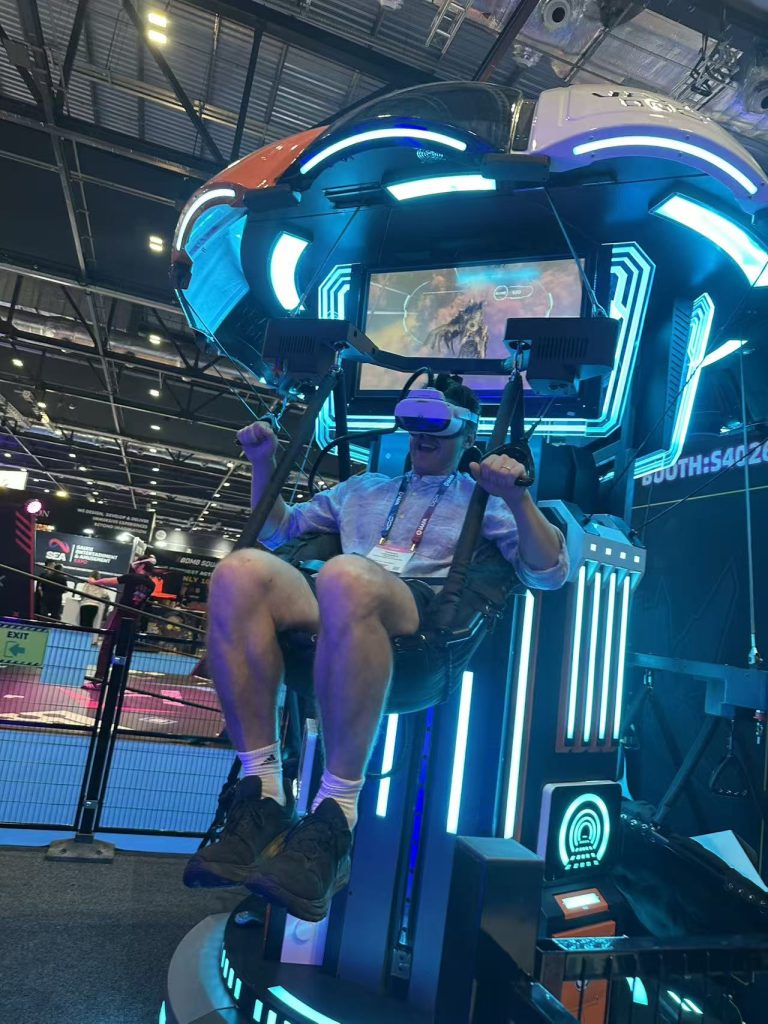
At the heart of the simulator is a multi-axis motion platform. This structure allows the simulator to tilt, rotate, lift, and descend in coordination with the virtual content. High-quality VR Flying Simulators can achieve smooth 360-degree rotation and precise angular control.
The motion platform recreates physical sensations such as acceleration, free-fall, banking turns, and hovering, giving users the realistic feeling of flight rather than simple seat movement.
Synchronized Motion Control Technology
Motion alone is not enough. What truly defines the experience is synchronization. Advanced VR Flying Simulators use real-time control systems that match every physical movement to the visual scene displayed in the headset.
This precise synchronization eliminates motion delay, reduces discomfort, and significantly minimizes motion sickness. The result is a natural and comfortable flying sensation that feels believable even during intense movements.
Virtual Reality Display and Tracking System
VR Headsets and Visual Immersion
The visual experience is delivered through high-resolution VR headsets. These headsets display stereoscopic 3D environments that create depth, scale, and spatial awareness. Users are fully immersed in virtual worlds such as outer space, fantasy landscapes, or futuristic cities.
Advanced headsets also support wide field-of-view visuals, ensuring that peripheral vision is engaged for stronger immersion.
Head and Position Tracking
Tracking technology ensures that the virtual view responds accurately to the user’s head movement. When a rider looks up, down, or to the side, the virtual scene updates instantly.
This alignment between physical orientation and visual response is essential for maintaining realism and comfort throughout the ride.
Sensory Effects That Enhance the Flying Experience
Beyond motion and visuals, sensory effects play an important role. Many VR Flying Simulators integrate:
- Wind effects to simulate air resistance
- Vibration feedback to enhance movement realism
- Directional sound for spatial awareness
These elements work together to create a multi-sensory experience that strengthens the illusion of flight without overwhelming the user.

Control System and Content Synchronization
The entire simulator is managed by a central control system. This system coordinates motion commands, visual playback, sensory effects, and safety monitoring in real time.
Operators can easily switch content, adjust motion intensity, and monitor system status through a user-friendly interface. Content libraries typically include multiple flying-themed experiences that can be updated without hardware changes.
Safety Systems and User Comfort Design
Safety is a core part of how a VR Flying Simulator works. Modern systems are equipped with:
- Secure safety belts and protective frames
- Emergency stop functions
- Smooth acceleration and deceleration algorithms
Comfort-focused seat design ensures that users of different body types can enjoy the experience safely and comfortably, even during repeated rides.
How Technology Design Impacts Business Performance?
The way a VR Flying Simulator works directly affects its commercial performance. Stable motion control, reliable synchronization, and durable mechanical structures reduce downtime and maintenance costs.
For venue owners, this translates into higher throughput, better customer satisfaction, and improved return on investment. To understand the business side in more detail, operators often evaluate whether a VR Flying Simulator is a profitable investment for their specific venue.
Conclusion
A VR Flying Simulator works by combining motion engineering, virtual reality technology, and real-time synchronization into a single immersive system. When designed correctly, these components operate seamlessly to create a realistic, comfortable, and exciting flying experience.
This technical foundation is what allows VR Flying Simulators to deliver strong customer engagement and consistent commercial value in modern entertainment venues.