


How a 3-Seat VR Parachute Simulator Works: From Jump to Landing

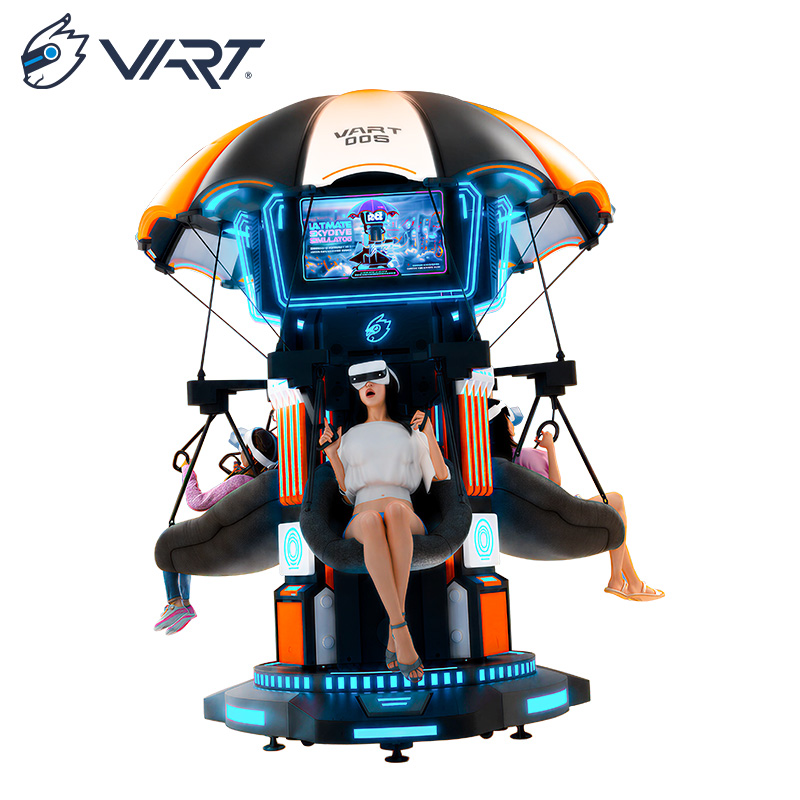
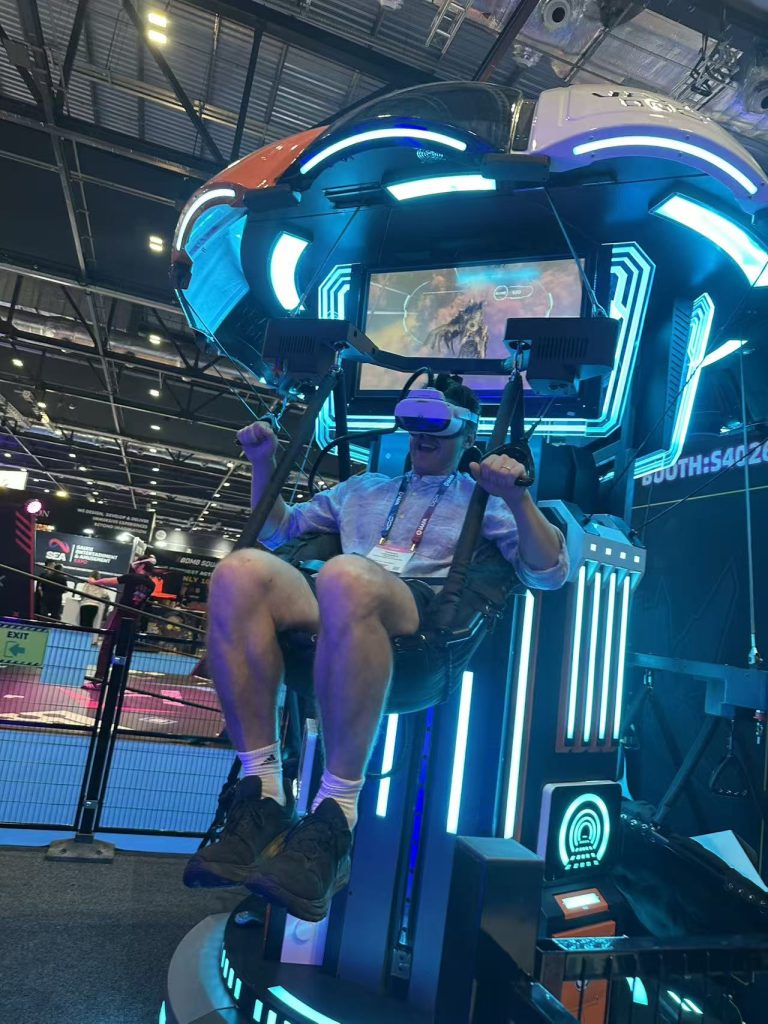
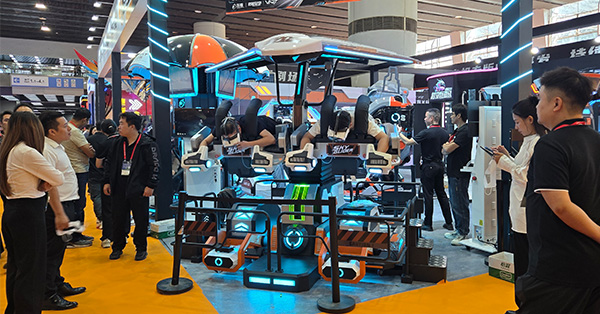
A 3-seat VR parachute simulator suspends up to three riders independently, each wearing a VR headset that shows a skydiving sequence synced to a motion platform capable of an 1100 mm vertical drop and a ±30° left-right tilt. Adaptive wind and binaural 3D audio complete the sensation. Because each of the three seats runs independently, one rider can be mid-flight while the next is still boarding — a throughput advantage that sets this ride apart from most single-cycle VR attractions.
3-Seat VR Parachute Simulator at a Glance
| Attribute | Specification |
|---|---|
| Capacity | 3 riders, independent operation supported |
| Vertical drop | 1100 mm |
| Tilt range | ±30° left/right |
| Environmental effects | Adaptive wind, binaural 3D audio, haptic seat feedback |
| Footprint | 6.25 m² (L 2500 × W 2500 × H 3200 mm) |
| Power | 9.0 kW, 220V / 50Hz |
| Machine weight | 950 kg |
| Rider height range | 1.2 m – 2.1 m |
| Included content | 12+ flight and skydiving VR games |
How the Ride Works, Station by Station
Unlike a single-cycle motion ride, each of the three seats on this simulator operates on its own independent cycle. That single design choice explains most of the machine’s revenue advantage, so it’s worth understanding the whole sequence before looking at each subsystem.
1. Independent Boarding
Because each seat runs independently, an operator can load and launch one rider while the other two seats are already mid-flight, or run all three simultaneously for a group experience. There is no need to wait for a full cycle to finish before starting the next rider — the loss of throughput that a shared-cycle machine incurs when one seat sits empty simply doesn’t apply here.
2. The Motion Platform: Drop and Tilt
Two axes of motion do the physical work:
- 1100 mm vertical drop: a fast downward release that unloads the rider’s body weight, reproducing the free-fall sensation of the moment a skydiver leaves the aircraft. This is more than twice the drop distance of a seated flight simulator, which is why the free-fall phase of the ride reads as genuinely weightless rather than a brief jolt.
- ±30° left/right tilt: reproduces the banking and directional turns of a parachute canopy catching wind, synced frame-by-frame to the VR visuals so a bank in the headset is felt as a bank in the seat at the same instant.
3. VR Headset and Skydiving Content
Each rider wears a standalone headset — commercial units commonly use a customised Pico Neo 3 — loaded from a library of 12+ flight and skydiving themes, including alien planet exploration, a futuristic sci-fi city flyover, a global panoramic tour of natural landmarks, and a dedicated skydiving-and-star-catcher game that blends the free-fall sensation with light collectible gameplay.
4. Environmental and Sensory Effects
- Adaptive wind: blower intensity tracks simulated airspeed in real time, moving from a light breeze during a slow descent to a roaring gust during the fastest part of the fall.
- Binaural 3D surround sound: spatial audio places wind resistance, ambient sound, and effects directly at each ear, reinforcing direction and altitude cues that the headset alone can’t fully convey.
- Haptic seat feedback: subtle vibration cues fire on drops and near-misses, adding a layer of physical feedback beneath the platform’s larger drop and tilt motions.
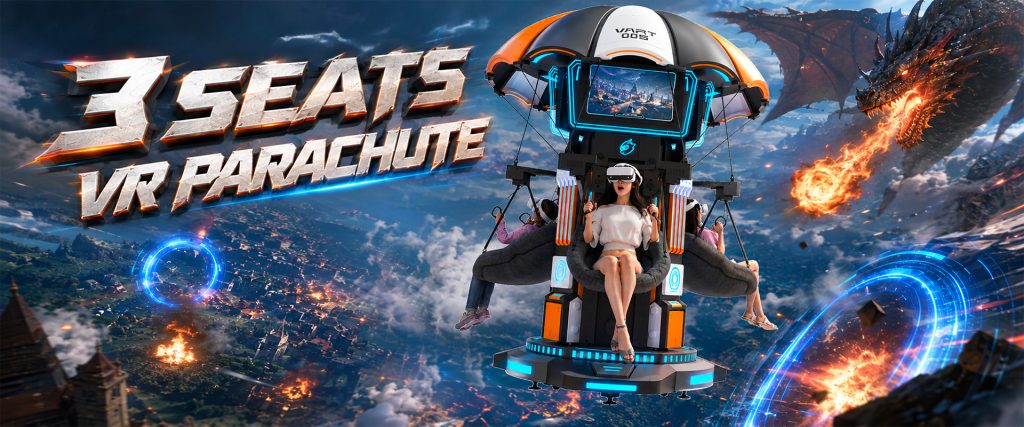
5. Active Steering (Upcoming Feature)
An interactive control upgrade — left/right pull-ring handles that let riders actively steer, brake, and navigate through the flight content rather than experiencing a fixed sequence — is planned as a future addition to the platform. Where relevant, check current availability before promoting this feature to customers.
From Jump to Landing: What a Rider Experiences
- Boarding: the rider is secured into one of the three independent suspended seats and fitted with a headset.
- Ascent / setup: the VR sequence establishes altitude and context — an aircraft door, a launch platform, or a similar framing device depending on the selected theme.
- The jump: the platform executes the 1100 mm vertical drop in sync with the headset’s free-fall visual, while wind intensity ramps up sharply.
- Free fall and steering: the ±30° tilt reproduces banking and directional changes as the flight content moves through its route — alien terrain, a sci-fi skyline, or a natural landmark tour.
- Canopy deployment and descent: motion and wind intensity ease as the visual sequence shows the canopy opening and the descent slowing.
- Landing and unload: the platform returns to its resting position and the restraint releases for the next rider.
Why Independent Seats Change the Throughput Math
Most VR motion rides — including a 2-seat sky glider, for example — run all seats on one shared cycle, so throughput is capped by how fast that single cycle repeats. A 3-seat parachute simulator with independently operated stations removes that ceiling: an operator can start, stop, and price each seat on its own schedule based on real-time foot traffic, rather than waiting for a synchronized group cycle to complete.
That flexibility matters most during uneven traffic patterns — a single walk-up rider doesn’t have to wait for two more people to fill out a group cycle, and an operator running a quiet weekday can run one seat active while the other two stay idle without losing revenue on empty seats. For a full breakdown of how cycle time and occupancy translate into daily revenue, see our VR attraction ROI guide.
Footprint and Power Compared to a Sky Glider
| Spec | 3-Seat VR Parachute Simulator | 2-Seat VR Sky Glider |
|---|---|---|
| Footprint | 6.25 m² | 7.5 m² |
| Height | 3200 mm | 2500 mm (2900 mm at peak pitch) |
| Power | 9.0 kW | 5.0 kW |
| Capacity | 3, independently operated | 2, shared cycle |
| Primary motion | 1100 mm drop, ±30° tilt | 105° pitch, 400 mm drop |
The parachute simulator’s smaller floor footprint but taller structure and higher power draw are worth checking against your site’s ceiling height and electrical capacity before ordering — see the requirements notes in the FAQ below.
Frequently Asked Questions
How does a VR parachute simulator work?
Riders wear a VR headset showing a skydiving sequence while a motion platform executes a 1100 mm vertical drop and ±30° left-right tilt in sync with the visuals. Adaptive wind, binaural audio, and haptic seat feedback complete the sensation from jump to landing.
Can all three seats run at the same time?
Yes. Each of the three suspended seats supports independent operation, so riders can be started, run, and stopped on separate schedules rather than requiring a synchronized group cycle.
How much floor space and power does the machine need?
6.25 m² of floor area (L 2500 × W 2500 × H 3200 mm) and a 220V/50Hz supply rated for 9.0 kW.
What height range can ride?
Riders between 1.2 m and 2.1 m fit the restraint geometry on a standard 3-seat unit.
How many games are included?
12+ flight and skydiving VR games are included at purchase, including alien-planet exploration, a sci-fi city flyover, a global panoramic landmark tour, and a dedicated skydiving-and-star-catcher game, with the content library updated periodically.
Does it require special ceiling height?
The unit stands 3200 mm tall at rest, so venues should confirm ceiling clearance above that height plus a safety margin before installation, similar to the site-planning process for other VR motion rides.
Next Steps
See the full specification sheet for the 3-Seat VR Parachute Simulator, compare it against the 2-Seat VR Sky Glider Simulator, or contact us for current pricing and a free venue layout drawing.

Quiero información
Thank you for your inquiry. Our sales team will contact you and provide you with the corresponding product pricing.