3D, 4D, 5D, 7D, 9D & VR Theater: What’s the Real Difference?

Key Takeaways
Key Takeaways
- 3D, 4D, 5D, 7D, 9D, and VR Theater represent different levels of immersive entertainment, but higher numbers do not always mean better technology.
- A 4D movie adds motion effects, while a 5D theater introduces environmental effects such as wind, rain, fog, and snow.
- A 7D interactive cinema adds shooting interaction and scoring systems, creating a game-like experience.
- A VR theater uses virtual reality headsets to create a fully immersive 360-degree digital environment.
- For commercial venues, the best choice depends on customer flow, space, maintenance requirements, and business goals.
The cinema industry has moved far beyond traditional 2D and 3D viewing.
Today, audiences can experience moving seats, realistic weather effects, interactive shooting, and even complete virtual worlds through advanced immersive entertainment systems.
However, many buyers and operators are confused by terms like 4D, 5D, 7D, 9D, and VR Theater.
Do higher numbers always mean better technology?
Not necessarily.
The real difference is not the number behind the “D”, but the combination of visual technology, physical effects, interaction, and immersion level.
This guide explains the difference between each format and helps entertainment operators choose the right solution for their venues.
Demystifying Cinema Dimensions (3D to VR)
Before comparing different cinema formats, it is important to understand what these “dimensions” actually represent.
In reality, most cinema technologies are not adding mathematical dimensions like length, width, and height.
Instead, terms such as:
- 4D cinema
- 5D cinema
- 7D cinema
- 9D cinema
are mainly industry terms used to describe additional layers of sensory interaction.
The evolution looks like this:
2D Cinema → 3D Visual Depth → Motion Experience → Environmental Effects → Interactive Entertainment → Full Virtual Reality
Each stage adds new ways for audiences to connect with the content.
From 3D Cinema to Immersive Entertainment
3D Cinema: Adding Visual Depth
Traditional 3D movies create the illusion of depth by showing slightly different images to each eye.
With special 3D glasses, viewers perceive:
- Objects appearing closer
- Characters moving forward from the screen
- A stronger sense of space
However, the audience remains passive.
They watch the story but do not physically feel the environment.
4D Cinema: Adding Physical Movement
Many people search online for:
“what is 4d movie?”
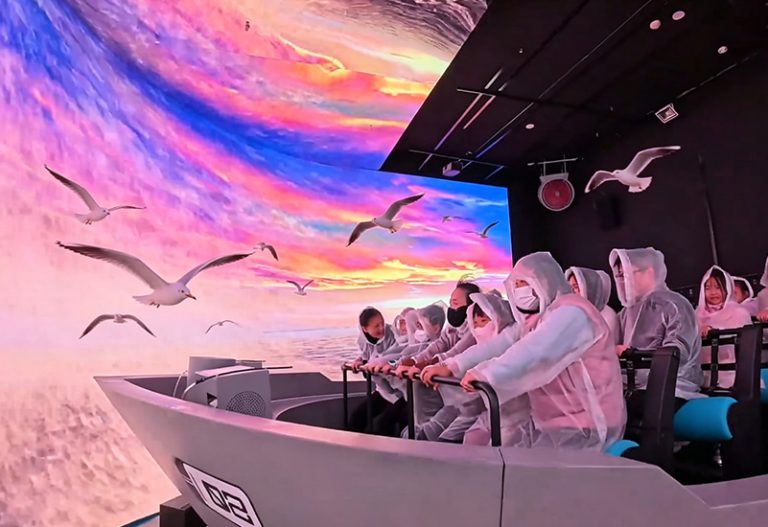
A 4D movie is essentially a 3D movie combined with physical effects inside the theater.
A typical 4D cinema includes:
- Motion seats
- Seat vibration
- Tilting movements
- Wind effects
- Water spray
When a car races on the screen, the seat moves.
When an explosion happens, the audience feels vibration.
4D creates the first step from watching a movie to experiencing a movie.
5D Cinema: Adding Environmental Reality
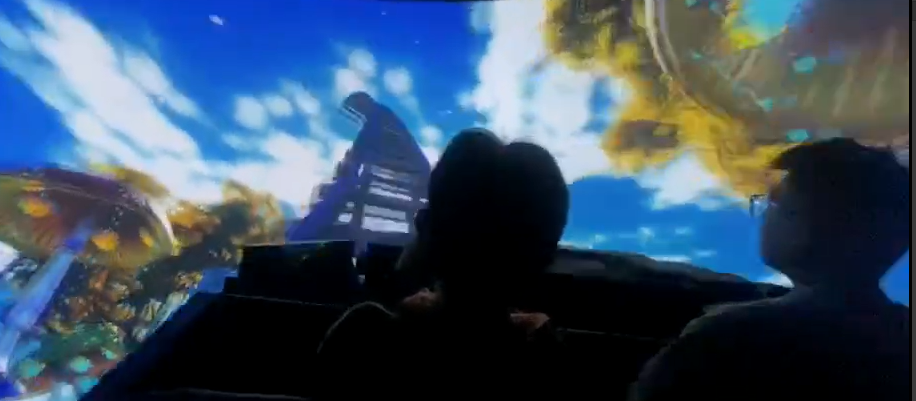
The next evolution is the 5D theater.
A 5D cinema builds upon the 4D experience by adding environmental effects that surround the audience.
These effects may include:
- Wind
- Rain
- Snow
- Fog
- Lightning
- Bubbles
- Air blasts
- Scents
- Leg ticklers
The goal is to make the theater environment respond to the movie.
For example:
A jungle adventure may include:
- Tropical wind
- Forest scents
- Fog effects
A winter scene may include:
- Snow effects
- Cold air simulation
This creates a much stronger connection between the viewer and the story.
Master Comparison Table: 3D vs 4D vs 5D vs 7D vs VR Theater
The following table provides a simple overview of the differences between major immersive cinema formats.
| Feature | 3D Cinema | 4D Cinema | 5D Theater | 7D Interactive Cinema | VR Theater |
|---|---|---|---|---|---|
| Visual Technology | 3D Glasses | 3D Glasses | 3D Projection | 3D Projection | VR Headset |
| Seat Motion | No | Basic Motion | Advanced Motion | Advanced Motion | Motion Platform Optional |
| Environmental Effects | No | Limited | Wind, Rain, Fog, Snow | Full Effects | Digital + Physical Interaction |
| Interactive Shooting | No | No | Usually No | Yes | Possible |
| Audience Role | Viewer | Viewer + Physical Sensation | Immersive Viewer | Active Player | Virtual Explorer |
| Headset Required | No | No | No | No | Yes |
| Immersion Level | Medium | Higher | High | Very High | Highest |
| Best Application | Cinemas | Theme Parks | Malls, FECs | Arcades, Entertainment Centers | VR Parks |
Deep-Dive Breakdown of Each Experience
3D Cinema: Visual Depth Using Glasses
3D cinema remains one of the most widely recognized immersive formats.
The technology focuses mainly on visual perception.
The system creates depth by displaying two slightly different images:
- One image for the left eye
- One image for the right eye
The brain combines these images into a three-dimensional scene.
Advantages of 3D Cinema:
- Simple operation
- Suitable for long movies
- Familiar audience experience
- Lower maintenance requirements
Limitations:
- No physical interaction
- Audience remains passive
- Limited sensory stimulation
For traditional movie theaters, 3D remains effective.
However, entertainment venues looking for stronger customer engagement often move toward interactive formats.
4D Cinema: 3D Visuals Plus Motion Experience
When people ask “What is a 4D movie?”
They are usually asking about the first generation of physical cinema interaction.
A 4D theater combines:
- 3D movie content
- Motion seats
- Basic environmental effects
The motion system can simulate:
- Vehicle movement
- Flying
- Falling
- Shaking
- Acceleration
For example:
During a roller coaster scene:
The screen shows a downhill drop.
At the same time:
- The seat tilts forward
- The platform vibrates
- Wind blows toward the audience
This creates a much more exciting experience compared with standard cinema.
5D Cinema: 4D Plus Advanced Environmental Effects
A 5D theater takes the 4D concept further by adding environmental effects that surround the audience.For a complete explanation of how 5D theaters work, read our guide:
What is a 5D Theater? Everything You Need to Know About 5D Cinema & Movies
If 4D focuses mainly on movement, 5D focuses on creating a complete sensory environment.
This is why many people searching for the difference between 4D and 5D cinema want to know whether the extra effects truly change the experience.
The answer is yes.
A modern 5D cinema can synchronize multiple systems together:
- Motion platform
- Wind generators
- Water spray systems
- Fog machines
- Snow effects
- Bubble effects
- Air jets
- Scent systems
Instead of simply feeling the chair move, visitors feel like they are inside the movie scene.
Example: How a 5D Experience Works
Imagine a movie scene where visitors are exploring an ancient jungle.
The sequence may include:
Visual Scene:
A helicopter flies over a rainforest.
Cinema Response:
- Seats tilt to simulate flying movement
- Wind blows from the front
- Fog appears around the audience
- Jungle sounds surround the room
- Special scents enhance realism
The audience is no longer only watching an adventure.
They become part of the adventure.
Why Commercial Venues Choose 5D Theaters
For shopping malls, family entertainment centers, and tourist attractions, 5D cinema offers several advantages:
Compact Space Requirements
Compared with large attractions, a 5D theater can deliver a premium experience within a relatively small footprint.
This makes it suitable for:
- Mall entertainment zones
- Indoor amusement parks
- Tourist attractions
- Science museums
High Visitor Turnover
Most 5D movies are designed as short experiences.
Typical duration:
| Experience Type | Average Duration |
|---|---|
| 5D Adventure Film | 5–15 minutes |
| Educational Experience | 5–10 minutes |
| Horror Experience | 8–15 minutes |
| Racing Experience | 5–12 minutes |
Short sessions allow operators to serve more visitors during peak hours.
7D Interactive Cinema: Turning Viewers Into Players
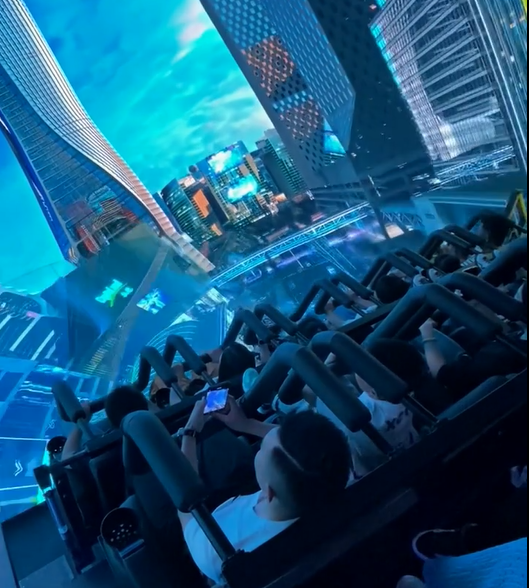
A 7D cinema adds another important element:
Interaction.
Unlike 4D and 5D formats where audiences mainly experience effects, a 7D interactive movie theater allows visitors to participate.
The most common feature is:
- Interactive shooting
Visitors use laser guns or controllers to interact with objects on the screen.
Examples:
- Shooting targets
- Fighting monsters
- Completing missions
- Competing for scores
How 7D Cinema Changes Customer Behavior
Traditional cinema:
Watch → Finish → Leave
Interactive cinema:
Watch → Participate → Compete → Replay
This difference is especially important for commercial entertainment businesses.
Interactive systems naturally encourage:
- Repeat visits
- Group competition
- Social sharing
- Longer entertainment sessions
Common 7D Applications
| Application | Example Experience |
|---|---|
| Family Entertainment Centers | Shooting games |
| Theme Parks | Adventure missions |
| Shopping Malls | Competitive attractions |
| Arcades | Multiplayer challenges |
| Tourist Attractions | Interactive storytelling |
VR Theater (Virtual Reality): Entering a Completely Digital World
A VR theater represents a different direction from traditional cinema.
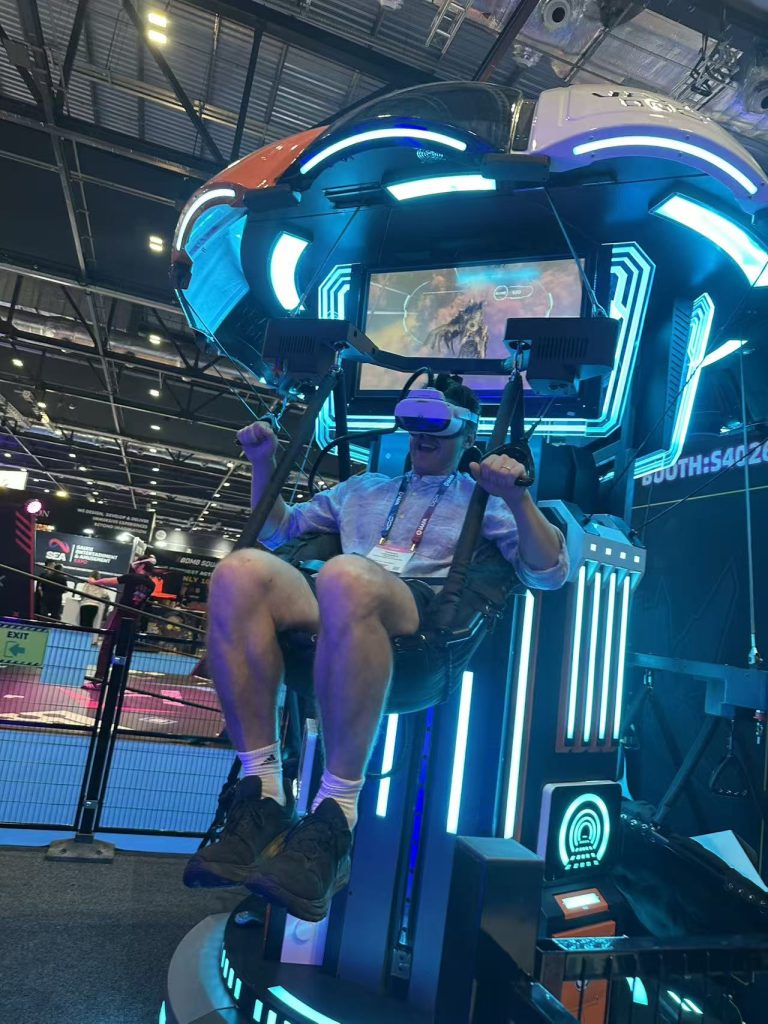
Instead of watching a large screen, each visitor wears a virtual reality headset.
The headset creates a 360-degree digital environment.
Users can:
- Look around freely
- Explore virtual spaces
- Interact with digital objects
- Experience simulated environments
A VR theater may combine:
- VR headsets
- Motion platforms
- Special effects
- Multiplayer systems
How VR Theater Differs From 5D and 7D Cinema
The biggest difference is the relationship between the user and the environment.
Traditional Immersive Cinema:
The audience watches the same screen.
VR Theater:
Each person enters a virtual world.
For example:
A 5D theater may show a space journey on a large screen.
A VR theater allows visitors to:
- Sit inside a spacecraft
- Look around the cabin
- Explore planets
- Interact with virtual objects
5D Theater vs. VR Theater: Which One Is Better for Commercial Use?
There is no universal winner.
The right choice depends on:
- Venue size
- Target customers
- Investment budget
- Operating model
Both technologies have strong commercial potential.For investors preparing a new project, our 5D cinema business setup guide explains equipment selection, costs, and operation planning.
Commercial Comparison: 5D Cinema vs VR Theater
| Factor | 5D Theater | VR Theater |
|---|---|---|
| Customer Experience | Group immersive viewing | Individual virtual exploration |
| Audience Capacity | Higher | Usually smaller groups |
| Operation Difficulty | Easier | Requires more staff management |
| Equipment Maintenance | Lower | Higher due to headsets/controllers |
| Space Requirement | Flexible | Depends on VR format |
| Content Style | Short films | Interactive experiences |
| Best For | Malls, FECs, attractions | VR parks, advanced entertainment centers |
| Repeat Visits | Medium | High with new content |
Which One Should Investors Choose?
Choose a 5D Theater If You Want:
- High visitor throughput
- Family-friendly entertainment
- Simple operation
- Mall attraction solutions
- Lower maintenance requirements
5D cinema works especially well as an attraction that catches attention from passing customers.
Choose a VR Theater If You Want:
- Premium immersive experiences
- Strong technology appeal
- Multiplayer interaction
- Higher customer engagement
- Future expansion possibilities
VR theaters are ideal for operators who want to create a destination experience rather than a simple attraction.
Understanding 5D vs 7D: What Is the Real Difference?
Many buyers search for:
“5D vs 7D”
The difference is mainly interaction.
A 5D theater focuses on:
- Sensory effects
- Motion
- Environmental simulation
A 7D cinema adds:
- Player control
- Shooting systems
- Competition
- Scoring
Simple comparison:
| Feature | 5D Cinema | 7D Cinema |
|---|---|---|
| Motion Seats | Yes | Yes |
| Wind Effects | Yes | Yes |
| Rain/Snow/Fog | Yes | Yes |
| Interactive Guns | No | Yes |
| Score System | No | Yes |
| Replay Motivation | Medium | High |
For arcades and entertainment centers, 7D often creates stronger repeat-play behavior because customers can compete with friends.
Why Cinema Formats Continue to Evolve
The reason immersive entertainment keeps developing is simple:
Modern audiences want more than passive viewing.
They want experiences that are:
- Memorable
- Interactive
- Shareable
- Physically engaging
This trend is especially visible in:
- Shopping malls
- Family entertainment centers
- Tourist destinations
- Theme parks
The future of entertainment is not only about better screens.
It is about creating complete experiences.
Frequently Asked Questions About 3D, 4D, 5D, 7D, 9D and VR Theater
What is 4D movie technology?
A 4D movie combines traditional 3D visuals with physical effects inside the theater.
The main feature is motion seating.
During the movie, seats can:
- Tilt
- Vibrate
- Move forward and backward
- Simulate acceleration
Additional effects such as wind and water may also be included.
The purpose of 4D cinema is to make audiences physically feel the action happening on screen.
What is the difference between 4D and 5D cinema?
The main difference between 4D and 5D cinema is environmental interaction.
A 4D movie mainly focuses on:
- 3D visuals
- Motion seats
- Basic physical effects
A 5D theater adds more environmental sensations:
- Rain
- Snow
- Fog
- Bubbles
- Scents
- Air effects
Simply explained:
4D = Movement
5D = Movement + Environmental Experience
Is 7D cinema better than 5D cinema?
It depends on the purpose.
A 7D cinema adds interactive gameplay elements, making it more suitable for entertainment venues that want customers to participate.
A 5D theater is usually better for:
- Family attractions
- Tourist destinations
- Educational experiences
A 7D cinema is often better for:
- Arcades
- Competitive entertainment centers
- Interactive attractions
The better choice depends on your audience and business model.
What is a VR theater?
A VR theater is an immersive entertainment system that uses virtual reality headsets instead of traditional screens.
Visitors enter a digital environment through:
- VR headsets
- Motion tracking
- Interactive software
Unlike a 5D cinema where everyone watches the same screen, a VR theater allows each participant to explore a virtual world.
Does VR theater require special equipment?
Yes.
A commercial VR theater usually includes:
- Enterprise-grade VR headsets
- Motion platforms
- Tracking systems
- Content management software
- Safety systems
Commercial equipment is different from home VR because it is designed for:
- Daily operation
- Multiple users
- Public environments
- Easy maintenance
Which is more profitable: 5D cinema or VR theater?
Both can be profitable when correctly planned.
The choice depends on several factors:
| Business Goal | Recommended Solution |
|---|---|
| Maximum visitor capacity | 5D Cinema |
| Family entertainment | 5D Cinema |
| Interactive experiences | 7D Cinema |
| Premium technology attraction | VR Theater |
| Multiplayer experiences | VR Theater |
| Small footprint attraction | 5D/7D Cinema |
For many commercial venues, combining different experiences creates the strongest attraction mix.
Conclusion & Expert Recommendation: Choosing the Right Immersive Theater
The evolution from 3D to 4D, 5D, 7D, 9D, and VR theater shows how entertainment is moving from passive viewing toward active participation.
Each format has its own advantages:
- 3D Cinema creates visual depth.
- 4D Cinema adds physical movement.
- 5D Theater introduces environmental sensations.
- 7D Cinema adds interactive gameplay.
- VR Theater creates complete digital immersion.
There is no single technology that fits every venue.
The right solution depends on:
- Customer demographics
- Available space
- Investment level
- Expected visitor flow
- Long-term operation goals
For shopping malls, family entertainment centers, and amusement operators, choosing equipment based only on the “D number” is not enough.
A successful immersive attraction requires:
- Reliable hardware
- Suitable content
- Efficient operation
- Easy maintenance
- Professional installation support
VART VR provides commercial immersive entertainment solutions including:
- 5D cinema equipment
- 7D interactive theaters
- VR arcade systems
- Complete entertainment venue planning
If you are planning to build a new attraction or upgrade an existing entertainment space, choosing the right immersive technology can help transform your venue into a destination customers want to visit again.
Ready to Build Your Immersive Entertainment Project?
Looking for the right 5D cinema, 7D interactive theater, or VR theater solution?
Contact VART VR to explore:
- Equipment recommendations
- Venue layout planning
- Product catalogs
- Customized entertainment solutions