2-Seat vs 3-Seat VR Flight Simulator: Which Fits Your Venue?

Choose a 2-seat VR flight simulator if most of your visitors arrive as couples, friends or parent-and-child pairs and you want a simple, easy-to-fill attraction. Choose a 3-seat simulator if families and groups of three are common, you have steady footfall, and you want more riders per cycle. The right answer depends on your audience, not on seat count alone.
Key takeaways
- A third seat only adds revenue if you can fill it. Look at how your visitors actually arrive: in twos or in threes.
- Estimate throughput with real numbers: cycle time, seats and fill rate. A simple formula is below.
- Check footprint, ceiling height and power on the spec sheet before you decide. Do not assume.
- Some venues run both models so every group size has a good option.
- Test ride before you buy. You can ride our machines at our Guangzhou factory.
The quick comparison
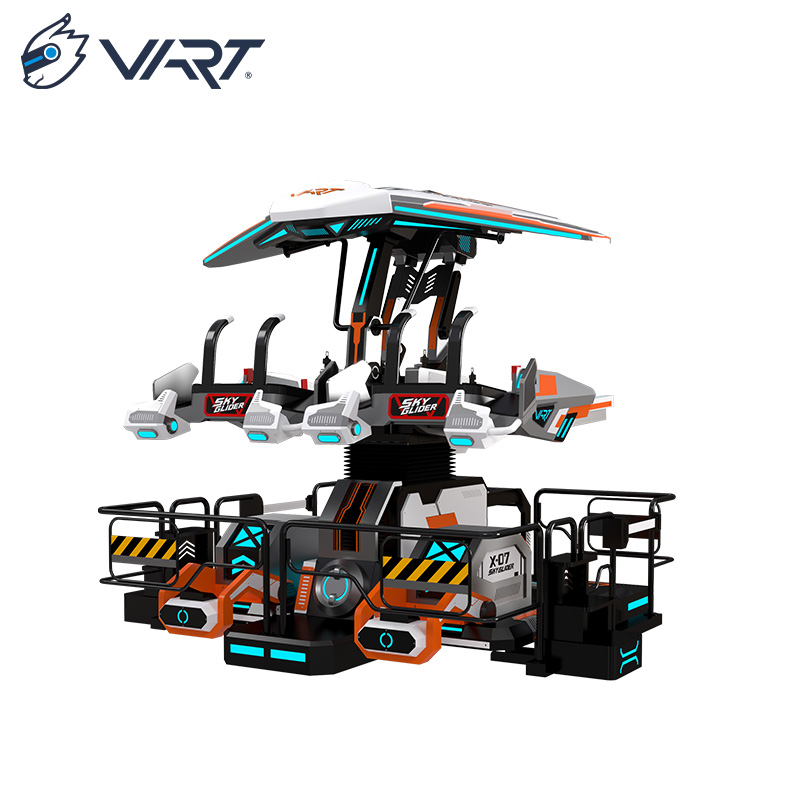
The two VART models below are different experiences as well as different sizes: a sky glider flight and a parachute-style flight. Treat the seat count as one factor among several.
| Factor | 2 Seats VR Sky Glider Simulator | 3 Seats VR Parachute Simulator |
|---|---|---|
| Seats per ride | 2 | 3 |
| Best-fit groups | Couples, friends in pairs, parent and child | Families, friends in threes, small parties |
| Easiest to fill when | Most visitors arrive in twos | Groups of three or more are common |
| Throughput potential | Good, with fewer riders per cycle | Higher per cycle if seats are filled |
| Operating complexity | Simple to manage | Slightly more loading and safety checks per cycle |
| Footprint, ceiling height, power | See the product spec sheet | See the product spec sheet |
| Typical venues | Malls, small FECs, cinemas, compact attractions | Theme parks, tourist sites, large FECs, VR parks |
We list footprint, ceiling height and power as “see the spec sheet” on purpose: these figures can vary by configuration, so confirm them with our team before you plan your floor.
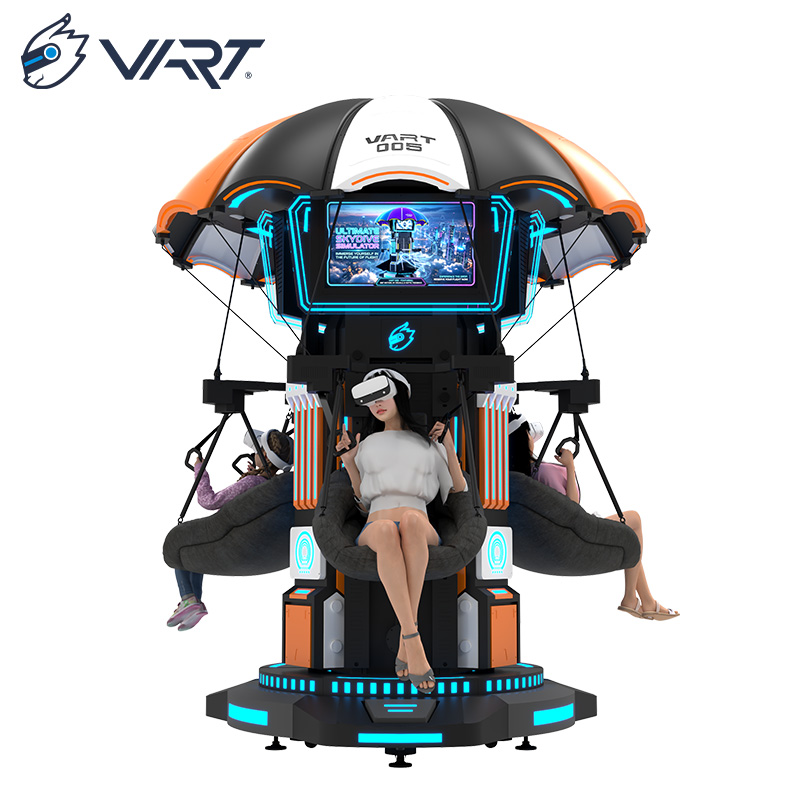
Factor 1: Who actually visits your venue?
This is the most important question, and it is easy to get wrong. Before you pick a machine, spend a week watching how people arrive.
- Mostly couples and pairs (shopping malls, date-night venues, city-center arcades): a 2-seat machine fills easily, and nobody waits for a third rider.
- Mostly families (family entertainment centers, resorts, tourist attractions): groups of three or four are common, so a 3-seat machine fits better.
- Mixed crowds with strangers sharing: if your venue culture allows strangers to share a ride, a larger machine fills more easily. If not, an unfilled seat is lost revenue.
Factor 2: Throughput and revenue
You can estimate riders per hour with a simple formula:
Riders per hour = (60 ÷ cycle time in minutes) × seats × fill rate
Cycle time is the ride itself plus loading and unloading. Here is an example with assumed numbers. Replace them with the real ride length from the spec sheet and your own loading time.
| Assumption | 2 seats | 3 seats |
|---|---|---|
| Cycle time (ride + loading), example | 8 minutes | 8 minutes |
| Cycles per hour | 7.5 | 7.5 |
| Riders per hour at 100% fill | 15 | 22.5 |
| Riders per hour at 70% fill | 10.5 | 15.75 |
| Riders per hour if groups come in twos (2 of 3 seats used) | 15 | 15 |
The last row is the key point: if almost every group is a pair, a 3-seat machine does not carry more riders than a 2-seat one, and a third of its capacity goes unused. If groups of three are common, the 3-seat machine pulls ahead.
Revenue per hour follows from price per rider. Multiply riders per hour by your ticket price, then compare it with the purchase price, staff cost, electricity and rent to estimate payback. Keep your estimates conservative: use a realistic fill rate rather than a best-case one.
Factor 3: Space and installation
Larger machines generally need more floor area, and some need more ceiling height or specific power supply. Before you decide:
- Measure your available area, ceiling height and entrance width, since the machine has to get into the room.
- Leave space for a queue, a waiting area, rider briefing and a staff station. Visitors need room to wait comfortably.
- Check the power requirement and whether your location needs an upgrade.
- Ask the supplier for a layout drawing based on your floor plan.
If space is tight, a 2-seat model is often easier to place. If you have room and footfall, a 3-seat model can make better use of that space.
Factor 4: Operation and staffing
- Loading time: more riders per cycle means a little more time to seat, restrain and check everyone. Train staff to keep the loading routine short and safe.
- Rider briefing: have a clear, short safety briefing for every ride, regardless of model.
- Peak hours: a larger machine helps most when queues form on weekends and holidays.
- Content: check how many flights or scenes are included and how updates work, since fresh content keeps repeat visitors coming.
Which venues suit which model?
| Venue | Often a good fit | Why |
|---|---|---|
| Shopping mall attraction | 2 seats | Many couples and friends in pairs; limited floor area |
| Family entertainment center | 3 seats, or both | Families visit in groups of three or four |
| Tourist attraction or resort | 3 seats | Larger groups and higher peak crowds |
| VR park or multi-ride arcade | Both | Variety lets each group size find a suitable ride |
| Cinema lobby or small venue | 2 seats | Compact footprint and simple operation |
These are starting points, not rules. Your own visitor data is the best guide.
Is it worth buying both?
For venues with enough footfall, a mixed setup can work well. Couples and pairs use the 2-seat machine, families use the 3-seat machine, and when one queue grows, staff can offer the other. A pair of different experiences also gives repeat visitors a reason to come back. If you are not sure, start with one machine, measure your fill rate and queue times, and add a second when the data supports it.
Questions to ask before you choose
- What are the footprint, ceiling height and power requirements for my configuration?
- How long is one ride, and how long does loading take with trained staff?
- How much content is included, and are updates available?
- What certificates apply to this model for my market?
- What does the warranty cover, and what spare parts should I keep?
- What is the lead time, packing method and shipping term?
- Can I test ride before buying?
For a full list of what to inspect when you visit a supplier, read our guide on how to visit a VR simulator factory in China. If you are comparing prices, our VR parachute simulator for sale and three-person VR flight simulator pages show what to ask for in a quotation.
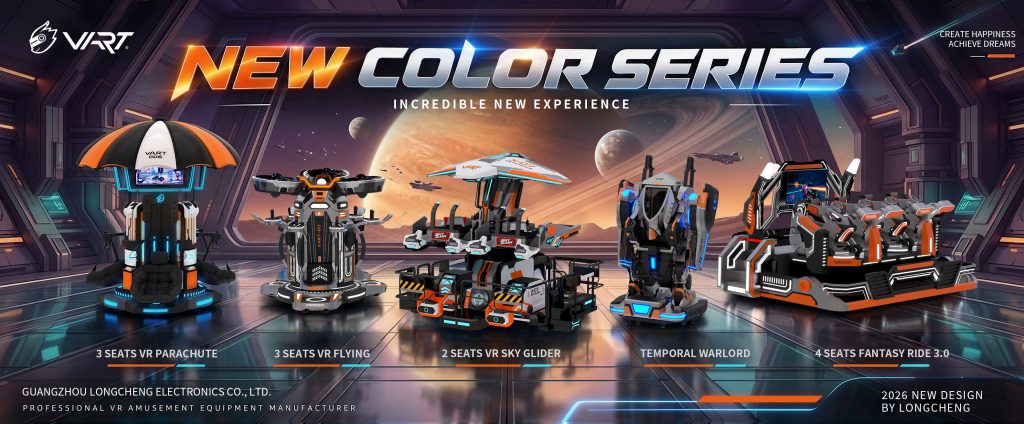
See both machines in person
The best way to decide is to ride both. Our factory is in Panyu District, Guangzhou, about 30 minutes by car from the Canton Fair venue, depending on traffic. Our team can run the machines for you, walk you through the options and prepare a quotation based on your venue.
Book a test ride
- Phone / WhatsApp: +86 18122722483
- Email: [email protected]
- Address: 202, Floor 2-3, No 5th Shixin Rd, Xinshuikeng Village, Dalong Street, Panyu District, Guangzhou, China
Please send your name, group size, preferred date and the models you want to ride. We recommend contacting us at least one day ahead.
Frequently asked questions
Is a 3-seat VR flight simulator always better than a 2-seat one?
No. A 3-seat machine can carry more riders per cycle, but it only earns more if you can regularly fill the third seat. If most of your visitors come as couples or pairs, a 2-seat machine can be easier to fill and simpler to run.
Which VR flight simulator is better for families?
A 3-seat simulator suits families and groups of three, such as two parents with a child or three friends. A 2-seat simulator suits couples, parent-and-child pairs and friends visiting in twos.
How do I estimate riders per hour for a VR flight simulator?
Divide 60 minutes by the time of one full cycle (ride time plus loading and unloading), then multiply by the number of seats and by your expected seat fill rate. Use the real ride length from the product spec sheet.
Can I buy both a 2-seat and a 3-seat VR flight simulator?
Yes. Some venues run both so that couples, small groups and larger parties can each find a suitable ride, and so a queue on one machine can move to the other.
How can I see the VART VR flight simulators in person?
Visit the VART factory in Panyu District, Guangzhou. Message us on WhatsApp at +86 18122722483 or email [email protected] with your name, group size, preferred date and the models you want to ride.
What should I ask the supplier before choosing a model?
Ask for the spec sheet with footprint, ceiling height, power supply and ride length, plus the included content, warranty terms, spare parts list, certificates and delivery time. Ask for a test ride if you can.
Final thoughts
Seat count is a tool, not a goal. Look at how your visitors arrive, estimate throughput with realistic fill rates, check your space and power, and test ride before you commit. A well-filled 2-seat machine often beats a half-empty 3-seat one, and a busy family venue can quickly outgrow a smaller machine. If you would like help choosing, send us your venue details and we will recommend a setup.